
If your TPO manufacturer’s warranty says 30 years, why do so many Central Texas roofs start failing at 15? It’s a common frustration for property owners in Austin, TX, who are trying to figure out how long does a TPO roof last in Texas before the heat or hail takes its toll. You’ve likely seen the glossy brochures promising decades of protection, but the reality of the Central Texas climate is much more demanding. We understand the stress of managing high energy bills and the fear of hidden leaks after a major storm.
We agree that your roof should be a source of security, not a recurring line item in your repair budget. Drawing on over 15 years of local experience and our work with manufacturers like GAF and Versico, this guide gives you a realistic, contractor-backed look at the 15 to 25-year lifespan you can actually expect. We’ll break down how to budget for the future, the specific maintenance steps that can push your roof past the 20-year mark, and the clear indicators that it’s time to stop repairing and start replacing.
Key Takeaways
- Learn exactly how long does a TPO roof last in Texas when facing extreme UV exposure and common Central Texas storm patterns.
- Find out why the “mil” thickness of your membrane and the quality of seam welding determine whether your roof lasts 10 years or 25.
- Discover how a structured preventative maintenance program can extend the life of your TPO system by reducing heat absorption and dirt buildup.
- Identify the specific signs of systemic seam failure and the “point of no return” where replacement becomes more cost-effective than ongoing repairs.
The Reality of TPO Lifespan in the Austin, TX Climate
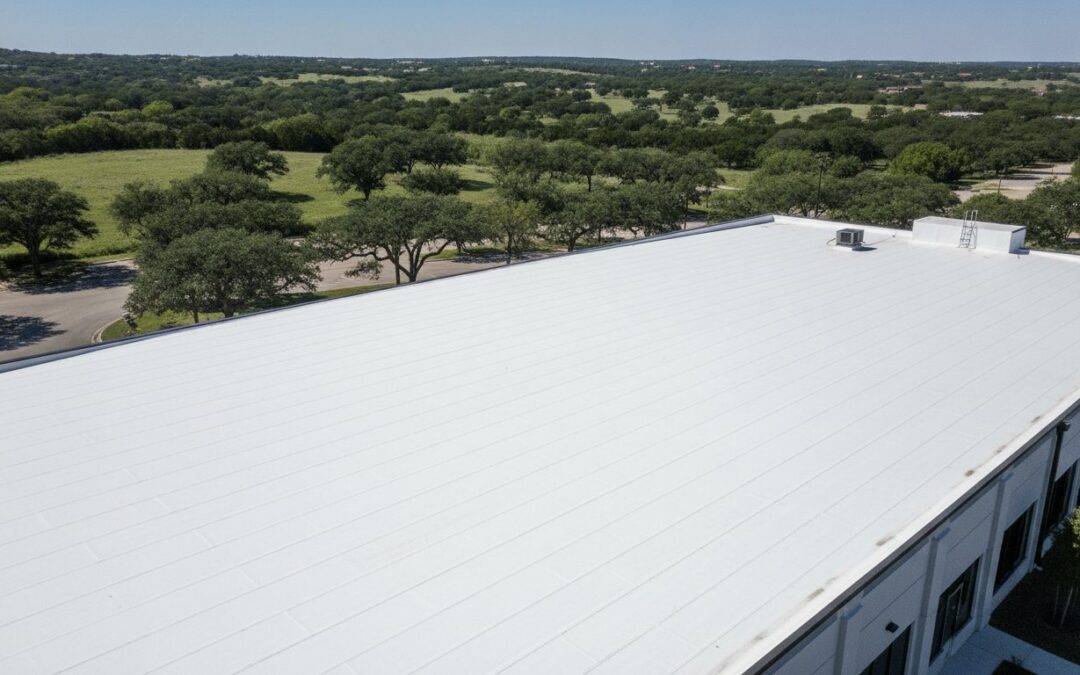
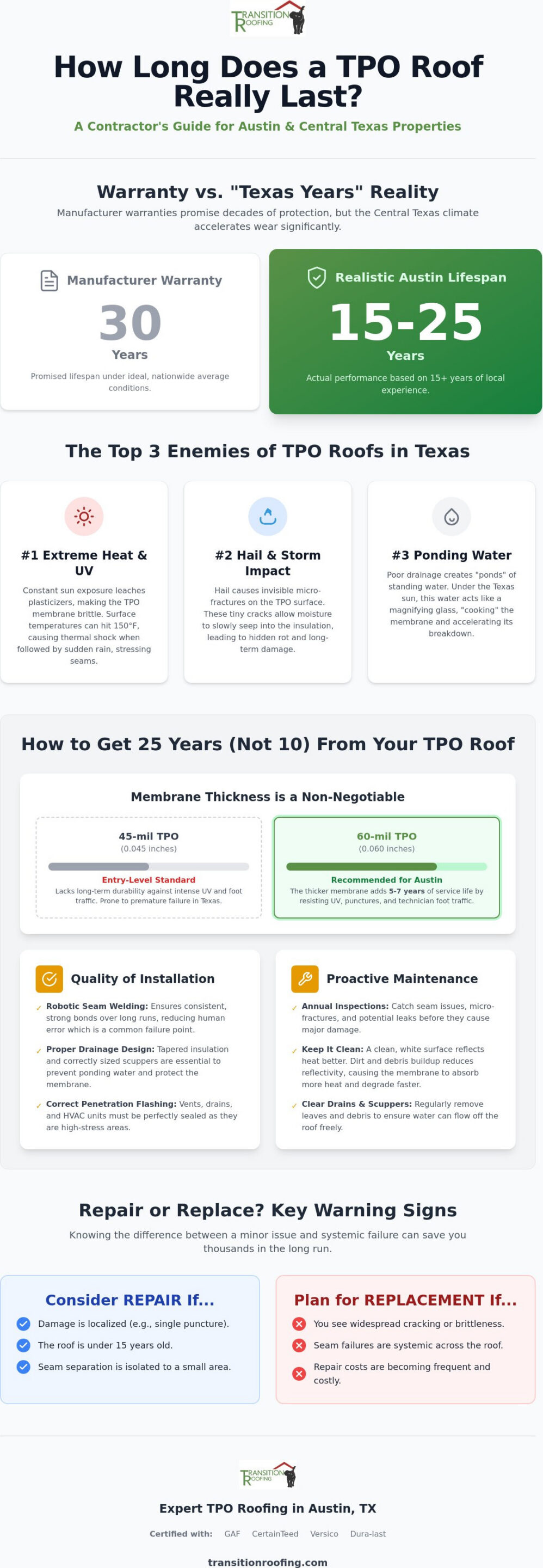
Property owners often ask how long does a TPO roof last in Texas compared to the rest of the country. While national averages might suggest a 30 year lifespan, our local experience in Austin and San Antonio shows a more realistic range of 15 to 25 years. Thermoplastic Polyolefin (TPO) is a single-ply membrane engineered for reflectivity, but the Central Texas climate puts it through a relentless stress test that most northern roofs never face. We call these “Texas years” because the environmental load is significantly higher here than in milder regions.
One of the biggest threats we see is thermal shock. Imagine a roof surface reaching 150 degrees under the July sun, only to be hit by a sudden 20 minute downpour. This rapid temperature drop causes the membrane to contract violently. Over time, this cycle of expansion and contraction stresses the heat-welded seams. If the installation wasn’t perfect, these seams are usually the first point of failure. It’s a specific challenge that makes local expertise vital for any commercial project.
To better understand this concept, watch this helpful video:
Why Austin Heat is the #1 Enemy of TPO
White TPO is famous for reflecting up to 80% of solar radiation. Even so, the constant baking in the Austin sun eventually leaches out the plasticizers that keep the material flexible. As the membrane loses its elasticity, it becomes brittle. This leads to hairline cracks and splits, particularly around penetrations like vents or HVAC units. Maintaining that reflective surface is key to preventing the core material from overheating and degrading prematurely.
Hail and Storm Impact in Central Texas
Hail doesn’t always cause a leak immediately. It often creates micro-fractures in the TPO surface that are invisible to the untrained eye. These fractures allow moisture to seep into the insulation over several months, leading to hidden mold and substrate rot. We recommend detailed post-storm inspections to catch these issues early. If you’ve recently weathered a storm, our commercial roof repair team can help identify these vulnerabilities before they require a full replacement.
Factors That Determine if Your TPO Roof Lasts 10 or 25 Years in Austin, TX
While the climate is a major factor, the specific choices made during installation often dictate how long does a TPO roof last in Texas. A roof that is under-specified or poorly installed might fail in just a decade. Conversely, a high-quality system can reach the 25 year mark with the right care. We focus on the foundation of the roof: the thickness of the membrane and the integrity of the seams.
45-mil vs. 60-mil: Which is Best for Austin, TX?
The “mil” is a measurement of thickness where one mil equals one-thousandth of an inch. A 45-mil membrane is the entry-level standard. In the harsh Central Texas sun, it often lacks the durability needed for long-term protection. We typically recommend a 60-mil membrane for Austin properties. This extra thickness can add 5 to 7 years of service life. It provides better resistance to UV degradation and physical punctures. If your building has frequent HVAC maintenance, the 60-mil option is essential to withstand foot traffic from technicians.
The Critical Role of Proper Drainage
Standing water is a silent killer for flat roofs. When water collects in low spots, it creates “ponding.” Under the intense Texas sun, this water acts like a magnifying glass. It “cooks” the membrane and accelerates the breakdown of the thermoplastic material. Proper drainage is not just about the membrane; it’s about the substrate and insulation underneath.
- Correct insulation tapering ensures water flows toward drains.
- Sizing scuppers correctly prevents overflow during Austin flash floods.
- Regularly clearing debris keeps drainage paths open.
Precision seam welding is another non-negotiable factor. Robotic welders provide a consistent heat-weld that hand-welding can’t match across thousands of square feet. Hand-welding is necessary for corners, but the long runs should be handled by machines to reduce human error. If you are concerned about your current seams, scheduling a professional inspection can help identify weak spots before they turn into major leaks.
Maintenance Strategies to Maximize TPO Longevity in Austin, TX
Regular upkeep is the single biggest factor in determining how long does a TPO roof last in Texas. Without a proactive plan, a roof can degrade 30% faster than the manufacturer intended. We recommend preventative maintenance programs that include bi-annual inspections. These visits allow us to catch minor issues, like small punctures or debris buildup, before they turn into expensive interior leaks.
Maintaining the “cool roof” benefit is also a technical necessity. White TPO is designed to reflect up to 80% of UV rays, but dirt and soot accumulation can drop that number significantly. When the membrane gets dirty, it absorbs more heat. This increases the internal temperature of your building and puts more thermal stress on the thermoplastic material. Keeping the surface clean helps maintain the energy efficiency and prevents the membrane from “baking” in the sun.
The 5-Point TPO Maintenance Checklist
- Seam Integrity: Search for “voids” or lifting in the heat-welded seams where the material has aged.
- Flashing Inspection: Check the seals around HVAC units and vents for cracked or failing sealant.
- Drainage Clearance: Clear organic debris from scuppers and drains, especially after Central Texas wind storms.
- Surface Condition: Look for “alligatoring” or hairline surface cracking in areas with the highest UV exposure.
- Puncture Check: Identify small holes caused by dropped tools or heavy rooftop foot traffic.
When to Consider a Silicon Coating
If your roof is reaching the 15 or 20 year mark but remains structurally sound, a silicone coating might be your best investment. This process can add 10 years of service life to an aging system. It’s a highly cost-effective alternative to a full commercial roof installation in Austin. A coating restores the original reflectivity and seals small cracks across the entire surface. This is a great way to push your roof’s lifespan toward that 25-year goal without the cost of a full tear-off.
If you haven’t had a professional look at your roof this year, we can provide a clear plan to protect your investment. Schedule a preventative maintenance check today to ensure your TPO system is ready for the next Texas summer.
When to Repair vs. Replace Your TPO System in Austin, TX
Deciding whether to patch a leak or invest in a full replacement is a major financial crossroad. While we’ve covered the factors that influence how long does a TPO roof last in Texas, every building eventually reaches its “point of no return.” We use a simple rule of thumb: if 25% or more of your roof’s insulation is saturated, a repair is no longer a viable long-term solution. Trapped moisture beneath the membrane will continue to degrade your roof deck and spike your energy costs regardless of how many patches you apply.
We use infrared thermography to find these hidden wet zones. This technology detects temperature differences that indicate trapped water, helping you avoid a “blind” replacement. If you’re managing properties across the region, consulting with commercial roofing San Antonio experts can help you build a clear multi-year budget. It’s about knowing when a simple puncture repair is enough and when systemic seam failure has made the system unsafe.
Signs Your TPO Roof is Failing
- Visible Scrim: If you can see the internal fabric reinforcement showing through the top layer, the UV protection has completely worn away.
- Repeated Leaks: If the same area fails despite multiple professional repairs, the membrane’s structural integrity is likely gone.
- Pillowing: Large sections of the membrane that have detached from the substrate indicate that the adhesive or fasteners have failed.
Navigating Insurance for Hail Damage in Central Texas
Hail is frequently the catalyst for TPO replacement in Austin and the surrounding areas. Even if you don’t see water inside your building, a major storm can cause thousands of micro-fractures across the surface. These fractures allow slow moisture seepage that rots the substrate over time. We specialize in insurance claim assistance, providing the technical documentation needed for Austin roof repair or full replacement claims. This ensures your asset is protected by a settlement that covers the true cost of restoration.
If you’re seeing these signs on your property, we can take a look and give you a clear plan. Schedule a roof inspection in Austin today to determine if a repair or a full TPO roofing system replacement is the best move for your bottom line.
Secure Your Commercial Investment with a Proactive Roofing Strategy
Understanding how long does a TPO roof last in Texas is the first step toward protecting your building and your bottom line. We’ve seen that while the Central Texas sun is intense, the combination of a high-quality 60-mil membrane and precision installation can reliably push your system’s lifespan toward that 25-year goal. The difference between a premature failure and long-term security often comes down to regular maintenance and catching moisture issues before they saturate your substrate.
As a GAF Certified Contractor with over 15 years of local experience, we specialize in moving structures from a state of vulnerability to total security. We focus on providing clear, contractor-backed advice rather than vague manufacturer promises. If you’re managing a property and need a realistic assessment of your roof’s current health, our team is ready to provide a straightforward, no-nonsense plan.
Dealing with a flat roof leak? Schedule a professional TPO roof inspection in Austin today. We look forward to helping you extend the life of your roof and ensuring your assets stay protected against the unpredictable Texas weather.
Frequently Asked Questions About TPO Roofing in Austin, TX
Is TPO better than PVC for Texas weather?
TPO is generally preferred for Central Texas commercial buildings because it offers superior UV resistance and better performance during extreme heat cycles. While PVC is excellent for restaurant roofs due to its chemical and grease resistance, TPO’s ability to handle thermal expansion makes it the more durable choice for most retail and warehouse structures. It provides a high level of protection at a more accessible investment point for most property owners.
Can you walk on a TPO roof?
You can walk on a TPO roof for routine maintenance, but you should strictly limit foot traffic to prevent accidental damage. Sharp tools or heavy equipment can puncture the membrane, especially as it ages and becomes less flexible. If your roof requires frequent access for HVAC service, we install dedicated walk pads. These reinforced paths protect the membrane and help ensure you hit the upper range of how long does a TPO roof last in Texas.
How much does a TPO roof cost per square foot in Austin?
The total investment for a TPO system depends on several factors, including the thickness of the membrane and the condition of your existing roof deck. Other variables like the amount of insulation required, the number of rooftop penetrations, and the size of the building will influence the final project scope. Because every commercial structure has unique drainage and structural needs, we recommend an on-site evaluation to provide a clear and accurate plan for your specific property.
Does TPO roofing come in colors other than white?
TPO is available in grey and tan, though white is the standard for the Central Texas climate. White membranes provide the highest solar reflectivity, which is essential for preventing the material from “baking” in the summer sun. While colored membranes are available for specific aesthetic requirements or local building codes, they don’t offer the same level of heat reflection as white, which can slightly reduce the overall lifespan of the system.
Will a TPO roof help lower my summer cooling bills?
A white TPO system can significantly lower your energy costs by reflecting up to 80% of solar radiation away from your building. This keeps the roof surface much cooler than traditional dark materials, meaning your HVAC system won’t have to work as hard to maintain indoor temperatures. This energy efficiency is a primary factor for owners considering how long does a TPO roof last in Texas when calculating their total return on investment.