
In the 2026 Austin housing market, a brand-new roof can fail in under five years if the installer ignores the unique thermal expansion of Central Texas. Most homeowners believe a shingle is just a shingle, but the wrong choice can lead to a denied insurance claim or a system that bakes from the inside out. You’ve likely felt the stress of “storm chasers” knocking on your door or the annoyance of a “repaired” leak that returns after the first heavy downpour. It’s frustrating to spend thousands of dollars only to wonder if your contractor will even answer the phone next season.
Knowing the common roofing mistakes to avoid is the only way to ensure your investment lasts 20 years or more. We’ve spent over 15 years fixing errors made by cut-rate crews who don’t understand local building codes or GAF and Certainteed installation standards. In this guide, we’ll show you how to navigate material choices for the Texas heat, avoid the pitfalls that lead to premature failure, and secure the insurance discounts you deserve for a resilient home. We’ll break down everything from ventilation secrets to the red flags of a bad contract so you can protect your property with confidence.
Key Takeaways
- Learn how to identify common roofing mistakes to avoid, including the “cheap bid trap” that often cuts a roof’s lifespan in half in Central Texas.
- Understand why technical errors like improper nailing and reusing old flashing are the leading causes of leaks during Austin’s spring storms.
- Discover why installing shingles on flat roofs or mixing material brands will void your warranty and lead to structural rot.
- Get a clear strategy for vetting contractors by verifying physical Austin offices and elite manufacturer certifications from GAF or Certainteed.
Common Roofing Mistakes to Avoid in Austin TX: Why Cheap Fixes Fail
When we talk about common roofing mistakes to avoid, we aren’t just talking about a single missing shingle. These errors usually involve technical blunders during installation, choosing materials that can’t handle the heat, or failing to vet a contractor. In Central Texas, many homeowners fall into the “Cheap Bid Trap.” While a low estimate looks good on paper, it often results in a roof that lasts only half its intended lifespan. These budget crews often skip the small details that keep water out of your home during a massive Austin downpour.
Thermal expansion is a major factor in our local climate. During Austin’s 100-degree summers, shingles expand and contract rapidly; if they aren’t installed with the correct precision, this movement causes shingle buckling and premature cracking. At Transition Roofing, our philosophy is built on long-term protection rather than quick, low-quality patches that fail when the next storm hits.
To better understand why these technical details matter so much, watch this helpful video:
The High Cost of Cutting Corners
Skipping a building permit might save a few dollars upfront, but it can void your manufacturer warranty from brands like GAF or Certainteed. Most homeowners don’t realize that insurance companies may deny a future claim if the initial work wasn’t permitted or inspected. You also need to stay alert for “storm chasers.” These outfits descend on Austin after hail events, perform sub-par work, and vanish before you notice a leak. Understanding roof construction basics helps you spot when a crew is rushing through the framing or covering process.
How the Central Texas Heat Accelerates Damage
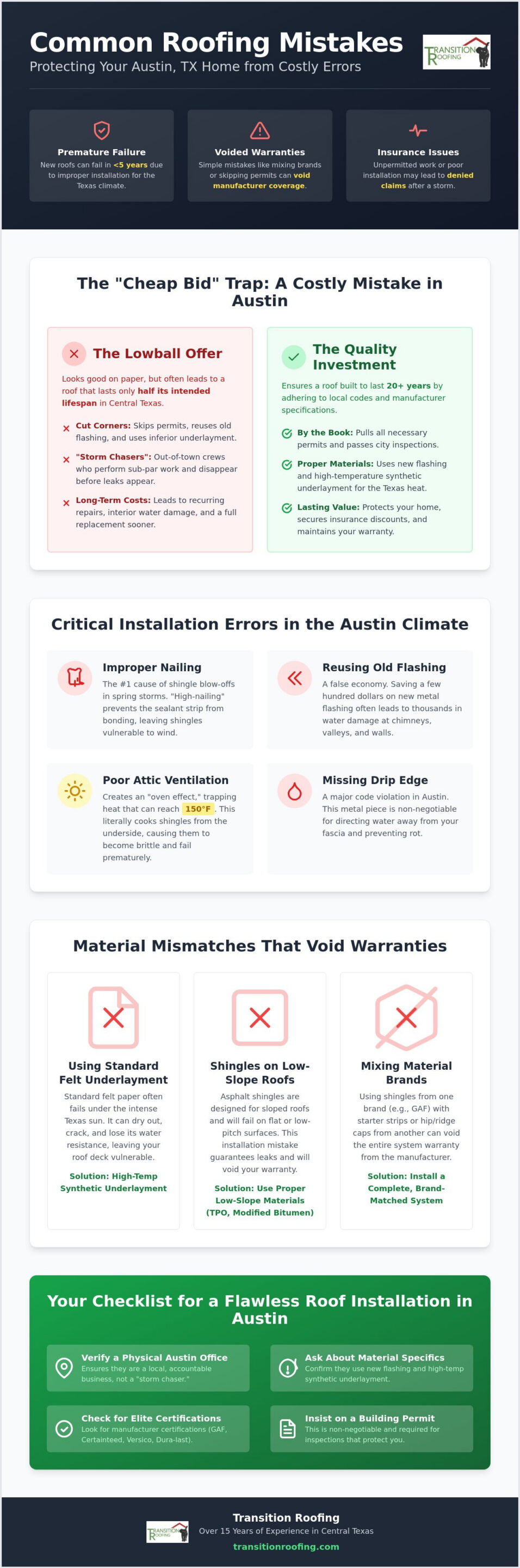
Thermal shock occurs when a blistering hot roof is suddenly cooled by a summer thunderstorm. This rapid temperature shift puts immense stress on roofing membranes and shingles. Choosing the wrong underlayment is a fatal error in this environment. Standard felt paper often fails under the intense Texas sun, leading to a roof that “cooks” from the inside out. We always recommend high-temperature synthetic underlayments to provide a secondary layer of defense against the elements.
Technical Installation Blunders Common in Austin TX Roofs
Many homeowners focus on the shingle brand, but the way those shingles are attached matters more. Improper nailing stands as the primary reason for shingle blow-offs during our intense Central Texas spring storms. High-nailing shingles is a common error that prevents the sealant strip from engaging correctly; this means the roof can’t bond into a single, wind-resistant unit. These are exactly the kind of technical common roofing mistakes to avoid if you want your system to survive the next round of high winds.
Flashing and Drip Edge Failures
Reusing old flashing is a gamble that rarely pays off. Saving a few hundred dollars on metal often leads to thousands in interior water damage when those old seals fail. We frequently see leaks at chimneys, valleys, and wall intersections because a previous installer cut corners. For Austin homes, step flashing is superior to continuous flashing because it allows for individual shingle movement. Additionally, a missing drip edge is a major code violation. This small metal component directs water away from your fascia and is non-negotiable under current Austin building requirements. If you’re concerned about your current seals, a professional residential roof inspection can identify these hidden gaps before the rain starts.
Ventilation Failures in the Austin Heat
Poor attic ventilation creates an “oven effect” that literally cooks shingles from the underside. In the 2026 Austin climate, heat trapped in your attic can reach 150 degrees, causing asphalt to become brittle years ahead of schedule. Balancing intake and exhaust vents is the only way to lower energy bills and protect your roof’s structural integrity. If you’ve already noticed shingles curling or recurring leaks after a storm, you should consult an Austin Roof Repair expert to assess the damage. Proper airflow isn’t just about comfort; it’s a requirement for maintaining your manufacturer warranty.
Material and Pitch Errors Unique to Austin TX Properties
Choosing the wrong material for your roof’s slope is a recipe for disaster. Shingles are water-shedding, not waterproof, which means they rely entirely on gravity to move moisture. The minimum pitch required for asphalt shingles to shed water effectively is a 2:12 ratio. If your roof rises less than two inches for every twelve inches of horizontal run, shingles will fail. This is one of the most common roofing mistakes to avoid because it leads to trapped moisture and eventual structural rot.
Mixing different shingle brands or types is another frequent error that ruins a roof’s integrity. Every manufacturer has specific chemical compositions and interlocking designs. Combining GAF with Certainteed shingles on the same plane prevents a proper seal and immediately voids your warranty. In our 15+ years of experience, we’ve seen these “Frankenstein roofs” fail during the first high-wind event of the season.
Ignoring the “Hail Factor” is a costly oversight in Central Texas. Austin is a high-risk area for severe weather, yet many homeowners settle for standard shingles to save money upfront. Upgrading to Class 4 impact-resistant shingles is a smarter long-term move. These materials are tested to withstand 2-inch hail stones and can qualify you for significant annual discounts on your homeowner’s insurance premiums.
Low-Slope and Flat Roof Mismanagement
Residential homes in Austin often have flat sections over porches or additions. Applying shingles here is a major technical blunder because it leads to “ponding water.” This standing water eventually seeps through the nail holes and rots the decking. For these areas, we install TPO roofing systems. TPO is a single-ply membrane that is heat-welded at the seams, making it completely watertight and highly reflective to combat the Texas sun.
When designing these outdoor spaces, observing how professional teams like MAK Roofing and Construction Company execute porch and patio installations can offer valuable insight into managing complex roof transitions and drainage.
The Risk of Reusing Old Materials
Reusing vents, pipe boots, or skylights during a replacement is a false economy. These components often have a shorter lifespan than a new 30-year shingle. If a boot fails three years after your new roof is installed, you’ll pay for an expensive repair that could’ve been avoided for a small fee during the initial job. Similarly, “roof-overs” or layering new shingles over old ones are banned by many Austin pros. A clean deck is essential for identifying wood rot and ensuring the new shingles lay flat. If you want to ensure your materials match your home’s specific needs, schedule a roof inspection with Transition Roofing today.
How to Ensure a Flawless Roof Installation in Austin TX
Choosing a contractor is the final step in sidestepping the common roofing mistakes to avoid. In Austin, TX, the market is often flooded with out-of-state crews after a major hail storm. To protect your investment, always verify that the company has a physical Austin office and can provide recent local references. A true professional provides a detailed written contract, not just a verbal handshake. This document should outline the scope of work, specific materials used, and a clear timeline for completion. If a roofer is hesitant to put their promises in writing, it’s a major red flag for your property’s security.
Manufacturer certifications are your best insurance policy for a quality install. Look for credentials like GAF Master Elite or Certainteed Select ShingleMaster status. These aren’t just stickers; they indicate the crew has been factory-trained to meet strict installation standards. If you’re filing a storm claim, don’t make the mistake of failing to take “before” photos of your property. Having clear documentation of your roof and siding condition before damage occurs makes the insurance process much smoother. Even if you are outside their primary service area, you can explore Roofing and Exterior Replacement Services options from established providers to understand the standard of quality you should expect. This is a piece of “contractor logic” that most generic guides overlook, yet it’s vital for avoiding claim denials.
Vetting Your Austin Roofing Contractor
Before signing anything, ask for proof of general liability insurance and workers’ compensation. In Texas, roofing licenses aren’t required at the state level, so you must rely on local reputation and manufacturer standing. If a contractor can’t show you their insurance certificates, walk away immediately. You don’t want to be held liable for an injury that happens on your roof. For a deeper dive into this process, read our guide on Finding a Reliable Roofer Near Me.
Long-Term Maintenance and Warranty Protection
Many homeowners fall into the “set it and forget it” trap. In the Central Texas climate, annual inspections are critical for catching small issues like cracked pipe boots or wind-lifted shingles before they become major leaks. You must also understand the difference between warranties. A material warranty covers the shingles themselves, while a labor warranty covers the actual installation. These protections only stay valid if the roof was installed to manufacturer specs. If you’re worried your roof wasn’t installed correctly, Transition Roofing can take a look and give you a clear plan.
Secure Your Central Texas Property for the Long Term
A roof is more than just a collection of shingles; it’s a complex system designed to protect your most valuable asset from Austin’s relentless heat and unpredictable storms. By understanding the common roofing mistakes to avoid, you can prevent premature failure and ensure your home stays dry for decades. Technical precision in nailing, proper attic ventilation, and choosing the right material for your roof’s pitch are the foundations of a successful project. Skipping these details often leads to expensive interior damage and denied insurance claims.
Don’t let a “storm chaser” or a cut-rate bid compromise your safety. Transition Roofing brings 15+ years of Central Texas expertise to every job. As GAF and Certainteed Certified specialists in both residential and commercial systems, we prioritize quality craftsmanship and transparent communication. Whether you need a simple repair or a full TPO system for a flat roof, we have the specialized knowledge to do it right the first time.
If you’re dealing with recurring leaks or are unsure about the quality of a past installation, we can take a look and give you a clear plan. Schedule a professional roof inspection in Austin today to gain total peace of mind. Your home deserves the protection of a seasoned expert who understands the local landscape.
Frequently Asked Questions
Can I install new shingles over my old roof to save money?
Installing new shingles over an old layer is a short-term saving that leads to long-term failure. This practice, known as a roof-over, traps heat between the layers and adds significant weight to your home’s structure. It also prevents your contractor from inspecting the wood decking for rot or water damage. Most manufacturer warranties from GAF or Certainteed require a clean deck for full coverage, so a tear-off is always the safer choice.
What is the most common reason for roof leaks in Austin, TX?
Flashing failure around chimneys, valleys, and vents is the most frequent cause of leaks in our area. These metal transitions often pull away or rust over time, especially after the intense thermal expansion of an Austin summer. One of the common roofing mistakes to avoid is reusing old flashing during a replacement. This almost guarantees a leak within the first few years of the new roof’s life as the old metal fails to seal against new materials.
How do I know if my roofing contractor is actually local to Austin?
Verify a contractor’s local roots by asking for a physical office address in Central Texas and checking for local references. “Storm chasers” often use temporary PO boxes or out-of-state phone numbers to appear local after a hail event. A truly local company will have a deep understanding of Austin building codes and a reputation they’ve built over 15 or more years in the community. They should also be able to provide proof of local insurance.
What happens if my roofer doesn’t use a drip edge?
Skipping the drip edge allows water to seep under the shingles at the eaves, eventually rotting your fascia boards and roof decking. This small metal strip is a mandatory requirement for Austin building codes because it directs water into the gutters and away from the house’s structure. Without it, your home is vulnerable to wood rot and pest infestations during heavy spring rains. It is a small component that prevents a massive structural headache.
Is it a mistake to use asphalt shingles on a flat roof?
Yes, using asphalt shingles on a roof with a pitch lower than 2:12 is a critical error. Shingles are designed to shed water using gravity. On a flat surface, water will pond and eventually leak through the nail holes. This is one of the common roofing mistakes to avoid that lead to total structural rot. For these sections, we recommend TPO roofing systems, which are heat-welded to create a completely waterproof, reflective barrier against the Texas sun.