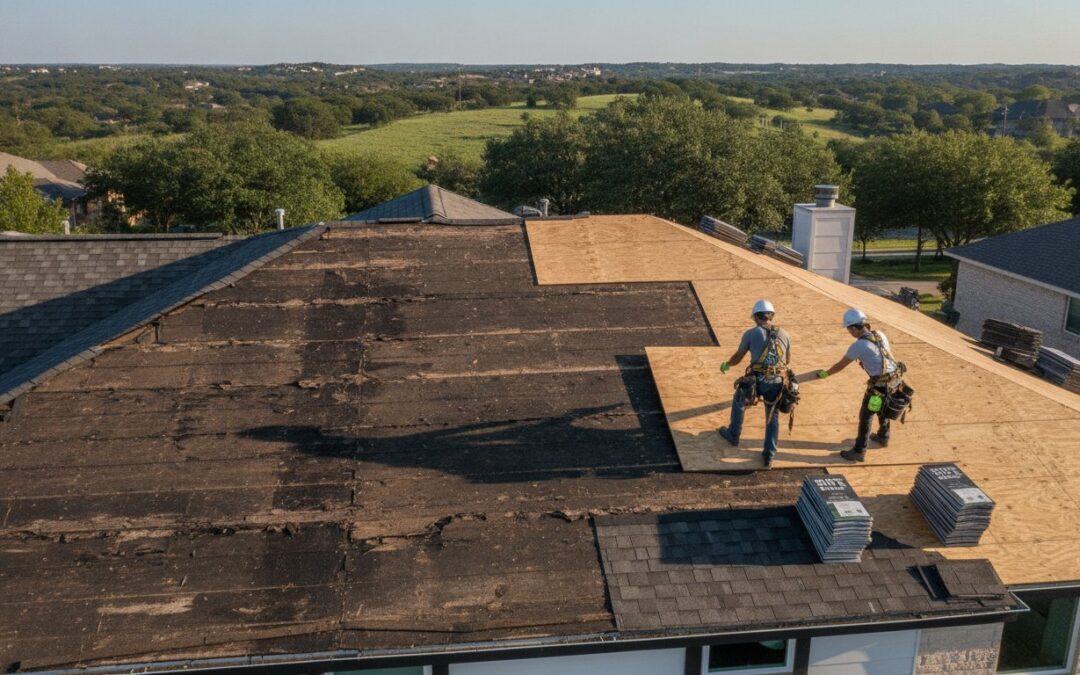
You’re two hours into a roof tear-off when the crew lead knocks on your door with a piece of crumbly, black wood in his hand. This is the moment every homeowner in Central Texas dreads. It signals a mid-project change order that can quickly inflate your budget. Knowing the cost to replace roof decking in Austin before the first shingle is pulled is the best way to maintain control over your home improvement project. Our 15 years of experience in the local market shows that hidden rot is the most common reason for unexpected price hikes during a replacement.
It’s frustrating when technical jargon like OSB or CDX makes a simple repair feel like a complex engineering problem. You deserve a clear explanation of what’s happening on your roof and why certain boards must be replaced by code. We’ll walk you through the exact factors driving material prices this year and how to spot a fair estimate. This guide provides a breakdown of current market rates per sheet, explains mandatory 2026 building requirements, and gives you the confidence to talk to any contractor with total clarity.
Key Takeaways
- Understand the current cost to replace roof decking in Austin so you can set a realistic budget and avoid mid-project price spikes.
- Learn the key differences between OSB and CDX plywood to choose the right structural support for your home’s long-term safety.
- Identify warning signs like spongy spots and sagging rooflines that signal when your decking is no longer structurally sound.
- Discover how transparent per-sheet pricing and digital photo documentation protect you from “hidden” expenses during a tear-off.
The Real Cost to Replace Roof Decking in Austin, TX
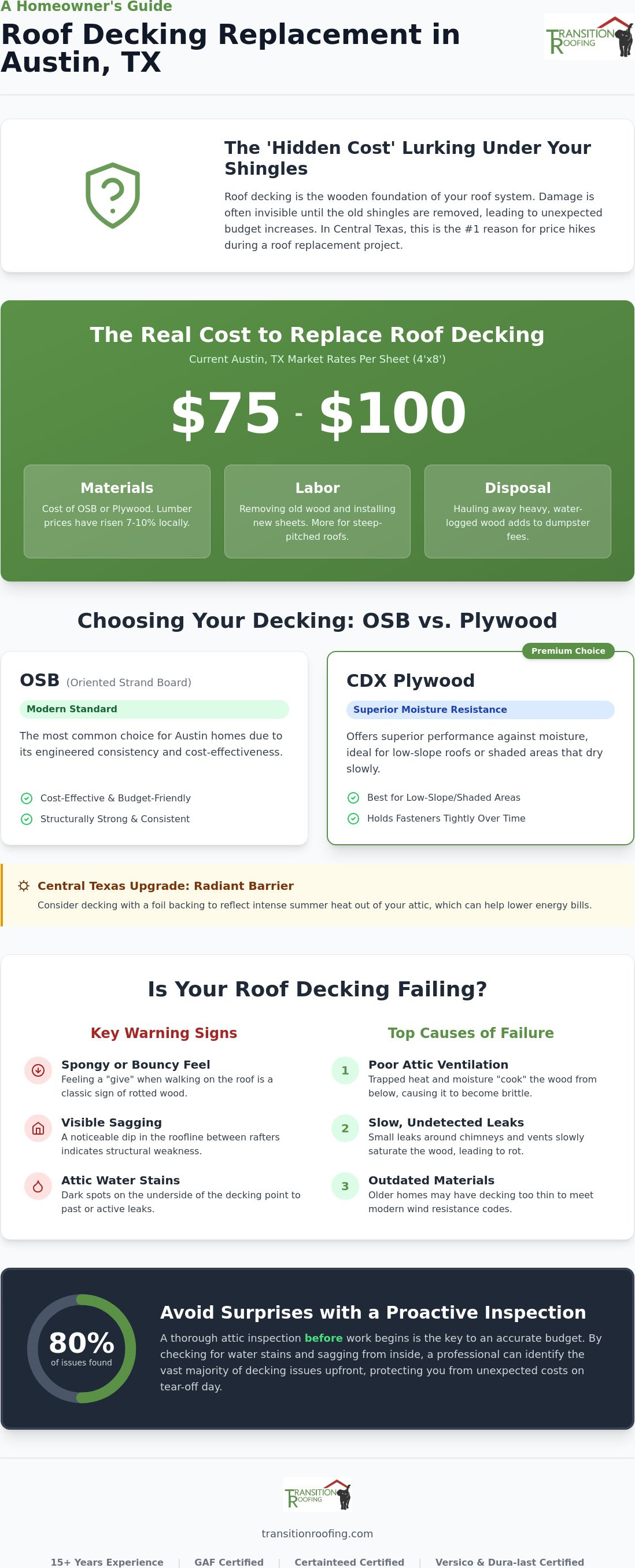
Roof decking, often called sheathing, serves as the structural foundation for your entire roofing system. It’s the layer of wood that bridges the gap between your home’s rafters and the shingles. In the current 2026 market, industry data shows the cost to replace roof decking in Austin generally ranges from $75 to $100 per sheet for standard materials like OSB. While this might seem like a minor detail, it’s the only thing keeping your shingles attached during a heavy Central Texas windstorm. Understanding the fundamentals of roof construction helps you see why skipping a few rotten boards can lead to structural failure later.
To better understand how these components fit into your total project budget, watch this helpful video breakdown:
What is Roof Decking and Why Does it Fail?
Most homes in Central Texas use either Oriented Strand Board (OSB) or CDX plywood. These panels must be strong enough to support the weight of heavy asphalt shingles and the physical stress of high winds. Failure usually happens for three specific reasons. Poor attic ventilation is the most common culprit; it traps heat and moisture that “cooks” the wood from the inside out. Slow leaks around chimneys or valleys also rot the wood over time. Finally, older homes may have thin, outdated materials that no longer meet 2026 building codes for wind resistance.
Why Decking Replacement is a ‘Hidden’ Cost
The biggest challenge with decking is that it’s invisible from the ground. You won’t know the full extent of the damage until the old shingles and felt paper are stripped away during a residential roof replacement. This “tear-off surprise” is where many homeowners face unexpected budget increases. We aim to eliminate this uncertainty. By performing a thorough attic inspection before the project starts, we can identify about 80% of decking issues by looking for water stains or sagging between the rafters. This approach prevents you from being blindsided by a large bill on the first day of the job.
Material and Labor Factors for Austin, TX Sheathing
The total bill for decking isn’t just the price of the wood itself. It involves three distinct cost components: the raw material, the labor to nail it down, and the disposal of the old, heavy rot. 2026 trends show a 7-10% rise in lumber prices across the Austin-Round Rock metro area. This increase directly impacts the average roof replacement cost for local homeowners. When we calculate the cost to replace roof decking in Austin, we look at the specific logistics of your property, including how many stories your home has and the total square footage of damaged wood.
Material Costs: OSB vs. Plywood in 2026
OSB (Oriented Strand Board) is the modern standard for most Austin builds because it’s cost-effective and engineered for consistency. CDX Plywood is the premium alternative. It offers superior moisture resistance, making it the better choice for homes with low-slope sections or areas prone to heavy shade and slow drying. To combat our 100-degree Central Texas summers, many homeowners choose a radiant barrier upgrade, which is a specialized foil backing on the decking designed to reflect heat out of your attic space. If you’re worried about the state of your sheathing, we can include a clear per-sheet price in your residential roof replacement quote.
Labor and Disposal Fees in Austin
Replacing wood is labor-intensive because a crew must carefully cut out rotten sections without damaging the rafters below. In neighborhoods like West Lake Hills or Tarrytown, many roofs have steep pitches (12/12 or higher). These projects require extra safety harnesses, specialized staging, and more time to navigate safely. This added complexity increases the labor portion of your estimate. Additionally, hauling away water-logged, heavy wood adds significant weight to the dumpster. This leads to higher disposal fees from local Austin waste management services compared to hauling away dry, light shingles alone.
When to Replace vs. Repair Decking in Austin, TX
Deciding whether to patch a few boards or replace the entire deck comes down to structural integrity. Ignoring rotted sheathing during a shingle swap is a major risk. The shingles won’t have a solid base to grip. This leads to “nail pull-through,” where Central Texas winds easily rip shingles off because the wood is too soft to hold the fastener. We often see this in older Austin neighborhoods where original decking has thinned over decades of intense heat. If the wood is compromised, the cost to replace roof decking in Austin is a small price to pay for a roof that actually stays attached.
Professional contractors use a “soft spot” test during the initial walk-through. By applying pressure to specific areas, we can feel if the wood gives way. You should look for these warning signs:
- Spongy spots when walking on the roof surface.
- Visible sagging between the rafters or along the roofline.
- Internal water stains or white fungal growth in the attic.
Identifying Rot and Water Damage from the Attic
Your attic tells the real story of your roof’s health. Look for dark “tide marks” on the underside of the wood. You’re looking for delamination, which is when the layers of plywood begin to separate. In our humid Central Texas climate, moisture often gets trapped, accelerating this decay. If the wood looks black or feels damp, the structural bond is gone. This is why we check the attic first; it’s the only way to be 100% sure about the wood’s condition before the shingles come off.
Austin Building Codes and Re-roofing Rules
Austin building codes are strict about the surface quality required for a new installation. The decking must be clean, smooth, and dry. Local regulations typically require a minimum decking thickness of 7/16-inch to ensure wind resistance during 110-mph gusts. If your current deck is thin or damaged, it won’t meet these safety standards. For a deeper look at navigating these requirements after a storm, check out our Austin roof repair guide. If you’re dealing with a spongy roof, we can take a look and give you a clear plan for your home.
Avoiding Budget Surprises with an Austin, TX Roof Inspection
Trust is the most important part of any structural project. We’ve spent over 15 years in Central Texas building that trust through total transparency. One of the biggest complaints from local homeowners is the “mystery bill” for wood that appears mid-project. We solve this by providing a fixed, per-sheet price in every initial contract. This ensures you understand the cost to replace roof decking in Austin before the first shingle is removed. If we find rot, we don’t just ask you to take our word for it. Our crews use digital photo documentation to show you the exact condition of your sheathing as it’s uncovered.
How Transition Roofing Estimates Decking
We include a clear decking contingency in every Austin, TX estimate. This isn’t a hidden fee; it’s a pre-approved price for a specific number of sheets. If your wood is clean and dry, you don’t pay a cent extra. If it’s rotten, the price is already locked in so there are no surprises. We never use “scab” repairs. Some contractors try to patch small holes with scrap wood. We always replace full sheets to ensure the wood hits the center of the rafters. This creates a solid, unified foundation that meets the highest safety standards.
Protecting Your Central Texas Investment
When heavy storms hit, insurance typically covers the shingles. Decking damage is often discovered during the tear-off process. We help you navigate this by providing the specific photo evidence your adjuster needs. This documentation helps justify the cost to replace roof decking in Austin to your insurance carrier if the damage is secondary to a covered event. A solid deck is the only way to get the full 30 to 50 year lifespan out of a premium GAF or CertainTeed system. If you’re seeing signs of rot or dealing with a soft roof, our residential roofing services can help. We’ll take a look and give you a clear plan for your home. Schedule a roof inspection in Austin today.
Secure Your Home with a Solid Foundation
A roof is only as strong as the wood beneath it. Replacing rotten or thin decking isn’t just about following building codes. It’s about protecting your property from the unpredictable Central Texas climate. By understanding the factors driving the cost to replace roof decking in Austin, you can move forward with your project without the fear of hidden expenses or mid-project surprises. We’ve spent over 15 years helping local homeowners achieve this peace of mind through honest assessments and quality craftsmanship.
As GAF Master Elite and CertainTeed Certified contractors, we prioritize structural integrity. We provide digital photo proof of every decking repair, so you have total clarity on the state of your home’s foundation. This transparency ensures your investment is secure for decades. If you suspect your roof has soft spots or hidden rot, don’t wait for a leak to confirm it. Schedule a professional roof inspection in Austin today to get a clear plan for your home. We’re here to ensure your property stays safe, dry, and protected for the long haul.
Frequently Asked Questions
How much does a single sheet of roof decking cost in Austin in 2026?
A single sheet of 7/16-inch OSB decking typically costs between $75 and $100 installed in the current Austin market. This price includes the material, labor for the removal of the old board, and the disposal of the debris. If your home requires premium CDX plywood instead, you can expect the per-sheet price to be slightly higher. We always provide a fixed rate for these sheets in our initial estimates to prevent budget surprises.
Can I install new shingles over old, slightly damaged decking?
No, you should never install new shingles over damaged or soft decking. New shingles require a smooth, structurally sound surface so the nails can grip properly. If the wood is rotten, the nails will eventually pull through, causing shingles to blow off in high winds. Austin building codes also require a solid substrate to ensure the roof meets 110-mph wind ratings. Replacing the wood is the only way to protect your long-term investment and keep your warranty valid.
Does homeowners insurance cover the cost of roof decking replacement in Texas?
Homeowners insurance usually covers decking replacement if the damage results from a covered event, like a fallen tree or severe hail impact. Insurance rarely pays for wood that has rotted due to age, poor maintenance, or slow leaks. If we find storm damage, we provide the digital photo evidence needed to help you navigate the claim. The final cost to replace roof decking in Austin will still depend on your specific policy and deductible.
What is the difference between OSB and plywood for Austin roofs?
OSB is the modern industry standard because it is engineered for consistency and costs less than plywood. It performs exceptionally well in most Central Texas homes when paired with proper attic ventilation. CDX plywood is a traditional layered wood that handles moisture exposure better without swelling at the edges. While plywood is more expensive, it is often the preferred choice for low-slope sections or under premium shingle systems that require a stiffer, more moisture-resistant base.
How do I know if my roof decking is rotting without taking the shingles off?
You can identify rot by inspecting your attic for dark water stains, white mold growth, or wood layers that are beginning to separate. From the outside, look for sagging lines between the rafters or visible dips in the roof surface. If you feel a spongy sensation while walking on the roof, it is a clear sign the wood has failed. We use these checks to determine the cost to replace roof decking in Austin during our initial inspection.