
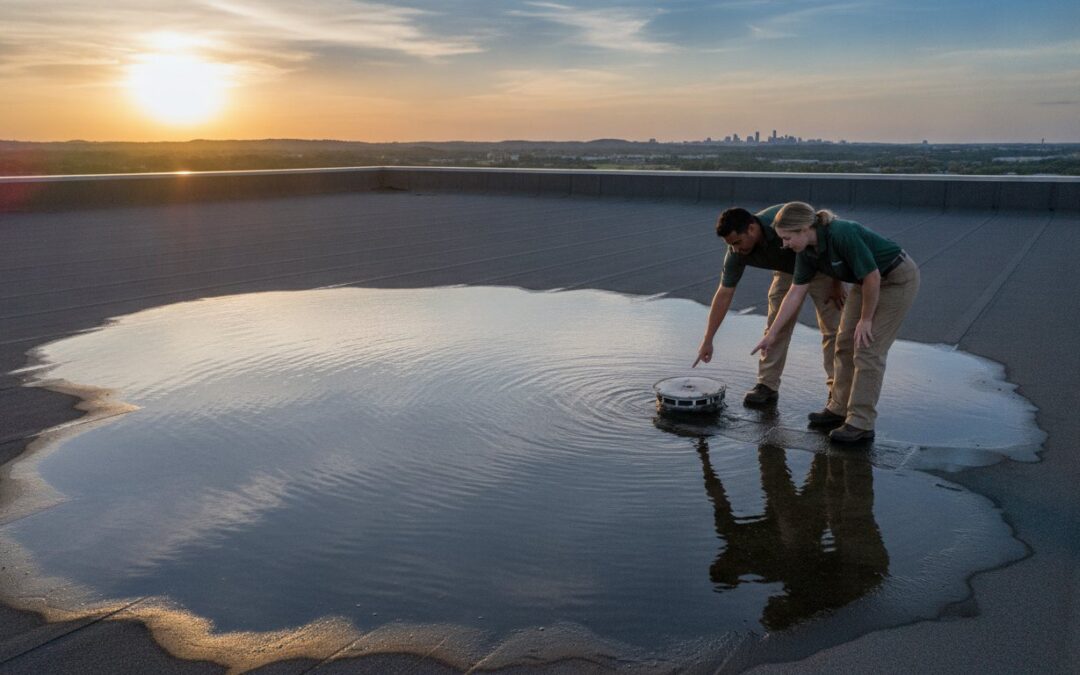
If you see standing water on your roof 48 hours after a heavy Central Texas rain, your structure is already under attack. It isn’t just a nuisance; it’s thousands of pounds of unnecessary weight pushing against your decking and membrane. When it comes to flat roof ponding water repair Austin property owners often feel trapped between the fear of a sudden collapse and the frustration of recurring leaks that never seem to stay fixed.
We understand the stress of managing a property in a climate where triple-digit heat and sudden hailstorms are the norm. With over 15 years of experience and certifications from industry leaders like GAF, Certainteed, and Versico, we’ve seen how Austin’s shifting soils and intense UV rays can turn a level roof into a series of dangerous dips. This guide provides a clear, expert path forward for identifying the root cause of your drainage issues. You’ll learn the difference between a simple drain clearing and a structural slope correction, how to navigate insurance questions, and the most effective ways to move your building from a state of vulnerability to total security.
Key Takeaways
- Identify why standing water for over 48 hours creates a magnifying glass effect that cooks your roof membrane in the intense Austin heat.
- See how Austin’s expansive clay soil causes foundation shifts that lead to improper roof sloping and structural sagging over time.
- Explore professional options for flat roof ponding water repair Austin property managers rely on, such as tapered insulation and custom roof crickets.
- Learn how a simple 10-minute maintenance routine can prevent thousands of dollars in structural damage before the spring hail season begins.
Understanding Ponding Water on Flat Roofs in Austin TX
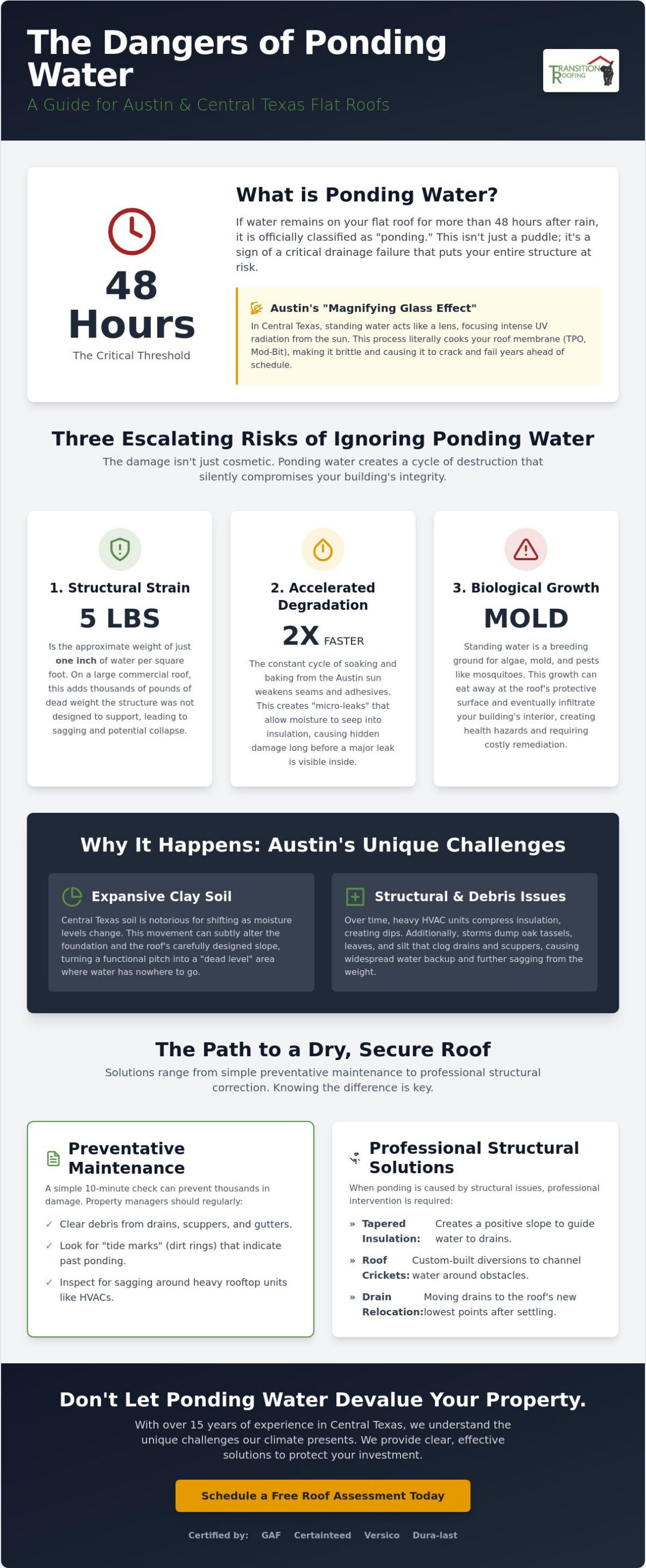
In the roofing industry, we don’t consider a few puddles after a storm to be a crisis. However, if water remains on your roof for more than 48 hours, it’s officially classified as ponding. For property owners seeking flat roof ponding water repair Austin experts often point out that our local climate turns these small pools into a significant threat. While flat roof design and construction usually accounts for a slight pitch, shifting foundations or clogged drains can quickly lead to standing water that refuses to leave.
The Austin sun creates a unique hazard known as the “magnifying glass effect.” Standing water acts as a lens, concentrating intense UV radiation onto the membrane below. This process literally cooks the material, causing TPO or modified bitumen to become brittle and crack long before its expected lifespan. Relying on evaporation isn’t a reliable strategy here; even in the heat, Central Texas humidity can slow the process, leaving your structure vulnerable for days.
To better understand the long-term impact of this issue, watch this helpful video:
You can often spot the early warning signs of ponding without climbing a ladder. Look for dark rings or staining on the roof surface, which indicate where water has previously sat. Algae growth or a thick layer of dried mud and debris in specific low spots are also clear indicators that your drainage system is failing. As a flat roofing company in Austin, we see these symptoms as the first stage of structural degradation.
The Dangers of Standing Water in Central Texas
Ignoring these pools leads to three primary risks that can compromise your entire building:
- Structural Strain: One inch of water weighs approximately 5 pounds per square foot. On a large commercial roof, this adds thousands of pounds of dead weight that the original rafters weren’t designed to support.
- Accelerated Degradation: The constant cycle of soaking and baking weakens seams and creates “micro-leaks.” These tiny failures allow moisture to seep into the insulation, often bypassing traditional flashing.
- Biological Growth: Standing water attracts pests and promotes mold. Over time, this biological growth can damage the membrane’s surface and eventually find its way into your building’s interior.
Beyond protecting the building from the top down, facility managers must also consider the durability of their interior surfaces. For those managing industrial or commercial spaces, Polished Concrete Atlanta provides high-performance flooring solutions that offer the same level of long-term protection for your floors as a quality roof does for your structure.
Structural Causes of Flat Roof Ponding Water in Austin TX
Many property owners assume standing water is simply a sign of an old membrane. In Central Texas, it’s often a structural issue tied directly to the ground beneath your building. Austin’s expansive clay soil is notorious for shifting as moisture levels change. When the foundation moves, it can alter the subtle pitch of your roofline. This transition often turns a functional slope into a “dead level” area where water collects rather than drains. Understanding these shifts is the first step in effective flat roof ponding water repair Austin.
Beyond the soil, internal factors often create “bowls” in your roofing system. Heavy HVAC units or regular foot traffic can compress insulation over time. According to the industry-standard definition, water that stays for 48 hours indicates a failure in the drainage design. If your scuppers or internal drains are no longer at the lowest point of the roof, gravity works against you. This is a common problem in older buildings where the original drainage plan didn’t account for decades of settling.
Local debris also plays a major role. Central Texas storms bring heavy winds that dump oak tassels, silt, and cedar debris directly into your drainage paths. Even a minor blockage in a scupper can cause a backup that spans hundreds of square feet. Over time, the weight of this water causes further sagging, creating a cycle of damage that eventually leads to leaks.
Identifying Drainage Failures
To spot these failures, start with a visual inspection of your primary and secondary drains. Look for “tide marks” or rings of dirt that show exactly where the water sits. If you’re noticing water pooling around your HVAC units, we can perform a detailed commercial roof assessment to determine if the issue is structural or a simple blockage.
We often recommend installing roof crickets to solve these problems. These are small, V-shaped structures built to divert water around obstructions like HVAC curbs or skylights. They force water toward the drains and prevent the stagnant pools that lead to membrane rot. Checking for these “dead spots” where the original pitch was insufficient is a standard part of our maintenance process.
Professional Solutions for Flat Roof Ponding Water Repair in Austin TX
Fixing standing water requires more than just a quick patch. We focus on permanent fixes that address the structural dips and drainage failures mentioned earlier. For a comprehensive flat roof ponding water repair Austin project, we often use tapered insulation systems. These specialized panels are cut at a slight angle to create an artificial slope. This forces water toward your existing drains without the need to rebuild the entire roof deck, providing a cost-effective way to restore proper drainage.
Another effective tool in our arsenal is the roof cricket. These V-shaped structures act as small ridges that divert water around large obstructions like HVAC units or skylight curbs. If your scuppers or internal drains are sitting too high due to building settling, we simply lower the drainage points to match the current low spots of the roof. For roofs that still experience minor, unavoidable pooling, silicone roof coatings are the gold standard. Unlike acrylics, silicone is a high-solids material that withstands permanent ponding without breaking down under the intense Central Texas sun.
Repair vs. Replacement: Contractor Logic
Deciding between a repair and a full replacement follows a specific logic based on the condition of your substrate. If you have minor low spots on a relatively new TPO membrane, a targeted repair or cricket installation is usually enough. However, if ponding has already led to saturated insulation or structural deck rot, a replacement is necessary. We use high-performance materials from GAF and CertainTeed to ensure your new system has the long-term UV resistance required for our local climate.
The Role of Professional Inspections
Don’t fall into the trap of DIY “puddle filling” with generic roof cement. This common mistake often traps moisture against the membrane and increases the weight on sagging areas, making the problem worse. Before recommending any solution, Transition Roofing evaluates the structural integrity of your decking to ensure it can safely handle the load. If you’re dealing with recurring puddles, we can take a look and give you a clear plan for a permanent fix.
Preventing Future Ponding and Maintenance in Austin TX
Prevention is the most cost-effective form of flat roof ponding water repair Austin property owners can invest in. In Central Texas, our weather follows a predictable but violent pattern. We recommend biannual inspections to stay ahead of the curve. One should happen in late winter before the spring hail season hits. The second should occur in late summer before the fall storm surges begin.
Maintaining a clear path for water is a simple process that prevents massive headaches. Clearing scuppers and drains is a 10-minute task that saves thousands in structural repairs. If debris from local oaks or cedars blocks these exits, water backs up and creates the ponding issues we discussed earlier. You should also monitor your HVAC condensation lines. If they drip directly onto the roof membrane instead of into a drain, they create localized ponding. This constant moisture accelerates wear in a very specific spot, even during a drought.
A formal preventative maintenance program is the best way to ensure your commercial property reaches its full 20-year lifespan. It shifts your strategy from reactive emergency repairs to proactive protection. This steady approach keeps your assets secure and prevents the sudden, high-cost surprises that come with structural neglect. If you’re seeing standing water after a storm, we can take a look and give you a clear plan.
Long-term Protection Strategies
When it’s time for upgrades or minor repairs, consider these high-durability options:
- Thicker Membranes: Upgrading to 60-mil TPO instead of the standard 45-mil provides significantly better puncture resistance and UV protection against the Texas sun.
- Walk Pads: Integrate walk pads around all HVAC equipment and roof hatches. These pads prevent foot traffic from compressing your insulation and creating the dips where water collects.
- Proactive Assessments: Scheduling a roof inspection in Austin today helps you catch small dips before they become deep ponds.
If you’re dealing with recurring standing water, we can provide a thorough evaluation of your drainage system. Schedule a roof inspection in Austin today to move your property from a state of vulnerability to one of total security.
Secure Your Austin Property Against Standing Water
Standing water on a flat roof is a timer counting down toward structural damage. We’ve explored how Austin’s shifting soil and intense UV rays turn simple puddles into membrane-cooking hazards. By addressing the root causes through tapered insulation or custom crickets, you move your building from a state of vulnerability to total security. Proactive maintenance is always more cost-effective than an emergency structural repair after a collapse.
With over 15 years of Central Texas experience and certifications from GAF and Certainteed, we specialize in high-durability TPO and flat roof systems. We understand the specific environmental stressors that property managers face in this region. If you’re dealing with ponding water on your flat roof, we can take a look and give you a clear plan. Schedule your inspection with Transition Roofing today.
Our team is ready to ensure your flat roof ponding water repair Austin project is handled with integrity and technical precision. Your property deserves the protection of a seasoned expert who values quality craftsmanship and community trust above all else. Let’s get your drainage back on track before the next storm surge hits.
Frequently Asked Questions
Is ponding water on a flat roof covered by homeowners insurance in Texas?
Most Texas insurance policies don’t cover ponding water because it is typically classified as a maintenance issue rather than a sudden peril. However, if a severe hailstorm or wind event damaged your drainage system and caused the water to pool, you may have a valid claim. We recommend seeking professional insurance claim assistance to document the cause of the damage and determine if your policy provides coverage for the necessary repairs.
How much standing water is too much for a flat roof to handle?
Any water that remains on your roof for more than 48 hours is considered excessive and dangerous. This 48-hour window is the industry standard for defining ponding. Beyond the risk of leaks, the weight is a major concern. Just one inch of standing water adds approximately five pounds of pressure per square foot. This extra load can cause your roof deck to sag further, creating a deeper “bowl” that collects even more water over time.
Can I use a roof coating to fix ponding water issues?
A high-solids silicone coating can protect your membrane from water damage, but it will not fix the underlying structural dip. Silicone is an excellent material for flat roof ponding water repair Austin projects because it doesn’t break down under permanent standing water like acrylic coatings do. While it prevents leaks, it doesn’t remove the heavy weight of the water. To truly solve the problem, you usually need to combine a coating with a slope correction like tapered insulation.
What is the best material for a flat roof in the Austin climate?
White TPO roofing systems are the most reliable choice for the intense Central Texas heat. TPO is a “cool roof” material that can lower a roof’s surface temperature by up to 50°F by reflecting UV rays. This material is also engineered to handle the thermal expansion and contraction caused by our rapid temperature swings. For property owners in Austin, TX, TPO offers the best balance of energy efficiency, durability, and resistance to frequent hailstorms.
How do I know if my flat roof ponding is a structural issue or just a clog?
Start by checking your scuppers and internal drains for debris like oak tassels, leaves, or silt. If the drainage path is clear but water still pools nearby, the drain is likely no longer at the lowest point of the roof due to foundation settling. If the water pools in the center of the roof far from any drains, you are likely dealing with a structural issue like sagging decking or compressed insulation. If you’re seeing this, we can take a look and give you a clear plan.