
In the Central Texas climate, your commercial roof is either a massive radiator or your building’s most effective defense against the sun. Most property managers in Austin, TX, are tired of watching their utility bills spike as soon as the thermometer hits 100 degrees. You have likely dealt with the stress of frequent repairs caused by thermal expansion, or felt overwhelmed trying to choose between TPO, metal, and specialized coatings. It’s a common challenge, but continuing to absorb those high operational costs isn’t your only option.
Implementing specialized cool roofing solutions for Austin businesses can turn your roof into a strategic financial asset. By selecting materials with high solar reflectance, you’ll protect your structure from heat damage and slash your monthly cooling expenses. Our team has spent over 15 years installing high-performance systems from manufacturers like GAF, Versico, and Dura-last to ensure long-term stability for local properties. We understand how the heat impacts your bottom line and your building’s integrity.
This 2026 guide explains how to achieve total security for your building while meeting current local energy codes. We will cover the most reliable materials for our region, available Austin Energy rebates, and how to choose the right system to maximize your roof’s lifespan. You’ll gain a clear plan for moving your property from a state of vulnerability to one of lasting protection.
Key Takeaways
- Understand how solar reflectance and thermal emittance work together to keep your building cool and reduce structural stress.
- Compare the best cool roofing solutions for Austin businesses, including TPO membranes and metal systems designed for the Central Texas heat.
- Learn how a high-performance roof can lower peak cooling demand by up to 15% and potentially allow for smaller, more affordable HVAC units.
- Discover why an infrared moisture survey is a critical first step before deciding between a full replacement or a simple roof recover.
What Are Cool Roofing Solutions for Austin Businesses?
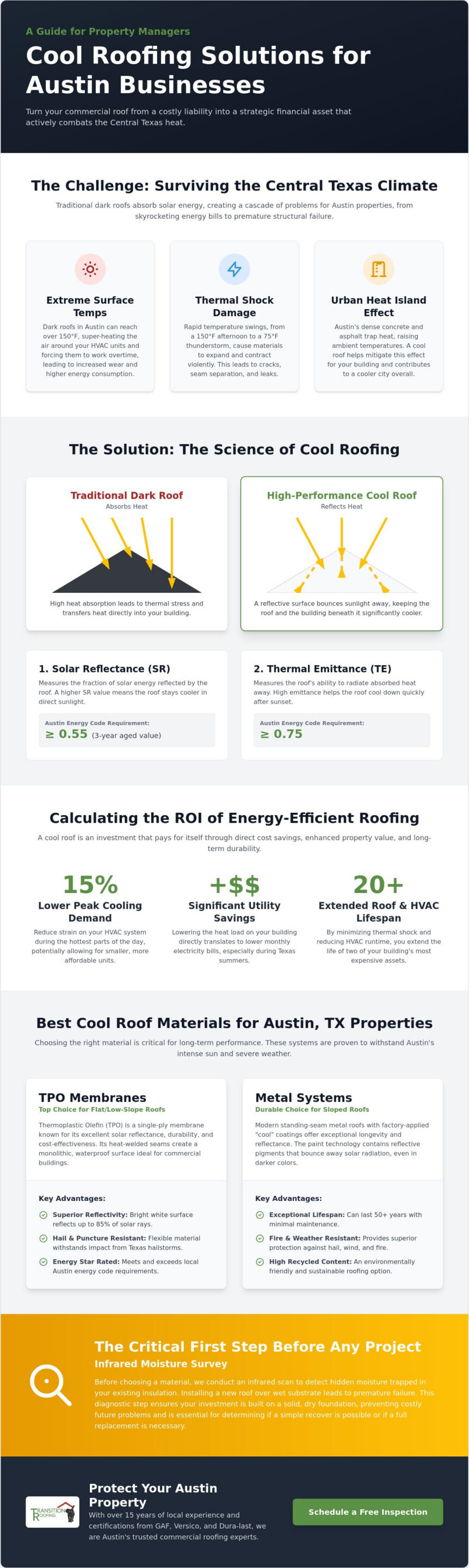
Cool roofing isn’t just a marketing term; it’s a technical standard for materials that actively fight the Texas sun. Unlike traditional dark roofs that soak up solar energy, these systems use high-performance surfaces to bounce sunlight away. To understand the science behind cool roofs, you need to look at two specific ratings: solar reflectance and thermal emittance. Reflectance measures how much light the roof bounces back, while emittance shows how quickly the material sheds any heat it does happen to absorb. For Austin property owners, getting both numbers right is the difference between a cool building and an oven.
In downtown Austin, the Urban Heat Island effect makes this even more critical. All the concrete and asphalt in the city center trap heat, keeping temperatures high even after the sun goes down. This leads to a phenomenon we call thermal shock. In Central Texas, a roof can go from 150 degrees in the afternoon to 75 degrees during a sudden evening thunderstorm. This rapid expansion and contraction causes cracks and seam failures in standard materials. Implementing cool roofing solutions for Austin businesses helps stabilize these temperature swings, protecting the structural integrity of your facility.
To better understand how roofing professionals approach these challenges in our local market, watch this helpful video:
Why Austin TX Commercial Properties Need Reflective Roofing
When the thermometer stays above 100 degrees for weeks at a time, your HVAC system is under constant duress. Standard dark roofs can reach 150 degrees or more, creating a layer of super-heated air right where your rooftop AC units pull in their intake. Reflective roofing lowers this ambient temperature significantly. By reducing the intake air temperature, your AC units don’t have to work as hard to cool the building. This doesn’t just save on electricity; it prevents premature mechanical failure and extends the life of your expensive HVAC equipment.
Local Building Codes and Standards in Austin TX
Austin has some of the most progressive energy conservation codes in the country. The City of Austin Development Services Department requires specific reflectance and emittance ratings for most new commercial construction and major retrofits. For low-slope roofs (2:12 or less), the 2026 standards typically require a 3-year aged solar reflectance of at least 0.55 and a thermal emittance of 0.75. Meeting these local benchmarks isn’t just about compliance; it’s about long-term financial stability. We’ve helped local businesses navigate these requirements for over 15 years, ensuring every commercial roof installation meets or exceeds Austin’s strict energy goals.
The Best Cool Roof Materials for Austin TX Commercial Properties
Selecting the right material for a commercial property in Central Texas requires balancing upfront costs with long-term performance. While many options exist, only a few stand up to the relentless UV exposure and severe weather common in our region. Exploring energy-efficient roofing benefits shows that white or light-colored membranes are the most effective way to reflect solar radiation. For most local facilities, this means choosing between TPO, PVC, or specialized metal systems. Each material offers different advantages depending on your building’s usage and your long-term financial goals.
When evaluating cool roofing solutions for Austin businesses, you must also consider physical durability. Austin is located in a high-risk zone for severe weather. This makes hail resistance a critical concern for any roofing contractor in Austin TX. We recommend materials with high impact ratings to ensure your investment doesn’t vanish during a single spring storm. Working with an experienced flat roofing company Austin ensures that your membrane is installed with the proper thickness and seam strength to handle both heat and hail.
TPO Roofing: The Austin Standard for Efficiency
TPO (Thermoplastic Polyolefin) has become the most popular choice for Austin warehouses and retail centers for good reason. It combines the heat-reflective properties of white membranes with the affordability businesses need. We often install systems from top manufacturers like GAF and Versico because they provide consistent weldability and UV resistance. These single-ply membranes are lightweight, which reduces the load on your building structure while providing a seamless, water-tight barrier that handles thermal expansion better than older asphalt systems.
Metal Roofing: Longevity Meets Reflectivity
Metal systems are a premium option that can last 50 years or more with proper maintenance. While many people worry that metal might get too hot, specialized “cool” pigments now allow even darker colors to reflect a significant portion of solar heat. The durability of metal roofing Austin systems makes them ideal for property owners who want a “one and done” solution. If you’re seeing signs of wear on your current roof, we can take a look and help you determine if a metal upgrade is the right strategic move for your property.
Calculating the ROI of Energy-Efficient Roofing in Austin TX
Investing in cool roofing solutions for Austin businesses delivers a measurable return on investment through lower utility bills and reduced maintenance costs. Scientific data from the Lawrence Berkeley National Laboratory regarding Cool Roof materials proves that these systems can slash peak cooling demand by 10% to 15%. In the Central Texas climate, where air conditioners run nearly year-round, this reduction directly translates to lower monthly overhead. You aren’t just saving on electricity; you’re also protecting your mechanical equipment.
A cooler roof surface significantly benefits your HVAC system. When the roof stays at a lower temperature, your rooftop units don’t have to work as hard to cool the building. This often allows property managers to downsize to smaller, less expensive HVAC units when it’s time for a replacement. Additionally, because reflective materials experience less thermal expansion, the membrane stays stable. This stability leads to fewer leaks and a longer overall lifespan for the entire structure.
Immediate vs. Long-Term Financial Impact
The initial cost for a high-performance system is usually higher than a standard roof, but the payback period in Texas is typically five to seven years. We use “contractor logic” here: spending more on a quality membrane today prevents the need for frequent austin roof repair caused by heat damage. You can also offset your initial investment with local incentives:
- Austin Energy Reflective Coating Rebate: $0.25 per square foot for spray-on or paint-on coatings.
- Austin Energy Insulation Rebate: $1.00 per square foot for new energy-saving roof insulation.
Impact on Property Value
For commercial real estate investors, energy-efficient upgrades improve CAP rates by lowering operating expenses. A building that costs less to run is naturally more valuable on the open market. Furthermore, high-quality tenants in Austin increasingly prioritize “Green” buildings to meet their corporate sustainability goals. Upgrading your roof makes your property more competitive and helps you secure long-term leases with premium tenants. If you’re ready to see how these savings apply to your specific building, schedule a professional roof evaluation today.
Selecting and Maintaining Your New Cool Roof in Austin TX
Implementing cool roofing solutions for Austin businesses requires a methodical approach to ensure your investment pays off. You shouldn’t jump straight into a full replacement without first understanding the current state of your structure. We follow a specific four step process to move your building from a state of heat vulnerability to total security.
- Step 1: Infrared Moisture Survey. We use thermal imaging to find trapped water under your existing membrane. If your insulation is dry, we can often perform a “recover” by adding a new cool roof over the old one, which saves you thousands in labor and disposal fees.
- Step 2: Material Matching. Your choice depends on your building’s environment. While TPO is a standard for many, a restaurant with grease vents might require PVC for chemical resistance. We also evaluate the slope to ensure proper drainage in the Central Texas climate.
- Step 3: Certified Installation. Hire a commercial roofing Austin contractor with certifications from GAF, Versico, or Dura-last. This ensures your warranty is valid and the heat-welded seams are permanent.
- Step 4: Routine Maintenance. A bi-annual plan is the best way to catch small issues before they become expensive leaks.
The Critical Role of Cleanliness
A cool roof only works if it stays white or light-colored. Dust, soot, and debris accumulation can reduce a roof’s reflectance by 30% or more within just a few years. When the surface gets dirty, it starts absorbing heat again, which drives your cooling costs back up. We recommend a professional cleaning as part of a preventative maintenance program. Keeping the surface bright ensures you continue to get the energy savings you paid for.
When to Repair vs. Replace
Deciding when to act is a matter of “contractor logic.” If your roof is under 15 years old and has a single isolated leak, a professional repair is usually the right choice. However, it’s time for a professional inspection if you notice any of these signs:
- Your energy bills have been rising steadily over the last three summers.
- You’re dealing with leaks in multiple locations after every Austin storm.
- The existing membrane shows signs of “alligatoring” or significant seam separation.
- An infrared scan shows more than 20% of your insulation is saturated.
If you’re dealing with high cooling costs or a roof that’s showing its age, we can take a look and give you a clear plan. Schedule a roof inspection in Austin today to protect your property for the long term.
Secure Your Building’s Future with High-Performance Roofing
Choosing the right roof is a decision that impacts your operational costs for decades. We have covered how reflective membranes and specialized metal coatings don’t just lower your cooling bills; they protect your structure from the damaging effects of thermal shock and UV exposure. Implementing cool roofing solutions for Austin businesses is a proven strategy to improve your property’s value while ensuring compliance with local energy standards. By prioritizing routine maintenance and choosing durable materials like TPO or metal, you move your building from a state of vulnerability to one of total security.
Our team brings over 15 years of Central Texas expertise to every project. We are certified installers for industry leaders like GAF, Certainteed, and Versico, and we specialize in high-efficiency systems designed for our local climate. We focus on quality craftsmanship and long-term protection so you can focus on running your business without the stress of roof failures. If you’re seeing rising energy bills or signs of wear, we can help you find a reliable solution. Schedule a free commercial cool roof assessment in Austin today. We look forward to helping you protect your commercial investment.
Frequently Asked Questions
How much can an Austin business actually save with a cool roof?
Austin businesses typically see a 10% to 15% reduction in peak cooling demand after upgrading. This leads to immediate monthly savings on utility bills during our hot summers. Beyond electricity costs, a cooler roof reduces the strain on your HVAC equipment. Since the units pull in cooler air from the roof surface, they run more efficiently and experience fewer mechanical breakdowns. This lowers your total operational costs over the life of the system.
Can I apply a cool roof coating to my existing commercial roof?
You can often apply reflective coatings to an existing roof if the structure is in good condition. We perform an infrared moisture survey first to confirm the insulation is dry. If the roof is sound, applying a coating is a smart way to integrate cool roofing solutions for Austin businesses without a full replacement. This process seals leaks and adds a high-reflectance layer that can extend your roof’s service life by a decade.
Are cool roofs more susceptible to hail damage in Central Texas?
Cool roofs are not more susceptible to hail; they are actually designed for durability in the Central Texas climate. High-quality membranes like TPO and PVC are flexible enough to handle the rapid temperature changes we see in Austin. We suggest using Class 4 impact-rated materials to ensure your property is protected during severe weather. With over 15 years of local experience, we know which specific systems hold up best against our regional hail threats.
What is the lifespan of a TPO cool roof in the Austin climate?
A TPO system usually lasts 20 to 30 years when installed correctly in the Austin area. The durability depends on the membrane thickness and the precision of the heat-welded seams. We use certified installers for top brands like GAF and Versico to ensure the installation meets strict manufacturer standards. Regular maintenance is essential to reach this lifespan. Keeping the surface clean prevents the material from absorbing UV rays that lead to premature aging and cracks.
Is a white roof required by law for commercial buildings in Austin?
Most new commercial buildings and major roof replacements in Austin must meet specific energy conservation codes. For low-slope roofs, the city requires a minimum aged solar reflectance of 0.55 and a thermal emittance of 0.75. While white membranes are the standard choice, some light gray or tan options also meet these requirements. We stay up to date on all local 2026 building codes to make sure your project is fully compliant and eligible for rebates.