In the Austin commercial market, the lowest bid on a roofing project is often the most expensive mistake a property manager can make over a ten-year period. You’ve likely felt the pressure of balancing a budget while worrying about how a single Central Texas hailstorm could compromise your entire building. It’s a heavy burden to navigate complex insurance claims while wondering if your chosen material, like TPO or metal, can actually survive the 105-degree heat.
Knowing how to choose a commercial roofer in Austin is about finding a partner who understands the 2024 building code updates and prioritizes long-term durability over a quick transaction. This guide provides the exact criteria you need to vet contractors, avoid predatory storm chasers, and select a roof system built for our specific climate. We’ll walk through the verification of local credentials and the technical requirements to move your structure from a state of vulnerability to one of total security.
Key Takeaways
- Learn why a physical Austin office and local history are the only ways to avoid “storm chasers” and ensure long-term support.
- Understand why TPO roofing is the preferred choice for the Central Texas climate to combat extreme heat and UV degradation.
- Follow a proven 5-step framework on how to choose a commercial roofer in Austin by verifying insurance and recent local project references.
- Discover how manufacturer certifications from brands like GAF and Versico secure your warranty and guarantee professional installation standards.
Why Local Expertise Matters for Commercial Roofing in Austin, TX
Choosing a contractor in Central Texas requires looking past a fancy website or a low bid. A true local expert maintains a physical office in the city and has a long-term regional history. This matters because Austin presents unique stressors that out-of-state crews often overlook. For instance, the intense Central Texas sun causes rapid UV degradation on low-quality flat roofs, turning a pliable membrane into a brittle liability in just a few years. Understanding these nuances is a core part of how to choose a commercial roofer in Austin.
Our weather doesn’t just bake; it pours. Austin’s flash-flood patterns put immense pressure on commercial drainage systems. If your contractor doesn’t understand the specific scupper and drain requirements for local rainfall rates, your building is at risk of structural water damage. After a major hail event, “storm chasers” often flood the market. They offer low prices but lack the local accountability needed when a leak appears six months later. Working with a neighborly expert ensures your warranty actually carries weight when you need it.
To better understand this concept, watch this helpful video:
The Austin, TX Climate Challenge: Heat and Hail
We regularly see 100-degree days that force roofing materials to expand and contract aggressively. This thermal cycling can pull apart seams on poorly installed TPO or modified bitumen systems. It’s why we emphasize “hail-rated” materials that meet high impact standards. Understanding these roofing materials and design choices is the first step in protecting your asset. For more detail on local standards, see our guide on an Expert Roofing Contractor in Austin, TX.
Understanding Austin Building Codes and Compliance
The City of Austin has adopted the 2024 Technical Building Codes, which introduce strict energy efficiency requirements for commercial structures. A contractor who doesn’t know how to choose a commercial roofer in Austin might miss these local amendments, leading to failed inspections. Proper permitting through the Austin Build + Connect portal is not optional; it’s a safeguard for your property’s legal and structural integrity. A local expert handles these filings correctly to avoid expensive project delays.
Technical Credentials and Material Specialization for Austin, TX Businesses
General contractors are helpful for broad projects; however, they often lack the specialized equipment and crew training required for complex commercial systems. When you’re looking at how to choose a commercial roofer in Austin, you need a specialist who understands high-performance membranes. A specialized commercial roofer focuses on heat-welded seams and heavy-duty flashing rather than just standard shingle work. This expertise prevents the small installation errors that lead to massive leaks during a Central Texas storm.
Manufacturer Certifications: Versico, GAF, and Beyond
Manufacturer certifications from leaders like Versico, GAF, and CertainTeed are the backbone of a secure investment. These credentials are proof that the contractor has undergone rigorous training and is authorized to offer NDL (No Dollar Limit) warranties. Without these, your warranty might only cover materials. This leaves you to pay the high labor costs for any future repairs out of pocket. Transition Roofing maintains master-level status for GAF and CertainTeed commercial projects. We use high-quality TPO and Metal systems that meet strict factory standards. If you’re concerned about your current coverage, we can review your documentation to ensure you’re fully protected.
Selecting the Right Material for Your Austin Flat Roof
The ideal material for your building depends on the existing deck structure and the building’s specific use. For example, a restaurant with heavy grease exhaust requires a PVC membrane to prevent surface melting. In contrast, a standard warehouse thrives with a TPO system. TPO is the standard for the Central Texas climate because its white surface reflects UV rays and lowers cooling costs. Metal roofing remains a durable, long-term alternative for industrial structures that need a 40 to 50-year lifespan. As a specialized flat roofing company in Austin, we evaluate every factor before making a recommendation. We help you balance the upfront costs against the long-term performance of each system.
How to Choose a Commercial Roofer in Austin: A 5-Step Framework
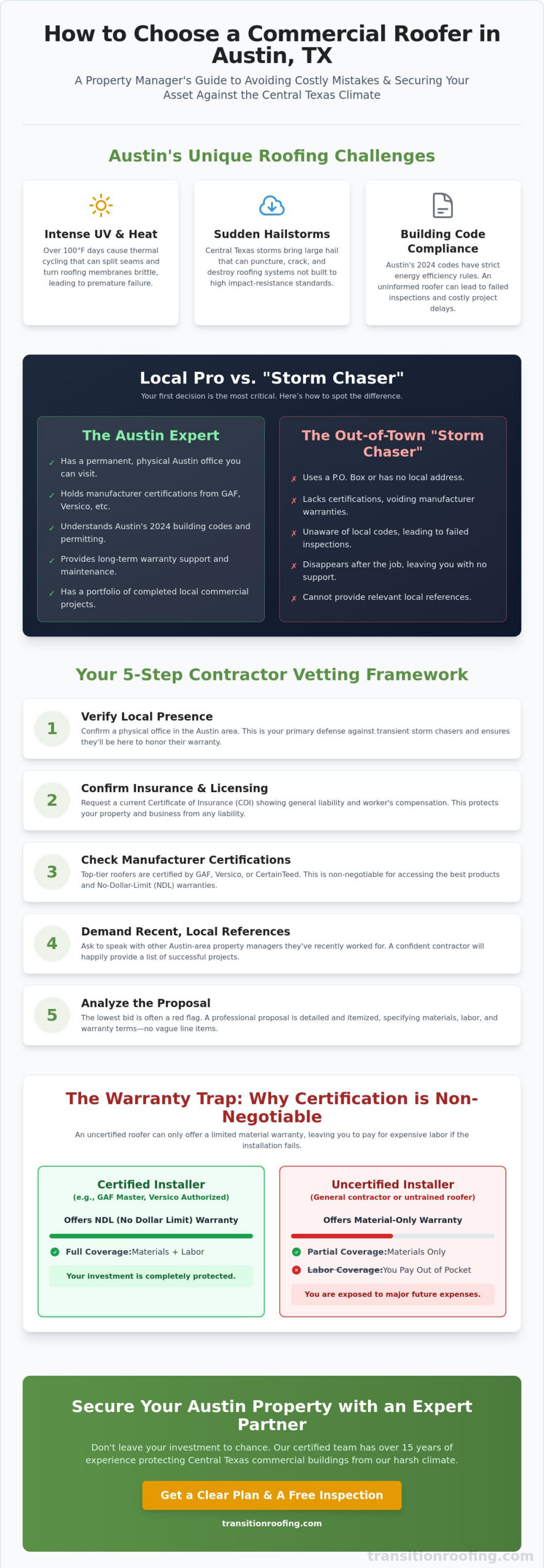
Vetting a contractor is a form of risk management for your property. Learning how to choose a commercial roofer in Austin means moving beyond a simple online search and looking at the operational health of the business. Use this five step framework to ensure you’re hiring a professional who will be here for the next twenty years.
- Step 1: Verify Local Physical Presence. Ask for a local office address and at least three Austin area references from projects completed within the last 5 years.
- Step 2: Review Insurance Coverage. Confirm they carry both General Liability and Workers’ Comp. Since Texas lacks statewide licensing, these policies are your primary protection against lawsuits.
- Step 3: Analyze Safety Records. Ask for their Experience Modifier Rate (EMR). A rating below 1.0 indicates a contractor who prioritizes site safety and has fewer accidents.
- Step 4: Demand Detail in Estimates. Avoid any bid that provides a single lump sum. A professional estimate should break down material costs, labor, and specific flashing details.
- Step 5: Confirm Insurance Claim Expertise. Your contractor should understand the specific documentation requirements for Texas commercial claims to ensure your roof is restored to pre-storm condition.
If you need a detailed evaluation of your property based on these standards, schedule a professional roof inspection today.
How to Spot Red Flags in a Commercial Bid
An unusually low bid is often a sign that a contractor is using sub-standard materials or lacks proper insurance. Watch out for high pressure tactics or requests for large upfront cash payments. A professional roofer in Austin, TX should always provide a detailed written scope of work. If they can’t explain the technical “why” behind their material choice, they likely lack the 15 plus years of experience required for complex commercial work.
The Role of Insurance Claim Assistance
After a hail event, your roofer should act as a technical guide rather than just a salesperson. They should attend the adjustment meeting to point out subtle damage that an adjuster might miss. This ensures the scope of work covers everything from the membrane to the underlying deck. For more information on navigating the aftermath of a storm, see our guide on Austin Roof Repair. This advocacy is a critical part of the service when you’re deciding how to choose a commercial roofer in Austin.
Securing Your Investment with Transition Roofing in Austin, TX
Transition Roofing brings over 15 years of local experience to every project in Central Texas. We understand that property managers need more than just a quick fix; they need a partner who values integrity and long-term protection. Our transparent estimates ensure you see exactly where your budget goes, from material grades to labor hours. We specialize in TPO and metal systems engineered to withstand the relentless Central Texas sun. This local focus is a key factor in how to choose a commercial roofer in Austin who can deliver a roof that lasts decades rather than just a few seasons.
Preventative Maintenance: The Secret to Roof Longevity
Small issues on a flat roof often stay hidden until they cause massive interior damage. Bi-annual inspections identify these vulnerabilities, such as clogged drains or failing seams, before they escalate into expensive repairs. Documented maintenance is a strict requirement for most commercial roof warranties. Manufacturers expect you to take reasonable care of the system to keep the warranty in force. Without a service history, a manufacturer might deny a claim for a premature failure. Our preventative maintenance programs provide the paper trail you need to keep your coverage valid and your tenants safe.
Get a Clear Plan for Your Austin Commercial Roof
If you’re seeing ponding water after a storm or suspect hail damage from a recent event, we can take a look and provide a clear plan. Quality craftsmanship is the only way to ensure your asset remains secure for 20 plus years. We believe in moving your structure from a state of vulnerability to one of total security. When you are deciding how to choose a commercial roofer in Austin, look for a team that prioritizes long-term satisfaction over a one-time transaction. Schedule a commercial roof inspection in Austin today to partner with a local authority you can trust.
Protecting Your Commercial Asset for the Next Two Decades
Securing a commercial building in Central Texas requires a proactive approach to maintenance and a deep understanding of local environmental stressors. We’ve discussed the importance of verifying physical local offices and checking for master-level certifications from manufacturers like GAF, CertainTeed, and Versico. These credentials are the only way to ensure your property is protected by a valid NDL warranty. Understanding how to choose a commercial roofer in Austin is ultimately about finding a partner who prioritizes your long-term ROI over a quick installation. A well-vetted contractor prevents the high cost of premature roof failure and the stress of navigating complex insurance claims alone.
Transition Roofing brings over 15 years of Central Texas expertise to every project. We specialize in high-efficiency TPO and Metal systems designed to handle the extreme heat and unpredictable hail of our region. If you’re dealing with a recurring leak or need a clear plan for a full replacement, we’re ready to provide a transparent estimate. Schedule your professional commercial roof inspection in Austin today to ensure your structure moves from a state of vulnerability to one of total security. You deserve the peace of mind that comes from knowing your roof was built by neighborly experts who value quality craftsmanship.
Frequently Asked Questions
How much does a commercial roof replacement cost in Austin, TX?
The cost of a commercial roof replacement is determined by the total square footage, the material selected, and the complexity of your building’s structure. Factors like the number of HVAC units and the height of the building also influence the final investment. Every project is unique; however, the Austin market typically sees higher costs than the state average due to local labor demand and strict code compliance. We provide detailed, transparent estimates so you understand every line item before the work begins.
What is the best roofing material for flat roofs in the Austin heat?
TPO (Thermoplastic Polyolefin) is the most effective choice for flat roofs in the Austin heat because of its high solar reflectance. This “cool roof” technology reflects UV rays away from the building, which keeps internal temperatures lower and reduces energy bills. Metal roofing is another excellent, durable alternative for industrial buildings. It provides a longer lifespan and withstands the aggressive thermal expansion common in the Central Texas climate.
How long does a commercial TPO roof last in Central Texas?
A professionally installed TPO roof typically lasts between 15 and 25 years in Central Texas. This lifespan depends heavily on the quality of the initial heat-welded seams and your commitment to a preventative maintenance program. Without regular inspections, the intense sun and sudden hailstorms can cause minor issues to escalate. We recommend bi-annual checks to ensure the membrane remains flexible and secure against the elements.
Do I need a permit for commercial roof repair in Austin?
The City of Austin requires a roofing permit for all commercial roof replacements and major structural repairs. Any work initiated after July 10, 2025, must comply with the 2024 Technical Building Codes and local energy efficiency amendments. We handle the entire permitting process through the city’s Build + Connect portal. This ensures your project is legally compliant and meets the latest safety standards for commercial properties.
Can a commercial roofer help with my insurance claim after a hail storm?
A qualified contractor acts as your technical advocate by documenting every point of hail impact and meeting with the insurance adjuster on-site. They provide the detailed evidence needed to ensure the adjuster’s scope of work covers all necessary repairs or a full replacement. This advocacy is a vital factor in how to choose a commercial roofer in Austin. You want a partner who understands the documentation required to move your claim forward without unnecessary delays.