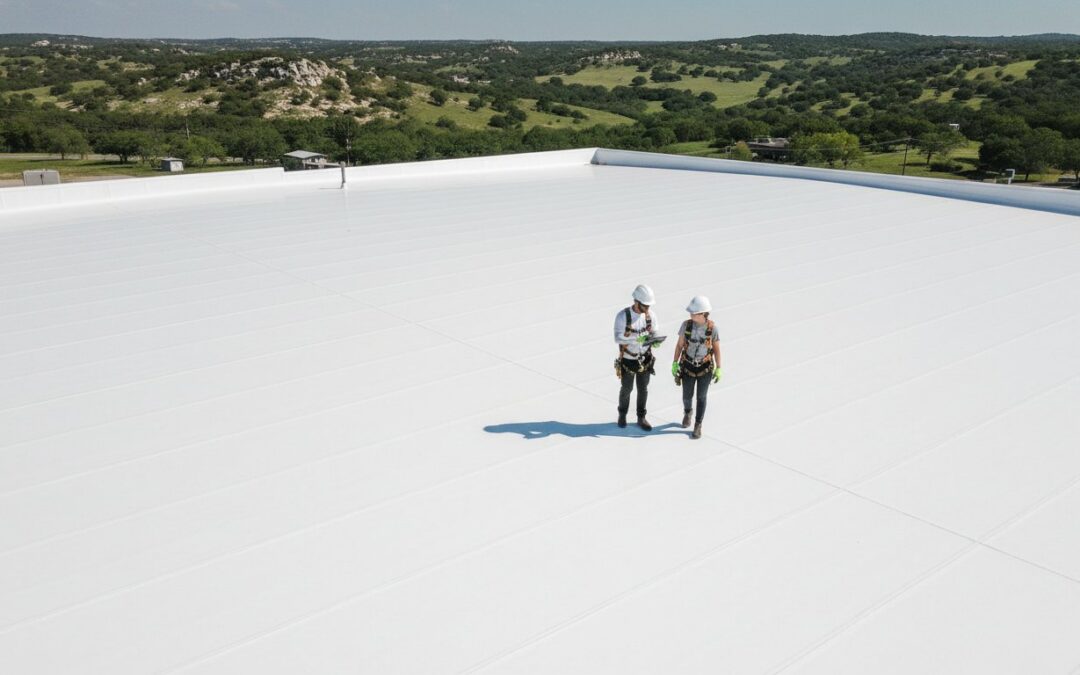
Did you know that your building’s roof could be responsible for up to 30 percent of your total cooling costs during a Central Texas summer? As a property manager, you know that the relentless heat and sudden hail storms are more than just a nuisance. They are a direct threat to your bottom line and your tenants’ comfort. Managing ponding water and rising utility bills can make building maintenance feel like a constant struggle. You need a roof that works as hard as you do.
We’re here to show you how to move your structure from a state of vulnerability to one of total security. This guide explains why a professional TPO roof installation in Bee Cave is the leading choice for local commercial properties. You’ll learn how to ensure a leak-free, energy-efficient installation that can last 20 years or more. We will cover the specific installation methods that prevent seam failure and how to navigate current building codes. This is your roadmap to achieving a high-quality result without business disruption.
Key Takeaways
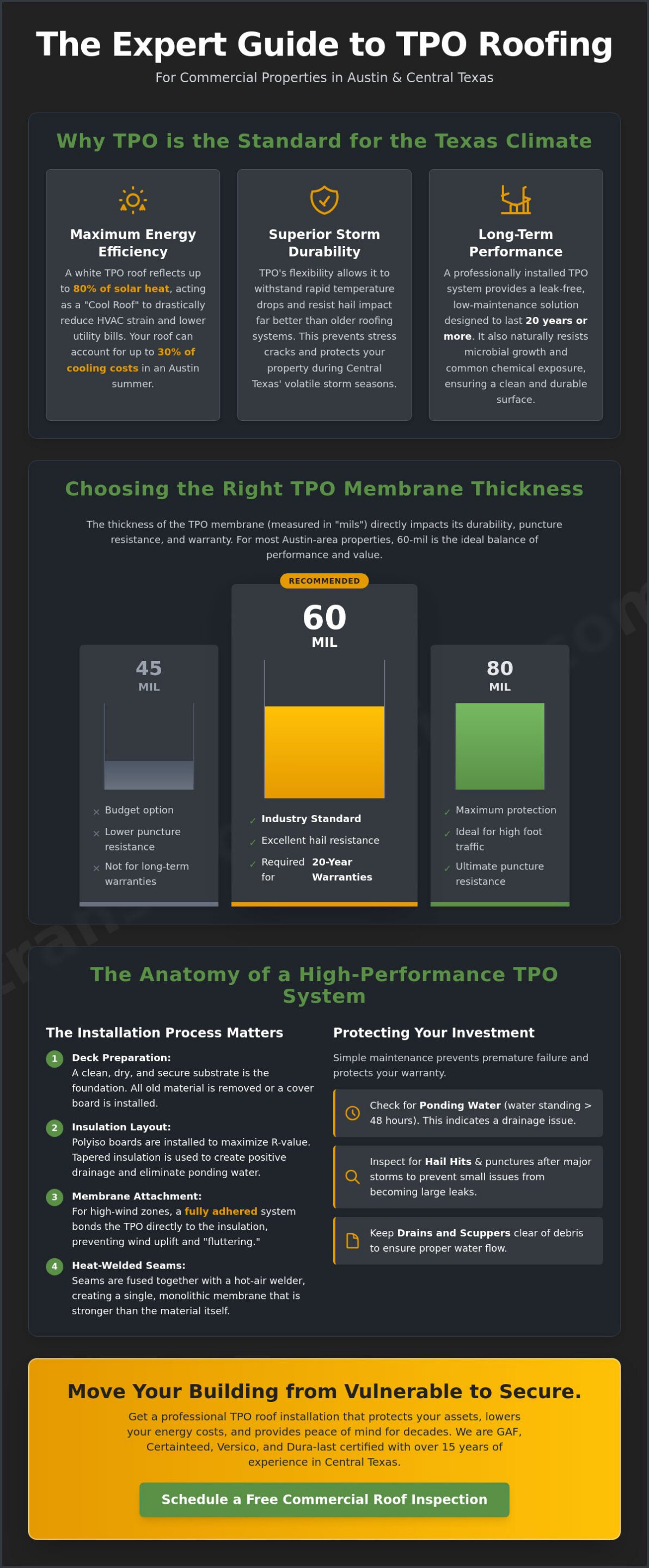
- Learn how TPO’s high UV reflectivity can reduce your building’s cooling loads and lower energy bills in the intense Central Texas heat.
- Discover why a 60-mil membrane is the preferred thickness for a durable TPO roof installation in Bee Cave and how it affects your long-term warranty.
- Understand the precision layout and deck preparation steps required to ensure a leak-free surface that protects your assets for two decades.
- Identify the critical maintenance habits, such as clearing ponding water and inspecting for hail hits, that prevent premature roof failure.
- See how moving from a vulnerable flat roof to a secure TPO system provides peace of mind for property managers and business owners alike.
Why TPO Roofing is the Standard for Bee Cave and Austin TX Properties
Bee Cave commercial roofs face a constant battle against the relentless Texas sun. Thermoplastic Polyolefin (TPO) is a single-ply, heat-reflective membrane that has become the preferred solution for modern flat and low-slope buildings. When we perform a TPO roof installation Bee Cave property managers often choose it because it combines the best traits of EPDM and PVC roofing. It’s durable, flexible, and naturally resists microbial growth and common chemical exposure.
The bright white surface of this material isn’t just for looks. It’s a strategic choice for the Austin TX climate. This high UV reflectivity bounces solar radiation away from the building rather than absorbing it into the structure. For a warehouse or retail center in Bee Cave, this simple material choice can transform a vulnerable building into a secure, energy-efficient asset. If you’re managing flat roofing systems in Austin, TX, TPO is often the most logical path forward.
The Energy Efficiency Factor in Bee Cave
TPO significantly lowers the internal temperature of industrial and retail spaces by reflecting up to 80 percent of solar heat. This reduces the “peak load” on your HVAC systems during the brutal months of July and August. When your units don’t have to cycle as frequently, you extend their operational lifespan and lower your monthly utility bills. A white TPO “Cool Roof” acts as a thermal barrier that keeps your cooling costs predictable even when the temperature hits triple digits.
Durability Against Central Texas Storms
Our local weather is notoriously unpredictable. Central Texas is famous for “Blue Northers” where the temperature can drop 40 degrees in a few hours. TPO remains flexible during these rapid swings, which prevents the stress cracks that often plague older, more brittle systems. It also offers superior resistance to hail impact compared to traditional built-up roofing or gravel-surfaced roofs. This durability ensures your property remains protected during our volatile spring storm seasons.
Selecting Your TPO System: Thickness and Insulation in Austin TX
Choosing the right components for your TPO roof installation Bee Cave project is about balancing upfront costs with long-term protection. TPO membranes typically come in three standard thicknesses: 45 mil, 60 mil, and 80 mil. While 45 mil is the budget-friendly option, many university guidelines for TPO roofing suggest that thicker membranes offer significantly better puncture resistance and seam strength. In our experience, the extra material is a small price to pay for the added security against Texas storms.
Membrane Thickness and Lifespan
For most commercial properties in Bee Cave, a 60-mil membrane is the standard “sweet spot.” It provides the durability needed to handle Central Texas hail while remaining cost-effective. Most manufacturers actually require at least a 60-mil thickness to qualify for a full 20-year warranty. If your building has high foot traffic or heavy HVAC equipment on the roof, upgrading to 80 mil adds a critical layer of protection against accidental damage.
How the membrane stays on the building is just as important as the material itself. In high-wind areas near the Hill Country, we often recommend a fully adhered system. This method bonds the membrane to the insulation board with specialized adhesive. It eliminates the “fluttering” effect seen in mechanically attached systems during high-wind events. If you want to see how these systems look in practice, you can check out our commercial roofing services in Austin.
Insulation R-Values for Maximum ROI
The insulation layer, usually Polyisocyanurate (Polyiso), is where you see the real return on investment. In the Austin TX climate, the goal is to maximize the R-value to keep heat out and your cooling costs down. We also use tapered insulation to create artificial slopes on perfectly flat decks. This ensures that water flows toward scuppers and drains rather than sitting in pools. If you’re seeing water hang around for more than 48 hours after a rain, it’s usually a sign that your insulation layout needs an upgrade.
The TPO Roof Installation Process in Bee Cave and Austin TX
Execution is everything. A professional TPO roof installation Bee Cave project follows a strict sequence to ensure 20 years of performance. We start with a total tear-off or a thorough cleaning of the existing deck. Removing old debris isn’t just about cleanliness; it allows us to inspect the substrate for structural integrity. Once the deck is ready, we install the Polyiso insulation boards and cover boards using the precision layout required for proper drainage. The membrane is then unrolled and allowed to “relax” to prevent wrinkles before we secure it to the building.
The Critical Role of Heat-Welded Seams
Seams are the most common point of failure on any flat roof. We use robotic heat-welders to create a monolithic bond that’s actually stronger than the membrane itself. These machines maintain a consistent temperature and speed that hand-welding simply can’t match. We follow the Best Practices for…Thermoplastic Roofing Systems by physically probing every inch of the seam once it cools. This “contractor logic” ensures that your roof is watertight before we leave the site. Our teams are certified by industry leaders like GAF and Versico to meet these high-performance standards.
Logistics for Bee Cave Businesses
Finally, our technicians focus on the detail work. We custom-fit flashings around HVAC curbs, vents, and pipes. These penetrations are the most likely spots for leaks, so we treat them with extra care and reinforced membrane. We understand that a roofing project can be a major distraction. If your property is near high-traffic hubs like the Hill Country Galleria, we manage the logistics to minimize impact on your tenants. We coordinate material deliveries during off-peak hours and maintain strict safety perimeters. You can learn more about our flat roofing expertise and how we handle complex commercial environments.
If you’re planning a major project, we can provide a detailed timeline to keep your business running smoothly. Schedule a professional roof inspection in Austin today to get started on your plan.
Protecting Your TPO Investment in the Austin TX Climate
A high-quality TPO roof installation Bee Cave is a significant investment that deserves proactive care. While TPO is incredibly durable, ponding water remains its primary enemy. In the Central Texas climate, heavy downpours can quickly overwhelm clogged scuppers and drains. If water sits on your membrane for more than 48 hours, it puts unnecessary stress on the heat-welded seams and can lead to premature degradation. We recommend a quick walk-through after every major storm to ensure your drainage system is clear of leaves and debris.
Hail is another reality for property managers in Bee Cave. While TPO resists punctures well, large hail can still cause “bruising” that compromises the membrane’s integrity over time. Documenting these events is critical for insurance compliance. Maintaining a consistent log of professional inspections makes the claims process much smoother if you ever face significant damage. For more details on navigating the aftermath of a storm, see our guide on how to handle storm recovery in Austin.
Identifying Early Warning Signs
Catching a small issue early prevents a total building shutdown later. You should look for “bridging,” which is when the membrane pulls away from the wall flashings and creates a tent-like gap. You might also notice small gaps in the seams or “alligatoring” on older sections of the roof. Whether you need a simple patch or a full section replacement depends on the age of the membrane and if the underlying insulation has absorbed moisture. If the insulation is dry, a targeted repair is often a viable, cost-effective solution.
The Transition Roofing Advantage
We bring over 15 years of experience to every commercial project in Central Texas. Our team holds certifications from industry leaders like GAF, Certainteed, and Versico, ensuring your TPO roof installation Bee Cave meets the highest manufacturer standards. We don’t believe in high-pressure sales. Instead, we provide transparent estimates and grounded, contractor-led advice that prioritizes the long-term protection of your asset. We are your neighbors, and we are committed to maintaining the high standards our community expects.
If you are concerned about ponding water or recent hail hits, we can take a look and give you a clear plan. Schedule a professional TPO roof inspection in Bee Cave today.
Securing Your Property’s Future with TPO
Transitioning your commercial building from a state of vulnerability to one of total security starts with choosing the right material and the right partner. A high-quality TPO roof installation Bee Cave project is the most effective way to manage rising energy bills and prevent costly interior damage from Central Texas storms. By selecting a 60-mil membrane and ensuring precision heat-welded seams, you’re investing in a system that can reliably protect your assets for two decades or more.
With over 15 years of Central Texas expertise, we understand the specific environmental stressors that challenge local businesses. Our teams are certified GAF and Versico installers who specialize in commercial leak mitigation. We prioritize quality craftsmanship and community trust to ensure your project is completed without business disruption. If you’re dealing with ponding water or want to verify your current roof’s health, we can provide a clear, professional plan. Schedule a free TPO roof inspection for your Bee Cave property today. We’re ready to help you protect your investment with confidence.
Common Questions About TPO Roofing in Bee Cave
How long does a TPO roof last in Bee Cave, TX?
A properly maintained TPO roof typically lasts between 20 and 30 years in our Central Texas climate. The actual lifespan depends on the thickness of the membrane and the quality of the initial installation. Most manufacturers require a 60-mil membrane to qualify for a 20-year warranty. Regular inspections to clear debris and check seams will ensure you get the maximum value from your investment.
Is TPO better than a metal roof for commercial buildings in Austin?
TPO is generally the superior choice for flat or low-slope commercial buildings because it is more cost-effective and energy-efficient than metal. While metal roofs last longer on sloped structures, they are more expensive and can be prone to leaks at the fasteners on flat surfaces. TPO provides a seamless, monolithic barrier that handles ponding water much better than metal panels on Austin area warehouses and retail centers.
Can a TPO roof be repaired if it gets damaged by hail?
Yes, a TPO roof can be repaired using heat-welded patches if it sustains hail damage. Because the material is thermoplastic, a technician can fuse a new piece of membrane over the damaged area to restore its watertight integrity. It is much easier to repair than older asphalt-based systems. If the hail is large enough to fracture the underlying insulation, we may recommend a more extensive section replacement to maintain structural stability.
What is the best color for a TPO roof in Central Texas?
White is the best color for a TPO roof installation Bee Cave because of its high solar reflectivity. White membranes reflect up to 80 percent of UV rays, which keeps the building significantly cooler and reduces peak cooling loads. While grey and tan options are available for specific aesthetic needs, they absorb more heat and don’t offer the same utility bill savings as the standard white reflective surface.
Does a TPO roof installation require a building permit in Bee Cave?
Yes, the City of Bee Cave requires a building permit for all roof replacements and new installations. This ensures the work meets the 2024 International Building Code and local energy conservation standards. Your contractor should handle the permitting process and coordinate the final inspection to verify the system is installed correctly. This step is vital for maintaining your property’s legal compliance and insurance eligibility.