
In Austin, a traditional asphalt roof is often a ticking clock that runs out every 15 years because of relentless UV rays and golf-ball-sized hail. If you’re tired of the constant cycle of repairs and insurance claims, you’re likely asking how long do metal roofs last in our Central Texas climate. While standard shingles bake and become brittle under the summer sun, a metal system acts as a structural shield designed to stay secure for decades.
We know the stress that builds up with every storm warning in Travis County. You deserve a roof that provides total security without the need for constant maintenance. This guide explains how a metal roof can offer 40 to 70 years of protection, even when facing 140 mph winds. We’ll break down the durability of these systems and show you how to maximize your investment so you can finally stop worrying about your next roof replacement.
Key Takeaways
- See why a metal system provides 40 to 70 years of protection, far outlasting shingles that often fail after 15 years in the Austin heat.
- Learn exactly how long do metal roofs last when you choose durable 24-gauge steel and specialized coatings designed for the Texas sun.
- Discover how regular inspections after major Central Texas hail events can prevent minor issues from becoming expensive structural problems.
- Recognize the specific signs of age, such as panel fatigue and edge corrosion, so you know exactly when it is time for a replacement.
Understanding How Long Do Metal Roofs Last in Austin, TX
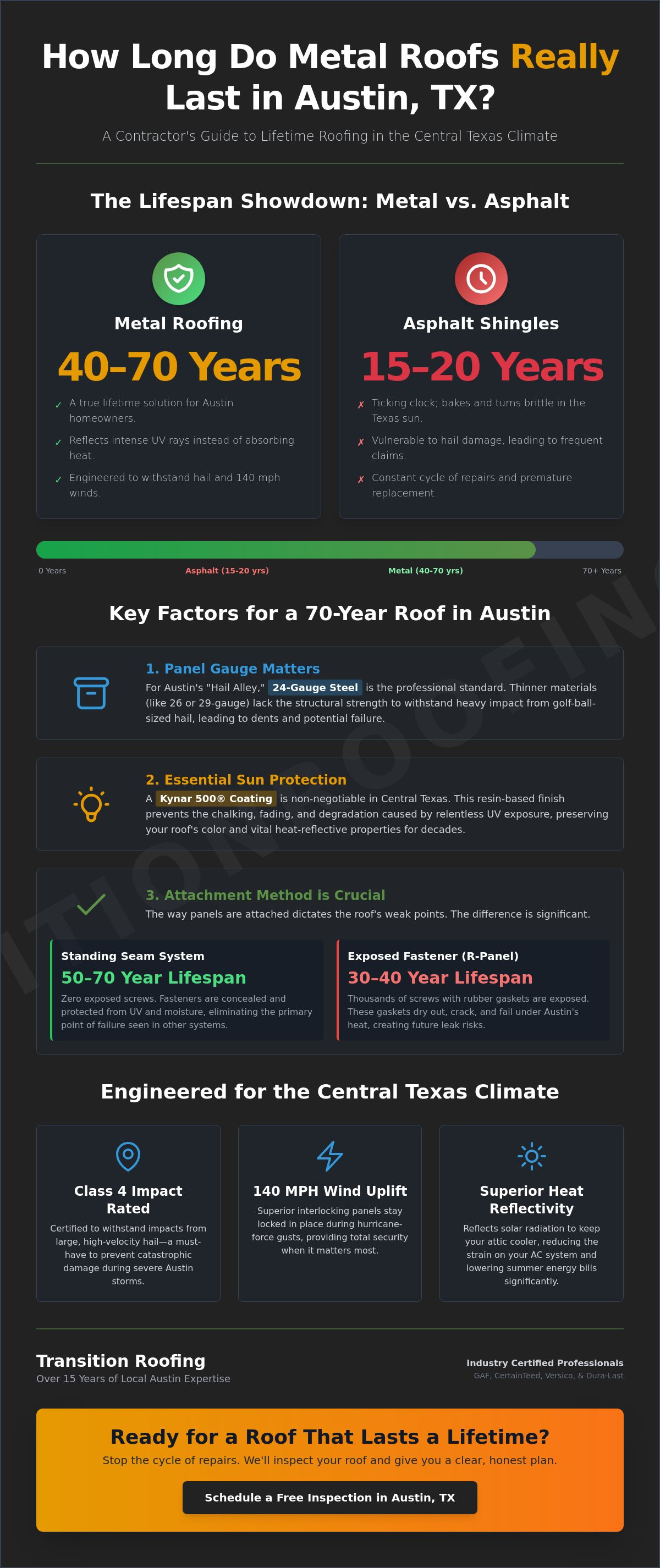
In the Central Texas climate, a high-quality metal roof typically lasts between 40 and 70 years. We’ve spent over 15 years observing how different materials handle the brutal Austin sun and sudden storm surges. For most property owners, this makes metal a true lifetime solution that provides long-term security and peace of mind. When homeowners ask how long do metal roofs last, they are usually comparing them to traditional asphalt shingles. In Austin, those shingles frequently fail after just 15 to 20 years because of extreme heat exposure. The difference in longevity comes down to how the material interacts with our specific environment. Our team has installed thousands of squares across the region, and we consistently see metal outperforming every other residential option.
To better understand how different materials hold up over time, watch this helpful video:
Why Metal Outlasts Asphalt in the Central Texas Heat
The primary enemy of any roof in Travis County is the intense heat and UV radiation. A Metal roof is engineered to handle 100-degree temperature swings without the structural failure we see in other materials. Shingles are petroleum-based, which means they eventually dry out and become brittle under constant exposure. Metal doesn’t have this vulnerability. It maintains its integrity for decades because it reflects heat rather than absorbing it. This thermal efficiency protects the underlying structure and prevents the attic from reaching dangerous temperatures that damage your home’s framing.
Metal panels use specialized fastening systems to manage thermal expansion and contraction. This allows the roof to breathe as it heats up during the day and cools at night. This flexibility prevents the cracking and warping that leads to leaks in older shingle systems. You can learn more about these differences in our Metal vs. Asphalt Roofing: A Comparison guide. Choosing a material that can withstand these cycles is the best way to ensure your property remains dry and secure for the next half-century.
Factors That Influence Metal Roof Durability in Austin, TX
A metal roof is a major investment, and its performance in Central Texas depends on specific technical choices. In our experience, 24-gauge steel is the standard for durability in Austin, TX. Thinner materials might seem like a bargain, but they lack the structural strength to withstand the heavy hail common in “Hail Alley.” We also prioritize Kynar 500 coatings. This resin-based finish is essential for preventing the chalking and fading that the Texas sun causes on lower-grade paints. According to the Metal Roofing Alliance (MRA), these high-performance coatings are vital for maintaining the reflective properties that lower your energy bills. The answer to how long do metal roofs last often depends on these technical specs.
Standing Seam vs. Exposed Fasteners
The method used to attach the panels significantly impacts how long do metal roofs last. Standing seam systems are the gold standard for 50 to 70 year lifespans because they feature zero exposed screws. The fasteners are hidden beneath the metal, protecting them from the elements. Conversely, exposed fastener systems like R-Panel are a 30 to 40 year solution. These systems use thousands of screws with rubber gaskets that eventually dry out and crack in the heat. If you’re seeing signs of wear on an older system, we can look at your roof and give you a clear plan for maintenance or replacement.
The Impact of Central Texas Storms and Hail
Austin storms are some of the most aggressive in the country. To ensure a lifetime of protection, we recommend systems with a Class 4 impact resistance rating. These roofs are engineered to survive high-velocity hail that destroys traditional materials. Metal also provides superior wind uplift ratings, often rated for 120 to 140 mph gusts. This level of security is why many insurance carriers offer premium discounts for homeowners who switch to metal. You can find more details on these benefits in our residential roofing guide.
How to Maximize Your Roof’s Life in Austin, TX
While a metal system is incredibly durable, proactive maintenance is the secret to reaching that 70-year milestone. In Austin, TX, we’ve seen how localized factors like heavy canopy cover and flash flooding can impact how long do metal roofs last if left unaddressed. We recommend a professional inspection after every major Central Texas hail event to ensure the protective finish remains intact. Even if you don’t see a leak from the ground, high-impact strikes can sometimes create micro-fissures that lead to long-term issues.
- Debris removal: Central Texas is known for its Live Oaks and Cedars. Oak leaves and cedar needles can trap moisture against the metal surface, which may lead to surface rust over several seasons if not cleared away.
- Gutter maintenance: Clogged gutters cause moisture to back up under the eave. This is a primary cause of edge corrosion that can compromise the perimeter of your roof.
- Seal and gasket checks: If you have an exposed fastener system, we check the rubber gaskets every few years. These small components are the first to fail in the Texas heat, and replacing them early prevents structural fatigue.
The Role of Proper Attic Ventilation
A “cool roof” system isn’t just about the external paint; it’s about internal airflow. Proper attic ventilation prevents your roof from “cooking” from the inside out during 100-degree Austin summers. Without consistent airflow, condensation can build up on the underside of the metal panels. This moisture eventually leads to structural rust and can shorten the answer to how long do metal roofs last by a decade or more. We ensure your ridge vents and soffits work together to keep the decking dry.
When to Call a Professional for Metal Roof Repair in Austin
It’s time to call an expert when you notice “silent” damage like loose flashing, backed-out screws, or minor scratches in the Kynar coating. These issues don’t cause immediate leaks, but they do create vulnerabilities that accelerate aging. If you’ve recently weathered a major storm, our Austin Roof Repair Guide provides a clear plan for recovery. If you’re seeing signs of wear, we can schedule a roof inspection in Austin today to protect your investment.
Signs It’s Time for Metal Roof Replacement in Austin, TX
Even the most durable systems eventually reach the end of their service life. We’ve spent over 15 years helping Austin property owners determine if an aging roof is still viable or if it has become a liability. Property owners often ask how long do metal roofs last when they start seeing surface rust, but the answer depends on whether the corrosion has reached the structural core. Once the protective Kynar or Galvalume coating wears away, the underlying steel is vulnerable to the humid Central Texas air. If you see widespread orange streaks or deep pitting, the metal can no longer provide the security your property needs.
Structural fatigue is another clear sign that it’s time to act. If you notice panels that seem loose or fasteners that won’t stay tight despite repairs, the system is likely suffering from decades of thermal movement. This “wallowing” of the screw holes creates permanent leak points that a simple patch cannot fix. You should also watch for:
- Severe hail strikes: While metal is tough, Austin hail can occasionally exceed a roof’s impact rating, leading to punctures or compromised seams.
- Rising energy costs: If your cooling bills are spiking, your old metal roof may have lost the reflective properties that make it an energy-efficient “cool roof.”
- Persistent leaks: When leaks appear in multiple locations, it usually indicates the entire system has reached its limit.
Evaluating Repair vs. Full Replacement
We use simple contractor logic to help you decide on the best path forward. If the cost of necessary repairs exceeds 30% of the price of a new system, a full replacement is almost always the smarter investment. It’s often better to start fresh with a new 50-year warranty than to spend thousands on a roof that’s already failing. If you are unsure about the state of your system, our guide to Expert Metal Roof Replacement in Austin explains what to look for during a professional assessment.
In many cases, an insurance claim in Austin, TX can help cover the cost of a full upgrade. If a major storm has caused significant damage to your older metal roof, your policy may provide the funds needed to install a modern, high-performance system. We have extensive experience with insurance claim assistance and can help you document the damage accurately. If you’re dealing with persistent issues or recent storm damage, we can take a look and give you a clear plan. Schedule a roof inspection in Austin today.
Secure Your Property with a Lifetime Roofing Solution
Choosing a metal system is a commitment to long-term stability over the constant cycle of shingle replacement. By understanding how long do metal roofs last in our specific Central Texas climate, you can move from a state of vulnerability to total security. High-quality 24-gauge standing seam systems provide a structural shield that survives intense heat and high-impact hail for up to seven decades. This investment pays for itself through lower energy bills and significantly reduced maintenance needs over the life of the property.
With over 15 years of local experience and certifications from GAF and Certainteed, we specialize in high-durability standing seam systems. We’ve seen firsthand how the right materials and expert craftsmanship protect Austin homes from the most severe weather. If you’re ready to stop worrying about every storm warning, we’re here to provide a clear plan and honest advice. Schedule a free metal roof inspection in Austin today and take the first step toward a permanent solution for your home.
Frequently Asked Questions
Do metal roofs last longer than shingles in the Austin heat?
Yes, metal systems significantly outlast asphalt shingles in the intense Central Texas sun. While traditional shingles often become brittle and lose granules after 15 to 20 years, a metal roof remains structurally sound for 40 to 70 years. This longevity is due to the material’s ability to reflect UV rays and manage high temperature swings without cracking. It’s a key reason property owners ask how long do metal roofs last when looking for a permanent solution.
How much maintenance does a metal roof actually need in Central Texas?
Metal roofing is a low-maintenance choice, but it still requires periodic attention to reach its full potential. We recommend a professional inspection after major storms and annual gutter cleaning to prevent edge corrosion. If you have an exposed fastener system, the rubber gaskets need to be checked every few years. Keeping the surface free of oak leaves and cedar needles prevents moisture traps that could lead to surface rust over time.
Will hail shorten the lifespan of my metal roof in Austin, TX?
Standard hail events rarely shorten the life of a high-quality metal system, especially those with a Class 4 impact rating. Most Austin hail causes only cosmetic dimpling that doesn’t compromise the roof’s integrity or water-tightness. However, extreme storms with very large hail can occasionally damage the protective coating. If this happens, we can apply treatments to prevent corrosion and ensure you get the full value of how long do metal roofs last.
Is a metal roof still energy efficient after 30 years?
High-performance metal roofs maintain their energy efficiency for decades as long as the finish remains intact. Modern resin-based coatings are designed to resist chalking and fading for 30 years or more. This means the roof continues to reflect solar heat away from your attic, keeping your cooling costs low even as the system ages. Lower-quality paints may fade sooner, which can slightly reduce their original reflective properties over time.
Can you walk on a metal roof without damaging it or shortening its life?
You can walk on a metal roof, but it must be done carefully to avoid denting the panels or scratching the finish. We recommend stepping only on the flat areas of the panels or where the structural decking provides the most support. Walking directly on the ribs or seams can cause buckling or compromise the seal. If you need to access equipment on your roof, it’s often safer to let a professional handle it to prevent accidental damage.