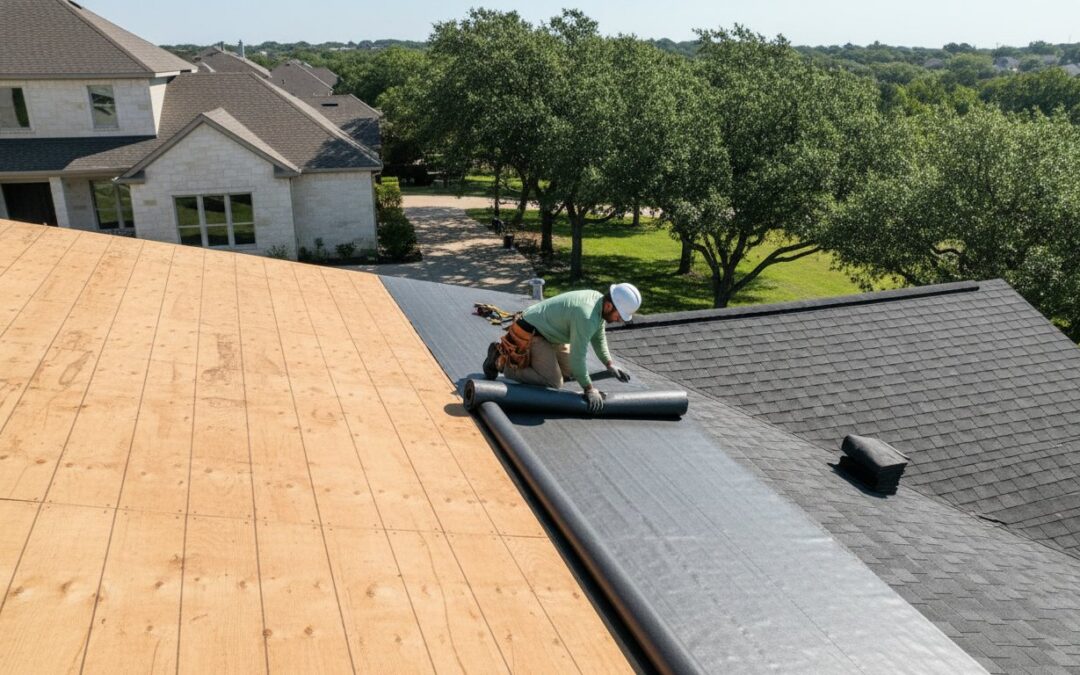
What if the most important part of your roof is the one layer you’ll never actually see after the job is finished? Most homeowners in Austin, TX, focus on the color of their shingles, but the real protection starts with the roofing paper installed underneath. We know that the Central Texas climate is unforgiving. Between the 100-plus degree days in August and the sudden spring hailstorms, your roof deck needs a secondary line of defense that won’t fail when the pressure is on.
It’s frustrating to hear contractors throw around industry jargon when you just want a home that stays dry and cool. This guide explains exactly why underlayment is the unsung hero of your Austin roof and how to choose the right type for our extreme heat. You’ll discover the differences between traditional felt and high-performance synthetics, identify which materials provide the best thermal protection, and learn how to ensure your new system meets strict warranty standards for 2026.
Key Takeaways
- Identify why a secondary water barrier is essential for protecting your Austin roof deck from moisture and damaging wood sap.
- Learn how to select high-performance roofing paper that won’t become brittle or “cook” under the intense 105-degree Central Texas sun.
- Compare the pros and cons of synthetic versus traditional felt materials to ensure your home has the best defense against UV degradation.
- Discover the professional installation techniques, like proper overlapping and deck preparation, that prevent common leaks and structural failures.
- Get our expert recommendation on why synthetic underlayment is the most reliable choice for residential asphalt roofs in the local climate.
Understanding Roofing Paper and Its Critical Role in Austin, TX
Roofing paper is the foundation of a weather-tight system in Central Texas. It serves as a secondary water barrier installed directly between your roof deck and the shingles. If you’re wondering what is roofing paper? it’s essentially a protective layer that catches any moisture that manages to get past your primary roofing material. At Transition Roofing, we view this layer as the “Trusted Protector” of your home’s structural integrity.
Beyond water protection, it prevents acidic sap in the wood decking from reaching and degrading your shingles. While shingles are designed to shed the bulk of Central Texas downpours, roofing paper manages the moisture that inevitably seeps underneath through capillary action or wind pressure. This layer ensures that your plywood or OSB decking stays dry, preventing rot and long-term structural failure.
To better understand this concept, watch this helpful video:
Why Shingles Alone Aren’t Enough
Austin weather is unpredictable. High-velocity wind-driven rain during spring storms can easily bypass even the highest quality shingles. Underlayment provides essential “dry-in” protection during the construction process. This keeps your home interior safe before the final shingles are nailed down. It also acts as a critical cushion for the roofing crew. It provides better traction and a safer surface for our technicians to move across while they secure your roof.
The Evolution of Underlayment Technology
Historically, contractors used organic rag felt, but the industry has moved toward sophisticated asphalt-saturated materials. In the 2026 Austin climate, where we face 100-degree heat for months, these modern materials are non-negotiable. Many Austin contractors use the terms “roofing paper” and “roofing felt” interchangeably. They both refer to the critical underlayment that keeps your decking dry. Modern versions are more tear-resistant and heat-stable than the basic felt used 20 years ago. This evolution ensures your roof can withstand the extreme thermal expansion common in Central Texas.
Comparing Types of Roofing Paper for Austin, TX Homes
Choosing the right roofing paper involves balancing your budget with the specific demands of the Central Texas climate. While traditional felt was the standard for decades, modern materials offer better protection against the 50 mph wind gusts and 100 degree days common in Austin. We look at three main categories to ensure your home stays dry during the next spring storm cycle.
Traditional Asphalt-Saturated Felt
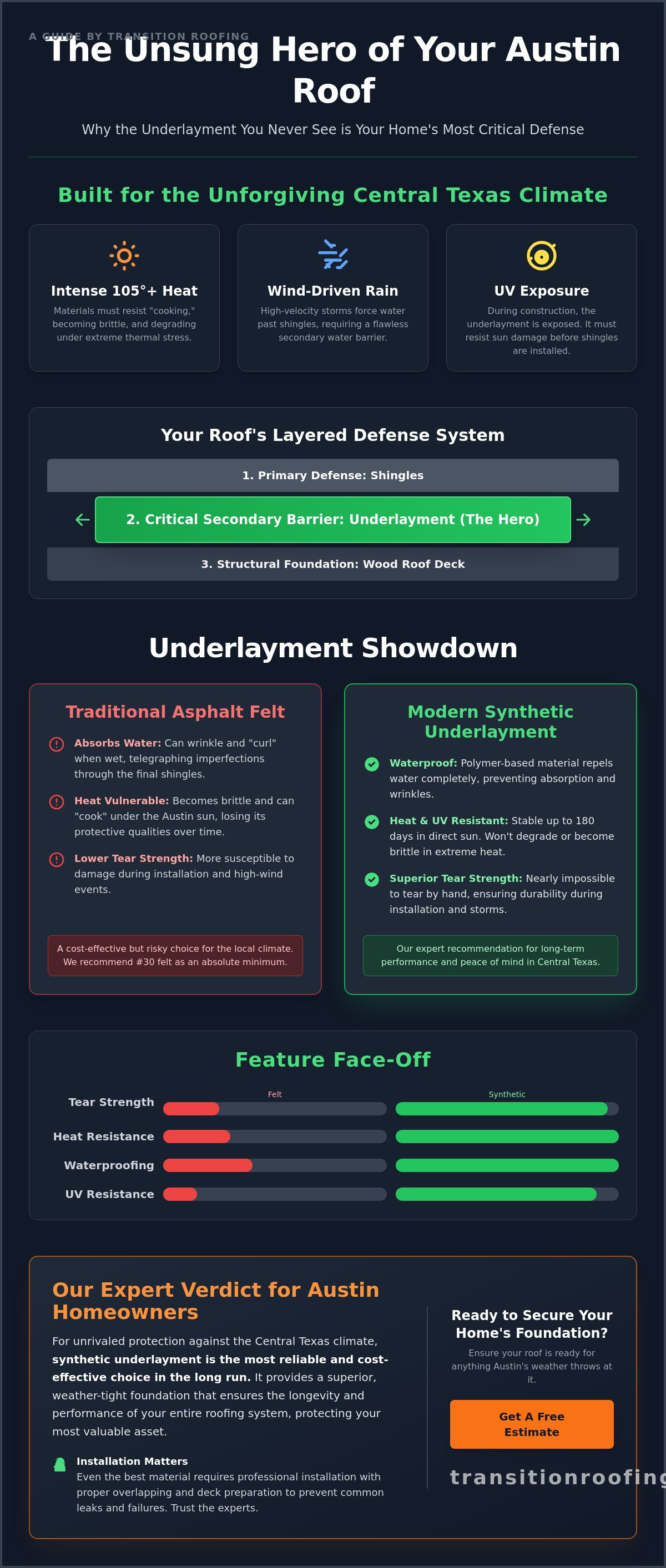
Asphalt felt is the classic choice for residential projects. It comes in two thicknesses: 15lb and 30lb. In our experience, #15 felt is often too thin for the heat intensity in Central Texas. We recommend #30 felt as the absolute minimum standard for any Austin roof repair. It provides a thicker buffer and better slip resistance for crews working on steep slopes.
A major downside to traditional felt is its reaction to moisture. If a rain shower hits before the shingles are installed, the paper can absorb water and begin “curling” at the edges. This creates an uneven surface that can telegraph through your new shingles. It remains a cost-effective option for budget-conscious homeowners, but it requires a fast installation window to avoid weather damage.
Modern Synthetic Underlayment
Synthetic underlayment is a polymer-based material that has largely replaced felt in high-end installations. These products are nearly impossible to tear by hand. This high tear strength is vital during Austin wind events when exposed underlayment might otherwise rip off the deck.
Synthetics are also highly UV resistant. Most high-quality brands can withstand 180 days of direct sun exposure without degrading. This is a massive advantage for larger projects that might face scheduling delays in the Texas heat. When we act as your Expert Roofing Contractor in Austin, TX, we prioritize these materials because they don’t absorb water or wrinkle like paper products do.
Self-Adhered (Peel-and-Stick) Barriers
Self-adhered barriers, often called ice and water shields, are the gold standard for leak prevention. Unlike other types of roofing paper, these have a sticky backing that bonds directly to the wood roof deck. This creates a watertight seal that prevents “wind-driven rain” from backing up under the shingles.
We install these barriers in high-risk areas such as valley flashings, chimneys, and roof-to-wall transitions. The rubberized asphalt inside the membrane is self-sealing. This means when a roofing nail passes through it, the material squeezes around the nail to plug the hole. If you’re seeing water stains near your roof valleys, this is usually when we recommend upgrading to a full peel-and-stick application in those critical zones.
- Asphalt Felt: Best for tight budgets; requires immediate shingle coverage.
- Synthetic: Best for wind resistance and long-term durability.
- Peel-and-Stick: Essential for valleys and low-slope transitions.
Why the Austin, TX Climate Demands High-Performance Roofing Paper
Austin, TX sees an average of 228 sunny days per year. This constant UV exposure is the primary enemy of standard roofing paper. In a typical July, roof surface temperatures easily exceed 160 degrees. Low-quality organic felt underlayment often cooks in this extreme heat. It loses its volatile oils, turns brittle, and eventually crumbles into dust. When our teams perform inspections on 10-year-old roofs in Central Texas, we frequently find that the underlayment has disintegrated, leaving the wood deck completely vulnerable to the next big storm.
Beyond the steady heat, Austin homeowners must deal with the thermal shock of rapid cooling. A sudden afternoon thunderstorm can drop roof temperatures by 70 degrees in less than 30 minutes. This rapid contraction puts immense stress on every layer of your roof. If you’re investing in metal roofing in Austin, high-temperature underlayment is a non-negotiable requirement. Standard materials can bond to the metal or melt under the intense heat transfer. We use high-temp synthetics rated to withstand up to 250 degrees to ensure your protection never melts away.
Managing Humidity and Attic Breathability
Austin’s humidity frequently spikes above 80% during the spring months. If your roofing paper acts as a total vapor barrier, it can trap moisture inside your attic space. This leads to deck rot and mold growth on the underside of your roof sheathing. We utilize vapor-permeable underlayment that allows moisture to escape while keeping liquid water out. This balance is critical for maintaining the integrity of your roof deck over its 30-year lifespan. Proper breathability prevents the “greenhouse effect” that destroys many local roofs from the inside out.
Storm Resistance: Hail and Wind-Driven Rain
Central Texas is a hotspot for severe weather, often ranking high for annual hail claims. When a large hailstone cracks a shingle, your underlayment becomes the last line of defense for your ceiling. Transition Roofing relies on over 15 years of experience to select storm-hardened materials that resist tearing even when shingles are compromised. During high-wind events, wind-driven rain is forced under the edges of your shingles. We install reinforced synthetic layers that provide a secondary water-shedding surface. This ensures that even if your primary shingles suffer impact damage, your home remains dry until we can arrive to perform professional repairs.
If you are concerned that your current underlayment has become brittle or failed after a recent storm, this is usually when we recommend a professional assessment. We can help you determine if your roof is still providing the protection you need.
Contact Transition Roofing today to schedule a comprehensive roof inspection in Austin.
Professional Installation of Roofing Paper in Austin, TX: Avoiding Common Failures
Installing roofing paper correctly is the difference between a dry attic and a costly ceiling repair. In Austin, TX, our intense 100-degree summers and sudden spring storms put immense pressure on your underlayment. At Transition Roofing, we follow a strict four-step process to ensure your home stays protected for decades. We don’t rely on guesswork; we rely on proven methods that withstand the Central Texas climate.
- Step 1: Proper Deck Preparation. We remove every single old nail and staple from the wood deck. A single leftover fastener can puncture your new roofing paper, creating a hidden leak point. We want a perfectly flat, clean surface before the first roll is laid down.
- Step 2: Overlapping Techniques. We use the “shingle effect” by overlapping rows of paper starting from the bottom of the roof and moving up. This ensures water flows over the seams instead of under them.
- Step 3: Fastening Patterns. We use a specific, high-density fastening pattern. This keeps the material from bubbling or shifting when temperatures fluctuate.
- Step 4: Drip Edge Integration. In Austin, TX, the paper must interact correctly with metal edges. We install the paper under the drip edge at the rakes and over the drip edge at the eaves to prevent water from rotting your fascia boards.
The ‘Staple’ Mistake and Why It Leads to Leaks
Many crews use simple manual staples because they’re fast and cheap. Transition Roofing avoids this practice entirely. Staples have a tiny surface area and can easily tear through the roofing paper when wind gusts hit 50 mph or higher. We use plastic cap nails instead. These caps provide a wide, water-tight seal that holds the material down firmly. This small detail prevents the underlayment from blowing off if your shingles are ever damaged during a hail storm.
Warranty Compliance with GAF and CertainTeed
Using generic underlayment is a major risk for your wallet. Leading manufacturers like GAF and CertainTeed often require their specific brand of roofing paper to qualify for a “System Plus” or extended lifetime warranty. If a contractor uses a cheap, generic paper, you could void a 50-year warranty on your entire roof system. Hiring certified roofers in Austin ensures that every component meets these strict manufacturer standards. We don’t cut corners because we want your investment to be fully protected by the brand’s guarantee.
If you’re worried about the state of your current underlayment or if it was installed correctly, we can help. Schedule a professional roof inspection in Austin today to get a clear plan for your home’s protection.
Choosing the Right Roofing Paper for Your Austin, TX Property
Selecting the correct roofing paper is a decision that dictates how well your home handles the next 25 years of Central Texas weather. For most residential properties in Austin, we categorize options into “Best for Most” and “Best for Performance.” While traditional asphalt-saturated felt was the standard for decades, modern synthetic underlayment has become our primary recommendation for asphalt shingle roofs. It resists the intense 100-degree heat and won’t tear or degrade if a storm manages to lift a shingle.
The math behind this choice is straightforward. Choosing a premium synthetic underlayment might add roughly $500 to a standard project estimate. That small upfront investment protects you against early deck rot or internal water damage. These issues often lead to a $15,000 full replacement long before the shingles themselves wear out. If you aren’t sure what’s currently protecting your decking, a professional inspection is the first step to securing your home. When searching for a roofer near me in the Austin area, look for contractors who can clearly explain the underlayment system they plan to install and why it suits the local climate.
Checklist for Your Next Roofing Estimate
When you review bids from contractors, look past the total price. The details of the roofing paper and installation method determine the system’s lifespan. Use these questions to vet your next estimate:
- Are you using felt or synthetic? Synthetic is the modern standard for durability in the Austin heat.
- Are you using cap nails or staples? Plastic cap nails provide better wind uplift resistance and a water-tight seal compared to staples.
- Is the underlayment part of a manufacturer-certified system? Using underlayment from the same brand as your shingles, such as GAF or CertainTeed, often unlocks better warranty protection.
Final Recommendation for Austin Homeowners
In Central Texas, the underlayment is just as vital as the shingle. The extreme thermal expansion caused by our summer sun requires a material that can stretch and breathe without failing. We always encourage homeowners to consult a roofing company that understands these local heat dynamics and carries the right certifications.
A roof is only as strong as its weakest layer. Don’t let a budget underlayment compromise a high-quality shingle. If you want to know exactly how your current system is holding up against the elements, we can help. Schedule a free roof inspection in Austin with Transition Roofing to evaluate your system’s integrity and get a clear plan for your home’s protection.
Securing Your Austin Home for the 2026 Storm Season
Choosing the right materials for your roof is about more than just the shingles you see from the street. It’s about the secondary layer of defense that keeps your decking dry when Central Texas storms hit. High-quality roofing paper acts as a critical moisture barrier against Austin’s intense humidity and unpredictable hail. You need a material that won’t degrade under the triple-digit heat we face every summer. Whether you opt for traditional felt or modern synthetic underlayment, the installation must be precise to prevent premature failure.
At Transition Roofing, we bring over 15 years of local experience to every project in Central Texas. We’re certified by industry leaders like GAF, CertainTeed, and Versico, ensuring your home meets the highest standards for durability. Our team specializes in storm restoration, so we know exactly how to protect your property from regional weather patterns. Don’t wait for a ceiling stain to find out your underlayment has reached its limit. We’re here to provide the peace of mind you deserve with a proven, methodical approach to roof protection.
Schedule your comprehensive 2026 roof inspection in Austin today with Transition Roofing.
Let’s make sure your home stays safe and secure for years to come.
Frequently Asked Questions About Roofing Paper in Austin, TX
Is roofing paper the same as roofing underlayment?
Yes, roofing paper is a specific category of underlayment, though the term usually refers to traditional asphalt-saturated felt. It serves as the critical middle layer between your roof deck and your shingles. At Transition Roofing, we install this barrier to protect your home from wind-driven rain that might get past the primary shingles. While synthetic options are now popular, many Austin homeowners still choose heavy-duty felt for its proven track record.
How long can roofing paper be left exposed to the sun in Austin, TX?
Standard asphalt roofing paper should not stay exposed to the Austin, TX sun for more than 24 hours. The intense UV rays in Central Texas quickly bake the oils out of the felt, leading to brittleness, cracking, and curling. If your project requires a longer exposure time due to scheduling, we recommend a synthetic underlayment. Some high-quality synthetics are rated to withstand direct sunlight for 90 to 180 days without degrading.
Does the color of roofing paper matter for attic heat in Austin, TX?
The color of the paper has almost no impact on your attic temperature because it is covered by shingles immediately after installation. While black felt absorbs heat during the few hours it is exposed, the final roofing material and your attic ventilation system do the heavy lifting for temperature control. In our 100 degree summer heat, we focus on proper ridge vents and solar fans to keep your home cool rather than the color of the underlayment.
Can I install new roofing paper over the old layer in Austin, TX?
No, you should never install new roofing paper over an old, existing layer. A proper roof replacement requires stripping the materials down to the 7/16 inch wood decking to inspect for rot or soft spots. Leaving old felt in place can trap moisture and hide structural damage that will eventually cause a leak. Our team always clears the deck to ensure the new system sits flat and remains secure against high winds.
Which is better for Austin, TX: 15lb or 30lb roofing felt?
We recommend 30lb roofing paper for most Austin, TX homes because it is significantly thicker and more resistant to tearing during installation. The 30lb option provides a much stronger secondary water barrier and does not rip as easily when crews are walking on the roof. While 15lb felt is a standard minimum, the added durability of the heavier material offers better long-term protection against the volatile weather patterns common in Central Texas.
What happens if roofing paper gets wet during an Austin, TX storm?
If traditional felt paper gets wet before the shingles are installed, it will often wrinkle or “bubble” as the paper fibers absorb moisture. You must wait for the paper to dry completely and lay flat again before the shingles go on. If the paper remains saturated for more than 48 hours, it can potentially trap moisture against the wooden deck. If you see this happening on your project, it is usually when we recommend a full inspection to ensure the deck is dry.
Is synthetic roofing paper worth the extra cost for Austin, TX homes?
Synthetic underlayment is worth the investment for most homeowners because it is virtually tear-proof and does not absorb water. It offers up to 20 times the strength of traditional asphalt felt, which is a major advantage during the 50 mph wind gusts seen in local storms. Because it lays flatter and covers more area per roll, it often leads to a more secure and uniform final appearance for your roof.
Does roofing paper help with my home’s energy efficiency in Austin, TX?
Roofing paper acts primarily as a moisture barrier rather than an insulator, so its direct effect on your electric bill is minimal. However, by keeping your attic insulation dry, it helps maintain the R-value of your home’s thermal envelope. Wet insulation loses its ability to block heat transfer almost immediately. By preventing leaks, a high-quality underlayment ensures your HVAC system doesn’t have to work harder to combat humidity and heat during the summer months.
If you are concerned about the state of your current underlayment or need a professional opinion on a recent storm, we can help. Contact Transition Roofing today to schedule a comprehensive roof inspection in Austin and get a clear plan for your home’s protection.