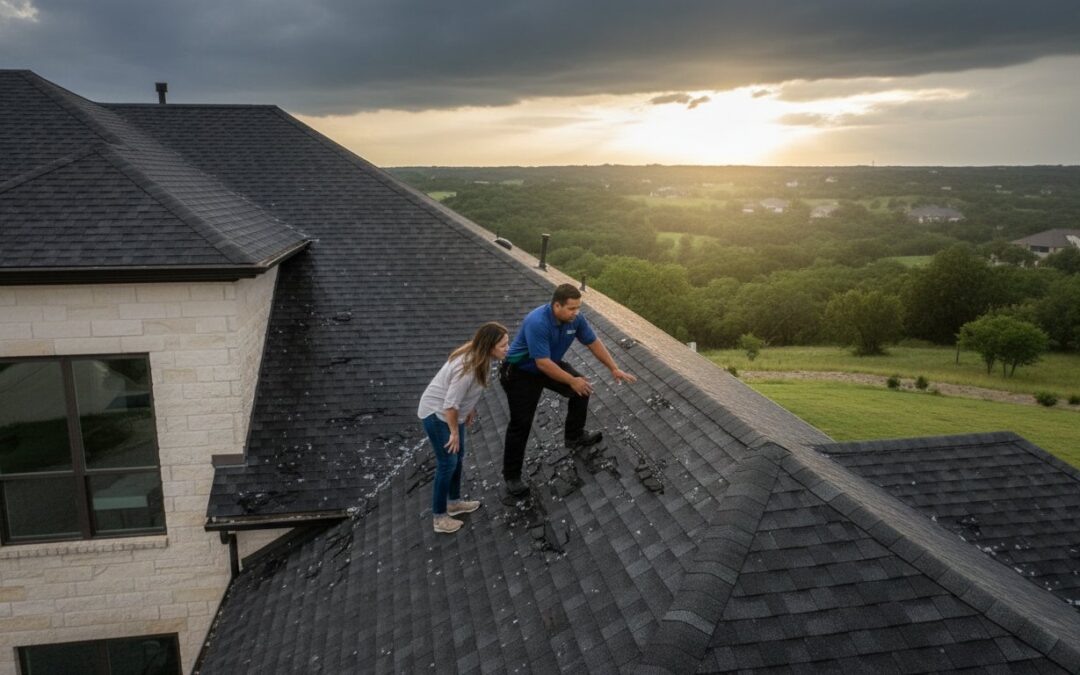
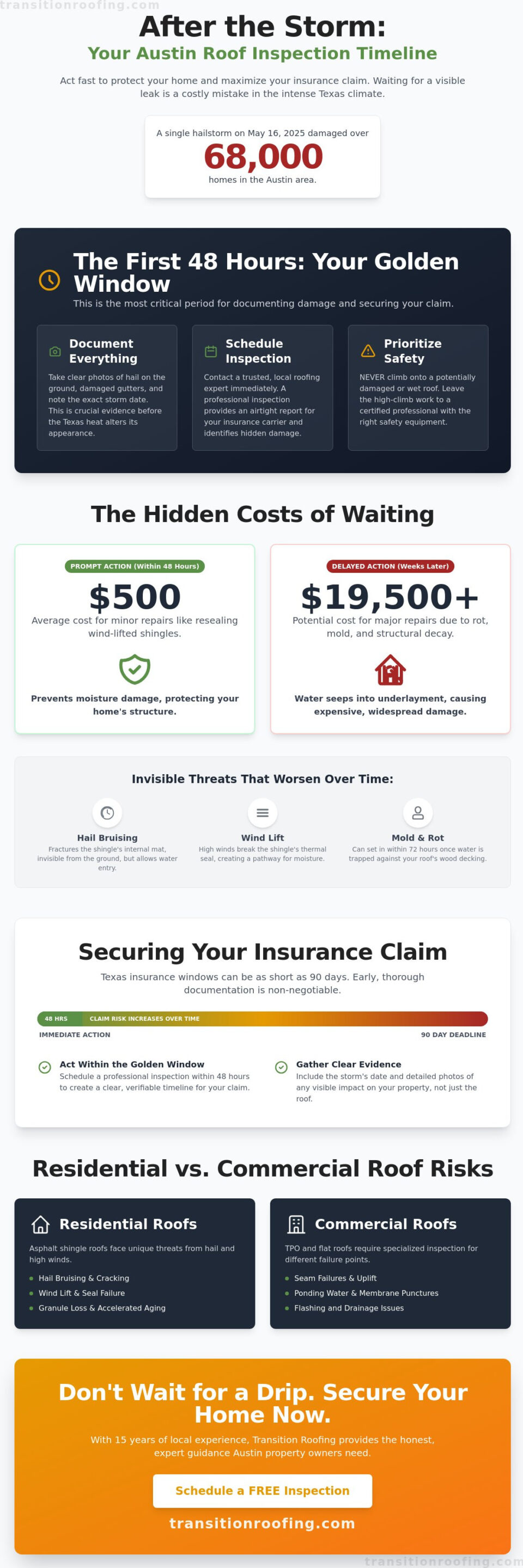
On May 16, 2025, a single hailstorm damaged over 68,000 homes across the Austin area, proving that waiting for a visible leak is often a costly mistake. Most homeowners don’t realize that the physical evidence of hail impact can hide or change as the intense Texas heat expands and contracts your shingles. You’re likely asking: How soon after a storm should I schedule a roof inspection?
It’s stressful to manage property damage while worrying about insurance deadlines and the threat of “storm chaser” scams. We understand that you need honest, expert guidance to move your home from a state of vulnerability to total security. This guide will teach you the critical timeline for post-storm inspections to ensure you secure your insurance claim and maintain your roof’s integrity. We’ll explain why the first 24 to 48 hours are vital for documentation, how to navigate insurance windows that can be as short as 90 days in Texas, and what our 15 years of local experience suggests for property owners in Austin, TX.
Key Takeaways
- Act within the 48-hour window to document damage before the intense Austin heat alters the appearance of hail impacts on your shingles.
- If you’re wondering how soon after a storm should I schedule a roof inspection, the answer is within 48 hours to ensure your insurance claim stays valid.
- Identify hidden threats like hail bruising and wind lift that compromise your roof’s seal without showing obvious signs of damage from the ground.
- Secure your property’s future by gathering immediate evidence, including the storm’s exact date and clear photos of hail on your lawn or patio.
- Recognize the unique risks for commercial TPO and flat roofs, where seam failures and ponding water require specialized technical inspection techniques.
How soon after a storm should I schedule a roof inspection in Austin, TX?
In the roofing industry, we refer to the first 48 hours after a severe weather event as the “Golden Window.” This is the period when damage is most evident and documentation is easiest to verify for insurance carriers. Many homeowners ask, how soon after a storm should I schedule a roof inspection? and our 15 years of experience in Central Texas shows that waiting longer than two days can lead to complications with claim approvals. Professional windstorm inspections conducted immediately provide the clear evidence needed to prove the storm caused the damage, rather than wear and tear over time.
Prompt action prevents minor leaks from turning into major structural repairs that require full roof replacements. When high winds compromise the seal of your asphalt shingles, the next rainfall can push water directly into your decking. If you are wondering how soon after a storm should I schedule a roof inspection?, remember that documenting the site within 48 hours creates a transparent timeline that satisfies the strict requirements of most Texas insurance policies. We prioritize getting an expert on your property quickly to ensure your home remains secure and your claim documentation is airtight.
To better understand how we document hail impact for insurance claims, watch this helpful video:
Why Timing Matters for Austin Homeowners
The Central Texas climate creates unique challenges for damaged roofing. During the summer, roof temperatures often exceed 150 degrees, causing shingles to expand. When a storm hits, the rapid cooling and subsequent reheating can cause thermal expansion that might mask fresh hail bruises as the material settles. Additionally, Austin is prone to sudden flash flooding. A roof compromised by high winds won’t protect your home from the heavy rain that often follows a Texas thunderstorm. The 48-hour inspection rule is the industry standard for storm recovery because it identifies these vulnerabilities before the next rain cycle begins.
Immediate Signs You Need a Pro Right Away
You can often spot serious issues without ever leaving the ground. Look for these red flags around your property: missing or torn shingles visible from the yard, dents in metal flashing, gutters, or downspouts, and new water spots appearing on your interior ceilings. Safety is our top priority. You should never climb onto your roof immediately after a storm; wet surfaces and loose granules make it incredibly dangerous. Let a certified expert with GAF or Certainteed credentials handle the high-climb work. If you’re seeing these signs, we can take a look and give you a clear plan for your home in Austin, TX.
Why Immediate Inspections Save Money on Austin Roof Repairs in Austin, TX
When homeowners ask how soon after a storm should I schedule a roof inspection, they’re usually worried about active leaks. However, the most expensive damage is often invisible from the yard. Hail bruising occurs when a stone strikes a shingle, fracturing the internal fiberglass mat without necessarily tearing the outer surface. Once that mat is cracked, the intense Texas sun accelerates the breakdown of the asphalt. In the Central Texas climate, daily temperatures frequently hit triple digits, causing these micro-fissures to expand and contract until the shingle fails completely.
Wind lift is another silent threat that leads to costly repairs. Even if you don’t see shingles scattered in your lawn, high-velocity winds can break the thermal seal of your shingle system. This allows moisture to seep underneath during the next thunderstorm. For business owners, identifying early failure points in flat roofing systems is even more critical. A small seam failure on a TPO roof can lead to massive ponding issues that compromise the entire structural deck.
The Hidden Cost of Delaying Inspections
Delaying an inspection for even a few weeks can be a $19,500 mistake. A minor $500 repair to reseal wind-lifted shingles prevents moisture from reaching your underlayment. Once water is trapped against the wood, rot and mold can set in within 72 hours. If you’re seeing excessive granules in your gutters, this is usually when we recommend getting a professional set of eyes on the situation before the damage spreads to your roof deck.
Contractor Logic: Spotting Damage Homeowners Miss
Our team relies on more than just a quick glance. With over 15 years of local experience, we look for specific fracture patterns and accelerated granule loss that suggest a compromised system. GAF and CertainTeed certified inspectors use specialized moisture meters and high-resolution optics to find micro-fissures that a standard insurance adjuster might overlook. We focus on the long-term integrity of your home, ensuring every bruise is documented before it becomes a permanent leak. Getting this right the first time is the only way to avoid a full roof replacement next year.
Navigating Insurance Claims and Documentation in Austin, TX
Filing a successful insurance claim in the Austin area requires a methodical approach. Insurance carriers rely on specific data points to approve repairs, and having a paper trail is essential. If you’re wondering how soon after a storm should I schedule a roof inspection, the answer is immediately. You need professional documentation while the evidence is fresh and undeniable. Follow these four steps to secure your home’s future:
- Step 1: Record the exact date and time of the storm event. Adjusters use weather service data to verify that a damaging event occurred at your specific address.
- Step 2: Capture ground-level photos of the property. Document hail stones next to a coin for scale and photograph any shredded window screens or dented downspouts.
- Step 3: Schedule a professional inspection to get a detailed damage report. A certified contractor provides the technical proof of loss that a standard homeowner might miss.
- Step 4: Submit the claim to your provider using the expert evidence. Presenting a contractor’s report upfront ensures the adjuster has a comprehensive view of the damage.
How Transition Roofing Assists with Your Claim
We take the stress out of the process by acting as your technical advocate. Our team uses specialized estimation software to provide transparent, line-item budgets for residential roofing projects. We prefer to be on-site when the insurance adjuster arrives. This ensures all damage, including compromised flashings and ventilation systems, is properly identified and included in the scope of work. If you’re seeing signs of damage, schedule a roof inspection in Austin today.
Common Insurance Deadlines in Texas
Most Texas policies provide a one-year window to file a claim for storm damage. However, waiting several months often leads to claim denials. Adjusters may argue the damage resulted from a lack of maintenance rather than a specific “act of God.” In our local climate, these clauses typically cover hail and wind events. For more detailed steps on the recovery process, read our Austin roof repair guide. We’ve spent over 15 years helping neighbors navigate these deadlines with integrity and clear communication.
Commercial vs. Residential Storm Damage in Austin, TX
Commercial properties face a different set of risks than residential homes. While a homeowner might worry about a single bedroom leak, a business owner faces the loss of expensive inventory, sensitive equipment, and operational downtime. If you manage a facility, you’re likely asking: how soon after a storm should I schedule a roof inspection? For commercial flat roofs, the answer is immediately. TPO and PVC systems rely on heat-welded seams that can be compromised by the pressure of high winds or heavy hail impacts. These micro-tears are often invisible to the untrained eye but lead to massive failures during the next rainfall.
Ponding water is the primary enemy of flat roofs after a Central Texas storm. If water remains on your roof for more than 48 hours, it’s a sign that your drainage system is blocked or the structural deck has shifted. We specialize in commercial roofing in Austin and understand that these issues require specialized technical proficiency to detect. While asphalt shingles show damage through granule loss, metal roofing often suffers from fastener back-out, where the vibration from high winds literally unscrews the roof from the building.
Urgency for Property Managers and Business Owners
For property managers, the question of how soon after a storm should I schedule a roof inspection is often answered by your insurance policy’s “due diligence” clause. Many commercial warranties from manufacturers like Versico or Dura-last require documented professional inspections after major weather events to remain valid. Protecting your equipment starts with a clear evidence trail. Our 15 years of experience helps us identify fastener fatigue and seam failures before they lead to a total roof collapse or interior disaster.
Choosing the Right Material for Future Storm Protection
Investing in resilient materials is the best way to handle the extreme temperature swings of the Central Texas climate. We recommend several options for long-term security:
- Class 4 Impact-Resistant Shingles: These are designed to withstand 2-inch hail without fracturing the internal mat.
- Standing Seam Metal Roofs: These systems have no exposed fasteners, making them nearly immune to the wind-lift issues common in Austin.
- High-Reflectivity TPO: This material stays flexible in the heat and provides a puncture-resistant barrier for flat roof systems.
If you’re managing a large facility, we recommend our preventative maintenance program to keep your property secure year-round. If you’re dealing with recent storm damage, we can take a look and give you a clear plan. Schedule a roof inspection in Austin today.
Secure Your Property Before the Next Storm Hits
Waiting for a visible leak is a gamble that rarely pays off in Austin, TX. The 48-hour window we discussed is your best opportunity to document damage before the intense heat alters the evidence. Whether you’re managing a commercial TPO facility or a residential home with asphalt shingles, prompt action protects your investment and your insurance rights. When you ask how soon after a storm should I schedule a roof inspection, the answer is as quickly as possible to ensure your claim is handled with integrity.
With over 15 years of experience in Central Texas, we know exactly what adjusters look for. Our GAF and CertainTeed certified team provides the expert documentation and insurance claim assistance you need to move from a state of worry to total security. We’ve spent over a decade building a reputation for reliability and quality craftsmanship across the local community.
Schedule your professional roof inspection in Austin today to ensure your roof remains a proven barrier against the elements. We’re here to help you navigate the recovery process with a clear, honest plan for your home.
Frequently Asked Questions about Storm Damage in Austin, TX
Can I wait a few months to inspect my roof if there are no leaks?
No, you shouldn’t wait because the Central Texas heat causes hidden damage to worsen rapidly. Even if you don’t see water inside your home, hail impacts fracture the internal fiberglass mat of your shingles. If you’re asking how soon after a storm should I schedule a roof inspection, the standard is within 48 hours. This prevents the intense sun from baking the compromised materials and causing premature shingle failure.
What happens if I miss the insurance deadline for a storm claim in Texas?
If you miss the filing window, you’ll likely be responsible for the full cost of any future repairs or replacements. Most Texas insurance policies have a one-year deadline for storm-related claims, though some are as short as 90 days. Waiting too long makes it difficult to prove the damage occurred during a specific 2025 weather event. This delay often results in a claim denial due to “neglect” or “lack of maintenance.”
Will my insurance rates go up if I schedule a roof inspection after a storm?
No, simply scheduling a professional inspection won’t cause your insurance premiums to increase. In Texas, storm damage is classified as an “act of God,” and state laws generally prevent carriers from raising rates for an individual based on a single claim. In fact, our 15 years of experience shows that proactive repairs actually protect your insurability. Insurance companies prefer homes that are well-maintained and free of structural vulnerabilities.
How do I know if the hail was large enough to cause roof damage?
Hail measuring one inch or larger typically causes structural damage to shingle systems. You can check for dents in soft metals like your gutters, downspouts, or the aluminum fins on your air conditioning unit. If you see “splatter” marks on your wooden fence or patio, it’s a strong indicator of high-velocity impacts. This is usually when we recommend asking how soon after a storm should I schedule a roof inspection to verify your home is secure.
Is a free roof inspection really free, and what does it include?
Yes, reputable Austin contractors provide these assessments at no cost to help you document property damage. Our GAF and CertainTeed certified team performs a 21-point inspection that covers shingles, flashings, and ventilation systems. We provide a detailed photo report and a clear plan of action for your insurance carrier. This professional documentation ensures you have the technical evidence needed to support a claim before you ever spend a dime on repairs.