

The most expensive roof on the market might be the worst choice for your specific building’s structure. If you’re managing a property in Central Texas, you’ve likely received three different opinions from three different contractors this week. It’s frustrating to face 105-degree heat and 2-inch hail while wondering if your current setup will hold. You want a leak-free building for the next 20 years without paying for features you don’t need.
Knowing Which commercial roof system is best here: TPO PVC modified bitumen metal or coating? depends on your specific goals for energy efficiency and storm protection. We’ve spent over 15 years installing GAF and Versico systems across Austin. This 2026 guide compares the five most common commercial roofing systems to help you find the perfect match for your building’s lifespan and budget. We’ll break down how each material handles the Texas sun, which ones lower your HVAC costs by up to 30 percent, and how to meet local Austin building codes.
Key Takeaways
- Learn which commercial roof system is best here: TPO PVC modified bitumen metal or coating? by matching your building’s slope and foot traffic to Austin’s extreme heat demands.
- Discover why TPO is the preferred “cool roof” for Central Texas warehouses while PVC offers the specialized chemical resistance needed for local restaurants.
- Compare the 50-year durability of metal roofing against the cost-effective benefits of silicone coatings that extend your roof’s life without a full tear-off.
- Understand the contractor logic for auditing energy bills and structural load capacity to ensure your new system handles Austin’s intense cooling loads.
- Identify how to protect your investment from Central Texas hail and storms by choosing materials with proven UV resistance and high-integrity craftsmanship.
Which commercial roof system is best here in Austin TX?
Choosing a roof for your facility isn’t about finding a universal winner. It’s about matching a specific material to your building’s footprint and long-term goals. When property owners ask, Which commercial roof system is best here: TPO PVC modified bitumen metal or coating?, we evaluate three factors: slope, foot traffic, and budget. At Transition Roofing, we bring 15+ years of local experience to this selection process to ensure your investment lasts.
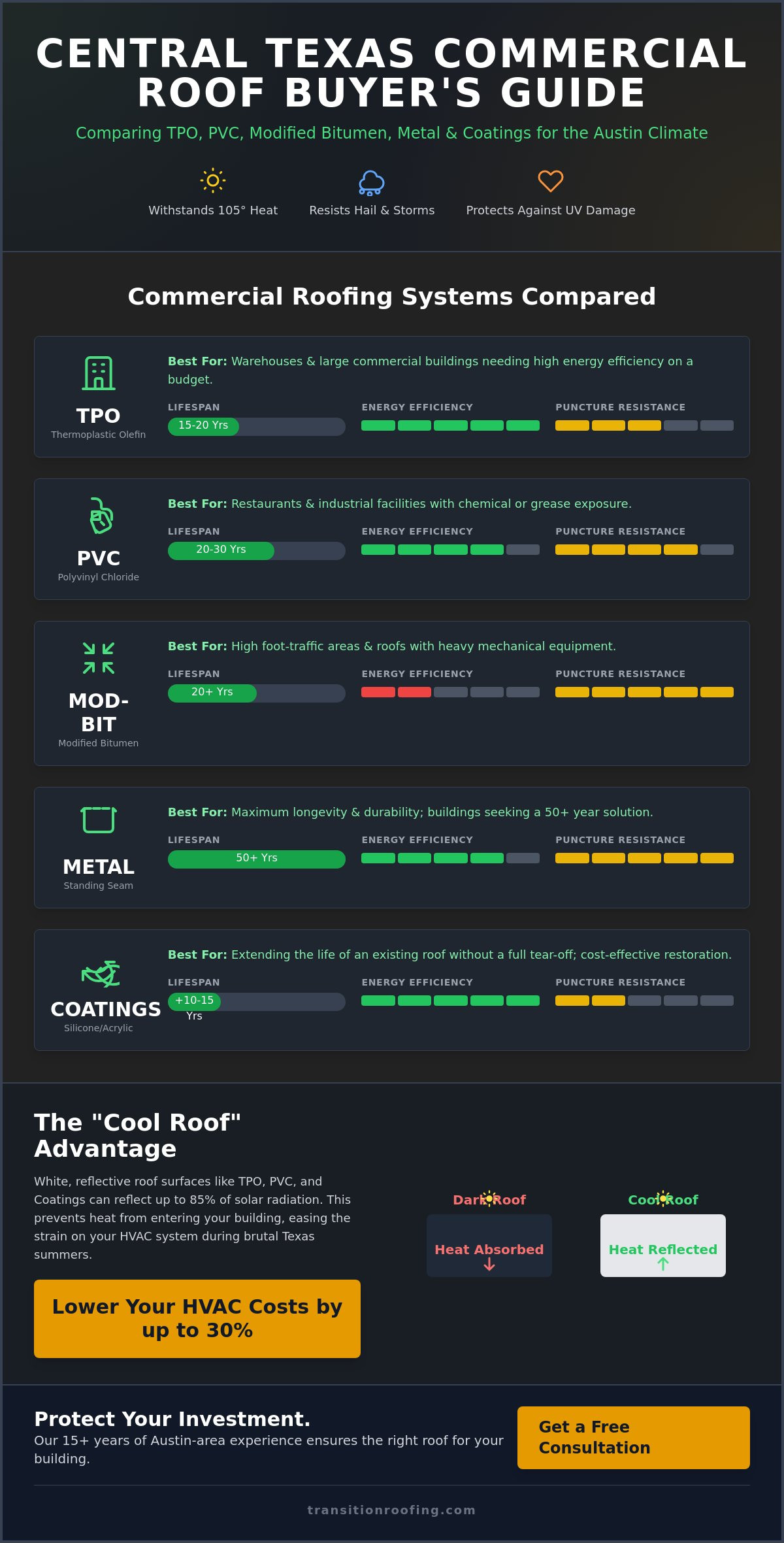
The five core systems used in Central Texas include TPO, PVC, Modified Bitumen, Metal, and Coatings, each serving a distinct purpose for industrial and retail spaces.
To better understand how these materials perform under the intense Texas sun, watch this helpful comparison:
Determining which commercial roof system is best here: TPO PVC modified bitumen metal or coating?
The Central Texas Climate Factor
Austin weather is brutal on building materials. We regularly see 100+ degree days that cause roofs to expand and contract rapidly; this is known as thermal shock. High UV indices in our region can degrade standard materials in less than 10 years if they lack proper reflectivity. For properties in Round Rock and Pflugerville, we treat hail resistance as a non-negotiable feature. Membrane roofing systems like TPO and PVC are popular here because they reflect solar heat, which significantly lowers cooling loads during August. We utilize high-grade products from Versico and GAF to ensure these membranes withstand the local intensity.
Understanding Low-Slope vs. Flat Roof Needs
Comparing TPO vs. PVC vs. Modified Bitumen in Austin TX
Deciding which commercial roof system is best here: TPO PVC modified bitumen metal or coating? is the most critical choice an Austin property owner can make. With over 15 years of experience in Central Texas, we have seen how the local climate dictates material performance. TPO is the most popular “cool roof” for Austin warehouses because it balances cost and energy savings. PVC offers superior chemical resistance for restaurants and industrial kitchens where grease venting is a factor. Modified Bitumen remains the tough as nails asphalt option for high traffic roofs that house heavy mechanical equipment.
Choosing the right material ensures your building stays dry during intense spring storms. We focus on long term protection rather than quick fixes. Each system has distinct advantages in heat reflectivity and durability that impact your bottom line.
| Feature | TPO | PVC | Modified Bitumen |
|---|---|---|---|
| Expected Lifespan | 15 to 20 Years | 20 to 30 Years | 20+ Years |
| Heat Reflectivity | Very High | High | Low to Moderate |
| Puncture Resistance | Moderate | Moderate to High | Very High |
TPO and PVC: The Single-Ply Advantage
White membranes are the standard for energy efficiency in Austin TX. These systems reflect up to 85 percent of solar radiation, which significantly lowers cooling loads during 100 degree summer days. We use heat welded seams to create a monolithic, waterproof barrier. These welds are physically stronger than the membrane itself, unlike older glued systems. We install Versico and Dura-last single ply systems because they are engineered for extreme UV exposure. The National Roofing Contractors Association notes that properly installed single ply membranes provide excellent wind uplift resistance during Texas storms.
Modified Bitumen: Multi-Ply Durability
The redundancy factor makes Modified Bitumen a top choice for roofs with heavy foot traffic. We install two or three layers of asphalt based sheets to create a thick, durable shield. Modern Mod-Bit handles the Austin heat much better than old school tar because it uses SBS or APP polymers for flexibility. This prevents the roof from becoming brittle and cracking under the sun. We find these systems are the best use cases for older downtown Austin buildings where HVAC technicians are frequently walking on the surface. If you are seeing leaks around your rooftop units, we can take a look and give you a clear plan for a durable upgrade.
Metal Roofing and Silicone Coatings for Austin TX Buildings
When property owners ask Which commercial roof system is best here: TPO PVC modified bitumen metal or coating?, they are often choosing between a permanent 50-year solution and a strategic maintenance move. Metal roofing and high-grade silicone coatings represent two very different ways to handle the intense Central Texas sun. While TPO and PVC are popular for flat surfaces, metal remains the gold standard for sloped Austin TX commercial properties that need to withstand decades of hail and high winds.
Is a Metal Roof Worth the Investment?
For many Austin TX businesses, a metal roof is the last roof they will ever buy. We typically install two types: standing seam and R-panel. Standing seam is the superior choice for storm protection because the fasteners are concealed under the metal. This prevents the “backed-out screw” leaks common with cheaper R-panels. In more rural areas of Central Texas, the fire resistance of a metal system provides a critical safety layer that synthetic membranes cannot match.
While the upfront cost is higher than single-ply systems, the ROI comes from a lifespan that often exceeds 50 years. We have seen metal roofs survive 20 years of Austin weather with nothing more than minor gutter cleaning. If you want to dive deeper into these systems, check out our metal roofing austin guide for local property managers.
The Power of Silicone Roof Coatings
If your current roof is structurally sound but leaking, a silicone coating can extend its life by 10 to 20 years without a full tear-off. This is a massive win for Austin TX budgets. A high-solids silicone coating can drop rooftop surface temperatures by up to 50 degrees during a July heatwave. This reduction directly lowers your HVAC strain and monthly cooling costs.
We recommend silicone over acrylic for our local climate. Austin experiences flash-flood rain patterns that lead to “ponding water” on flat roofs. Acrylic coatings eventually re-emulsify and peel when submerged, but silicone is moisture-cure and handles standing water indefinitely. Safety is also a factor during these applications. We follow the CDC Health and Safety Guide for the Commercial Roofing Industry to ensure every coating project is handled with the same integrity as a full replacement.
If you are seeing ponding water or rising energy bills, schedule a roof inspection in Austin today
Choosing Your Commercial Roof System in Austin TX: Which Commercial Roof System is Best Here: TPO PVC Modified Bitumen Metal or Coating?
Deciding which commercial roof system is best here: TPO PVC modified bitumen metal or coating? requires a look at your building’s specific needs rather than a one-size-fits-all approach. At Transition Roofing, we’ve spent over 15 years helping property owners navigate the brutal Central Texas climate. We don’t use high-pressure sales. Instead, we use a contractor’s logic to find the right fit for your budget and structural requirements.
- Step 1: Audit your energy bills. If your cooling costs spike during 105 degree Austin summers, a reflective TPO or PVC membrane can significantly lower your peak demand.
- Step 2: Assess structural load. We check if your existing deck can support a heavy modified bitumen system or if a lightweight coating is a safer choice for older structures.
- Step 3: Determine your hold period. If you plan to sell the property in 24 months, a restoration coating might offer the ROI you need. If you’re keeping it for 20 years, a full TPO install is the smarter play.
- Step 4: Review insurance requirements. Texas hail storms are frequent and destructive. We look for systems with UL 2218 Class 4 impact resistance to help you secure better insurance ratings.
- Step 5: Consult a certified expert. Always work with a GAF or Certainteed certified contractor who understands local building codes and manufacturer warranty requirements.
The True Cost of a Commercial Roof
The cheapest bid is often the most expensive choice you can make. Low-cost contractors frequently cut corners on flashing and edge metal. These are the first places to leak during a heavy Austin downpour. A quality TPO or PVC install might cost more upfront, but the energy savings from reflecting UV rays can pay for the difference in just a few years. It’s also vital to set up a preventative maintenance program. Regular inspections keep your manufacturer warranty valid and catch small issues before they become five-figure repairs.
When to Act: Signs Your Austin Roof is Failing
You need to check your roof for “alligatoring” if you have a modified bitumen system. This looks like cracked, scaly skin and means the bitumen has dried out from years of sun exposure. For TPO roofs, look for seam failure or membrane shrinkage at the parapet walls. If you notice pooling water or interior ceiling stains, it’s time for a professional austin roof repair assessment. We can take a look and give you a clear plan to secure your property before the next storm hits. Schedule a roof inspection in Austin today.
Which commercial roof system is best here: TPO PVC modified bitumen metal or coating for Austin TX buildings?
Selecting the right protection for your property depends on your specific goals for energy efficiency and long term durability. When deciding Which commercial roof system is best here: TPO PVC modified bitumen metal or coating?, you have to consider the intense Central Texas heat and frequent hail. TPO and PVC are excellent for reflecting UV rays and lowering cooling costs. Metal and modified bitumen offer rugged strength against storm damage, while silicone coatings provide a cost-effective way to renew an aging roof without a full tear-off.
Transition Roofing brings over 15 years of local experience to every project. We’re certified Versico and Dura-last installers who understand the specific needs of Austin business owners. We focus on high quality craftsmanship and steady communication to ensure your roof remains secure for decades. Our A+ rated team doesn’t just fix leaks; we build long term solutions that protect your investment and give you peace of mind.
If you’re dealing with a commercial roof leak or high energy bills, schedule a professional roof inspection in Austin today. We’ll give you a clear, honest assessment and a plan that fits your budget. Your property is in safe, capable hands with our expert crew.
Frequently Asked Questions: Which commercial roof system is best here: TPO PVC modified bitumen metal or coating in Austin TX?
Is TPO or PVC better for the extreme heat in Austin TX?
TPO is generally the better choice for Austin TX property owners who want maximum heat reflection at a lower cost. It’s designed to withstand high UV levels and can lower your building’s surface temperature by up to 50 degrees during a typical July heatwave. While PVC offers similar cooling benefits, it’s usually reserved for restaurants or facilities where grease and chemical resistance are the primary concerns.
How long does a modified bitumen roof typically last in Central Texas?
A high-quality modified bitumen roof lasts between 12 and 20 years in the Central Texas climate. The actual lifespan depends heavily on the color of the granules and how well the seams were installed. Because Austin experiences intense thermal expansion, we recommend a two-ply system to provide the extra durability needed to prevent cracks during rapid temperature swings.
Can I install a new TPO roof over my existing modified bitumen system?
You can often install a TPO recover system over modified bitumen if the existing roof doesn’t have more than one layer and the insulation is dry. This approach saves you about 25% on labor costs because we don’t have to tear off the old material. We always perform a core test first to ensure the underlying structure is secure before we proceed with the new installation.
Does a silicone roof coating qualify for energy tax credits in 2026?
Silicone coatings often qualify for federal tax deductions under Section 179, which allows Austin TX businesses to deduct the full cost of the project in a single year. In 2026, these incentives remain a popular way for owners to restore their roofs while improving energy efficiency. These systems reflect about 85% of the sun’s rays, meeting the strict standards set by most local energy saving programs.
What is the best commercial roof for a building with a lot of heavy HVAC equipment?
PVC is the top choice for buildings with heavy HVAC equipment because it’s resistant to the oils and condensates that AC units often leak. If your Austin TX building has high foot traffic from maintenance crews, a thick 60-mil or 80-mil PVC membrane provides the puncture resistance you need. These systems hold up much better than thinner alternatives when heavy equipment is constantly being serviced.
How do I know if my commercial roof needs a full replacement or just a coating?
Your roof is a candidate for a coating if it’s structurally sound and less than 25% of the substrate contains moisture. If we find widespread leaks or saturated insulation during our inspection, a full replacement is the only way to protect your investment. This is usually when we recommend a professional moisture scan to determine which commercial roof system is best here: TPO PVC modified bitumen metal or coating. Schedule a roof inspection in Austin today.