Your HVAC system isn’t failing because it’s old; it’s failing because your roof surface is hitting 160 degrees every July afternoon. Many homeowners feel the sting of utility bills that jump 40% in the summer and wonder, Are cool roofs reflective coatings and added insulation actually worth it in Austin? It’s a fair question when you’re tired of hearing marketing pitches that don’t seem to match the harsh reality of a Central Texas summer. You want lower bills and a home that stays comfortable without your AC unit running 24 hours a day.
At Transition Roofing, we’ve spent over 15 years watching how different materials handle the intense heat and sudden storms of Austin, TX. We promise to give you the clear financial justification you need to decide if these upgrades fit your budget. This guide previews the actual ROI of reflective coatings, explains how added insulation extends your roof’s lifespan, and helps you spot the difference between functional solutions and expensive fluff. You’ll learn how to lower your indoor temperatures by 5 to 10 degrees while ensuring your property stays in safe, capable hands.
Key Takeaways
- Many property owners ask, are cool roofs reflective coatings and added insulation actually worth it in Austin? The data shows these upgrades can cut summer cooling costs by up to 30% while extending your roof’s life by over a decade.
- Learn how reflective coatings act like “sunglasses” for your property, bouncing up to 85% of solar radiation away from your roof to prevent attic heat buildup.
- Discover why pairing rigid ISO board insulation with a reflective coating is the most effective way to block both heat conduction and UV radiation in the Central Texas climate.
- Identify the specific material upgrades, like high-solids silicone, that provide the superior impact resistance needed to protect your investment from Austin hail storms.
- Understand the critical “transition” signs that tell you when your roof is a candidate for a professional coating versus when it requires a full structural replacement.
The Science of Savings: Why Cool Roofs and Reflective Coatings Are Worth It in Austin TX
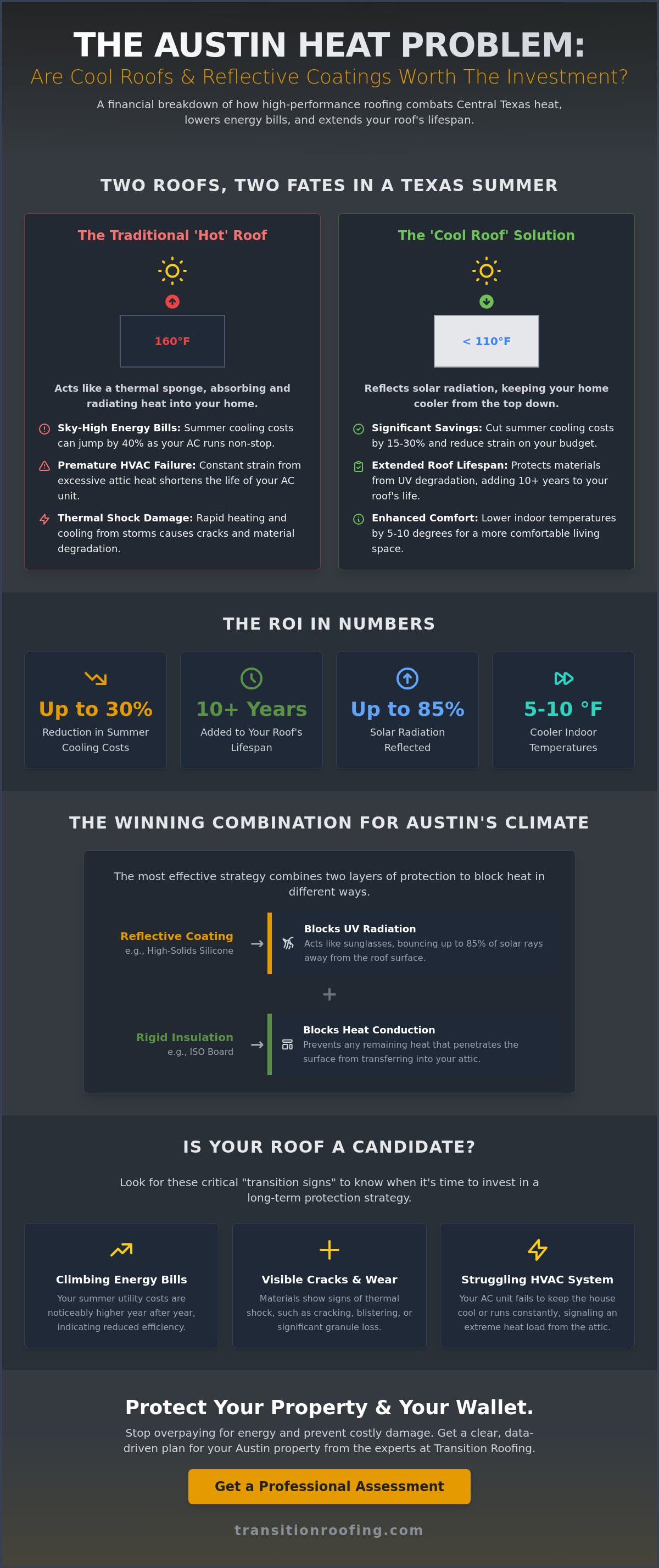
Many homeowners ask us, Are cool roofs reflective coatings and added insulation actually worth it in Austin? After 15 years of roofing in Central Texas, we’ve seen the data firsthand. A standard dark shingle roof often hits 160°F on a typical July afternoon. In contrast, a cool system stays under 110°F. These systems work by reflecting solar radiation away from your attic, keeping your home cooler from the top down. Transition Roofing focuses on these high-performance solutions to protect your property from the brutal Texas sun.
To better understand how these materials perform in the real world, watch this helpful video:
Think of reflective coatings as high-performance sunglasses for your building. They bounce up to 85% of UV rays back into the atmosphere before they can penetrate your roof deck. This technology relies on Cool Roof Technology to ensure your structure doesn’t act like a radiator. By choosing the right materials, you’re not just saving on energy; you’re extending the life of your entire roofing system.
Reflectance vs. Emittance: The Central Texas Perspective
Solar reflectance is the specific percentage of sunlight that a roof bounces back into the atmosphere. While reflectance is key during the day, high emittance is just as vital for Austin TX properties. Emittance measures how quickly a roof sheds heat after the sun goes down. In neighborhoods like Mueller or Tarrytown, high emittance helps fight the “heat island” effect where trapped heat keeps the whole area sweltering at night.
- TPO Membranes: These offer a smooth, white surface that excels at reflectance, making them ideal for flat or low-slope roofs.
- Coated Metal: Specialized pigments provide high emittance, which is perfect for our humid nights when the air stays thick and warm.
- Cool Shingles: Modern GAF or Certainteed cool shingles use granules that reflect infrared light while maintaining a traditional look.
The Hidden Costs of Traditional ‘Hot’ Roofs in 2026
Standard asphalt shingles act as thermal sponges. They soak up heat all day and radiate it into your living space long after sunset. This forces your AC unit to cycle constantly to keep up. Over time, this leads to premature mechanical failure and higher maintenance fees for your HVAC system. We often see AC units in Austin fail years before their expected lifespan because of excessive attic heat.
Thermal shock is another major concern for Austin TX homeowners. This is the rapid expansion and contraction of materials as they heat up to 160°F and then cool down during a sudden afternoon thunderstorm. This process creates cracks and loosens granules, shortening the lifespan of non-reflective roofs. If you’re seeing your energy bills climb every summer, this is usually when we recommend looking at a transition to a more efficient system. We can take a look at your current setup and give you a clear plan for long-term protection.
Calculating the ROI: Are Reflective Coatings and Added Insulation Actually Worth It in Austin?
Most property owners in Central Texas see a 15% to 30% reduction in peak summer cooling costs after upgrading to a high-performance system. This data directly answers the question: Are cool roofs reflective coatings and added insulation actually worth it in Austin? When you consider the extreme heat of our local climate, these upgrades transition from optional luxuries to essential financial protections. For most commercial properties and flat-roof homes, the investment pays for itself through utility savings and asset preservation.
Energy Bill Reductions and HVAC Longevity in Austin TX
Reducing the cooling load on your building does more than lower your monthly bill; it changes how your HVAC system operates. When your roof reflects solar energy instead of absorbing it, your AC units don’t have to work nearly as hard. This allows property owners to downsize HVAC equipment during their next replacement cycle because the building maintains its temperature more efficiently. We focus on the “delta T,” which is the temperature difference between the blistering outside air and your indoor environment. While a coating reflects light, added insulation like ISO board or spray foam provides a consistent thermal barrier that maintains a 20-degree gap even in July.
Reflective coatings can extend the life of an existing flat roof by 10 to 15 years. This effectively delays a costly full replacement. Many commercial roofing San Antonio property managers are already using these systems to hit ESG and sustainability goals while protecting their bottom line. If you are seeing your energy bills climb every summer, this is usually when we recommend a thermal assessment to find where your roof is leaking energy.
Tax Credits and Local Rebates for Austin TX Property Owners
The financial return is accelerated by government and local utility incentives. In 2026, federal tax credits remain available for energy-efficient building envelope improvements. These credits can significantly offset the initial cost of installing reflective materials or high-R-value insulation. According to the Department of Energy on Cool Roofs, these systems are most effective in hot climates where cooling dominates energy use. Locally, Austin Energy often provides rebates for reflective roofing and attic insulation upgrades that meet specific Solar Reflectance Index (SRI) standards.
A typical commercial coating project in the Austin area pays for itself in energy savings within 5 to 7 years. To ensure you qualify for maximum warranty and incentive tiers, we use industry-certified products from GAF and Versico. With over 15 years of experience in the Texas market, we know which systems meet the rigorous requirements for local rebates. Our team ensures the installation is documented correctly so you don’t leave money on the table. We provide realistic ranges for every project, ensuring your ROI is based on facts rather than guesswork.
The Winning Combination: Integrating Reflective Coatings and Rigid Insulation in Austin TX
To answer the question, are cool roofs reflective coatings and added insulation actually worth it in Austin? you have to understand how heat enters your building. Reflective coatings manage solar radiation by bouncing UV rays away before they soak into the structure. Insulation handles conduction by slowing the physical transfer of heat through the roof deck. You need both to create a high-performance system that survives a Central Texas summer. We prefer rigid polyisocyanurate (ISO) board for adding R-value to flat or low-slope roofs because it offers the highest thermal efficiency per inch of thickness.
For residential homes, we recommend “Cool Shingles” that meet Energy Star requirements. These shingles use specially engineered granules to reflect heat without sacrificing the curb appeal of a traditional roof. This is usually when we recommend a full system audit. Our team needs to ensure your existing decking can support the weight of added insulation layers before we begin the installation. With over 15 years of experience, we’ve seen how the right combination of materials prevents the premature aging of your roof deck.
Choosing Between TPO, Metal, and Elastomeric Coatings
TPO (thermoplastic polyolefin) is the gold standard for new commercial metal roofing Austin installations. It’s a single-ply membrane that provides exceptional puncture resistance and reflectivity. If your current roof is structurally sound but leaking, a liquid-applied silicone coating is often a smarter financial move than a full tear-off. It creates a seamless, waterproof barrier for a fraction of the cost. For homeowners looking for a “lifetime” solution, metal roofing with Kynar 500 reflective finishes is the top choice. These finishes stay bright and reflective for decades, even under the intense Austin sun.
Why Insulation R-Value Matters More Than Ever in Central Texas
R-value is the measure of thermal resistance. Higher numbers mean your insulation is better at blocking heat. Current Austin building codes for new commercial construction typically require R-30 or higher. We often use “tapered insulation” to solve two problems at once. This custom-cut ISO board stops heat gain and creates a precision slope to eliminate ponding water. Lawrence Berkeley National Laboratory research on cool roofs shows that combining these reflective surfaces with proper insulation can lower peak cooling demand by 10 to 15 percent. This isn’t just about comfort; it’s about reducing the strain on your HVAC system during 100-degree days.
If you’re seeing high energy bills or dealing with a hot upstairs office, we can take a look and give you a clear plan. Schedule a roof inspection in Austin today.
When to Transition: Investing in Your Austin TX Roof Protection Strategy
Deciding if are cool roofs reflective coatings and added insulation actually worth it in Austin? depends entirely on the current health of your building. At Transition Roofing, we’ve spent over 15 years evaluating commercial and residential structures across Central Texas. We’ve learned that a cool roof is a performance upgrade for a sound structure, not a fix for a failing one. You should never coat a roof that is currently leaking or has saturated insulation. Trapping moisture under a new silicone layer leads to rapid wood rot and structural failure within 18 to 24 months.
Assessing Hail Damage and Coating Integrity in Austin TX
Austin hail storms are the primary threat to any reflective surface. Lower-quality acrylic coatings often develop micro-cracks after a storm, which allows water to seep under the membrane and cause delamination. We use high-solids silicone because it provides superior impact resistance against the 1.5-inch hail common in our region. If your property was hit by a storm in the last year, our team specializes in austin roof repair and insurance claim assistance to ensure your system is restored correctly.
- Impact Resistance: High-solids silicone stays flexible, absorbing energy from hail strikes without cracking.
- Sacrificial Protection: These coatings act as an affordable shield for expensive TPO membranes, preventing UV degradation and extending the roof life by 10 to 15 years.
- Reflectivity Maintenance: Dirt and Texas dust can reduce solar reflectance by 25% within three years; regular rinsing is required to maintain your ROI.
Professional Installation: Why Your Contractor Choice Determines Your ROI in Austin TX
Proper surface preparation is 90% of a successful coating application. Our crews focus on deep power washing and specialized priming to ensure the material bonds permanently to the substrate. Because we are GAF and CertainTeed certified installers, we can provide No Dollar Limit (NDL) warranties. These warranties offer long-term peace of mind that uncertified contractors simply cannot match. We’ve seen 85% of DIY or uncertified coating projects fail early due to poor adhesion or improper thickness.
If you’re seeing rising energy bills or a struggling AC unit that can’t keep up with 100-degree days, we can take a look and give you a clear plan. We’ll help you determine if are cool roofs reflective coatings and added insulation actually worth it in Austin? for your specific property. Schedule a roof inspection in Austin today to protect your investment for the long haul.
Protect Your Property and Budget with a Proven Austin TX Strategy
Lowering your overhead starts with understanding how heat moves through your building. High-solids silicone coatings reflect up to 88 percent of UV rays, while rigid insulation prevents thermal bridging that wastes your expensive AC. When you combine these technologies, you create a shield that handles the brutal Central Texas sun and unpredictable spring storms. We’ve spent over 15 years perfecting these installations for local property owners who need real results.
Many clients ask us: Are cool roofs reflective coatings and added insulation actually worth it in Austin? The data shows that reduced cooling loads and extended roof life cycles provide a return on investment that pays for itself over time. As GAF and Versico certified installers, we focus on high-performance TPO and silicone systems that stay secure for decades. You don’t have to guess about your roof’s integrity or settle for high utility costs every summer.
If you’re tired of skyrocketing energy bills, schedule a professional roof and insulation audit in Austin today. We’ll give you a clear, honest assessment of your current system and show you exactly how to transition your roof into a long-term asset. We’re ready to help you keep your building cool and your costs down.
Frequently Asked Questions About Cool Roofs in Austin TX
Do cool roofs actually work in the winter in Austin?
Yes, cool roofs still function in the winter, but their primary job is managing our 100 degree Texas summers. Since Austin averages 229 sunny days per year, the cooling benefits far outweigh any minor heat loss during our short winters. The sun stays low in the sky during January, so your roof doesn’t absorb much heat anyway. You’ll see the real return on investment when the cooling season hits in May.
How much can I realistically save on my Austin energy bills with a reflective coating?
You can typically reduce your annual cooling costs by 7 to 15 percent according to Department of Energy data. Many property owners ask, are cool roofs reflective coatings and added insulation actually worth it in Austin? The answer is clear when you see roof surface temperatures drop by 50 degrees on a July afternoon. This reduction takes a massive load off your HVAC system, which helps it last longer and run more efficiently.
Can you apply a reflective coating over existing asphalt shingles?
No, we don’t recommend applying liquid coatings directly over standard asphalt shingles. These products are engineered for flat roofs or metal systems, not for shingle granules. Applying a coating to shingles can trap moisture in the roof deck and lead to rot or mold. If you want a cool roof for a sloped home in Austin TX, we suggest installing GAF or CertainTeed shingles that have reflective granules built in.
Does a white roof get dirty and lose its effectiveness over time?
Yes, dirt and biological growth can reduce a roof’s solar reflectance by 10 to 20 percent within the first 3 years. We see this often in the humid Central Texas climate where pollen and dust settle on flat surfaces. Regular maintenance and professional cleaning every 24 months help maintain the high SRI ratings. This ensures your roof continues to repel heat rather than absorbing it into your building.
What is the best R-value for roof insulation in Central Texas?
The Department of Energy recommends an R-value between R-38 and R-60 for attic spaces in Austin TX. Most older homes in our area only have R-19 or R-30, which isn’t enough to stop the intense heat transfer. Upgrading to R-49 provides a thick thermal barrier that keeps your air conditioning from escaping. This is a critical component for those wondering if are cool roofs reflective coatings and added insulation actually worth it in Austin.
Will a reflective coating protect my Austin roof from hail damage?
A standard reflective coating provides almost no protection against the physical impact of large hail. While some high performance coatings from brands like Versico add a slight layer of durability, they aren’t a substitute for impact resistant materials. If you’re concerned about the frequent storms in Austin TX, we recommend a Class 4 impact rated roofing system. These systems are specifically tested to withstand 2 inch hailstones without failing.