The most affordable flat roofing option on your initial quote often ends up being the most expensive mistake you’ll make for your property. It’s frustrating to watch a low-slope area develop standing water after a typical Central Texas thunderstorm, especially when that moisture eventually finds its way into your ceiling. You likely already know that the Austin, TX sun is relentless, and a roof that can’t reflect that heat is just a giant radiator sitting above your head. Every degree of heat absorbed through a dark membrane translates directly to higher HVAC stress and bigger monthly bills.
We’ve spent over 15 years protecting local buildings, and we want to ensure your next investment lasts at least 20 years. This guide compares the most durable materials like TPO and Modified Bitumen specifically for our regional climate to help you secure a leak-free future. You’ll learn which reflective systems can reduce cooling costs by up to 30 percent and exactly what maintenance schedule keeps your warranty valid. We’re here to help you move from a state of constant repair to total security with a clear, data-driven plan for your property.
Key Takeaways
- Learn why traditional shingles fail on low-slope systems and how to identify the correct pitch for your Austin property to prevent water ponding.
- Compare the durability and heat-resistance of TPO, PVC, and Modified Bitumen to see which material best handles the intense Central Texas sun.
- Discover the real-world investment required for flat roofing in Austin, TX, and why prioritizing expert labor now prevents expensive interior water damage later.
- Tailor your material choice to your building’s specific needs, including how to account for heavy HVAC equipment and frequent foot traffic.
- Understand our specialized inspection process for uncovering hidden moisture and structural deck issues before they compromise your building’s security.
Understanding Flat Roofing Systems in the Austin, TX Climate
In Austin, TX, a roof does not need a steep peak to provide high-level protection. Most property owners refer to these as flat roofs, but they are technically low-slope systems with a pitch typically between 1/4:12 and 3:12. This slight angle is vital because it helps guide water toward your drainage system. When you are Understanding Flat Roofing Systems, it becomes clear why standard shingles are a poor choice for these surfaces. Shingles are designed to shed water quickly using gravity. On a flat surface, water tends to sit or “pond,” which eventually rots the asphalt and leads to structural leaks. Our team at Transition Roofing focuses on moving you from the vulnerability of a failing roof to the total security of a sealed, modern system.
To better understand how these systems protect your property, watch this helpful video:
Proper drainage is the most critical factor for flat roofing during a Central Texas flash flood. If your scuppers or internal drains are not sized correctly, thousands of pounds of water can accumulate on your roof deck. This extreme weight threatens the structural integrity of your building. We have seen many properties in Travis County suffer because their drainage wasn’t designed for the heavy rainfalls we experience. If you’re noticing water standing on your roof 48 hours after a storm, it’s usually when we recommend a professional evaluation to prevent long-term damage.
The Impact of Central Texas Heat and UV in Austin, TX
Austin’s 100-degree summers are brutal on roofing materials. On a typical July afternoon, a dark roof surface can reach 160 degrees, causing membranes to expand and contract rapidly. This thermal movement can pull at the seams and create gaps. We prioritize “cool roof” ratings for our installations because they reflect UV rays away from the building. Using these reflective materials can lower your Austin energy bills by as much as 15 percent. UV degradation is the primary enemy of flat roofing in Travis County, making high-quality, UV-resistant membranes a necessity for long-term protection.
Hail Resistance for Low-Slope Roofs in Austin, TX
Hail is a constant threat in Central Texas, and low-slope roofs are particularly vulnerable to impact. We evaluate membrane thickness, measured in mils, to ensure your property can withstand local storm patterns. Reinforced TPO from manufacturers like GAF or Versico is often the preferred choice because it handles hail impact better than thinner, non-reinforced options. We also recommend installing high-density cover boards under the membrane. This extra layer provides a solid backing that prevents hailstones from puncturing the waterproofing layer, keeping your interior dry even during severe weather events.
Comparing the Best Flat Roofing Materials for Austin, TX Properties
Many property owners in Central Texas ask us for a “rubber roof” by default. They are usually thinking of EPDM, which was the industry standard for decades. However, the 100-degree Austin summers have changed the conversation. Black EPDM absorbs heat, which can spike cooling costs and stress your HVAC equipment. Choosing the right flat roofing material requires looking at reflectivity, puncture resistance, and how the system handles our intense storm cycles. We focus on high-performance systems from trusted manufacturers like GAF, Versico, and Dura-last because they provide the long-term security our clients expect.
The performance of these materials often depends on the attachment method. We typically recommend one of two approaches based on your building’s structure:
- Mechanically Attached: We secure the membrane to the roof deck using heavy-duty screws and plates. This is a reliable and cost-effective method for most standard commercial decks.
- Fully Adhered: We bond the membrane to the insulation using specialized adhesives. This provides the highest level of wind uplift protection, which is vital during the severe spring storms we experience in Central Texas.
TPO Roofing: The Modern Standard
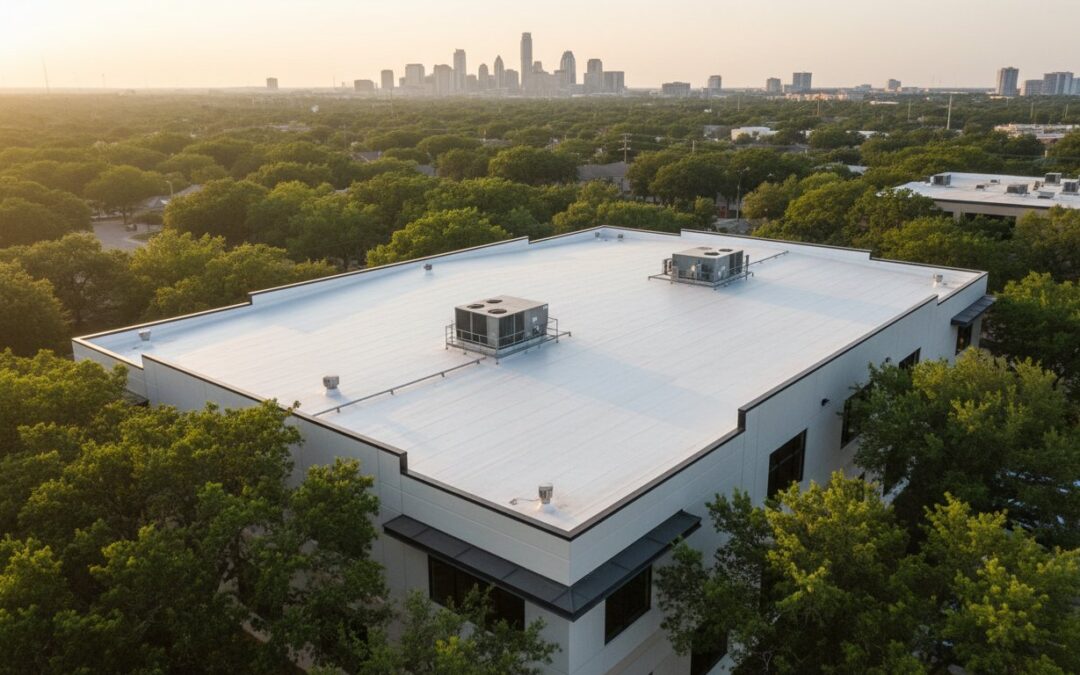
White TPO (Thermoplastic Polyolefin) is the top choice for energy efficiency in Austin, TX. It reflects a massive amount of solar heat, keeping the building interior much cooler than traditional dark materials. We prefer TPO because of its heat-welded seams. Instead of relying on glues that can dry out and fail, we use hot-air welders to fuse the sheets together. This creates a single, monolithic waterproof layer. Based on our 15 years of experience in the field, a quality TPO system from a brand like Versico or GAF provides a reliable 20-year lifespan when installed with precision.
Modified Bitumen and Built-Up Roofing (BUR)
There are times when a modern single-ply membrane isn’t the best fit. For buildings with heavy roof-mounted equipment or frequent foot traffic, Modified Bitumen remains a powerhouse. These systems use multiple layers of asphalt reinforced with polyester or fiberglass. You can install them using “torch-down” heat or cold-applied adhesives. If you are worried about hail damage or punctures, the thickness of a multi-layer bitumen roof provides a level of physical protection that single-ply membranes cannot match. If you notice pooling water or aging seams on your current deck, scheduling a professional assessment is the best way to see if a bitumen system is the right upgrade for your property.

Flat Roofing Costs and Lifespan Factors in Austin, TX
Investing in flat roofing for your property in Austin, TX requires a realistic look at both the upfront price and the long-term value. A high-quality installation is a balance between premium materials and expert labor. While materials like TPO or modified bitumen accounts for a portion of your budget, the skill of the crew determines if those materials actually perform. Expert labor ensures that seams are heat-welded correctly and drainage slopes are precise. Choosing a “budget” contractor often leads to ponding water, which eventually rots structural decking and causes expensive interior damage to your ceiling and equipment.
Estimating Your Flat Roof Investment
Several variables influence the final quote for a project in Central Texas. The size of the roof is the primary factor, but accessibility also plays a major role. If a building is located in a high-density area of Austin with limited space for cranes or debris removal, labor costs will increase. We also look at the number of existing layers; Texas building codes often require the removal of old roofing before a new system is installed. To maximize your investment, we recommend insulation upgrades using ISO (polyisocyanurate) boards. These boards provide a critical thermal break that resists the intense Austin heat, significantly reducing your building’s energy consumption. Local permit fees in Austin are calculated based on the total project valuation, adding a fixed administrative cost to every professional roof replacement.
Lifespan and Warranty Realities
Understanding the difference between manufacturer warranties and workmanship guarantees is vital for long-term protection. Brands like GAF and Certainteed provide warranties that cover material defects for 20 years or more. However, these do not always cover leaks caused by poor installation. This is why a contractor’s workmanship guarantee is your most important shield. While marketing brochures might claim a 30-year life, the reality of the Texas climate is much harsher. Constant UV exposure and rapid temperature shifts can degrade standard materials faster than laboratory tests suggest.
Our “Transition” logic focuses on moving your property from a state of vulnerability to total security. This means investing more in a thicker membrane or reinforced flashing upfront. This proactive approach prevents the emergency repair calls that typically happen during a midnight thunderstorm. To keep your system healthy, we suggest the following:
- Bi-annual Inspections: Schedule professional walk-throughs in the spring and fall to clear debris from drains.
- Post-Storm Checks: After a Central Texas hailstorm, have an expert verify that the flat roofing membrane was not punctured.
- Seam Maintenance: Address small cracks in the flashing immediately to prevent water from reaching the insulation.
If you are noticing water stains on your ceiling or suspect your current roof is nearing the end of its life, it is time for a professional assessment. We provide a clear plan to stabilize your property and extend the life of your roof through proven maintenance and quality craftsmanship.
Selecting the Right Flat Roof for Your Austin, TX Building
Choosing the right flat roofing system depends on what happens inside and on top of your building. A retail space has different needs than a restaurant or a modern home. In Austin, we face intense UV rays and sudden storms that dump three inches of rain in an hour. Many owners worry about ponding water. A properly engineered system uses a 1/4-inch per foot slope to ensure water moves toward internal drains or scuppers. If your roof holds water for more than 48 hours, it’s a design flaw, not a flat roof feature. Our team focuses on creating a positive pitch that moves water off the deck immediately.
Solutions for Commercial and Industrial Buildings in Austin, TX
For restaurants, PVC is the industry standard. It resists animal fats and grease exhausted from kitchen vents. These substances would dissolve other materials over time. For large warehouses and retail spaces, TPO is the most efficient choice. Its white surface reflects up to 85% of solar heat, which is vital during our 100-degree July stretches. We often install walk pads around HVAC units to protect the membrane from heavy foot traffic during routine maintenance. Managing large-scale drainage requires a mix of internal roof drains and overflow scuppers to keep the structure safe during a Central Texas downpour. Property managers overseeing large facilities should also understand the risks of metal roof failures; a single leaking seam on a warehouse can cause thousands in interior damage, which is why having a plan for commercial metal roof repair in Austin, TX is just as important as your flat roof maintenance strategy. For those managing properties across the broader South Texas region, understanding how extreme heat affects low-slope systems is equally critical, and our guide to commercial roofing San Antonio property managers rely on covers the same thermal shock and hail challenges in detail.
Modern Residential Flat Roof Options for Austin, TX
Modern Austin architecture often blends flat sections with sloped areas. You don’t have to sacrifice style for protection. High-quality membranes now come in various colors to match your home’s palette. If you’re building a sleek addition, you can easily integrate a flat system with existing metal roofing Austin systems. This creates a watertight transition that handles the thermal expansion common in our climate. We prioritize aesthetics by hiding drainage components while ensuring the membrane remains puncture-resistant against falling branches or hail.
Finding a reliable roofing contractor Austin TX requires looking for specific certifications. Look for installers certified by Versico, GAF, or Certainteed. These manufacturers only back contractors who prove they can handle the technical details of heat-welded seams and perimeter flashing. We use over 15 years of local experience to ensure your installation meets these high standards. If you’re seeing signs of wear or ponding water, it’s time to get a professional eyes on it. Schedule a comprehensive roof inspection in Austin today to secure your property’s future.
Transitioning Your Austin, TX Property to a Secure Flat Roof
Every successful flat roofing project starts with a detailed inspection that goes beneath the surface. We don’t just look for visible tears; we use moisture probes and thermal technology to find water trapped within the insulation. Identifying these hidden pockets of moisture is vital because installing a new membrane over a wet substrate leads to premature failure and rot. If your structural deck is compromised by years of neglect, a simple overlay won’t protect your investment. We prioritize structural integrity to ensure your building remains secure through the 2026 storm season.
Central Texas expertise is a requirement for long-term flat roof performance. The Austin, TX climate creates extreme thermal expansion that can pull seams apart if they aren’t installed correctly. We’ve spent over 15 years refining our techniques to handle the 100 degree heat and sudden hail spikes common in our area. This local knowledge helps us choose the right thickness and attachment methods for your specific property. Before you sign any contract, use this final checklist to protect yourself:
- Manufacturer Certifications: Ensure the contractor is certified by brands like GAF, Versico, or Carlisle to guarantee warranty coverage.
- Specific Scope of Work: The quote should detail exactly how many layers are being removed and which specific materials are being installed.
- Drainage Plan: Verify how the contractor will handle ponding water, which is the primary enemy of low-slope systems.
- Insurance and Bonding: Confirm the company carries active general liability and workers’ compensation specifically for roofing.
Expert Installation and Leak Mitigation
We focus heavily on critical flashing points where walls meet the roof and around pipes. These areas are where 90 percent of leaks originate. While a full replacement is sometimes necessary, timely and professional austin roof repair can often extend the life of an existing membrane by five to seven years. Transition Roofing provides transparent estimates and no-fluff advice. We won’t sell you a new roof if a high-quality repair will keep you dry and safe.
Schedule Your Austin Flat Roof Inspection
When you schedule a professional low-slope assessment with us, you get a clear plan for your property. We walk the entire surface, document every deficiency, and provide a digital report with photos. This process removes the guesswork from property management. If you’re seeing signs of aging or water stains on your ceiling, it’s time to act. We’re here to help Austin owners secure their properties for 2026 and beyond. Contact us today to receive your comprehensive flat roof evaluation and move your building toward total security.
Secure Your Austin, TX Investment with a Proven Flat Roof Plan
Choosing the right flat roofing system for your Austin, TX property is about more than just picking a material; it’s about preparing for the 100 degree heat and unpredictable hail that defines the Central Texas climate. We’ve seen how the right choice today prevents costly leaks and structural issues five or ten years down the road. Our team brings over 15 years of local experience to every project, serving as certified GAF and Versico installers who specialize in navigating the complexities of storm damage and insurance claims.
We focus on providing a methodical transition from a failing roof to a high-performance system that protects your bottom line. You deserve the peace of mind that comes from knowing your building is in the hands of a neighborly expert who values craftsmanship and long-term durability. Schedule your professional Austin flat roof inspection and get a clear security plan today. We’re ready to help you protect your property with a roof built to last through every Texas season.
Common Questions About Flat Roofing in Austin TX
Is flat roofing more prone to leaks than sloped roofing?
Flat roofs aren’t inherently more prone to leaks if they’re installed with proper drainage and modern materials. The issue usually stems from poor installation or ponding water where moisture sits for more than 48 hours. We use high quality membranes like TPO or PVC that create a monolithic, waterproof barrier. This ensures your Austin property stays dry even during heavy spring thunderstorms and flash flood events common in Central Texas.
How long does a TPO flat roof last in the Austin heat?
A professionally installed TPO flat roof typically lasts 15 to 25 years in the Central Texas climate. The white, reflective surface of TPO is specifically designed to bounce back UV rays, which prevents the material from becoming brittle under the Texas sun. Regular maintenance is key to reaching that 25 year mark. If you notice the seams starting to pull, it’s usually when we recommend a professional inspection to prevent internal damage.
Can I install a flat roof over my existing roofing material?
You can often install a new flat roof over one existing layer, but local Austin building codes generally prohibit a third layer. We usually recommend a full tear-off to inspect the decking for wood rot or structural issues. Removing the old material ensures the new membrane adheres perfectly and doesn’t trap moisture between layers. This approach provides the long term protection your building deserves and maintains the integrity of your warranty.
What is the best flat roofing material for a residential home in Texas?
TPO is currently the top choice for residential flat roofing in Austin TX because of its energy efficiency and durability. It handles our 100 degree summer days better than traditional rolled asphalt or built up roofs. For homeowners looking for maximum longevity, PVC is another high performance option. Both materials offer excellent resistance to chemicals and punctures, making them a secure investment for any property owner in the region.
How much does it cost to repair a commercial flat roof in Austin?
Repair costs depend on the size of the damage and the type of membrane, but minor repairs often start with a base service fee for simple patch work. Major restoration or structural repairs require a more detailed assessment of the deck and insulation. According to 2024 industry data, commercial repairs are priced based on labor hours and material specialized for the specific system. We provide a clear plan after every inspection so you know exactly what the fix involves.
Do flat roofs require a special type of insulation?
Yes, flat roofs typically use Polyisocyanurate rigid foam boards which provide a high R-value per inch. This insulation is installed directly under the membrane to keep your building cool during intense Texas summers. It’s strong enough to support the weight of the roof and foot traffic while providing a flat surface for the membrane. Proper insulation is a critical step in reducing your monthly energy bills and protecting your HVAC system from overworking.
How often should I have my flat roof inspected in Central Texas?
You should schedule a professional roof inspection at least twice a year, ideally in the spring and fall. Austin weather is unpredictable, and heavy hail or wind can damage seams and flashings without being visible from the ground. We also recommend an inspection after any major storm event. Catching small issues early is the best way to extend the life of your roof and avoid the stress of a total replacement.
Can I walk on my flat roof after it is installed?
You can walk on most flat roofs for routine maintenance, but they aren’t designed for heavy daily foot traffic or use as a living space. If you plan to use the area as a patio or for frequent equipment access, we install reinforced walk pads in high traffic zones. These pads protect the membrane from punctures and surface wear. Always wear soft-soled shoes to maintain the integrity of the surface and keep your property secure.