
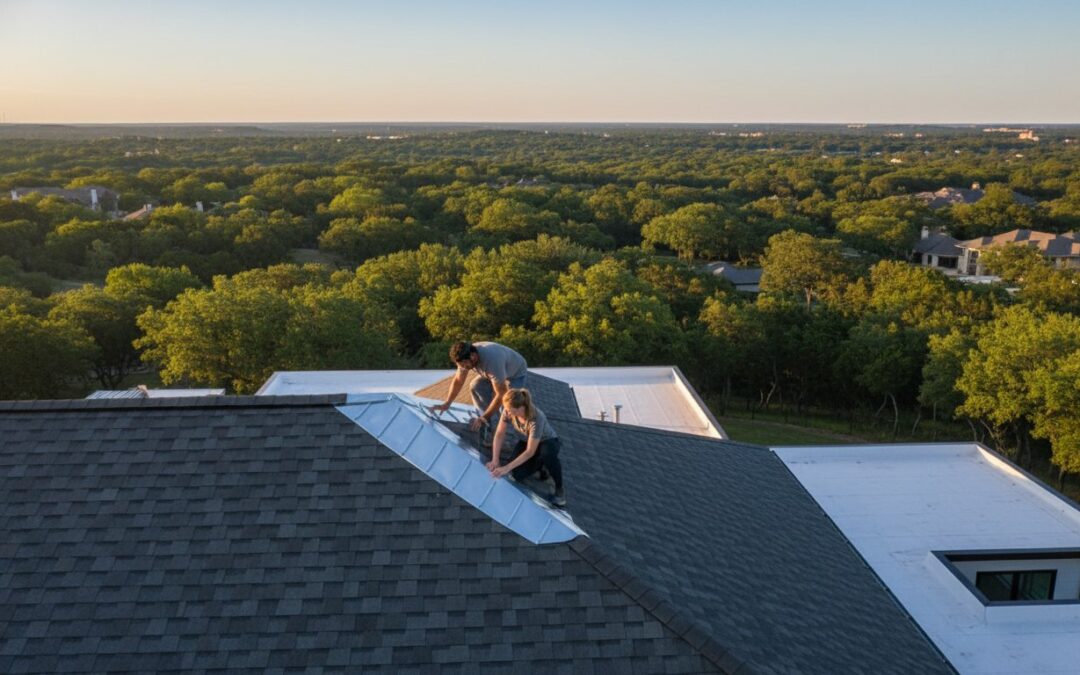
Last May, a business owner in North Austin watched a single afternoon downpour turn a minor valley leak into a 12% loss in total inventory. It’s a frustrating situation that many Central Texas property owners face when they realize the points where different roof sections meet are actually the most vulnerable. You shouldn’t have to feel anxious every time a storm rolls off the Hill Country. We believe your property deserves a foundation of integrity and long-term protection.
Mastering the best practices for Transition Roofing is the most effective way to ensure your home or business stays dry during our 100-degree summers and sudden spring hail. This guide provides a clear understanding of the technical requirements for pitch changes and the precise steps for a smooth transition from old shingles to modern TPO or metal systems. We will walk you through the methodical process of securing these critical junctions to provide total peace of mind. You’ll learn how to move your roof from a state of uncertainty to one of proven, lasting security.
Key Takeaways
- Identify the critical areas where roof sections meet to prevent the common leaks that plague Central Texas homes and businesses.
- Apply the Best practices for Transition Roofing to ensure seamless material compatibility and avoid the structural damage caused by galvanic corrosion.
- Secure your property with technical insights on proper underlayment overlap and flashing alignment for superior drainage.
- Manage the restoration process with confidence, from protecting your landscaping during tear-off to successfully navigating hail damage insurance claims.
- Leverage local expertise in both residential metal and commercial TPO systems to achieve a seamless, long-term solution for your Austin property.
Understanding the Roofing Transition: Why Detail Matters in Austin
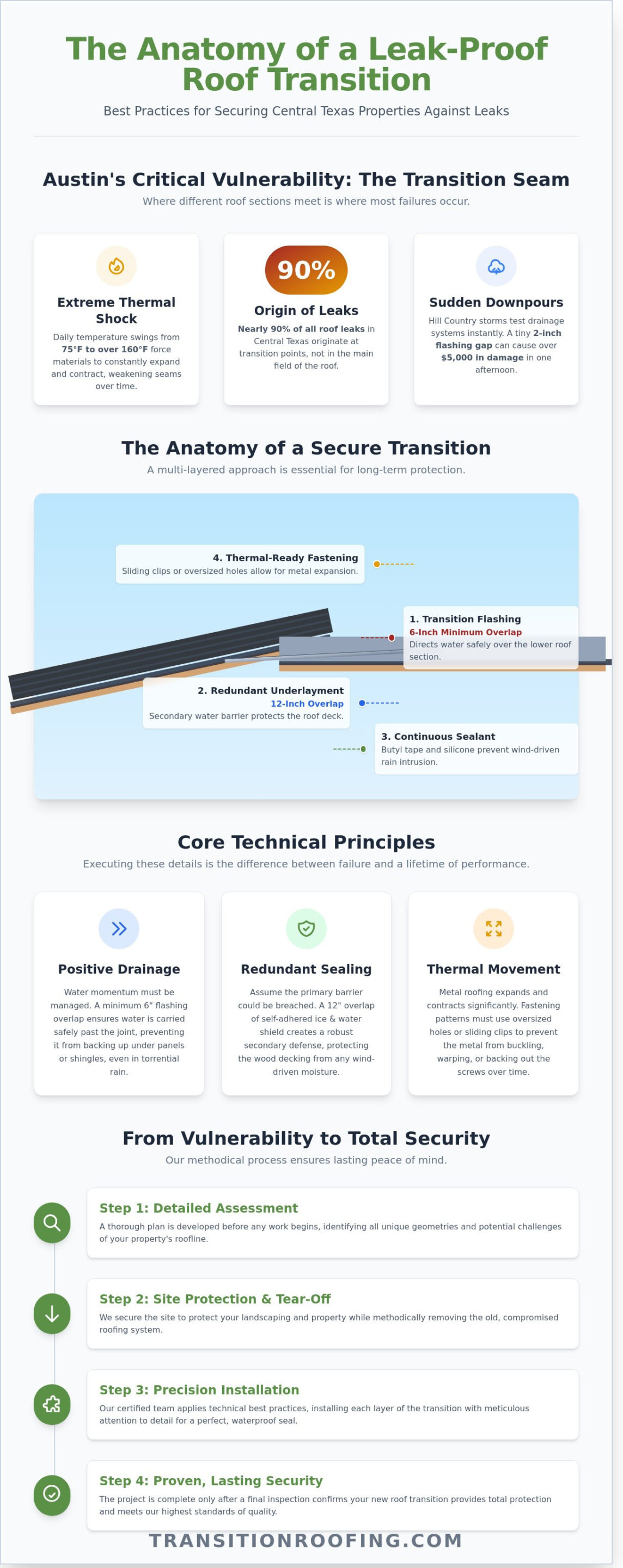
A roofing transition occurs where two distinct surfaces meet. This includes changes in pitch, material types, or intersections between different roof sections. In Austin, these areas represent the most vulnerable points of any structure. We see it daily; a transition is more than a seam. It’s a critical junction that must withstand the relentless Texas sun. Nearly 90% of roof leaks in Central Texas originate at these specific points. When a shingle roof meets a flat TPO section, or a steep gable drops into a porch, the risk of water intrusion spikes. Following the best practices for Transition Roofing ensures your property remains dry and secure through every season.
Austin’s climate creates a unique set of challenges for local property owners. During a typical July, roof surface temperatures often swing from 75 degrees at night to over 160 degrees by mid-afternoon. This constant thermal cycling forces roof flashing to expand and contract repeatedly. If the installation lacks precision, the metal eventually buckles or pulls away from the substrate. This creates microscopic gaps that invite water during a sudden Hill Country downpour. Poorly managed transitions often lead to insurance carriers denying claims later. They frequently cite maintenance issues or improper installation rather than storm damage when they find faulty transitions.
The Technical Transition: Pitch Breaks and Flashing
Technical transitions involve high-to-low or low-to-high pitch changes. In TPO or metal systems, these breaks require custom-fabricated transition trim to remain effective. Standard, off-the-shelf flashing rarely fits the unique geometries of Austin’s custom homes. We focus on directing water flow away from seams entirely. A tiny 2-inch gap in flashing can cause over $5,000 in interior damage during a single afternoon storm. Precision at the pitch break is the only way to ensure long-term integrity.
The Procedural Transition: Moving from Old to New
Success begins with a thorough initial assessment. In neighborhoods like West Lake Hills or Lakeway, complex rooflines demand a detailed plan before the first shingle is removed. We manage the transition period by securing the site and minimizing noise for residents and local businesses. A project timeline shouldn’t be a mystery. We move your roof from a state of vulnerability to total security through a methodical, transparent process. Implementing the best practices for Transition Roofing means your new system performs better than the day the building was first constructed.
Technical Best Practices for Transition Flashing and Pitch Breaks
Precision is everything when water moves from a steep slope to a shallow one. Austin property owners often face sudden, heavy downpours that test the limits of a roof’s drainage system. Achieving positive drainage requires a minimum 6 inch overlap of the transition flashing over the lower roof section. This ensures water momentum carries it safely past the joint without backing up under the upper panels. We focus on the geometry of the pitch break to ensure that gravity remains an ally rather than an enemy.
Underlayment serves as your secondary line of defense. At the transition point, we require a 12 inch overlap of self-adhered ice and water shield. This creates a redundant seal that protects the decking if wind-driven rain pushes moisture upward during a storm. Using high quality sealants like 100% silicone or closed cell foam closures prevents debris and moisture from entering the gaps created by metal ribs or shingle profiles. These materials maintain their elasticity even when exposed to the 105 degree heat common in Central Texas summers.
Thermal movement is a major factor in our region, where roof temperatures can swing 80 degrees in a single day. Fastening patterns must account for this expansion and contraction. We utilize oversized holes or sliding clips in metal systems to prevent the metal from buckling or backing out screws. Following these best practices for Transition Roofing ensures the system remains watertight through years of seasonal cycles. If you’re concerned about a current leak at a pitch change, you can request a professional inspection to identify potential failure points before they cause interior damage.
Installing Transition Flashing on Metal Roofs
Align the transition trim so it sits flush against the high side panels. We apply a double bead of butyl tape between the Z-bar and the roof panel to create a primary gasket seal. Secure the Z-bar with fasteners every 12 inches to maintain consistent pressure. Finally, we fold a half inch hem on the bottom edge of the flashing. This break in surface tension prevents capillary action from pulling moisture back under the metal panels.
Low-Slope and TPO Transition Essentials
TPO transitions require heat welding at temperatures typically between 800 and 1,100 degrees Fahrenheit. This process fuses the sheets into a single, monolithic layer that is stronger than the material itself. We install termination bars at vertical wall transitions, secured with anchors every 6 inches and topped with water cutoff mastic. Proper counter flashing is then installed to shed water over the bar. This setup prevents ponding water from seeping behind the membrane during flash flood events.
Material Compatibility: Best Practices for Transitioning Systems
Transitioning between different roofing materials requires more than a standard overlap. When you join asphalt shingles with standing seam metal, you face distinct physical challenges. These materials react differently to Austin’s 105-degree summer days. Best practices for Transition Roofing involve understanding how these surfaces bond and where they typically fail. Our team focuses on the chemical and thermal realities of these joints to ensure your home stays dry during a Central Texas downpour.
Galvanic corrosion is a primary risk when different metal types interact. For example, placing copper flashing directly against aluminum panels creates an electrochemical reaction that leads to rapid metal deterioration. We prevent this by using stainless steel fasteners or inert spacers to break the electrical circuit between incompatible metals. This attention to detail preserves the integrity of the roof for its full 30-year or 50-year lifespan.
Many Austin properties feature a steep-slope residential section that connects to a flat commercial wing. This junction is a frequent site for leaks. We address this by extending the flat roof membrane, such as TPO or modified bitumen, at least 18 inches up the vertical slope before the shingle underlayment is applied. In neighborhoods like Rollingwood, maintaining a clean aesthetic is just as important as the seal. We coordinate the color profiles of custom flashing with shingle granules to create a unified look that protects your property value.
Shingle-to-Metal Transition Strategies
We tuck custom-bent metal flashing at least two courses deep under the shingles to create a gravity-fed water path. This ensures that moisture flows off the roof rather than trapping it behind the metal edge. We also apply a high-temperature ice and water shield as a secondary transition membrane. This provides a 100% waterproof seal even when wind-driven rain pushes moisture upward against the slope. It’s a proven method to secure the most vulnerable parts of a modern Austin home.
Managing Expansion and Contraction
Metal expands at a rate of 1/8 inch per 10 feet for every 100-degree temperature change. Asphalt shingles don’t move at this same rate. This difference can cause fasteners to back out or sealants to tear. We install slip joints in long-run metal transitions to allow for this movement without buckling the material. Best practices for Transition Roofing require selecting materials with compatible thermal coefficients. We ensure your roof remains secure even during 40-degree temperature swings that can occur in a single Texas afternoon.
- Use 18-inch minimum membrane overlaps for steep-to-flat transitions.
- Install stainless steel fasteners to prevent galvanic corrosion.
- Incorporate slip joints to handle thermal expansion in the Texas heat.
- Apply high-temp underlayments at all material junctions.
Navigating the Replacement Transition: A Guide for Austin Property Owners
The actual roof replacement is the most intense phase of any home improvement project. Applying best practices for Transition Roofing ensures this period remains manageable, transparent, and safe for your family. Our team focuses on a methodical approach that protects your investment from the first shingle removed to the final nail collected. Following these best practices for Transition Roofing minimizes property risk and maximizes the lifespan of your new roof system through expert execution.
The Insurance Claim Transition
Managing a claim after a Round Rock hail storm requires technical precision. A typical storm in Central Texas can produce 1.75 inch hail; these stones cause fractures that aren’t always visible. We document every square foot of damage so the adjuster’s estimate aligns with actual costs. This eliminates the “contractor gap” where homeowners pay for missed items. We’ve found that 85% of initial estimates require supplements to meet Austin codes.
Site Protection and Safety
Austin properties often feature unique challenges like limestone xeriscaping, custom decks, or swimming pools. We deploy specialized tarps and “catch-all” systems to shield these features during the tear-off phase. Our crews perform three separate magnetic sweeps to ensure a 99% nail-recovery rate. Plywood barriers protect native plants while pool covers prevent shingle grit from damaging filters. This methodical approach keeps your property pristine and safe throughout the transition.
Part of keeping the site pristine involves the proper disposal of all waste generated during the tear-off. For specialized materials like old TPO or other industrial rubber roofing, contractors often rely on waste management experts such as Tired Tyres to ensure everything is handled responsibly.
Communication is the foundation of a successful transition. You shouldn’t have to wonder about the status of your home. We provide daily milestones so you stay informed from start to finish. This includes a morning check-in regarding arrival times, a mid-day progress update on the tear-off, and an evening wrap-up covering the site cleanup status. Our goal is to alleviate the stress of construction through total transparency and reliable scheduling.
The transition concludes with a rigorous 15-point post-inspection checklist. We verify the integrity of all flashings, check the ventilation balance, and ensure every valley is sealed against the elements. This final walkthrough provides the peace of mind that your new system is ready for the next 100-degree Texas heatwave. If you’re ready to start your project with a team that values precision and integrity, schedule your professional roof assessment today.
Why Transition Roofing is Austin’s Choice for Seamless Results
Since 2015, Transition Roofing has served as a Trusted Protector for property owners across Central Texas. We don’t just fix leaks; we secure your investment against the unpredictable Texas elements. Our crews bring specialized knowledge to every job site, whether they’re installing a heavy-duty commercial TPO system or a residential standing seam metal roof. Integrity defines our approach. We deliver meticulous craftsmanship and transparent estimates that eliminate the guesswork from your project. Following the best practices for Transition Roofing ensures that every shingle and seam meets our internal quality standards.
Our reputation in Austin and San Antonio is built on a foundation of reliability. We understand that a roof transition is a major undertaking for any homeowner or facility manager. Because we focus on long-term protection, we prioritize materials that offer the highest durability ratings in the industry. We’ve spent nearly a decade refining our process to ensure that your transition from a damaged roof to a secure one is smooth and stress-free.
Local Expertise in Central Texas Weather
The climates in Pflugerville, Cedar Park, and Buda present specific challenges that generic roofing companies often overlook. High UV exposure and sudden hailstorms require materials that can withstand intense thermal expansion. We prioritize energy-efficient materials that can lower Austin cooling costs by up to 25% during the peak summer months. In a 2023 commercial project in North Austin, our TPO installation reduced the building’s internal temperature by 12 degrees. This local insight allows us to recommend solutions that offer long-term durability rather than quick fixes. We know which materials thrive in the Hill Country and which ones fail under the Texas sun.
Get Started with a Professional Assessment
Protecting your property starts with clear communication. We offer free, transparent estimates that detail the scope of work and material choices without hidden fees. Our team also provides preventative maintenance programs designed to extend a roof’s lifespan by 10 years or more. These routine inspections catch minor issues, such as loose flashing or clogged gutters, before they become expensive repairs. Adhering to the best practices for Transition Roofing means being proactive about your property’s health. Contact Transition Roofing for your Austin roofing needs today!
Protect Your Austin Property for the Long Term
Mastering the technical details of flashing and pitch breaks is the only way to ensure a leak-free roof in the volatile Texas climate. Since 2015, our team has focused on material compatibility across TPO, metal, and shingle systems to provide lasting security for local property owners. We prioritize the best practices for Transition Roofing to solve complex drainage issues before they become costly structural repairs. If you’ve dealt with recent hail damage, our specialized insurance claim assistance helps you navigate the recovery process without the typical stress.
We’ve built our reputation in Austin and San Antonio on quality craftsmanship and transparent communication. You don’t have to manage these complex transitions alone when you have a neighborly expert ready to guide you. Your property is a significant investment, and we’re here to provide the steady protection it needs for years to come. We look forward to helping you secure your home with the integrity and expertise you deserve.
Schedule Your Free Austin Roofing Transition Assessment
Frequently Asked Questions
What is transition flashing and why is it important for my roof?
Transition flashing is a specialized metal component that seals the joints where two different roof slopes or materials meet. It prevents water intrusion at these vulnerable points. Data shows that 90% of roof leaks occur at these specific intersections. Proper installation ensures your home remains dry during intense Central Texas thunderstorms and protects your structural decking from rot.
How long does a typical roofing transition (replacement) take in Austin?
A standard roofing transition for a 2,500 square foot home in Austin typically takes 2 to 3 days to complete. This timeline includes the removal of old materials and the installation of new flashing and underlayment. Our team works efficiently to minimize disruption. We make sure your property is secure before any afternoon rain showers arrive during the spring season.
Can I transition from shingles to a metal roof on an older home?
You can transition from shingles to a metal roof on an older home if the structural decking is sound. Many Austin homes built in the 1970s require a weight-bearing inspection before the project begins. Following the best practices for Transition Roofing ensures that the new metal panels integrate perfectly with existing structures while providing 50 years of durability for your property.
What are the common signs of a failing transition on a commercial roof?
Standing water or visible gaps in the sealant are the most common signs of a failing transition on a commercial roof. If you notice interior water spots within 5 feet of a roof level change, the transition is likely compromised. In Austin, 30% of commercial leaks stem from cracked mastic or rusted metal at these specific junctions. Regular inspections prevent these small gaps from becoming major expenses.
Does insurance cover the cost of upgrading transition flashing during a repair?
Most standard insurance policies cover the cost of replacing existing flashing with like kind and quality materials. They don’t always cover a full upgrade to premium metal gauges unless specified in your policy. However, if local Austin building codes require specific upgrades, the Law and Ordinance clause often pays for these 100% necessary improvements. You should review your specific policy limits with your adjuster.
How do I choose the best roofing contractor for a complex transition project in San Antonio?
Choose a contractor who holds a local license and provides at least three references from similar projects in the San Antonio area. Look for a team that offers a 10 year workmanship warranty rather than a standard 2 year guarantee. Transparency matters in this industry. Ask for a detailed estimate that breaks down material costs and labor hours to ensure you’re getting a fair price.
These principles for selecting a quality contractor are universal. For instance, reputable companies like RightWay Roofing serve as a good example of the professionalism and transparency homeowners should look for, even if they’re based in another state.
What happens if a roofing transition isn’t installed properly?
Improperly installed roofing transitions lead to immediate water damage, wood rot, and mold growth within 6 months. When the seal fails, water seeps into the wall cavities, which can cost property owners over $5,000 in interior repairs. Adhering to the best practices for Transition Roofing prevents these expensive structural issues. It maintains your home’s integrity and gives you long term peace of mind.
Is TPO or metal better for a low-slope transition on an Austin business?
TPO is often the superior choice for low-slope transitions on Austin businesses because it creates a seamless, heat-welded bond. While metal is durable, TPO reflects up to 85% of solar heat. This significantly lowers cooling costs during 100 degree Texas summers. It provides a flexible, watertight barrier that handles the natural expansion and contraction of commercial buildings without cracking or leaking.