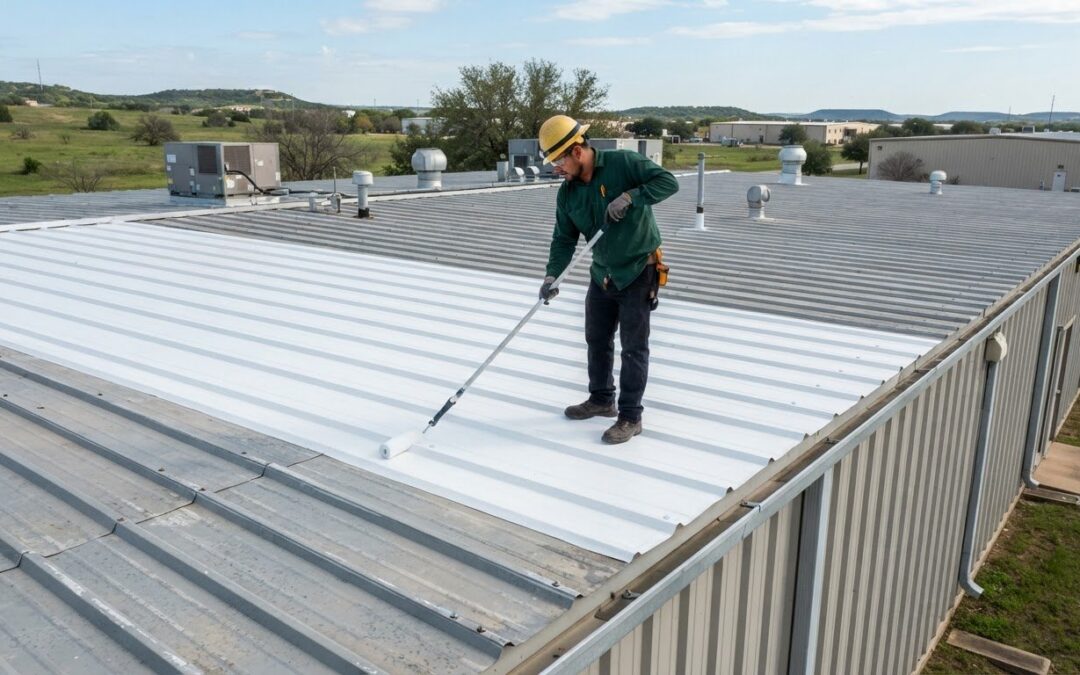
A reflective coating can reduce air-conditioning runtime in a conditioned building, but the right system depends on roof condition and drainage. The cost to recoat a commercial metal roof in Buda also depends on roof size, access, and the repairs needed before coating begins.
It’s worth weighing the project carefully, especially as heat, hail, and storms put steady stress on commercial roofs across Central Texas. Coating may help extend the service life of a sound roof, but it won’t fix serious damage or replace failed materials.
This guide explains what affects a recoating estimate, how acrylic, silicone, and polyurethane coatings differ, and which roof conditions can add work. It also covers when recoating may delay replacement and when the roof needs another solution.
Key Takeaways
- Coating material affects performance and estimate; roof drainage and exposure help determine which option may fit.
- Roof size, height, access, and details such as drains or HVAC units can change the amount of preparation and application work.
- Recoating may extend the service life of a sound metal roof, while severe damage or wet insulation can call for a different solution.
- A clear estimate should account for roof condition and required repairs, not just the area to be coated.
Acrylic, silicone, and polyurethane coating options in Austin, TX
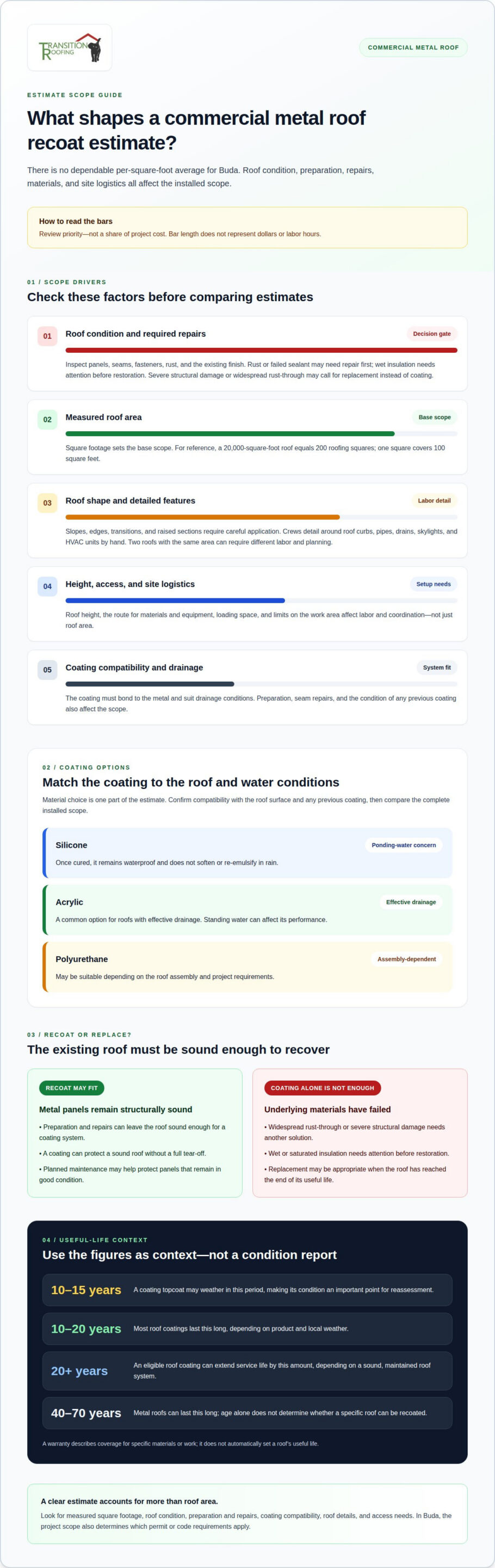
There is no dependable per-square-foot average for Buda because coating type, preparation, repairs, and roof condition all affect the installed estimate. These coating options differ in how they handle water and what the existing metal surface needs.
Comparing Coating Materials
Acrylic, silicone, and polyurethane coatings have different uses and compatibility requirements. The right choice must bond to the existing roof and suit its drainage conditions. Silicone resists rain after curing, while acrylic is a common option for roofs with effective drainage. Polyurethane may also be suitable, depending on the roof assembly and project requirements.
Pricing, Water Resistance, and Drainage
Once cured, silicone coatings remain waterproof and don’t soften or re-emulsify in rain, which can make them suitable where ponding water is a concern. Acrylic needs effective drainage because standing water can affect its performance. Material choice is only part of the estimate: preparation, seam repairs, and the existing coating’s condition matter too. Compare the full installed scope, not just the coating material.
Metal roof preparation starts with inspecting the panels, seams, fasteners, and existing finish. Dirt and loose material can interfere with adhesion, while rust or failed sealant may need repair first. The new coating must be compatible with both the roof surface and any previous coating. If insulation is wet, coating over it won’t solve the underlying problem; the damaged area needs attention before restoration.
Coating can protect a structurally sound metal roof without a full tear-off, but it can’t correct severe structural damage or widespread rust-through. Replacement is more appropriate when the roof has reached the end of its useful life or its underlying materials have failed. The key question is whether repairs and preparation can leave the existing roof sound enough for a coating system.
Roof details, height, access, and project size
A reliable estimate starts with measured roof area, then accounts for access and detailing. A 20,000-square-foot roof equals 200 roofing squares, since one square covers 100 square feet.
Roof Size and Complexity
Square footage sets the base scope, but roof shape affects how crews apply coatings. A broad, open roof allows longer, uninterrupted passes. A standing-seam roof with multiple slopes, edges, or raised sections requires more careful work around transitions. Two roofs with the same area can therefore need different labor and planning.
Access and Project Logistics
Roof height and access affect how materials and equipment reach the work area. A clear loading area can simplify setup, while limited access or a crowded site may require more coordination. The estimate should account for the actual route to the roof and any limits on the work area. These details affect labor and logistics, not just the roof’s area.
Penetrations and Roof Details
Crews detail roof curbs, pipes, drains, skylights, and HVAC units by hand. Each penetration interrupts the open surface and needs careful work around its edges. A roof with several HVAC units or skylights requires more detailed attention than an unobstructed surface. Drain locations matter too because they shape how water leaves the roof.
Include standing-seam panels, roof edges, and transitions in the site review. Asphalt shingles are a different material, so their surface and coating scope shouldn’t be treated like metal. Accurate measurements and a clear record of roof features help explain the estimate’s scope, beyond the square footage alone.
For a commercial roof, a focused roofing project review can account for building access, roof details, and the planned work area before the estimate is set.
Recoat timing and service-life extension
In Buda, permit and code requirements depend on the project scope. Recoating an existing roof differs from work that changes its structure, so the planned work determines what applies.
Timing a Roof Recoat
Recoat timing means restoring the coating before the existing roof system becomes too damaged for recovery. It matters because an eligible commercial roof can gain more service life without immediate replacement. A coating topcoat may weather in 10-15 years, making its condition an important point for reassessment.
Widespread rust-through, severe structural damage, or saturated insulation are signs that coating alone won’t solve the roof’s problems. A roof assessment considers its structure and surface before determining whether recoating fits. If the metal panels remain sound, planned maintenance can help protect them. If underlying materials have failed, repairs or replacement may be necessary.
Warranty and Useful Life
A roof warranty describes coverage for specific materials or work; it doesn’t automatically set the roof’s useful life. The manufacturer’s painted metal panels have a 40-year paint warranty, while a well-designed, installed, and maintained commercial metal roof can last 50 years or more. Those figures describe different things, so compare the warranty terms with the roof’s actual condition.
Most roof coatings last 10 to 20 years, depending on product and local weather. An eligible roof coating can extend service life by 20+ years, but that outcome depends on the roof system being sound and maintained. A recoat may also be an option after the topcoat weathers, rather than waiting for coating failure to spread.
Metal roofs can last 40 to 70 years, but age alone doesn’t establish whether a specific roof can be recoated. A square-foot estimate should be read alongside inspection findings, including panel condition, seams, and signs of water beneath the roof. For Buda properties exposed to heat, hail, and storms, those details help separate worn coating from deeper roof damage.
For a coating-only project, the scope should clearly distinguish surface restoration from changes to panels or structural components. That distinction helps determine which permit or code review applies in Buda. A roof with widespread damage may need repair or replacement rather than another coating layer.
Obtaining an accurate project estimate for the cost to recoat a commercial metal roof in Buda
The total for recoating a commercial roof in Buda depends on its measured area and the work required. Preparation, coating material, roof details, and repairs all shape the cost to recoat a commercial metal roof in Buda.
Estimating Total Cost by Roof Size
A size-based estimate applies the project’s installed rate to the measured roof area. A 2,000-square-foot roof, for example, has 20 roofing squares, with one square equal to 100 square feet. The total still reflects more than area: coating selection, surface preparation, and repair needs determine the scope behind the calculation.
On larger metal roofs, unit costs may decrease as project area grows because mobilization costs are roughly fixed. But a larger roof may also have more penetrations, seams, and access requirements. Those features add detail work, so compare the cost to recoat a commercial metal roof in Buda with projects that have similar conditions and scopes.
Preparing a Project Estimate
A useful evaluation starts with measuring the roof and inspecting the metal panels. The assessment records the condition of seams, fasteners, edges, and penetrations such as pipes and HVAC units. It also identifies the repairs and preparation needed before coating, so these tasks aren’t hidden in a broad area-based figure.
A written estimate should separate coating work from repairs and explain how access, material, and preparation affect the scope. Water or impact damage may require replacing underlying roof materials, changing the project beyond coating alone. Clear line items help property managers understand what work protects the roof system and what conditions may call for a different plan.
For a project-specific evaluation, request a commercial roof estimate based on the roof’s measured area and condition.
Transition Roofing
Transition Roofing helps Buda property managers assess roof concerns and understand whether repairs or a broader roofing project may fit. If a metal roof has leaks, loose panels, or visible damage, a condition review can help clarify the next step. The right solution may involve commercial roof repair, Metal Roofing Systems, or Commercial Roof Installation, depending on the roof’s condition and scope of work.
Recoating isn’t right for every roof. Serious damage to the panels or underlying structure may make repair or replacement more appropriate. Clear findings help you weigh the roof’s condition and project needs before choosing a direction.
For help understanding your commercial roof’s next steps, contact Transition Roofing.
Plan the next move with confidence
Choose the next step based on the building’s needs, not just the visible roof surface. Facility managers should weigh active leaks, upcoming maintenance, and how roof work will affect daily operations. A clear scope provides a practical basis for planning and separates urgent concerns from longer-term decisions.
The cost to recoat a commercial metal roof in Buda is most useful for planning when it reflects the actual roof, its condition, and the work required. If new leaks or storm damage appear, note where they occur and when they began. These details can help focus the evaluation.
Before committing to a project, consider how the building is used and which areas need to stay accessible during the work. Sharing these priorities helps shape a plan around the property’s needs and makes the next phase of roof care easier to manage.
Contact Transition Roofing to discuss your roof and possible next steps. A clear conversation can help you move forward with confidence.
Frequently Asked Questions
Does a reflective coating actually reduce operating costs?
A reflective coating can reduce air-conditioning runtime in a conditioned building by reflecting more sunlight from the roof. The effect on operating costs depends on insulation, HVAC use, and how much roof area receives direct sun. A warehouse with limited cooling needs, for example, may see a different result from an office that runs air conditioning throughout the day.
Why do quotes for the same roof vary so much between contractors?
Quotes can differ because they may cover different work, not just different coating materials. One estimate may include cleaning, rust treatment, seam work, and detailing around equipment, while another may exclude these tasks. For a Buda property, compare the stated preparation, repair scope, coating system, and warranty terms. The lowest total may not cover the same finished result.
Which roof coating types are suitable for commercial metal roofs in Central Texas, and how much do they cost?
Acrylic, silicone, and polyurethane coatings may suit commercial metal roofs, depending on drainage, surface condition, and compatibility with existing materials. There is no single dependable local price for every roof. A useful estimate shows the selected system and installation scope together, allowing property managers to compare complete proposals rather than material names alone.
What factors affect commercial metal roof recoating costs, such as roof condition, access, and repairs?
Cost depends on the work needed to prepare and coat the specific roof. A roof with difficult equipment access or extensive fastener and seam repairs, for example, needs a different scope from an open, unobstructed surface. The existing coating’s condition and any extra detailing also affect labor. A thorough assessment separates coating work from repairs for other damage.
How much does pressure washing, rust removal, seam repair, and priming add to recoating costs?
There is no fixed add-on amount for these tasks because their scope varies from roof to roof. Light cleaning differs from extensive rust removal, and isolated seam repairs differ from work across many panel joints. Priming needs also depend on the metal surface and coating system. A clear estimate lists these tasks separately so owners can see how preparation affects the project.
What are current commercial roof coating contractor labor rates in Buda and the Austin area?
No single labor rate applies to every commercial coating project in Buda or Austin. Crews account for access, detailing, preparation, and required repairs, often using a project-based estimate rather than a simple hourly figure. For a meaningful comparison, review how each proposal defines labor and included tasks, not just the final total.