
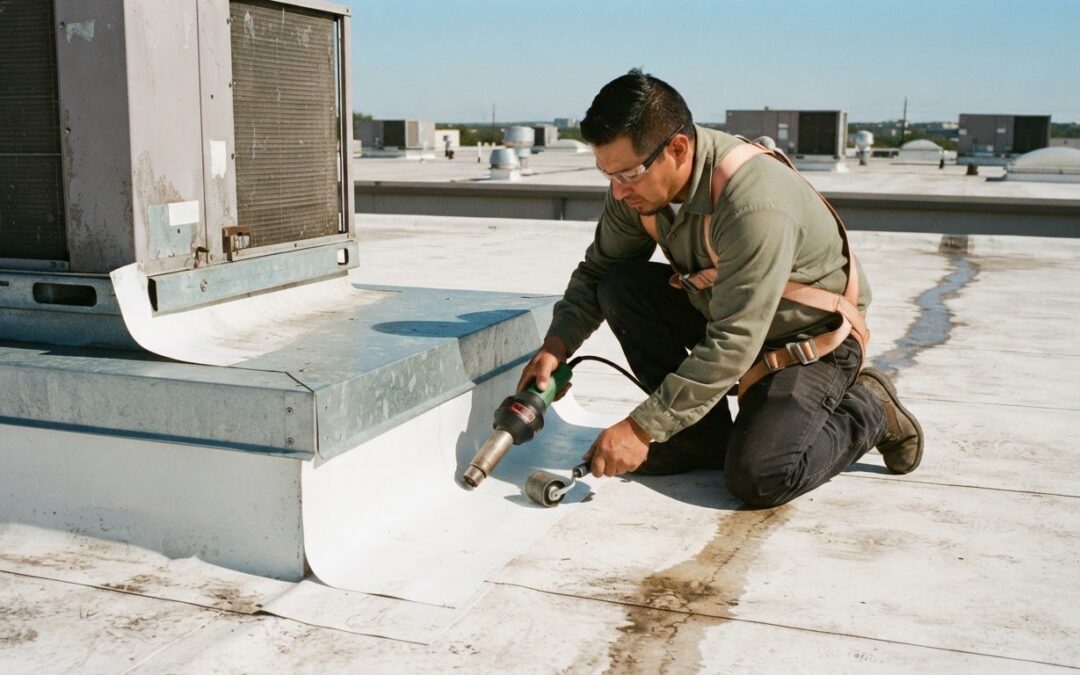
A stain around a rooftop AC curb may signal a roofing leak, an HVAC drainage problem, or both. Repairing leaks around commercial HVAC curbs in Pflugerville starts by tracing moisture to its source, not by sealing the first visible gap.
Water near an air-conditioning unit can enter through curb flashing or result from a drainage issue, and each requires a different repair. Identifying the cause helps protect the roof assembly and keep a small leak from spreading.
This guide covers common causes of AC-related moisture, what a roofer inspects at the curb, and how the repair depends on the damage. It also explains what affects whether a repair can be completed the same day, so you know what needs attention and what to expect.
Key Takeaways
- Moisture near a rooftop AC unit can come from a drainage issue or a roof leak, so identifying the source is the first step toward the right repair.
- Whether a curb leak can be repaired the same day depends on the damage, access, and conditions at the roof.
- A careful inspection looks for loose flashing, open joints, unsealed corners, and signs of corrosion around the HVAC curb.
- Learn how a roofer can address the cause of the leak and help protect the surrounding roof from further moisture.
AC leaks and moisture: repairing leaks around commercial HVAC curbs in Pflugerville, Austin TX
Moisture near a rooftop air conditioner may come from a blocked drain or an opening in the roof at the curb. In Pflugerville, identifying the source guides the repair. A roofer starts repairing leaks around commercial HVAC curbs in Pflugerville by tracing where water enters, rather than sealing the first visible gap.
Curb Flashing Repair or Replacement
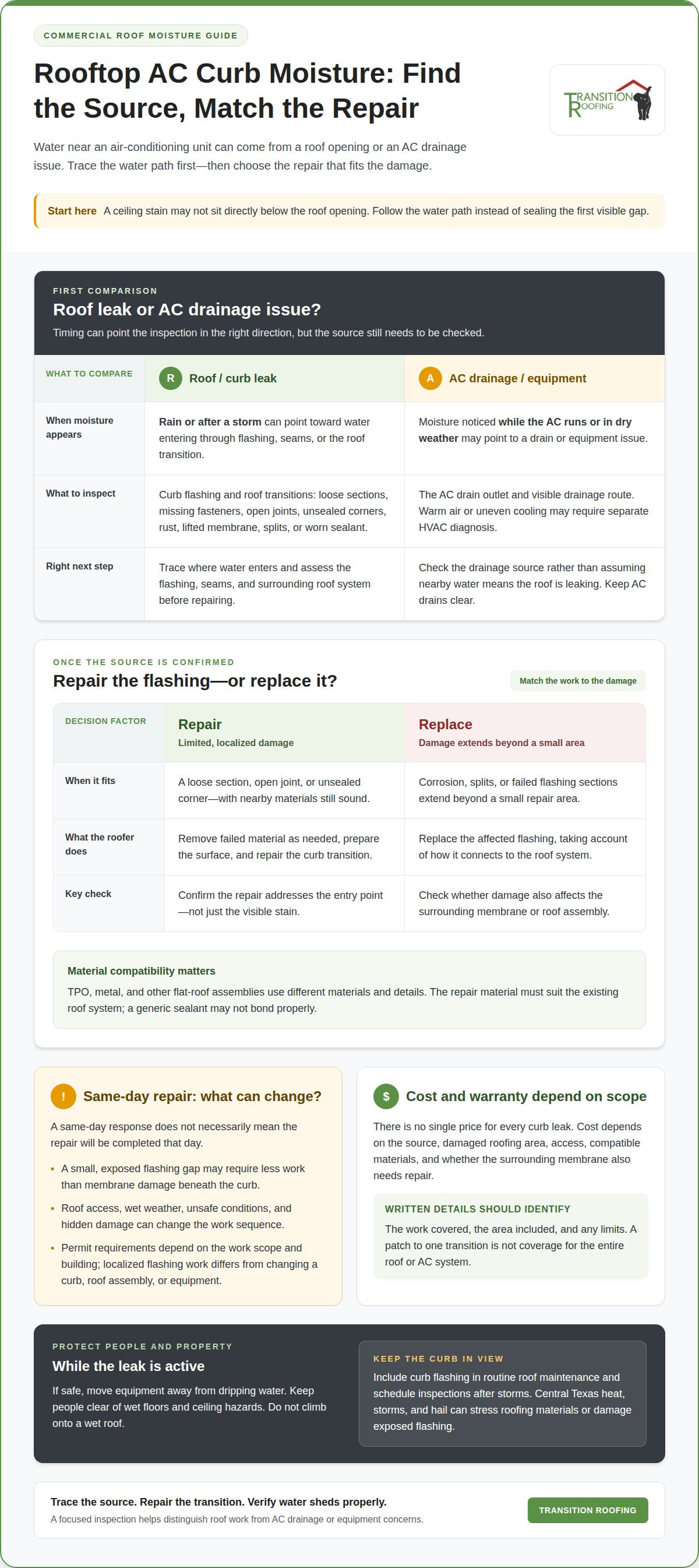
Repair flashing when damage is limited, such as a loose section, open joint, or unsealed corner, and nearby materials remain sound. Replace it when corrosion, splits, or failed sections extend beyond a small repair area. The decision should account for how the flashing connects to the roof system, not just the visible stain. This keeps the repair appropriate to the damage.
Leak Diagnosis at Curbs and Transitions
A roofer checks curb flashing for loose sections, missing fasteners, open ends or lap joints, unsealed corners, and rust. The U.S. Environmental Protection Agency advises repairing moisture problems at their source, including rain leaks around flashing and roof leaks. The inspection also traces the water path, since a ceiling stain may sit away from the roof opening.
Commercial roofers serving Pflugerville and Austin diagnose curb leaks by inspecting the roof system and its transitions. They distinguish roof leaks from a clogged AC drain, which can also release water near the unit. Accurate diagnosis is essential to repairing leaks around commercial HVAC curbs in Pflugerville without treating the wrong source.
Commercial Curb Leak Repair Process
The repair begins by locating the entry point and identifying affected flashing, seams, or roof membrane. The roofer then removes failed material as needed, prepares the surface, and repairs the curb transition. A final check confirms that the repaired area sheds water properly. During an active leak, keep people away from wet floors and ceiling hazards. Don’t climb onto a wet roof.
Central Texas heat can stress roofing materials, while storms and hail can damage exposed flashing. These conditions may expose weak seams or affect when roof work can safely proceed.
Roofing Materials and Sealant Compatibility
Repair materials must suit the existing roof system. TPO, metal, and other flat-roof assemblies use different materials and details, so a sealant made for one may not bond properly to another. A roofer selects compatible materials for the membrane and curb transition instead of applying a generic coating.
To help prevent recurring leaks, include curb flashing in routine roof maintenance and schedule inspections after storms. Keep AC drains clear, and address ductwork or airflow issues if warm air or uneven cooling persists.
Same-day repair availability in Austin TX
A same-day response does not necessarily mean the repair will be completed that day. For a commercial building in Pflugerville, planning starts with locating the leak, checking roof access, and assessing conditions around the HVAC curb. A small, exposed flashing gap may require less work than membrane damage beneath the curb. Wet weather, unsafe access, or hidden damage can change the work sequence.
Protect indoor areas first. If it is safe, move equipment away from dripping water and keep people clear of wet floors and ceiling hazards. Note where and when the leak appears, such as during rain or while the AC runs. This helps determine whether the issue involves roof water or an air-conditioner drain. Heating and cooling problems, warm air, or refrigerant concerns require separate HVAC diagnosis.
For commercial rooftop curb repairs in Pflugerville, permit requirements depend on the work scope and building. A localized flashing repair differs from changing a curb, roof assembly, or rooftop equipment. The work scope should clarify what the repair includes and whether it requires a permit before work begins.
There is no single price for every curb leak. Cost depends on the source, the area of damaged roofing, access, compatible materials, and whether the surrounding membrane also needs repair. A clear estimate should distinguish curb work from broader roof repairs or equipment work. Replacement may be appropriate when damage extends beyond a small, repairable section.
Warranty terms depend on the repair scope and materials. Written details should identify the work covered, the area included, and any limits. A patch to one transition is not the same as coverage for the entire roof or AC system. Clear documentation helps property managers understand the protection provided.
For a roof leak that needs assessment, commercial roof repair can address damaged roof areas around HVAC curbs. A focused inspection can explain the cause, needed work, and next steps for protecting the building.
How do roofers diagnose leaks at HVAC curb flashing and transitions?
A roofer starts by connecting the reported leak to the rooftop unit, curb, and nearby roof seams. The inspection follows the water path instead of assuming the ceiling stain sits directly below the opening. In Pflugerville, timing also matters: water that appears during rain points to a different source than moisture noticed while the AC runs.
At the curb, the roofer checks the flashing and its connections on every side. Loose sections, missing fasteners, open ends or lap joints, unsealed corners, and rust can all let water in. The inspection also looks for lifted membrane, splits, worn sealant, and gaps where the curb meets the roof. Examining the transition closely shows whether the problem is limited to one joint or extends into the surrounding roofing.
Next, the roofer compares roof conditions with signs around the air conditioner. Water that appears in dry weather may point to a drain or equipment issue rather than rain entering through the roof. The inspection may include the unit’s drain outlet and visible drainage route, without assuming every nearby puddle indicates a roofing failure. If the leak follows a storm, the roofer pays particular attention to exposed seams and flashing.
Inside, the roofer traces damp ceiling areas, stains, and active drips back toward the roof opening. Water can travel along roof layers or building surfaces before becoming visible, so the nearest ceiling mark may not reveal the entry point. Comparing interior signs with roof details helps identify the source before repairs begin.
Before recommending work, the roofer documents the damaged area and checks whether the surrounding roof system remains sound. For example, one open lap joint may need a localized repair, while widespread deterioration can indicate a broader problem. Clear findings help the property manager understand the leak source, repair scope, and whether the HVAC drain also needs attention.
What is the step-by-step repair process for leaking commercial HVAC curbs?
A durable repair addresses the leak source, works with the existing roof system, and accounts for the curb’s condition. In Pflugerville, each step should fix the opening without damaging nearby roofing or HVAC equipment.
- Prepare the work area. The roofer plans safe roof access and protects nearby equipment. Interior staff can move items away from drips and mark affected areas. This helps connect interior moisture with the rooftop inspection.
- Confirm the leak path. The roofer checks the curb, flashing, seams, and nearby roof surface. They compare roof conditions with the reported timing of the leak. This helps separate rain entry from moisture related to AC drainage.
- Remove failed material. Loose sealant, damaged flashing, or compromised membrane may need removal. The roofer exposes the repair area carefully and checks whether the roof beneath remains sound. Applying new material over a failed layer can leave the entry path unresolved.
- Prepare and repair the transition. The repair surface must be clean and suitable for the selected material. The roofer then restores the curb connection using materials compatible with the existing roof system. The repair should tie into sound roofing, not stop at the visible stain.
- Review the completed work. The roofer checks seams, edges, corners, and fasteners around the curb. They also look for nearby damage that could keep directing water toward the unit. The property manager receives a clear explanation of the repaired area and any separate concerns.
Repair scope changes if the curb itself is damaged or the surrounding membrane has failed. A small opening may allow a localized repair, while wider deterioration can require broader roof work. The roofer should explain why the chosen repair fits the roof material and observed damage before work proceeds. For help with a leaking commercial roof, request commercial roof repair and get a clear next step for the affected area.
Transition Roofing
Transition Roofing helps property owners assess commercial roof leaks around HVAC curbs and understand the repairs needed. If moisture returns after a patch or the curb flashing and surrounding roof show damage, a focused roof assessment can identify the source and define the right scope of work.
For a localized leak, commercial roof repair may address damaged flashing or roof transitions. If the existing roof system has more extensive damage, the repair plan can include the affected roofing and its connection to the curb. The goal is a compatible repair that addresses the cause, not just the visible stain.
Contact Transition Roofing to discuss your commercial HVAC curb leak and the next steps for your roof.
Move From a Leak to a Clear Plan
Use the next inspection to create a useful record for your building. Note when moisture appears, which rooms or equipment it affects, and whether the AC is running or rain has recently passed. These details help connect building symptoms to rooftop conditions and give property teams a practical starting point for future maintenance.
When repairing leaks around commercial HVAC curbs in Pflugerville, focus on identifying the source and documenting the repair scope. This gives you a clearer basis for deciding what needs attention now and what to monitor during routine roof care.
Transition Roofing can help assess a commercial roof leak and explain the next step for the affected area. Contact Transition Roofing about a curb leak to discuss your building’s needs. A clear plan can help you move forward with confidence.
Frequently Asked Questions
What causes leaks around commercial HVAC curbs on flat roofs?
Leaks often begin where the roof membrane meets the HVAC curb, especially if the original connection has weakened or later equipment work disturbed it. A nearby puncture can also let water travel beneath the roof surface before appearing indoors. AC condensate drainage problems may cause similar moisture near the unit, so the leak’s timing and conditions help distinguish a roofing issue from an equipment issue.
How much does commercial HVAC curb leak repair cost in Pflugerville, Texas?
There is no single price for every curb leak. Cost depends on the leak source, damaged roofing area, access, compatible materials, and whether the surrounding membrane needs repair.