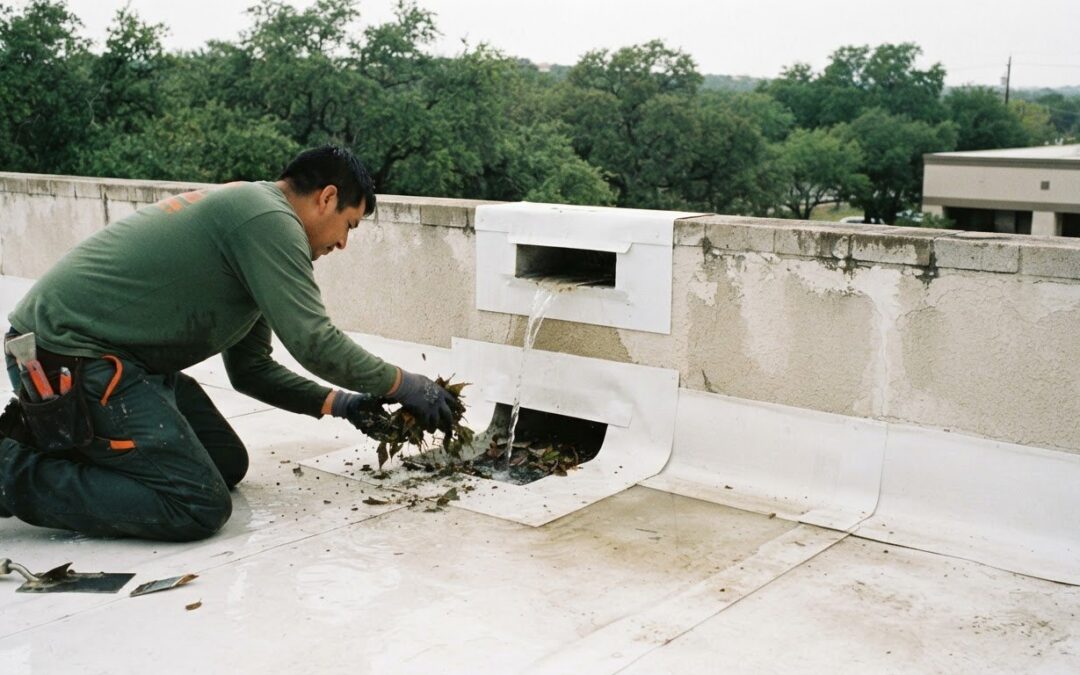
A working overflow scupper can still signal a drainage problem. If it discharges during ordinary rain, the primary outlet may be blocked or overwhelmed. Preventing roof leaks from clogged scuppers on commercial buildings starts with understanding what the water is telling you.
A scupper is an opening in a roof-edge wall or parapet that lets water drain off the roof. Water that remains after rain may point to a blockage, a low spot, or another drainage issue. These clues can help distinguish the cause.
This guide explains how scuppers and overflow outlets work, how to spot drainage problems, and how regular maintenance can help protect commercial roofs in Austin and Central Texas.
Key Takeaways
- Compare where water collects with how it drains. A blockage, a low spot, and damaged flashing can create similar symptoms but need different fixes.
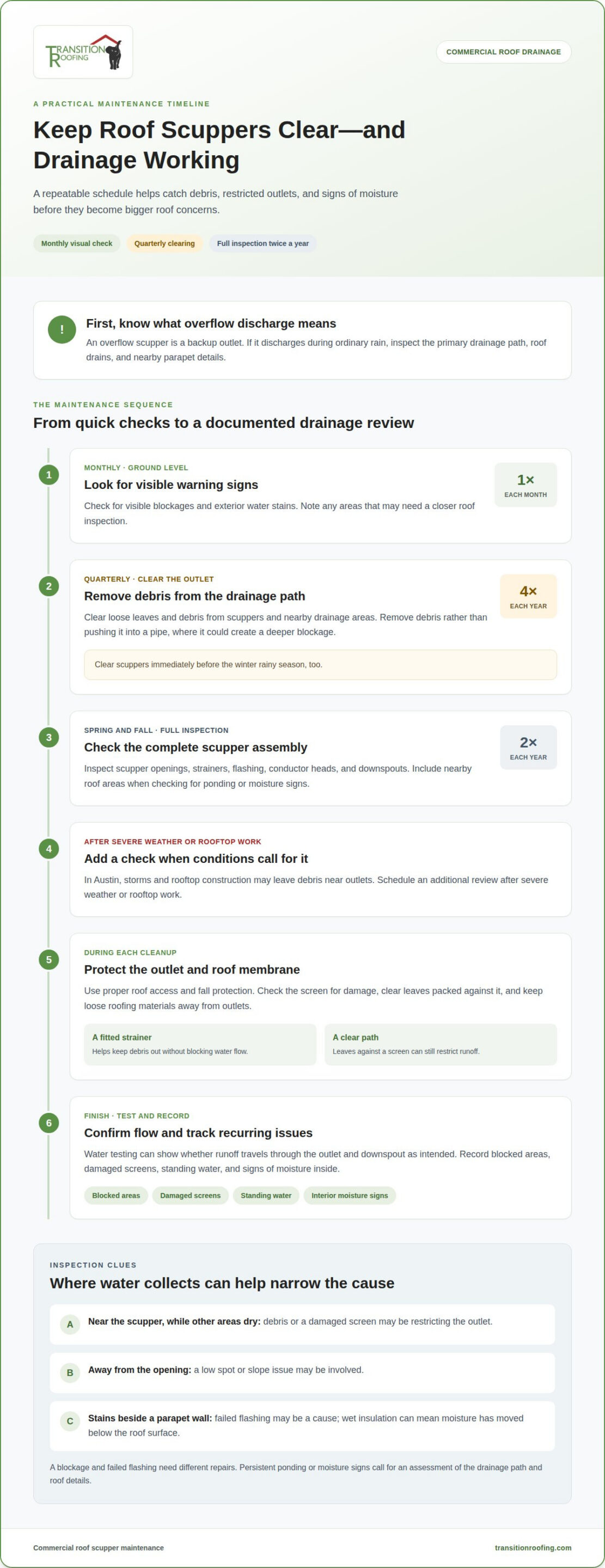
- Overflow discharge is a reason to assess the primary drainage path, especially if it happens in ordinary rain.
- Include scuppers, strainers, flashing, conductor heads, and downspouts in regular roof maintenance, with added checks after severe weather or rooftop work.
- Act on persistent ponding or signs of moisture early. A roof assessment can help determine whether clearing debris or repairing drainage components is needed.
Distinguishing scupper blockages from other drainage problems to prevent roof leaks from clogged scuppers on commercial buildings
A scupper is an opening through a roof-edge or parapet wall. It carries runoff outside, sometimes through a conductor head and downspout. Gutters collect water along roof edges, while interior roof drains carry it through pipes inside the building. Because these systems follow different routes, where water collects can help narrow down the cause.
If standing water gathers near a scupper while other roof areas dry, debris or a damaged screen may be restricting the outlet. Water remaining away from the opening can point to a low spot or slope issue. Stains beside a parapet wall may signal failed flashing, while wet insulation can mean moisture has moved below the roof surface. These clues help focus an inspection on the likely source.
U.S. commercial roof requirements depend on the codes adopted where the building is located. The International Plumbing Code addresses emergency roof drains or scuppers when the roof perimeter could trap water if primary drainage backs up. A blocked outlet and failed flashing need different repairs, so both the drainage path and roof details matter.
Cleaning or repair costs depend on the cause and scope. Clearing reachable debris is different from repairing a damaged outlet, separated flashing, or a blockage farther inside a drain line. Access requirements and affected materials also shape the work, so an inspection is needed to define the repair rather than rely on a broad estimate.
Scupper capacity should reflect the roof area it serves and local rainfall intensity. Commercial roof drainage systems are sized for localized rainfall intensity based on a 100-year, 60-minute storm event. Outlet size and layout affect how quickly runoff leaves the roof.
An inspection can compare scupper openings, strainers, flashing, visible ponding, and nearby interior stains. For commercial roofing systems, that evidence helps separate a simple blockage from a broader drainage or roof-surface repair.
Why is water coming out of the overflow scupper?
An overflow scupper carries water only when the primary drainage path cannot keep up. Its discharge is a useful warning to inspect the main outlet, roof drains, and parapet details.
Primary and Emergency Overflow Scuppers
A primary scupper sits at or near a roof’s low point and drains water in ordinary weather. An emergency overflow scupper sits higher, providing a separate outlet if the primary path is blocked or overwhelmed. Water flowing from the higher opening during routine rain points to a drainage issue worth investigating, not simply a functioning backup.
On a flat roof, the two outlets serve different water levels. Debris at the primary opening, a blocked drain line, or intense rainfall can cause water to rise to the overflow. Inspecting both paths helps determine whether the issue is a clog, limited drainage capacity, or another roof condition.
How Overflow Scuppers Operate
When water rises above the overflow opening, it flows through the parapet wall and out of the building. Unlike a primary outlet connected to a downspout, an overflow scupper may discharge through a wall opening without a downpipe. Its height determines when excess water can escape.
Section 9.11 directs designers to locate overflow scuppers in parapet walls at the membrane top so ponding does not exceed the high point of the slopes, according to U.S. Department of Veterans Affairs, National Cemetery Administration. Overflow scuppers are commonly positioned two to four inches above the roof covering.
Heat tracing may be considered where ice could block an exposed outlet or drain path. A heating cable is installed along the vulnerable drainage area to reduce ice buildup. Its placement should account for the outlet, nearby roof drains, and the route water must follow.
If an overflow scupper discharges in ordinary rain, a commercial roof drainage review can help identify whether the primary outlet, membrane, or surrounding details need attention.
Roof scupper maintenance schedules
A dependable maintenance schedule checks scuppers, downspouts, and nearby roof areas before debris restricts commercial roof drainage. In Austin, storms and rooftop work may call for additional attention between routine inspections.
Scupper Cleaning and Maintenance Steps
Safe maintenance clears loose material while protecting the roof membrane and drainage path. A qualified roofing technician uses proper roof access and fall protection, then checks the scupper opening, strainer, flashing, conductor head, and downspout. Remove debris rather than pushing it into a pipe, where it could cause a deeper blockage. The technician also records standing water and signs of moisture inside.
Water testing can show whether runoff travels through the outlet and downspout as intended. A written record of blocked areas, damaged screens, and needed repairs helps track recurring problems between visits.
Keeping Leaves and Debris Out
A properly fitted strainer helps keep leaves and other debris out without blocking water flow. The U.S. Environmental Protection Agency recommends strainers or other devices to prevent debris from clogging drains or downpipes. Screens still need attention: leaves packed against an intact strainer can restrict flow during rain.
During cleanup, inspect the screen for damage and remove buildup around the scupper and conductor head. Keep loose roofing materials away from outlets so runoff cannot carry them into the drainage system. Maintaining a clear path matters more than simply having a screen in place.
Seasonal and Climate-Based Maintenance
Inspect commercial roof drainage systems at least twice a year, ideally in spring and fall. Clear scuppers quarterly and immediately before the winter rainy season. In Austin, schedule additional reviews after severe weather or rooftop construction, when storms or work may leave debris near outlets.
A monthly ground-level visual check can reveal visible blockages or exterior water stains, but it cannot show hidden piping or roof-level flashing. After heavy rain, note whether water remains near an outlet after other areas dry. These observations give a roofing technician useful context for the next scheduled inspection.
A scheduled roof maintenance review can assess scuppers, screens, and downspouts as one system.
How do clogged roof scuppers cause leaks on commercial buildings?
A blocked scupper slows runoff and lets water collect around the roof outlet. A partial blockage can also trap sediment, which further narrows the drainage path. Clogged strainers are another cause of ponding on flat commercial roofs. Each inch of standing water adds 5.2 pounds per square foot to the roof load, so even a small pooled area adds weight.
Standing water can put stress on seams, flashing, and the roof membrane. Poor scupper drainage can damage the membrane and insulation, then allow moisture to enter parapet walls. A leak may appear inside near the roof edge, but internal drainage failures can also cause leaks on lower levels. Ceiling stains and wall moisture can help reveal where water is traveling.
Damage can extend beyond visible leaks. Persistent ponding accelerates membrane wear and can weaken the adhesives joining roof laps. Added water weight also raises structural concerns, especially when ponding continues or covers a broad area. In Austin, a storm can reveal a drainage problem by sending runoff toward an outlet narrowed by debris.
A repair assessment should trace the water’s path rather than seal only the visible stain. A roofing professional can inspect the scupper opening, strainer, flashing, membrane, and affected insulation. If debris is the only issue, clearing the outlet may restore flow. Corrosion, separated flashing, or wet insulation points to repairs beyond cleaning. For example, water near a parapet with damaged flashing calls for checking that connection, not just the scupper throat.
If water is backing up or staining ceilings, arrange commercial roof repair to identify the cause and address the damaged drainage or roofing components.
Transition Roofing
Transition Roofing helps commercial property owners address drainage problems before they lead to wider roof damage. If a scupper keeps backing up, water reaches the interior, or flashing has separated, a roof assessment can determine whether the issue calls for clearing, targeted repair, or broader work. The right response depends on the condition of the outlet, membrane, and surrounding roof.
For buildings in Austin and Central Texas, storm runoff can expose weak points in commercial roofing. Transition Roofing provides commercial roof repair and, when replacement is needed, commercial roof installation with systems suited to the project. A clear assessment helps property managers understand the problem and choose a practical next step.
If you’re dealing with a clogged scupper or recurring roof leak, contact Transition Roofing to discuss the issue.
Protect your roof before the next storm
A recurring drainage issue is easier to address before water reaches ceilings, walls, or business operations. Start with a clear assessment of the roof’s condition and the repairs it needs. That makes preventing roof leaks from clogged scuppers on commercial buildings a practical maintenance decision, not a reaction to interior damage.
Transition Roofing can help determine whether a commercial roof needs repair, a TPO Roofing System, or a full Commercial Roof Installation. The right scope depends on the condition of the drainage details and roofing materials. A focused review can help you understand which work fits the building and protect its roof over the long term.
Contact Transition Roofing for help with your commercial roof. A sound plan starts with understanding what the roof needs, so you can move forward with confidence.
Frequently Asked Questions
What is a roof scupper?
A roof scupper is an opening through a roof-edge wall that lets roof water drain outside. On a commercial building, it may empty into a conductor head and downspout or discharge directly through the wall. This distinguishes it from an interior roof drain, which carries water through piping inside the building.
How often should commercial roof drains be cleared?
Clear commercial roof drains and scuppers quarterly, and again immediately before the winter rainy season. Timing should also reflect what collects on the roof: nearby trees can drop leaves, while rooftop work can leave loose materials near an outlet. Clear visible debris before it is washed into a downspout or blocks a drain screen.
How often should commercial roof scuppers and drains be inspected and cleaned?
Schedule a full drainage inspection at least twice a year, ideally in spring and fall, and clear outlets quarterly. Add an inspection after severe weather or rooftop construction, since either can leave debris or damage around drainage components. A monthly ground-level visual check can help spot visible blockages, but it cannot reveal the condition of roof-level flashing or hidden piping.
What are signs that a commercial roof scupper is clogged or leaking?
Look for water spilling from an overflow scupper during ordinary rain, debris packed into the opening, or standing water that lingers near the outlet after nearby areas dry. Repeated leaks near parapet walls, interior ceiling stains, and water marks on exterior walls also deserve attention. These clues can point to a blockage, a low roof area, or damaged flashing.
When should a clogged scupper be repaired or replaced by a commercial roofing professional?
Arrange a professional assessment if clearing accessible debris does not restore drainage or if water backs up again after rain. Corrosion, separated flashing, damaged outlets, or wet roofing materials require more than routine cleaning. A roofing professional can determine whether the scupper itself needs repair, the connected drainage path is obstructed, or surrounding roof materials need attention.
What risks can standing water and blocked scuppers create for commercial roofs and occupants?
Blocked drainage can leave water against roof seams and flashing, increasing the risk of leaks into ceilings, walls, or concealed spaces. Persistent ponding can also speed membrane wear and affect insulation. If water enters interior areas, it may disrupt business operations and damage finishes or equipment. Ongoing accumulation adds weight to the roof, so persistent ponding warrants prompt attention.