
Did you know that a roof that saves you money today could cost you double in energy bills within five years? It’s a common trap in the Central Texas market. Most property managers we speak with are feeling the squeeze of unpredictable material spikes and the constant threat of our brutal summer heat. You want a roof that lasts. But you don’t want to overpay for features your building doesn’t need.
We’re going to pull back the curtain on the real commercial roof cost per square foot Austin business owners are facing in 2026. With over 15 years of experience, we’ve seen how Austin, TX building codes and climate stressors change the math on your investment. This guide provides a transparent breakdown of material performance, labor factors, and ROI considerations. You’ll learn how to navigate insulation requirements and choose high-reflectivity systems that slash your cooling costs. We’ll show you how to keep your assets secure for the long haul.
Key Takeaways
- Understand the current commercial roof cost per square foot Austin property owners are paying in 2026 to ensure your budget covers both quality materials and local labor.
- Learn why high-reflectivity TPO systems are the most effective defense against the Central Texas heat and how they help lower your building’s energy bills.
- Identify hidden expenses like structural deck rot and drainage upgrades that can impact your final project cost if not caught early.
- Discover how a proactive maintenance plan can extend the life of your metal or flat roof while making insurance claims after a storm much simpler.
Factors Driving Commercial Roof Cost Per Square Foot in Austin, TX
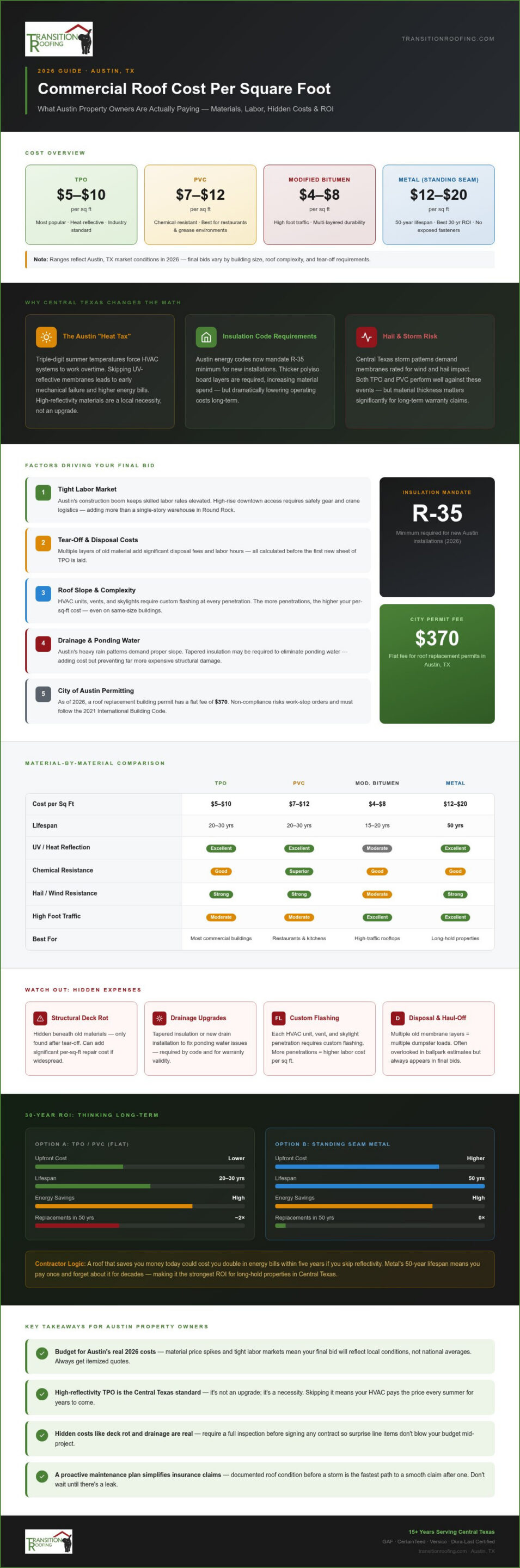
Estimating a project in Central Texas requires looking beyond the basic price of commercially available roofing materials. Several local variables shift the commercial roof cost per square foot Austin property owners see on their final bids. For instance, the 2026 labor market remains tight due to the ongoing construction boom in the metro area. Accessing a high-rise downtown requires different safety gear and crane logistics than a single-story warehouse in Round Rock. These logistical hurdles directly impact the total labor rate.
We also account for the Austin “Heat Tax.” Because our summer temperatures stay in the triple digits, UV-reflective membranes are a local necessity for long-term durability. If you skip high-performance materials, your HVAC systems will work overtime. This leads to early mechanical failure and higher energy bills. Additionally, tearing off multiple layers of old material adds significant disposal fees and labor hours that we must calculate before the first new sheet of TPO is laid.
To better understand how these variables come together during a professional assessment, watch this helpful video:
Austin Building Codes and Insulation Requirements
Local energy codes now mandate higher R-values for insulation, often reaching R-35 for new installations in Central Texas. This requires thicker layers of polyiso board, which increases your total material spend. For property owners looking to maximize efficiency, Insulation Magic! offers specialized services that complement these roofing upgrades by ensuring the entire structure is properly protected. We also handle the City of Austin permitting process. As of 2026, the flat fee for a roof replacement building permit is $370. Getting these details right from the start prevents costly work-stop orders and ensures your building stays compliant with the 2021 International Building Code.
Slope and Complexity of the Roof Design
A simple flat roof is more affordable than one crowded with HVAC units, vents, and skylights. Each penetration requires custom flashing to remain watertight. These complexities are the primary reason the commercial roof cost per square foot Austin contractors quote can vary between similar-sized buildings. We also look closely at your drainage. If you have ponding water issues, we recommend installing tapered insulation to create a proper slope. This ensures your commercial roofing in Austin survives the heavy rain patterns common in our region.
Comparing Materials: Cost Per Square Foot for Austin, TX Systems
Choosing the right system is about balancing your initial budget with the long-term performance required for the Central Texas climate. TPO is the industry standard for reflective commercial roofing in 2026. It is favored because it reflects solar heat and keeps building interiors cooler. However, the commercial roof cost per square foot Austin property owners pay changes based on material thickness and the specific needs of the building. For example, modified bitumen is often chosen for roofs with high foot traffic due to its multi-layered durability.
TPO vs. PVC: Performance and Price Differences
While TPO is the most popular choice, PVC is often worth the premium for restaurants or facilities in grease-heavy environments. PVC membranes are chemically resistant, meaning kitchen exhaust won’t break down the material over time. Both systems offer excellent resistance to the wind events and hail common in Austin, TX. When evaluating the commercial roof cost per square foot Austin contractors provide, remember that PVC handles chemicals better than standard membranes. We follow guidelines from the National Roofing Contractors Association to ensure every installation meets high safety standards. If you’re managing a local retail space, we often suggest checking our flat roofing company Austin services to find the right fit for your budget.
The Longevity of Metal Roofing in Central Texas
Metal roofing requires a higher upfront investment compared to single-ply systems. Despite this cost, it offers a 50-year longevity that makes the 30-year ROI very attractive. Standing seam metal systems are particularly effective in Central Texas because they don’t have exposed fasteners that can back out during temperature swings. Many modern metal finishes are cool-roof rated, reflecting UV rays just as effectively as white TPO. This long-term durability means you won’t be looking at a full replacement again for several decades. If you’re weighing these options, we can help you compare the total lifetime costs for your specific building.
Hidden Expenses in Austin, TX Commercial Roofing Projects
Many property owners focus solely on the surface material. However, the commercial roof cost per square foot Austin contractors quote often excludes subsurface surprises. Structural deck repair is the most common hidden expense. If we discover rot or rust after tearing off the old membrane, we must replace the decking to ensure a secure foundation. Industry data on commercial roof replacement costs shows that ignoring these substrate issues leads to premature failure and costly leaks.
Identifying Substrate Issues Before the Project Starts
We use infrared moisture surveys to detect trapped water before the work begins. This technology allows us to see where insulation is saturated without tearing into the roof. Core sampling also helps us understand the existing layers and the condition of the deck. These steps help us provide a more accurate bid. They prevent “surprise” costs from appearing in the middle of your project when the roof is already open.
Upgrading your drainage system is another critical factor. Preventing ponding water is essential for long-term protection. As a specialized flat roofing company Austin, we often recommend adding tapered insulation to fix slope issues. This ensures the commercial roof cost per square foot Austin owners pay includes a system that actually sheds water during Central Texas storms.
Logistics and Staging in Busy Austin Neighborhoods
Working in high-traffic areas like Downtown or The Domain adds complexity to any project. We must manage material deliveries carefully to avoid blocking traffic or violating city ordinances. Safety equipment, such as perimeter flags and debris chutes, protects your tenants and the public. We also coordinate with you on noise mitigation. This allows us to work around your business hours and minimize disruptions to your daily operations.
If you’re worried about hidden damage on your building, contact us today for a professional roof assessment to get a clear picture of your roof’s condition.
How to Maximize ROI on Your Austin, TX Commercial Roof Investment
Real ROI is measured over decades, not just at the time of installation. The commercial roof cost per square foot Austin property managers pay becomes a much smaller number when spread over thirty years instead of fifteen. Implementing preventative maintenance programs is the most effective way to protect that investment. Regular professional inspections can double the functional lifespan of a TPO roof by catching minor seam failures and UV degradation before they cause structural damage.
Austin hail storms are another reality of the Central Texas climate. We recommend keeping detailed maintenance records to simplify the process if you need to file an insurance claim after a storm. Having a documented history of care proves the roof was in good condition. This makes it much harder for adjusters to deny coverage based on general wear and tear. If you are dealing with recent storm damage, we can help you navigate the claim process with your provider.
Energy Savings and Tax Incentives
Upgrading to a high-reflectivity membrane does more than just meet local codes. It significantly lowers the HVAC load on your building, which reduces monthly utility costs. You may also qualify for federal tax credits for energy-efficient commercial roof upgrades. These incentives help offset the initial material spend and improve your long-term bottom line in the Austin, TX market.
Vetting Your Austin Roofing Partner
Choosing a contractor with over 15 years of local experience ensures they understand the specific stressors of our environment. Look for certifications from industry leaders like GAF and Versico. These partnerships allow us to offer NDL (No Dollar Limit) warranties, which provide the highest level of protection for your asset. Always verify that your roofing partner carries full liability insurance. If you’re seeing signs of aging on your current system, this is usually when we recommend a professional evaluation to plan for future savings.
Securing Your Investment Against the Central Texas Climate
Navigating the commercial roof cost per square foot Austin business owners must budget for requires looking past the initial invoice. Real value comes from choosing high-reflectivity materials like TPO and committing to a schedule of preventative care. We’ve seen how our unique Central Texas climate can punish a poorly installed system; choosing a certified partner is your best defense. By focusing on UV protection and robust drainage, you turn a necessary expense into a long-term financial asset.
With over 15 years of local expertise, we specialize in TPO and metal systems built for longevity. As certified GAF and Versico installers, we offer the technical skill and warranty protection your structure deserves. If you’re managing a property with a failing roof, schedule a professional commercial roof inspection in Austin today. We’re ready to provide a clear path toward total security for your building.
Frequently Asked Questions about Commercial Roofing in Austin, TX
How much does a 10,000 sq ft commercial roof cost in Austin?
What is the cheapest commercial roofing material for Central Texas?
EPDM rubber and thin-gauge TPO membranes are often the most affordable options for initial installation. However, these budget materials don’t always offer the best resistance to the intense Austin heat. We recommend high-reflectivity white TPO to lower energy bills and provide better long-term value. Choosing quality materials from the start ensures your building stays protected during our frequent storm cycles and heavy spring rain patterns.
Does insurance cover commercial roof replacement after a hail storm in Austin?
Most commercial policies cover a full replacement if a professional inspection confirms structural hail damage. Since Austin and Round Rock face frequent weather events, insurance companies require detailed proof of impact. We provide insurance claim assistance by creating documented reports that adjusters need for approval. Our GAF and Versico certifications add credibility to the findings. This helps ensure your claim covers the full project scope and necessary structural repairs.
How long does a TPO roof last in the Austin heat?
A professionally installed TPO system typically lasts between 20 and 30 years in the Central Texas climate. The intense UV exposure can accelerate the breakdown of low-quality membranes if they aren’t maintained. We use premium materials from manufacturers like Versico to ensure maximum durability. Regular inspections through our preventative programs can help you reach that 30-year mark by catching minor seam issues before they turn into major leaks.
Should I repair or replace my commercial roof in Austin, TX?
If your roof has widespread moisture in the insulation or has exceeded 75% of its expected life, replacement is usually necessary. Minor leaks or isolated damage can often be resolved with a professional commercial roof repair. We use infrared moisture surveys to check the substrate’s condition before recommending a path forward. If you’re dealing with persistent leaks in Cedar Park or Austin, we can take a look and give you a clear plan.