What if the most expensive threat to your Austin property isn’t a sudden storm, but the silent degradation of a membrane baking in 170-degree heat? Most facility managers in Central Texas know that our climate is relentless. Between unpredictable hail and the brutal UV rays that push TPO to its limits, staying ahead of damage feels like a full-time job. You need a proactive strategy to protect your investment and ensure warranty compliance. This commercial roof inspection checklist Texas guide provides the exact framework we use at Transition Roofing, drawing on over 15 years of local contractor logic to keep your structure secure.
We understand the pressure of rising repair costs and the complexity of navigating insurance claims after a major weather event. This guide simplifies your maintenance roadmap by breaking down critical inspection points for 2026. You’ll learn how to identify early warning signs of failure, manage reflectivity requirements, and extend your roof’s lifespan. From checking GAF and Certainteed shingle integrity to inspecting Versico or Dura-last flat roof seams, we are giving you the professional tools to move your building from a state of vulnerability to total security.
Key Takeaways
- Use this commercial roof inspection checklist Texas to catch structural issues before they become expensive emergency repairs.
- Identify exterior warning signs like membrane blisters and seam failures triggered by the intense Central Texas sun.
- Look for interior red flags such as ceiling stains and deck rust to stop hidden leaks before they damage your facility’s assets.
- Understand the difference between monthly visual checks and professional audits to extend your roof’s lifespan by 25% or more.
Why a Commercial Roof Inspection Checklist in Texas is Critical for Austin, TX Businesses
A professional commercial roof inspection checklist Texas property managers use is more than a simple walk-through; it is a proactive structural audit for your business assets. In Austin, TX, your roof faces extreme environmental stressors that can turn minor vulnerabilities into total system failures. With over 15 years of local contractor logic, we’ve seen how consistent documentation protects your investment and keeps your facility operational. It’s the difference between a minor repair and a premature $50,000 replacement.
To better understand what our experts look for during these audits, watch this helpful guide from GAF:
Maintaining a detailed log is also essential for warranty compliance on TPO and PVC systems. Manufacturers like GAF, Certainteed, Versico, and Dura-last often require proof of regular maintenance to honor their long-term protection plans. Without a documented history, you might face denied insurance claims after a major hail storm. Flat roofs are especially prone to pooling water if drainage isn’t monitored, making these checks vital for your commercial roofing in Austin.
Addressing Thermal Expansion in the Central Texas Climate
The Central Texas climate creates a cycle of extreme stress. On a 100-degree Austin afternoon, your roof membrane can reach 170 degrees, causing it to stretch significantly. If a sudden thunderstorm hits, the temperature drops fast, leading to “thermal shock.” This rapid cooling forces the material to contract, pulling at seams and flashing attachments. Thermal expansion is the primary silent killer of Texas flat roofs, slowly weakening the bond of your roofing system until a leak develops.
The Exterior Commercial Roof Inspection Checklist for Austin, TX Flat Roofs
Just as your roofing must be chosen for its ability to handle intense heat, your property’s landscaping should be equally resilient; facility owners can explore Medjool date palm options from Verdant Tree Farm as a durable, heat-hardy solution that complements a well-maintained commercial exterior.
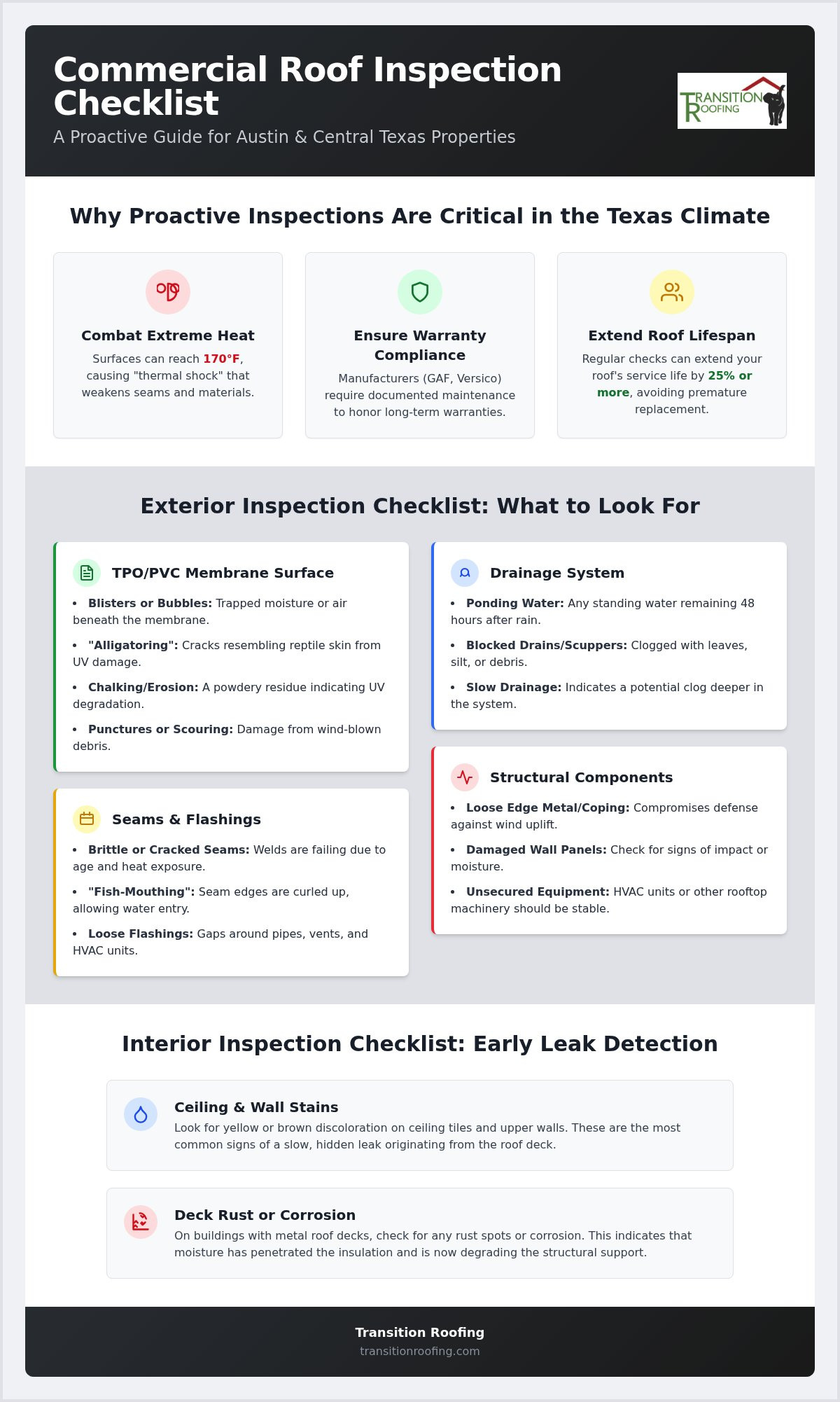
This commercial roof inspection checklist Texas property managers rely on starts with a thorough walk-through of the exterior membrane. In our local climate, intense UV exposure is the primary cause of “alligatoring,” where the surface develops small cracks resembling reptile skin. We also look for blisters, which indicate trapped moisture or air beneath the surface. If you notice these signs, it is time to consult the NRCA’s comprehensive technical library to understand the potential for systemic failure.
Examining TPO and PVC Membrane Integrity
White reflective roofs are standard in Austin, but they aren’t invincible. Look for chalking or surface erosion, which are clear indicators of UV degradation. Austin storms often carry wind-blown debris that can cause “scouring” or small punctures. If your seams feel brittle or show signs of “fish-mouthing,” where the edge of the seam curls up, you likely need commercial roof repair to prevent water from entering the insulation layer.
Clearing Drains and Scuppers to Prevent Ponding
Proper drainage is critical for low-slope systems. Check for leaf debris and silt buildup that blocks primary drains. According to contractor logic, water should never remain on your roof for more than 48 hours after a Central Texas rainstorm. Standing water accelerates membrane failure and adds dangerous weight to the structure. Ensure your overflow scuppers are clear and set at the correct height to prevent internal flooding if primary drains fail.
Beyond membranes, verify the condition of edge metal and coping caps. These components are your first line of defense against wind uplift during severe weather. If you’re seeing loose metal or delaminating seams, this is usually when we recommend a professional assessment to secure your facility before the next storm hits.
Interior Signs and Structural Points for Your Austin, TX Checklist
While exterior checks are vital, the interior of your facility often tells the real story of its health. A comprehensive commercial roof inspection checklist Texas property managers use must include a thorough scan of ceilings and walls. Look for water stains, mold growth, or peeling paint, especially after our heavy spring rains. These signs often point to failures in flashing or membranes that aren’t visible from the roof surface.
Spotting Water Stains and Interior Deck Corrosion
Don’t ignore a small ceiling stain. Contractor logic dictates that a minor drip usually hides a large area of saturated insulation above. In Austin, TX warehouses, checking the underside of the roof deck during dry spells is the best way to find “slow leaks.” This is a critical part of your commercial roof inspection checklist Texas routine. We look for early rust on metal decks or wood rot on older structures. Catching corrosion early prevents structural failure and the high cost of full deck replacement.
Evaluating Roof Penetrations and HVAC Curb Seals
Most commercial leaks in Central Texas occur at transition points like HVAC curbs and pipe vents. Inspect seals around heavy rooftop equipment for cracked pitch pockets or failing caulking. If you see condensation on HVAC ducts, it might suggest a failing curb seal allowing moisture to bypass the membrane. When our experts perform these checks, they follow OSHA fall protection standards to maintain a safe work site. If you’re spotting moisture streaks or white salt deposits known as efflorescence on interior masonry, schedule a professional structural audit to secure your building’s interior.
Implementing Your Checklist: Professional Maintenance and Repairs in Austin, TX
Using a commercial roof inspection checklist Texas property managers can handle themselves is a great first step. A monthly visual walk-through helps you spot obvious debris or large punctures. However, it doesn’t replace a professional GAF-certified inspection. Our team uses over 15 years of Central Texas experience to find subtle issues that untrained eyes miss. This level of expertise is why a specialized flat roofing company Austin businesses trust is essential for long-term protection.
Preventative maintenance programs are the most effective way to protect your bottom line. Industry data shows that consistent, professional care can extend a roof’s life by 25% or more. In a 2026 market where insurance carriers are reducing their exposure in Texas, having a documented maintenance history is your best defense against denied claims. If you can’t prove the roof was maintained, a carrier might argue that a leak was caused by neglect rather than storm damage.
Why GAF and Versico Certifications Matter for Texas Inspections
Certified contractors have direct access to specific manufacturer repair protocols that uncertified crews don’t. When we inspect a system from GAF, Certainteed, or Versico, we ensure every repair meets strict warranty standards. This professional documentation is vital for your insurance standing, especially with the strict enforcement of Texas House Bill 2102. We provide the paper trail that proves you’ve met your obligations as a property owner.
If you’re seeing these signs on your commercial roof inspection checklist Texas walk-through, we can provide a detailed plan. We understand the specific stressors of Austin’s heat and hail. Our goal is to provide a reliable partnership that prioritizes your facility’s long-term health over a quick fix. Moving your structure from a state of vulnerability to total security is our signature process.
Secure Your Austin Facility with Proactive Maintenance
Mastering your commercial roof inspection checklist Texas is the most effective way to avoid the high costs of emergency repairs. We’ve discussed how the Central Texas sun and sudden storms create a cycle of thermal stress that threatens even the most durable TPO and metal systems. By combining monthly visual walk-throughs with professional structural audits, you protect your warranty and ensure your building is ready for whatever the 2026 weather season brings.
At Transition Roofing, we bring over 15 years of local contractor logic to every project. As a GAF and Certainteed certified team with specialized expertise in TPO and metal roofing, we focus on long-term protection rather than quick fixes. Don’t wait for a ceiling stain to alert you to a systemic failure. Schedule your professional commercial roof inspection in Austin today and move your property from a state of vulnerability to total security. We are here to provide the steady, reliable partnership your business deserves.
Frequently Asked Questions
How often should I use a commercial roof inspection checklist in Texas?
Use the commercial roof inspection checklist Texas at least twice a year. We recommend a walk-through in the spring before the hail season and again in the fall before winter. Austin’s heat cycles and unpredictable storms can cause rapid wear. Documenting these checks helps maintain your warranty and provides a clear history for insurance carriers. This proactive approach ensures you identify minor vulnerabilities before they become expensive structural failures.
Can I perform a commercial roof inspection myself in Austin, TX?
You can perform a monthly visual walk-through to clear debris and check for obvious punctures. However, a professional audit is required for structural integrity and warranty compliance. Our experts use specialized tools to find hidden moisture and seam delamination that untrained eyes miss. For high-risk areas like Austin, TX, a GAF-certified expert ensures your facility meets current building codes and safety standards that a standard visual check might overlook.
What are the most common signs of hail damage on a TPO roof?
Hail damage on TPO isn’t always obvious. Look for circular bruises or small fractures where the impact has broken the internal reinforcement. Over time, these spots lead to water infiltration as the membrane expands and contracts in the Austin heat. If you see dark spots or stars on the white surface, the material is likely compromised. We recommend a professional assessment to determine if a repair or full replacement is necessary for long-term protection.
How does ponding water affect my commercial roof warranty in Texas?
Most manufacturers, including GAF and Versico, have specific clauses regarding ponding water. If water remains on your roof for more than 48 hours after a Central Texas rainstorm, it can void your warranty. Ponding water places immense weight on the structure and accelerates membrane degradation. Using a commercial roof inspection checklist Texas helps you identify drainage issues early, allowing you to fix clogged scuppers before they lead to a total system warranty denial.
Does insurance cover commercial roof repairs after an Austin storm?
Most commercial policies cover sudden storm damage, but you must prove the damage was caused by a specific weather event. This is where your documented inspection history becomes vital. Under Texas law, specifically HB 2102, you must pay your full insurance deductible. We assist property managers by providing detailed damage reports and professional estimates to streamline the claim process, ensuring your facility is restored to total security without unnecessary delays or legal complications.