
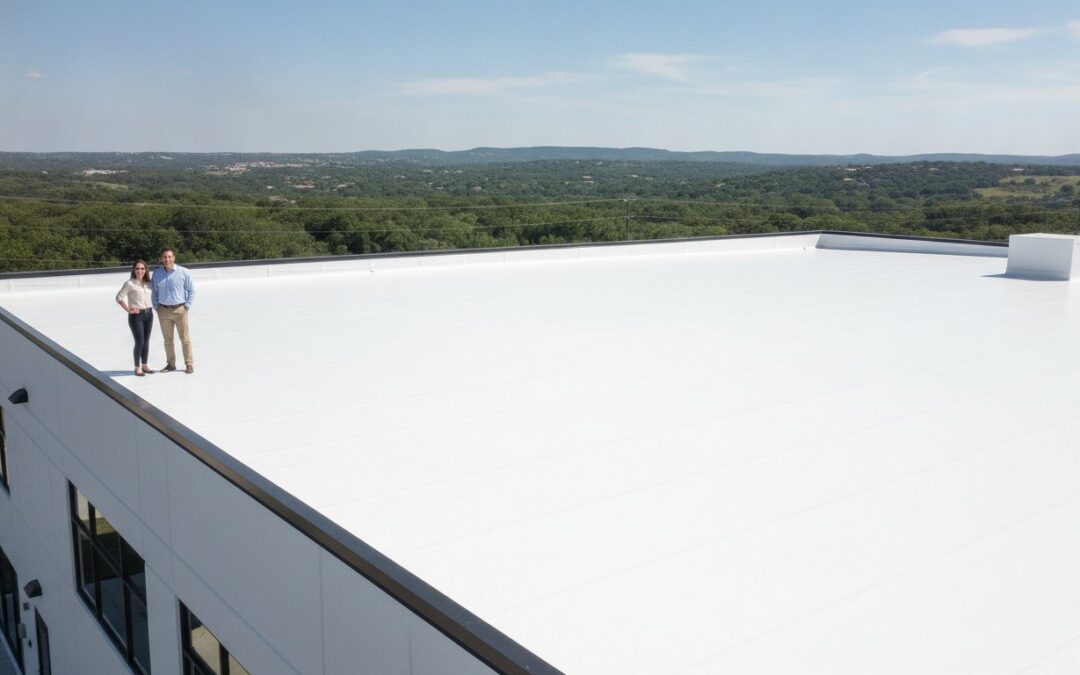
Did you know that upgrading to a reflective membrane and higher R-value insulation can cut your building’s HVAC energy consumption by up to 20% in the Central Texas heat? Managing a large property in Austin means constantly balancing maintenance costs against the threat of sudden hail storms and relentless UV exposure. It’s a high-stakes game where one wrong choice leads to years of leaks and high utility bills. If you’re planning a commercial flat roof replacement Austin project in 2026, you need a strategy that protects your bottom line as much as your structure.
We understand that the pressure to stay under budget while meeting strict city energy codes is exhausting. This guide shows you exactly when, why, and how to replace your roof to maximize ROI and protect your assets for the next two decades. You’ll learn about the latest 2021 building code requirements, the benefits of materials like TPO and PVC, and how to navigate the insurance process after a storm. We’ll give you the expert clarity you need to move from a state of vulnerability to total security.
Key Takeaways
- Learn how the 25% rule helps you decide if it is time to stop repairing and start replacing your weather-worn roof.
- Compare the benefits of TPO and PVC membranes to find the right balance of heat reflectivity and chemical resistance for your facility.
- Discover how building height and local codes influence the final price of a commercial flat roof replacement Austin project.
- Master the professional replacement steps, from initial core sampling to site safety staging, to ensure your business stays protected.
Recognizing When to Schedule a Commercial Flat Roof Replacement Austin TX
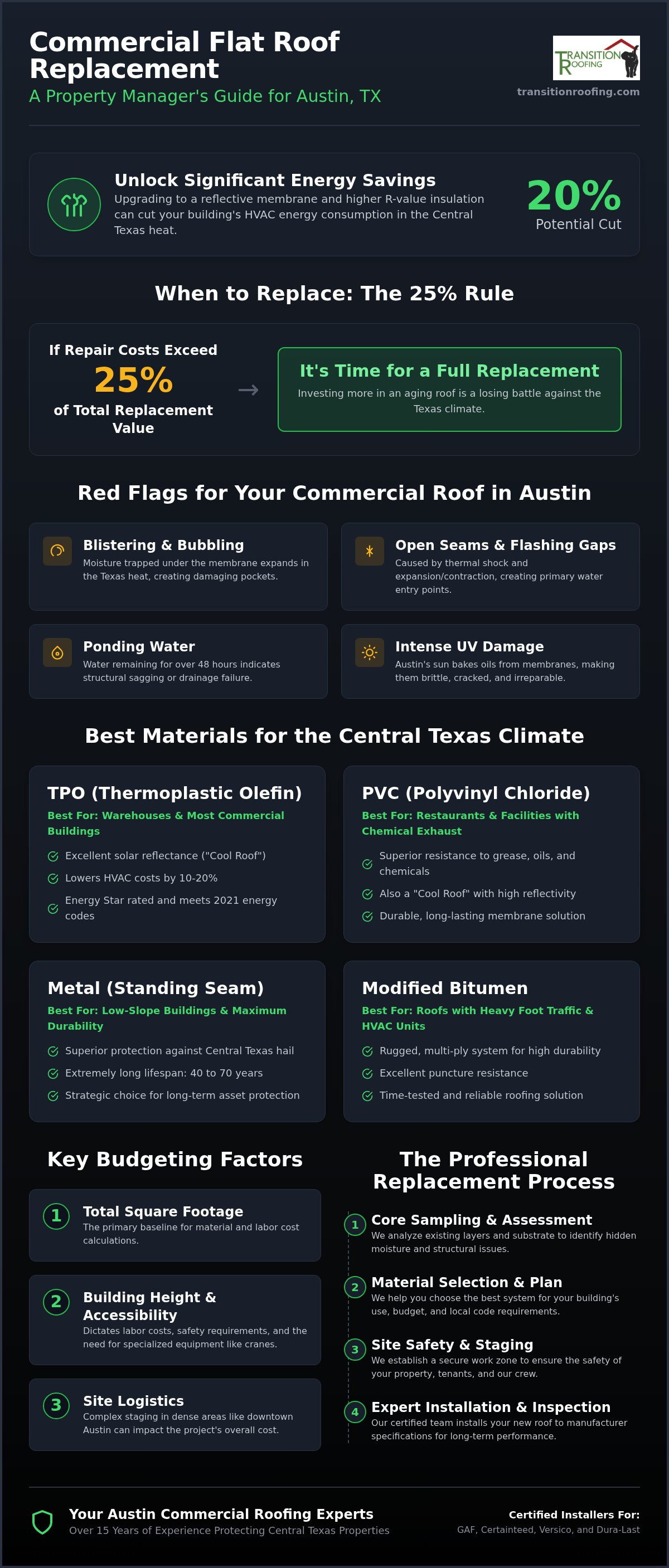
Deciding between a patch job and a full commercial flat roof replacement Austin project usually comes down to “contractor logic” and the 25% rule. If the estimated cost of repairs exceeds 25% of the total replacement value, it’s time to move on. Sinking money into an aging roof is a losing battle against the Central Texas climate. While minor leaks might seem manageable, they often hide widespread insulation saturation that compromises your building’s structural integrity and drives up cooling costs.
The intense UV radiation in Austin is a primary driver of roof failure. Over time, the sun bakes the oils out of roofing membranes, making them brittle and prone to cracking. This damage is often permanent and cannot be reversed with simple coatings. Additionally, ponding water that remains for more than 48 hours indicates structural sagging or drainage issues that a standard Austin roof repair cannot fix. Understanding flat roof construction and materials helps property managers see that once the substrate is compromised, a full commercial flat roof replacement Austin becomes the only safe path forward for long-term protection.
Common Signs of Flat Roof Failure in Central Texas
Keep a close eye on these specific red flags during your quarterly maintenance checks to avoid a catastrophic failure:
- Blistering and Bubbling: These pockets occur when moisture is trapped between the layers of the roof or under the membrane, expanding as the Texas heat rises.
- Open Seams and Flashing Gaps: Expansion and contraction cause seams to pull apart, creating the most common entry points for water in Austin office buildings.
Thermal shock occurs when rapid temperature changes, such as a sudden afternoon thunderstorm hitting a 150-degree roof, cause materials to expand and contract too quickly, leading to structural fatigue and split seams.
Best Materials for a Commercial Flat Roof Replacement in Austin, TX
Choosing the right material for a commercial roofing Austin project is the single biggest factor in your building’s long-term ROI. In Central Texas, roof surface temperatures often exceed 150 degrees. You need a system that reflects heat rather than absorbing it. TPO is the top choice for local warehouses because its white surface provides excellent solar reflectance. If you manage a restaurant or facility with chemical exhaust, PVC is better because it resists grease and oils. For buildings with heavy foot traffic or rooftop HVAC units, Modified Bitumen offers a rugged, multi-ply defense.
TPO vs. PVC: High-Reflectivity Solutions for Texas Heat
Both TPO and PVC are considered “Cool Roofs” because they utilize energy-efficient cool roof products to lower interior temperatures. Upgrading to these systems can reduce HVAC energy consumption by 10% to 20% in the Austin heat. As certified specialists for Versico and Dura-last, we know how high-quality installation ensures these membranes remain leak-free for decades. Selecting the right membrane for your commercial flat roof replacement Austin ensures you meet the latest 2021 energy codes while lowering your cooling costs. If you aren’t sure which membrane fits your facility, we can provide a transparent estimate based on your building’s specific usage.
Why Metal is a Strong Alternative for Low-Slope Buildings
While single-ply membranes are standard, metal roofing Austin systems are a great alternative for low-slope structures. Metal provides superior protection against the large hail common in Central Texas. Unlike membranes that can become brittle over time, a standing seam metal roof can last 40 to 70 years. This durability makes it a strategic choice for a commercial flat roof replacement Austin when long-term asset protection and hail resistance are your primary objectives.
Budgeting for Your Commercial Flat Roof Replacement in Austin, TX
Budgeting for a commercial flat roof replacement Austin project depends on several physical factors. Total square footage is the baseline, but building height and accessibility often dictate labor costs. If we need specialized cranes or if the building is in a dense part of downtown Austin TX where staging is difficult, the price reflects that complexity. We also evaluate the current state of common types of commercial roofing materials already on your building to determine if the deck can support new weight.
Austin building codes generally allow for two roof layers. If your building only has one layer, an overlay might save you money upfront. However, if the existing insulation is wet or damaged, a full tear-off is mandatory to prevent mold and structural rot. This is usually when we recommend a professional inspection to see if a full tear-off is actually required.
Cost Factors and ROI for Austin Business Owners
Modern energy codes in Central Texas now require higher R-value insulation, typically ranging from R-25 to R-30. Increasing the R-value thickness of your roof insulation directly reduces the heat transfer into your building, allowing your HVAC system to cycle less frequently and maintain stable interior temperatures during 100-degree Austin afternoons. While this increases the initial material cost, the energy savings can often pay back the investment over 10 to 15 years.
Many property managers overlook insurance claim assistance when budgeting. If your roof has sustained storm damage, your policy might cover a significant portion of the replacement. With over 15 years of local experience, we help you navigate the complexities of hail damage claims to ensure you get the coverage you deserve. If you’re ready for a clear financial plan, request a detailed estimate for your commercial roofing Austin project today.
The Replacement Process for Commercial Flat Roofs in Austin, TX
A successful commercial flat roof replacement Austin project follows a methodical timeline to ensure long-term security. We begin with a thorough inspection and core sampling. This step is vital for uncovering hidden moisture that could compromise the new system. Once we understand the deck’s condition, we move into staging. We set up safety barriers and material zones to keep your employees and customers safe throughout the build.
Our crews follow a systematic approach to protect your interior assets:
- Removal and Dry-In: We remove the old roof in manageable sections. Each area is “dried-in” immediately to prevent damage from unpredictable Central Texas rain.
- Precision Installation: We install high-performance GAF or Certainteed systems. Our specialists focus on expert flashing work around vents and units to eliminate common leak points.
Minimizing Business Disruption During Installation
We understand that a major construction project can stress your tenants. To minimize the impact, we offer flexible scheduling, including night and weekend work for Austin retail and office environments. Our team prioritizes noise control and daily debris management to maintain a professional appearance for your business. This steady rhythm prevents the process from feeling overwhelming for you or your occupants.
After the installation, we conduct a comprehensive final walkthrough with you. We verify that every detail meets our high standards and the specific requirements for manufacturer-backed warranties. This final step transforms your building from a state of vulnerability to one of total security. If you’re dealing with recurring leaks, we can take a look at your property and give you a clear plan.
Securing Your Building’s Future in Central Texas
Managing a commercial property in Austin requires a proactive approach to structural health. By applying the 25% rule for repairs and choosing high-reflectivity materials like TPO, you can turn a necessary maintenance expense into a strategic energy investment. Meeting the latest R-value requirements doesn’t just satisfy 2026 building codes; it provides a direct payback through lower cooling costs over the next decade. A well-planned project protects your tenants and your bottom line simultaneously.
When you’re ready to move forward with a commercial flat roof replacement Austin project, working with an experienced team ensures the process is transparent and minimally disruptive. We bring over 15 years of local expertise and certifications from GAF, Certainteed, Versico, and Dura-last to every site. If you’re dealing with recurring leaks or an aging system, schedule a commercial roof inspection in Austin today. We’ll provide a clear plan to move your asset from a state of vulnerability to total security. Your property is in safe, capable hands.
Frequently Asked Questions About Commercial Flat Roofs in Austin TX
How long does a commercial flat roof replacement take in Austin?
Most commercial flat roof replacement Austin projects take between one and three weeks to complete. The exact timeline depends on the building’s square footage, the number of existing roof layers, and current weather patterns in Central Texas. We prioritize a systematic dry-in process to ensure your interior remains protected from rain during construction. Larger industrial warehouses or complex retail centers may require additional time for staging and safety setup.
Can I install a new flat roof over my existing one to save money?
You can install a new membrane over an existing one if your building currently has only one roof layer and the underlying insulation is dry. Austin building codes generally allow for a maximum of two roofing layers. We use core sampling to check for hidden moisture before recommending an overlay. If it’s wet or damaged, a full tear-off is necessary to prevent structural rot and ensure a manufacturer-backed warranty.
What is the best flat roof material for the Austin heat?
TPO (Thermoplastic Polyolefin) is widely considered the best choice for the intense Austin heat due to its high solar reflectivity. These white membranes reflect UV rays rather than absorbing them, which helps lower your building’s cooling costs. For specialized facilities like restaurants, PVC is a better option because it resists grease and chemicals. We install certified systems from Versico and Dura-last that are specifically engineered to withstand the Central Texas climate.
Does commercial property insurance cover flat roof replacement after hail?
Most commercial policies cover replacement if a professional inspection proves the hail caused functional damage to the membrane or flashing. Insurance companies look for bruising, cracks, or punctures that compromise the roof’s lifespan. With over 15 years of local experience, we provide detailed documentation to assist with your insurance claim. This process helps property managers offset the cost of a commercial flat roof replacement Austin after severe storm events.
How much does a commercial flat roof replacement cost in Austin, TX?
The total cost for a project in Austin TX depends on the material choice, building height, and the complexity of the installation. Factors such as the need for a full tear-off versus an overlay and the R-value of the new insulation also impact the total investment. We provide transparent, project-based estimates that account for these variables. This ensures you’re getting a high-quality solution that meets current energy codes.
If you’re dealing with recurring leaks or an aging system, we can take a look and give you a clear plan. Schedule a roof inspection in Austin today.