

How many times can you patch a recurring leak before you’re throwing money into the Central Texas wind? Many property owners in Austin feel stuck in a cycle of temporary repairs while their cooling costs climb during our 100-degree summers. It’s frustrating to deal with a roof that feels like a liability rather than a shield. If you’re tired of the “patch and pray” method, it’s time for a permanent solution. This guide provides the steps to master a flat roof replacement in Austin, TX, from selecting high-performance materials like TPO to navigating complex insurance claims with guidance.
You deserve a roof that offers total security and lasts over 20 years. We’ll walk you through the differences between TPO, PVC, and Modified Bitumen while explaining how to handle the specific stressors of Austin hail and heat. With over 15 years of local experience and certifications from GAF and Versico, we’ve seen exactly what works in our climate. By the end of this guide, you’ll have a clear plan to move from vulnerability to total security.
Key Takeaways
- Learn how to use the “25% Rule” and identify ponding water to determine if you need a professional flat roof replacement.
- Compare high-performance materials like TPO and Modified Bitumen to see which system best handles the intense Austin heat and foot traffic.
- Break down the factors that influence your project budget, including the labor required for roof penetrations and the choice between tear-offs or recoveries.
- Gain expert insights on navigating the insurance claim process to ensure your property is fully protected after a major Central Texas storm.
Signs You Need a Flat Roof Replacement in Austin, TX
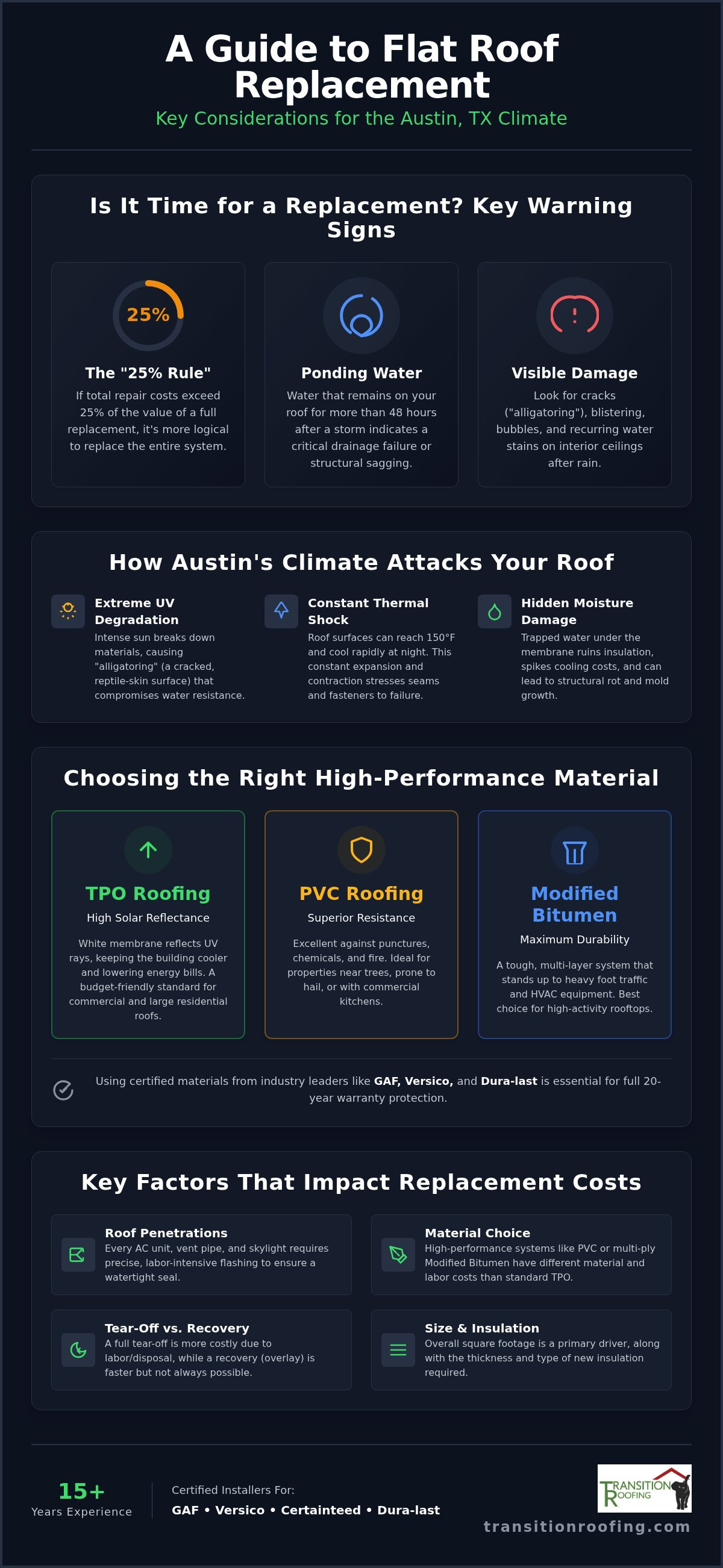
Knowing when to invest in a flat roof replacement often comes down to simple math and careful observation. If you notice ponding water that stays on your roof for more than 48 hours after a Central Texas storm, your drainage system has failed. The intense Austin sun usually evaporates surface moisture quickly; standing water indicates structural sagging or blocked outlets. We recommend using the “25% Rule” to guide your decision. If a single repair or the total cost of recurring leaks exceeds 25% of the value of a full replacement, it is no longer logical to keep patching a failing system.
How the Austin, TX Climate Destroys Flat Roofs
Our local weather is brutal on flat roof construction and materials. In the summer, roofs often reach 150 degrees before dropping significantly at night. This constant thermal expansion pulls at seams and fasteners, eventually causing them to fail or pull apart. Without high-reflectivity coatings, standard membranes suffer from extreme UV degradation. This leads to “alligatoring,” where the surface cracks like reptile skin and loses its ability to shed water effectively.
Structural Integrity and Hidden Moisture
The biggest danger is often the moisture you can’t see. Wet insulation loses its thermal resistance, which leads to sudden spikes in your cooling costs during the peak of summer. Trapping moisture under a new layer leads to structural rot and mold. A core test is the professional way to check for subsurface moisture before finalizing a project plan. If you see these signs, it’s time to move toward a more secure solution:
- Visible blistering or bubbles in the membrane surface.
- Water stains on interior ceilings or walls after heavy rain.
- Recurring leaks in the same location after multiple repair attempts.
If you’re seeing these issues, we can take a look and give you a clear plan for your next flat roof replacement.
Choosing High-Performance Materials for Austin, TX Flat Roofs
Selecting the right system for a flat roof replacement is your first line of defense against the Central Texas climate. The choice of material directly impacts your building’s internal temperature and long-term energy bills. Modern Low-Slope Roofing design focuses on systems that can handle thermal movement while maintaining a watertight seal. We look for materials that provide both durability and high reflectivity to combat the intense Austin sun.
TPO Roofing has become the standard for Commercial Roofing in Austin because of its high solar reflectance. This white membrane reflects UV rays instead of absorbing them, which keeps your structure cooler. For properties with chemical exposure or commercial kitchens, PVC Roofing offers superior resistance and heat-welded seams for maximum leak protection. If your roof houses heavy HVAC equipment or sees high foot traffic, Modified Bitumen provides a durable, multi-layer alternative that resists punctures better than single-ply systems.
TPO vs. PVC: Which is Better for Central Texas?
Both materials fight the heat using high Solar Reflectance Index (SRI) ratings. TPO is often more budget-friendly for large residential or commercial areas. However, PVC typically offers better puncture resistance for buildings near tall trees or areas prone to heavy hail. If you’re seeing high energy bills, a reflective membrane can significantly lower your building’s thermal load and reduce the strain on your AC units.
The Role of Manufacturers like GAF and Versico
Using certified materials from industry leaders like Versico, GAF, or Dura-last is essential for long-term warranty protection. These manufacturers only offer full coverage when the flat roof replacement is installed by certified experts. This ensures your 20-year roof actually lasts its full lifespan without premature failure. If you’re unsure which material fits your property’s specific needs, we can help you compare options with a local expert assessment.
Factors That Impact Flat Roof Replacement Costs in Austin, TX
Project costs for a flat roof replacement aren’t just about square footage. The complexity of your roofline plays a major role in the final investment. For example, every AC curb, vent pipe, and skylight requires individual flashing and sealing. These “penetrations” add labor hours because they are common failure points that need precision work to ensure a watertight seal.
You must also decide between a full tear-off or a roof recovery. A recovery involves installing a new membrane over the existing one, which saves on labor and disposal. However, local building codes usually limit you to two total layers. If your current insulation is wet or damaged, a full tear-off is mandatory to prevent structural rot. This decision often depends on the results of a core test to check for hidden moisture.
In dense areas like Downtown Austin, logistics can influence the budget. Limited space for dumpsters and cranes, or working on high-rise buildings, requires more coordination and specialized equipment. Meeting Austin’s strict insulation requirements for R-value is another factor that ensures your building stays cooler and complies with modern energy standards.
Hidden Cost Drivers in Commercial Flat Roofing
- Disposal fees: Hauling away old, heavy asphalt or gravel materials requires more equipment and higher landfill charges.
- Drainage corrections: If your roof has low spots, we must install tapered insulation. This creates a slight slope to move water toward drains, preventing the ponding issues that lead to leaks.
The Long-Term ROI of a Quality Replacement
A high-performance system reduces HVAC strain and maintenance costs for 15+ years. By choosing high-reflectivity materials, you lower the thermal load on your building during the peak of summer. If you need a precise estimate for your property, our team at this Flat Roofing Company in Austin provides professional assessments to help you plan effectively.
The Transition Roofing Approach to Flat Roof Replacement in Austin, TX
At Transition Roofing, we don’t just install materials; we provide long-term protection for your assets. Our process begins with an expert local assessment that leverages over 15 years of Central Texas experience. We know exactly how Austin hail and heat stress a roof, allowing us to spot hidden vulnerabilities before they become disasters. By maintaining certifications with industry leaders like GAF, Certainteed, and Versico, we ensure every flat roof replacement meets the highest standards for durability and warranty coverage. We prioritize transparent communication to keep your business or home running smoothly without the stress of contractor unreliability.
Navigating Insurance Claims for Flat Roofs
Dealing with insurance after a major storm is often the most stressful part of property ownership. We simplify this by providing comprehensive documentation of all wind and hail damage. Our team works alongside you to ensure your carrier understands the full scope of the loss. Contractor logic is vital when meeting with insurance adjusters because it focuses on the structural reality of the damage rather than just the surface-level appearance. This approach ensures that the transition from a damaged roof to a new system is handled with integrity and professional authority.
Protecting Your Investment Post-Replacement
A new roof is a significant investment that needs consistent care to reach its 20-year potential. This is why we recommend preventative maintenance programs to catch small issues like debris buildup or seam stress before they lead to leaks. Our goal is to move your structure from a state of vulnerability to one of total, long-term security. If you’re dealing with recurring leaks or storm damage, we can take a look and give you a clear plan. Schedule a flat roof inspection in Austin today to secure your property.
Secure Your Property with a High-Performance Flat Roof
Managing a property in Central Texas means staying ahead of the elements. You now have a clear roadmap for your flat roof replacement, from identifying subsurface moisture to selecting reflective TPO that lowers your cooling costs. A new roof is more than a repair; it is a long-term thermal upgrade that protects your investment for decades. By following the “25% Rule” and prioritizing certified craftsmanship, you move from vulnerability to total security.
Transition Roofing brings over 15 years of local experience to every project. As certified GAF and Certainteed installers, we maintain the highest standards of integrity and provide A+ rated insurance claim assistance to handle the paperwork for you. We ensure your transition to a new roof is steady and transparent. Schedule your professional flat roof inspection in Austin today and let our team provide the expert guidance you need to protect your assets. Your peace of mind starts with a roof built to survive the Austin sun.
Frequently Asked Questions About Flat Roofing in Austin, TX
How long does a flat roof replacement typically take in Austin?
Most projects take between 2 to 5 days. It depends on building size and the number of penetrations like HVAC units. Weather is also a factor; we don’t open roofs when rain is in the forecast. For a standard 2,000-square-foot commercial space, we aim for a three-day window to ensure the transition to total security is efficient and clean for your business.
Is TPO the best material for flat roofs in the Central Texas heat?
TPO is often the top choice because of its high solar reflectance. This white membrane reflects UV rays instead of absorbing them, which is critical during 100-degree Austin summers. It helps lower cooling costs and reduces strain on your AC units. While PVC is excellent for chemical resistance, TPO provides a durable solution that meets local “cool roof” standards for most property owners.
Can I install a new flat roof over my existing one in Austin, TX?
You can perform a recovery if your current system has only one layer and the insulation is dry. Local Austin building codes generally limit structures to two total roofing layers. However, if a core test reveals trapped moisture or structural rot, a full flat roof replacement is mandatory. Installing over wet materials leads to mold, so a professional assessment is vital before choosing this path.
Does insurance cover flat roof replacement after an Austin hail storm?
Most policies cover replacement if the damage is caused by a sudden peril like hail or high winds. We specialize in documenting these losses to provide expert insurance claim assistance. We use contractor logic to show adjusters how storm impacts compromised the membrane. It’s important to act quickly after a storm to ensure your flat roof replacement claim is filed within the required policy deadlines.
What is the average lifespan of a flat roof in the Austin, TX climate?
A professionally installed flat roof typically lasts between 15 and 25 years. The intense UV exposure and thermal expansion in Central Texas can shorten this lifespan if the roof isn’t maintained. High-performance materials like TPO or Modified Bitumen stay secure longer than older asphalt systems. We recommend preventative maintenance programs to catch seam stress early, ensuring your property remains protected for the full life of the system.