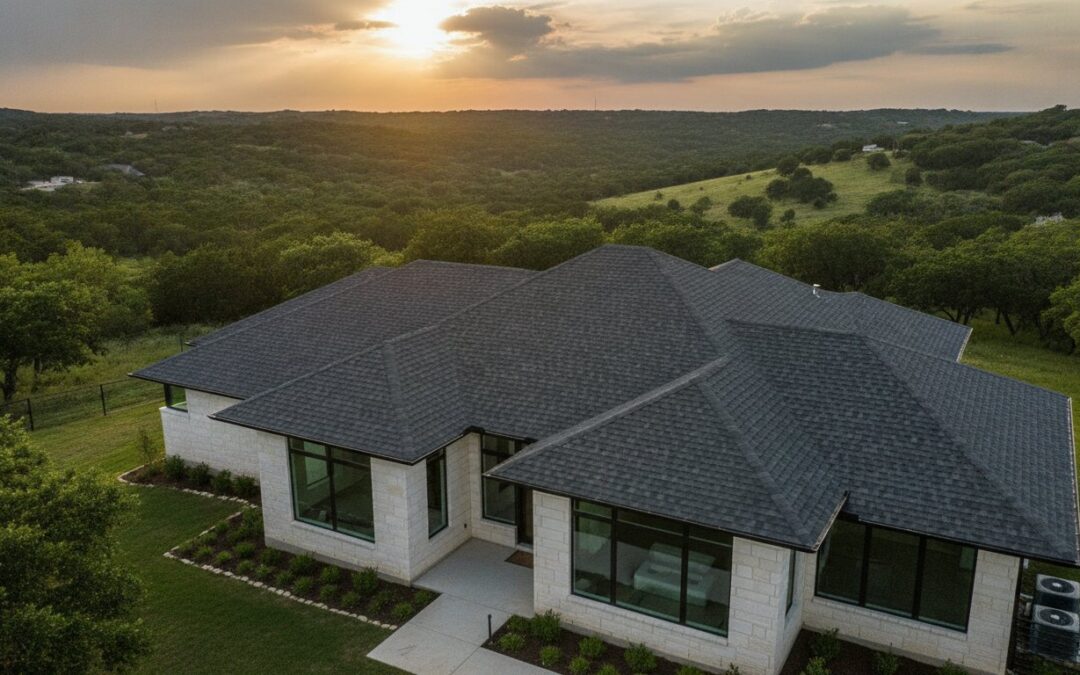
In 2026, an Austin roof is no longer just a structural necessity; it’s your primary defense against skyrocketing insurance premiums and record-breaking Central Texas hail. Most homeowners feel the stress of deciphering conflicting quotes for a residential roof installation after a major storm. It’s frustrating to worry if your next claim will be denied because of your roof’s age or material.
We’ve spent over 15 years helping neighbors secure their homes with high-quality craftsmanship that stands up to the local climate. We’re GAF and Certainteed certified, which means we focus on long-term protection rather than quick fixes. This guide teaches you how to choose the right materials, navigate the 2026 insurance landscape, and ensure your home stays leak-free for the next two decades. You’ll learn about current Austin building codes, the new Texas Roof Fortification Program, and how to spot a quote that actually protects your investment for the long haul.
Key Takeaways
- Spot visual signs like granule loss and use the “80% rule” to replace your roof before a major storm causes interior leaks.
- Select the right materials for a residential roof installation by comparing the durability and cooling benefits of GAF and Certainteed shingles.
- Ensure your investment is protected by insisting on a full tear-off and a thorough deck inspection during the replacement process.
- Avoid expensive long-term repairs by learning how to spot low-quality quotes and navigate the complexities of 2026 insurance claims.
Signs You Need a Residential Roof Installation in Austin, TX
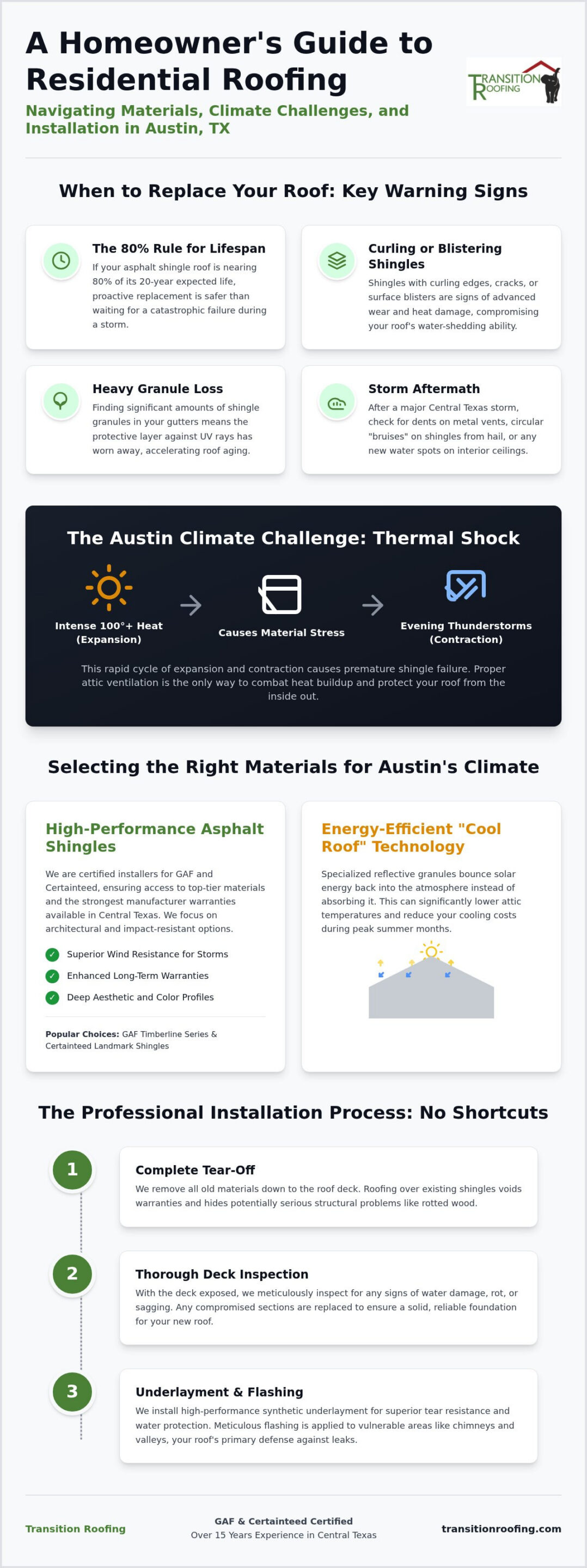
Knowing when to schedule a residential roof installation in Austin, TX protects your home from the sudden disaster of a collapsed ceiling. We follow the 80% rule based on our 15 years of local experience. If your roof is at 80% of its expected life, which is typically 20 years for standard asphalt, it’s safer to replace it than wait for a total failure. Look for curling shingle edges or heavy granule loss in your gutters. These granules protect the asphalt from UV rays. The purpose of a roof is to provide shelter and insulation, but a failing system cannot maintain your home’s integrity.
The Impact of Central Texas Heat on Shingle Lifespan
Our consistent 100-degree Austin summers create intense thermal shock. Shingles expand in the midday sun and contract quickly during evening thunderstorms. This cycle often causes shingle blistering, where trapped moisture pops through the shingle surface. Proper attic ventilation is the only way to combat this heat buildup. Without it, your shingles bake from the inside out, leading to premature failure well before the warranty ends.
When Storm Damage Requires Full Installation
Minor shingle repair works for small leaks, but major Central Texas hail often requires a full residential roof replacement. Localized hail patterns can destroy the integrity of a single slope while leaving others intact. If you’ve just weathered a major storm, check for these signs:
- Dents on soft metal vents or gutters.
- Circular bruises on shingles where granules are missing.
- Pinpoints of light filtering through the roof boards in your attic.
- New or growing water spots on your interior ceilings.
Selecting Materials for Residential Roof Installation in Austin, TX
Choosing the right material for your residential roof installation determines how well your home handles 100mph wind gusts and relentless UV exposure. While basic shingles are common, we use “contractor logic” to evaluate material weight and wind ratings. Heavier architectural shingles stay put during spring storms. If you want the ultimate protection, stone-coated metal offers a premium, high-impact alternative that mimics the look of traditional tile or wood shake. Before signing any contract, it’s wise to review the FTC’s advice on hiring a contractor to ensure you’re working with a legitimate local expert who understands Austin’s unique building requirements.
Asphalt Shingle Options: GAF vs. Certainteed
We specialize in GAF and Certainteed because their local warranties are the strongest in Central Texas. These brands offer performance tiers ranging from standard architectural shingles to heavy-duty impact-resistant options. GAF’s Timberline series and Certainteed’s Landmark shingles provide excellent wind resistance and aesthetic depth. You can see specific material examples on our residential roofing page. Using a certified installer is the only way to lock in these enhanced manufacturer warranties. This ensures that if a product defect occurs, you aren’t left paying for labor or disposal costs out of pocket.
Energy Efficient Roofing for the Austin Climate
Energy efficiency is a major factor in the Austin climate. “Cool roof” technology uses specialized granules to reflect solar energy back into the atmosphere. This significantly lowers your cooling costs during the peak heat of July and August. Lighter shingle colors generally have higher reflectivity ratings, but modern dark shingles now come with advanced reflective coatings too. If you’re curious about which color fits your home’s aesthetic while saving you money, this is usually when we recommend a material consultation to compare reflectivity ratings side-by-side.
The Step-by-Step Residential Roof Installation Process in Central Texas
With over 15 years of local experience, we know that a successful residential roof installation begins with a complete tear-off of your old materials. Some contractors might suggest roofing over existing shingles to save time, but we never recommend this. It voids manufacturer warranties and hides deep structural issues. Once the deck is bare, we perform a thorough inspection. We look for rotted wood or sagging areas that suggest moisture penetration. Replacing these sections ensures your new roof has a solid foundation that won’t fail during a heavy storm.
Underlayment and Flashing: Your Roof’s Secret Defense
We’ve seen many DIY attempts fail because of poor flashing at valleys and chimneys. These are the most vulnerable points on any Austin home. While traditional felt was the standard, we now use synthetic underlayment for superior tear resistance and moisture protection. We also install metal drip edges to keep water away from your fascia boards. This multi-layered defense is what keeps your home dry during intense Central Texas downpours. Proper flashing directs water safely into your gutter system rather than allowing it to seep behind your siding.
Timeline: What to Expect During Installation
For a standard 2,500 sq. ft. home in Austin, the physical residential roof installation typically takes one to three days. However, the exact schedule depends on the weather. We monitor Central Texas storm fronts closely to ensure your home is never left vulnerable to rain during the tear-off phase. Once the shingles are set, we conduct a final inspection to verify that every detail meets current Austin building codes and manufacturer specifications. We focus on a clean job site and a secure structure. If you want a team that prioritizes these technical details, you can schedule a professional roof inspection with our experts today.
Costs and Insurance for Residential Roof Installation in Austin, TX
Budgeting for a residential roof installation in Austin, TX often feels like a moving target. Pricing isn’t just about square footage. We evaluate roof pitch and material complexity to determine the final cost. A steep roof requires more safety equipment and specialized labor hours. While it’s tempting to pick the lowest bid, the cheapest quote often leads to expensive leaks within three years because of cut corners. With over 15 years of local experience, we’ve seen how “storm chasers” disappear when the next thunderstorm hits. We prioritize integrity and long-term protection over a one-time transaction.
Understanding Your Roofing Estimate
Contractors measure your home in “roofing squares.” One square equals a 10-by-10-foot area. Your estimate should be transparent and include every line item. This means disposal fees for your old shingles and Austin city permits are clearly listed. As of 2026, a standard residential reroofing permit fee in Austin is approximately $333. If these costs aren’t in your quote, you’ll likely face surprise charges later. We believe in a methodical, no-nonsense approach to pricing that protects your assets from day one.
Claim Assistance for Austin Homeowners
Texas storms are intense, and navigating insurance is stressful. Under Texas House Bill 2102, it’s illegal for a contractor to waive or rebate your deductible. We help you stay compliant while ensuring you get a fair settlement. Before the adjuster arrives, document your damage with clear photos of fallen shingles or dented gutters. We provide expert insurance claim assistance to guide you through the adjuster meeting. This ensures your policy’s “Ordinance or Law” coverage is applied to meet current 2021 International Building Codes. If you’re dealing with hail damage, we can take a look and give you a clear plan.
Securing Your Austin Home for the Next Two Decades
A professional residential roof installation is the most significant step you can take to protect your property from the unpredictable Central Texas climate. By identifying damage early and selecting high-performance materials like GAF or Certainteed shingles, you ensure your home remains a safe haven. We’ve covered the importance of a complete tear-off and the necessity of navigating insurance claims with local expertise. These steps move your structure from a state of vulnerability to one of total security.
With over 15 years of experience and an A+ local reputation for storm recovery, we understand the specific stressors Austin homes face. Our GAF and Certainteed certifications mean we maintain the highest standards of craftsmanship on every project. If you’re dealing with recent hail damage or an aging system, we can take a look and give you a clear plan. Schedule a professional roof inspection in Austin today to get started. You deserve the peace of mind that comes from knowing your roof is built to last.
Frequently Asked Questions
How much does a new residential roof installation cost in Austin, TX?
The total investment for a residential roof installation depends on several specific factors. We calculate your estimate based on the number of roofing squares, the pitch of your roof, and the complexity of the architectural design. Premium materials like stone coated metal or high-tier GAF shingles also influence the final price. We provide transparent quotes that include city permit fees and old material disposal to ensure you face no hidden charges.
How long does it take to install a new roof on a standard home?
A standard 2,500 square foot home in Central Texas typically takes one to three days to complete. This timeline includes the full tear-off of old materials, a thorough deck inspection, and the final shingle application. However, the schedule can shift based on local weather conditions. We monitor Austin storm patterns closely to ensure your home is never left vulnerable to rain or high winds during the active project phase.
Can I install a new roof over my existing shingles?
We never recommend installing new shingles over an existing roof layer. While some contractors suggest this to save time, it prevents us from performing a necessary deck inspection to find rotted wood. It also adds unnecessary weight to your home’s structure and usually voids the manufacturer’s warranty. A clean tear-off is the only way to ensure your new residential roof installation meets local building codes and provides long-term protection.
Does homeowners insurance cover residential roof installation after a storm?
Most homeowners insurance policies cover a full replacement if the damage was caused by a sudden event like hail or wind. We specialize in insurance claim assistance to help you navigate the adjuster meeting and documentation process. It’s important to remember that Texas law requires homeowners to pay their full deductible. We ensure your claim covers necessary code upgrades, such as the required 2021 International Building Code amendments in Austin.
What is the best roofing material for the hot Central Texas climate?
Architectural asphalt shingles and metal roofing systems are the most effective choices for the intense Austin heat. Brands like GAF and Certainteed offer “cool roof” technology that uses reflective granules to bounce solar energy away from your home. This helps lower your energy bills significantly during the summer. For homeowners looking for maximum durability against hail, stone coated metal provides a premium, impact-resistant alternative that withstands the harshest Central Texas storms.