Most Austin homeowners don’t realize that a single storm in Central Texas can shave five years off a roof’s lifespan in less than ten minutes. While you might not see missing shingles from your driveway, hail often creates hidden fractures that the intense Texas sun eventually turns into leaks and mold. If you’re looking into hail damage roof repair Austin experts are currently busy managing the aftermath of the 902 major hail events Texas faced last year. It’s natural to feel stressed about dealing with insurance adjusters or feel uncertain about whether you need a simple patch or a total replacement.
We believe you deserve a straight answer and a roof that actually protects your family. With over 15 years of local experience and certifications from GAF and Certainteed, we’ve seen how these storms impact different materials across Austin, TX. This 2026 recovery guide will teach you how to identify subtle damage, navigate the Texas insurance claim process with confidence, and restore your home using professional contractor logic. You’ll learn exactly what to look for so you can secure a successful claim and gain the peace of mind that comes from a leak-free home.
Key Takeaways
- Learn to spot hidden structural issues like shingle bruising and granule loss that lead to leaks long after a Central Texas storm passes.
- Understand the proper sequence for insurance claims, including why a professional inspection should always happen before you contact your adjuster.
- Discover the “25% Rule” that experts use to determine if you need a targeted hail damage roof repair Austin or a full system replacement.
- Find out how GAF and Certainteed certifications protect your warranty and ensure your home is restored with high-quality, durable materials.
- Navigate the specific 2026 Texas insurance deadlines and local Austin building codes to avoid claim denials and unexpected out-of-pocket costs.
Identifying Storm and Hail Damage in Austin, TX
Hail damage is often misunderstood as a purely cosmetic issue. In reality, it represents a significant structural compromise to your home’s first line of defense. Understanding what is hail and how it impacts different materials is the first step in protecting your investment. Most homeowners look for missing shingles, but the real danger lies in the fractures you can’t see from the ground. If you’re considering hail damage roof repair Austin specialists recommend looking for signs of impact that weaken the underlying fiberglass mat. These impacts create “bruises” that eventually lead to leaks.
To better understand this concept, watch this helpful video:
Common Signs of Hail Damage on Austin Roofs
Identifying damage requires a keen eye for “collateral” indicators. Since you shouldn’t climb a ladder yourself, look for these signs from the safety of the ground or through your windows:
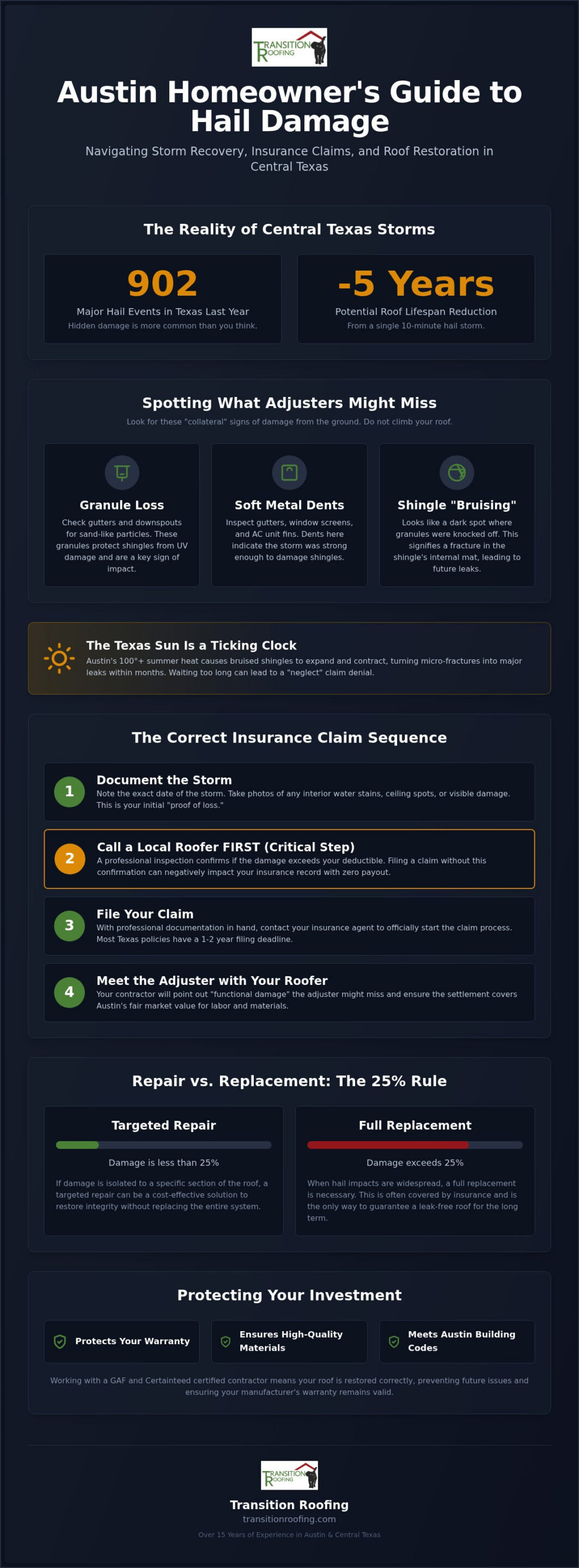
- Granule loss: Check your gutters and downspout splash pads for piles of mineral granules. These protect shingles from UV rays. Without them, the asphalt dries out and cracks.
- Soft metal dents: Inspect your window screens, gutters, and AC unit fins. If these thin metals are dented, the force of the storm was likely strong enough to damage your shingles.
- Shingle bruising: This looks like a dark, circular spot where granules have been knocked away. While it looks minor, the impact often fractures the internal reinforcement of the shingle.
How the Central Texas Climate Worsens Hail Impacts
In Austin, TX, the weather doesn’t just stop after the storm. Our 100-degree summer days create a “hidden clock” for damaged roofs. When a shingle is bruised, the intense heat causes the asphalt to expand and contract rapidly. This thermal shock widens the micro-fractures caused by hail, leading to premature leaks within months. Waiting too long to act is a common mistake. If you delay an inspection for six months or more, insurance companies may label the resulting leaks as “neglect” rather than storm damage. This can lead to a denied claim for a problem that was originally covered. Professional drone or ladder inspections are essential to catch spatter marks and impact patterns before the sun turns them into a total roof failure.
Navigating the Insurance Claim Process for Austin Roofs
Filing a claim for hail damage roof repair Austin property owners often find, is a race against the clock. Most Texas policies require you to file within one to two years of the storm event. However, the process shouldn’t start with a phone call to your agent. It starts with documentation. Record the exact date of the storm and take clear photos of any interior leaks or ceiling stains immediately. These records provide the “proof of loss” that adjusters require to validate your claim.
The most critical step is calling a local contractor before you file. If an adjuster visits and determines the damage is less than your deductible, you’ve essentially added a claim to your record with zero payout. A professional pre-inspection confirms if the damage meets the necessary threshold. This sequence protects your insurance history and ensures you have a factual basis for your claim. If you’re seeing signs of impact, we can provide a clear assessment to help you decide if filing is the right move for your home.
Why You Need a Roofer Present for the Adjuster Meeting
Adjusters are often tasked with handling dozens of files a week. They might miss “functional damage” like fractured shingle mats that haven’t yet caused a leak. When a contractor is present, they can point out these issues and ensure the “Scope of Work” is comprehensive. This includes often-overlooked components like the drip edge, valley flashing, and ridge vents. A local expert also ensures the insurance company uses the Fair Market Value for Austin labor and materials, which currently sits 15-20% higher than the Texas state average. Utilizing professional insurance claim assistance simplifies this paperwork and ensures your settlement covers the actual cost of a high-quality restoration.
Knowing exactly what homeowners insurance covers allows you to advocate for yourself during the process. If your claim is denied, don’t assume the case is closed. You have a legal right to a re-inspection. Requesting a second look with a different adjuster and providing a detailed contractor’s report often reverses an initial denial. Documentation is your strongest leverage in the Central Texas climate, where storm evidence can fade or be masked by subsequent heat cycles.
Hail Damage Roof Repair vs. Full Replacement in Austin, TX
Deciding between a targeted repair and a complete overhaul requires a clear understanding of contractor logic. In Austin, TX, the industry standard often follows the 25% rule. If more than 25% of a single roof slope shows functional damage, insurance carriers typically approve a full replacement for that slope. For asphalt shingles, this usually means replacing the entire facet to ensure structural integrity and a visual match. Metal roofing differs; we can often replace individual standing seam panels if the underlying decking remains dry and the finish matches.
Commercial properties face unique risks that residential owners might miss. Small hail punctures in TPO membranes can trap water in the insulation layer. This leads to hidden rot that compromises the entire building structure over time. If you’re managing a facility, a patch might fix the surface, but it won’t address the moisture already seeping into the substrate. This is why a comprehensive moisture scan is a vital part of a professional hail damage roof repair Austin assessment.
Contractor Logic: When to Repair
Repairing a roof is viable when the damage is localized and the materials are still healthy. We typically recommend repairs for:
- Isolated impacts from a small, brief hail event that only affected one area.
- Roofs under five years old where shingles are still pliable enough to be manipulated without cracking.
- Minor surface dents on flat roofing systems that haven’t breached the primary waterproofing membrane.
When a Full Roof Replacement is Unavoidable
There are times when patching is simply a band-aid on a failing system. A full replacement becomes the only safe path when we see extensive granule loss across multiple slopes. This loss leaves the asphalt exposed to the harsh Central Texas sun, accelerating failure. We also perform a “brittle test” during our inspections. If we lift a shingle to replace the one below it and the top shingle cracks, the roof is too old to be repaired. Widespread bruising also signals the end of a roof’s useful life. Patching these systems often results in unsightly color mismatches and creates new leak points where old and new materials meet. If you aren’t sure which path is right for your property, schedule a professional roof inspection in Austin today to get a clear recovery plan.
Why Transition Roofing is the Trusted Choice for Austin Hail Recovery
Transition Roofing has anchored the Central Texas community for over 15 years. We’ve managed the aftermath of every major storm cycle in the region, providing a steady hand for property owners during stressful times. When you need hail damage roof repair Austin experts who prioritize integrity over a quick sale, our team delivers. We don’t just patch holes. We restore the long term protection of your home or business using high quality materials and seasoned craftsmanship. Our certifications with GAF and Certainteed ensure that every repair or replacement meets rigorous manufacturer standards.
Local Expertise for the Central Texas Storm Season
Our team lives and works in Austin, Round Rock, and Pflugerville. This local roots approach is vital because we understand the specific building codes and permit requirements that vary across Central Texas. We aren’t “storm chasers” who arrive with the clouds and disappear once the job is finished. We’re your neighbors. We provide grounded realism and transparent estimates, ensuring you understand exactly what your roof needs to withstand the next 100 degree summer or spring hailstorm.
A Proven Process for Peace of Mind
We follow a methodical rhythm that mirrors a well organized project timeline. From the initial damage assessment to the final walkthrough, we handle every detail so you don’t have to. Our deep expertise covers both residential roof replacement and complex commercial roofing in Austin, including specialized systems like TPO and metal. Our GAF Master Elite status allows us to provide homeowners with enhanced warranty protection that covers both materials and labor for decades. This status is only awarded to the top 2% of roofers, giving you total security in your investment.
If you’re dealing with hidden leaks or visible storm damage, we can take a look and give you a clear plan. Schedule a roof inspection in Austin today.
Take the Next Step Toward a Secure Roof
Recovering from a Central Texas storm doesn’t have to be a source of constant stress. You now understand how hidden shingle bruising acts as a ticking clock and why having a contractor present for your adjuster meeting is the best way to ensure a fair settlement. By acting within the required insurance windows and choosing high quality materials, you protect your home from the inevitable return of intense heat. Professional hail damage roof repair Austin services are about more than just fixing leaks; they are about restoring your property’s long term resilience.
Transition Roofing brings over 15 years of Austin experience and an A+ BBB rating to every project. As GAF and Certainteed certified experts, we provide the steady hand and technical proficiency needed to move your structure from vulnerability to total security. If you suspect your roof has storm damage, schedule a professional roof inspection in Austin today. We’ll provide a transparent plan so you can move forward with confidence and peace of mind.
Common Questions About Hail Damage Roof Repair in Austin, TX
How long do I have to file a hail damage claim in Austin, TX?
You typically have between one and two years from the date of the storm to file a hail damage claim in Austin, TX. Every insurance policy has different language, so it’s critical to verify your specific deadline immediately after a storm is recorded. Waiting until you actually see a leak often results in a denied claim. The insurance company may attribute the damage to normal wear and tear rather than a specific weather event if you delay too long.
Can I repair my roof myself after a hailstorm?
We don’t recommend attempting your own roof repairs after a storm. Insurance companies require professional documentation and proof of repairs from a certified contractor to release the full claim payout. Also, DIY work can void high level warranties from manufacturers like GAF or Certainteed. It’s safer and more financially sound to let an expert handle the restoration while your insurance covers the cost. This ensures the structural integrity of your home remains intact.
What size hail actually causes roof damage?
Hail roughly one inch in diameter, the size of a quarter, is the standard threshold for functional damage to asphalt shingles. Stones this size have enough mass to fracture the underlying fiberglass mat. Larger stones can crack tiles or dent metal, while smaller hail usually only causes cosmetic granule loss. While small hail seems harmless, it shortens the roof’s lifespan by exposing the asphalt to the sun. This leads to brittle shingles and future leaks.
Will my insurance rates go up if I file a hail damage claim?
In Texas, insurance companies are prohibited from increasing your individual rates solely because you filed a weather related claim. State law protects homeowners from being penalized for “acts of God” like hailstorms. While your premiums might eventually go up because of high storm activity in your entire area, filing for a necessary hail damage roof repair Austin service won’t be the direct cause. It’s almost always better to file a valid claim than to pay for a full replacement later.
How much does hail damage roof repair cost in Austin?
The total cost for hail damage roof repair Austin properties require depends on the roof’s pitch, the square footage of the damage, and the materials involved. Repairing a few bruised shingles is a minor expense compared to replacing entire metal panels or TPO sections. We provide detailed estimates that break down these variables so you can make an informed decision about your property. Every roof is different, so a professional inspection is the only way to get an accurate price for your specific situation.