
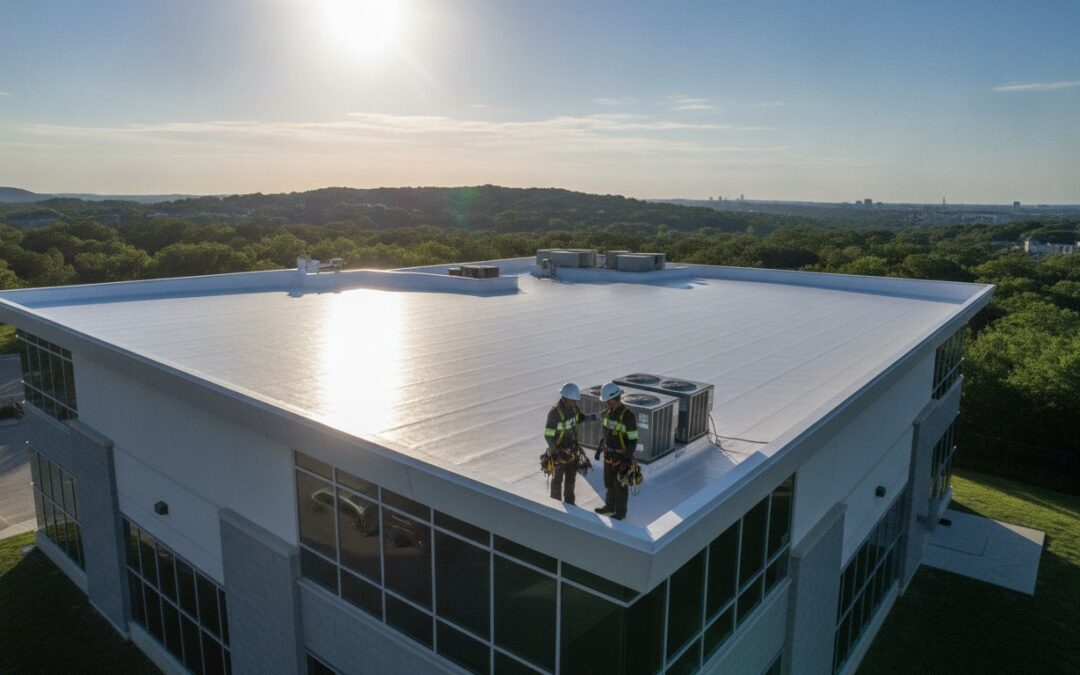
A white TPO roofing membrane can reflect 80% of solar radiation, which can lower your rooftop surface temperature by as much as 80 degrees compared to a traditional dark roof. For property managers in Central Texas, this isn’t just a technical stat; it’s the difference between manageable overhead and skyrocketing energy bills. You’ve likely dealt with the stress of frequent leaks in old bitumen systems or the fear of hiring “storm chaser” contractors who vanish after a single hail event.
We understand that your primary goal is protecting your commercial asset with a roof that actually lasts. Choosing between various TPO roofing companies in Austin TX requires a clear understanding of local installation standards and the specific durability needs of our harsh climate. This guide provides the 2026 roadmap to finding a reliable partner, ensuring you get a UV-reflective, leak-free system backed by a 20 plus year warranty. We’ll cover essential cost factors, the importance of membrane thickness, and how to navigate the latest Austin energy codes to keep your building secure and efficient.
Key Takeaways
- Learn how white TPO membranes reflect up to 80% of solar radiation to lower energy bills in the intense Austin heat.
- Find out why hiring certified TPO roofing companies in Austin TX is the only way to secure a manufacturer NDL warranty.
- Compare the costs and benefits of a roof recover versus a full tear-off to maximize your property maintenance budget.
- Understand how roof penetrations like HVAC units and vents impact labor complexity and your total project timeline.
- Discover how thermal imaging inspections can spot hidden moisture and prevent minor leaks from turning into major structural issues.
Why TPO is the Standard for Austin TX Commercial Buildings
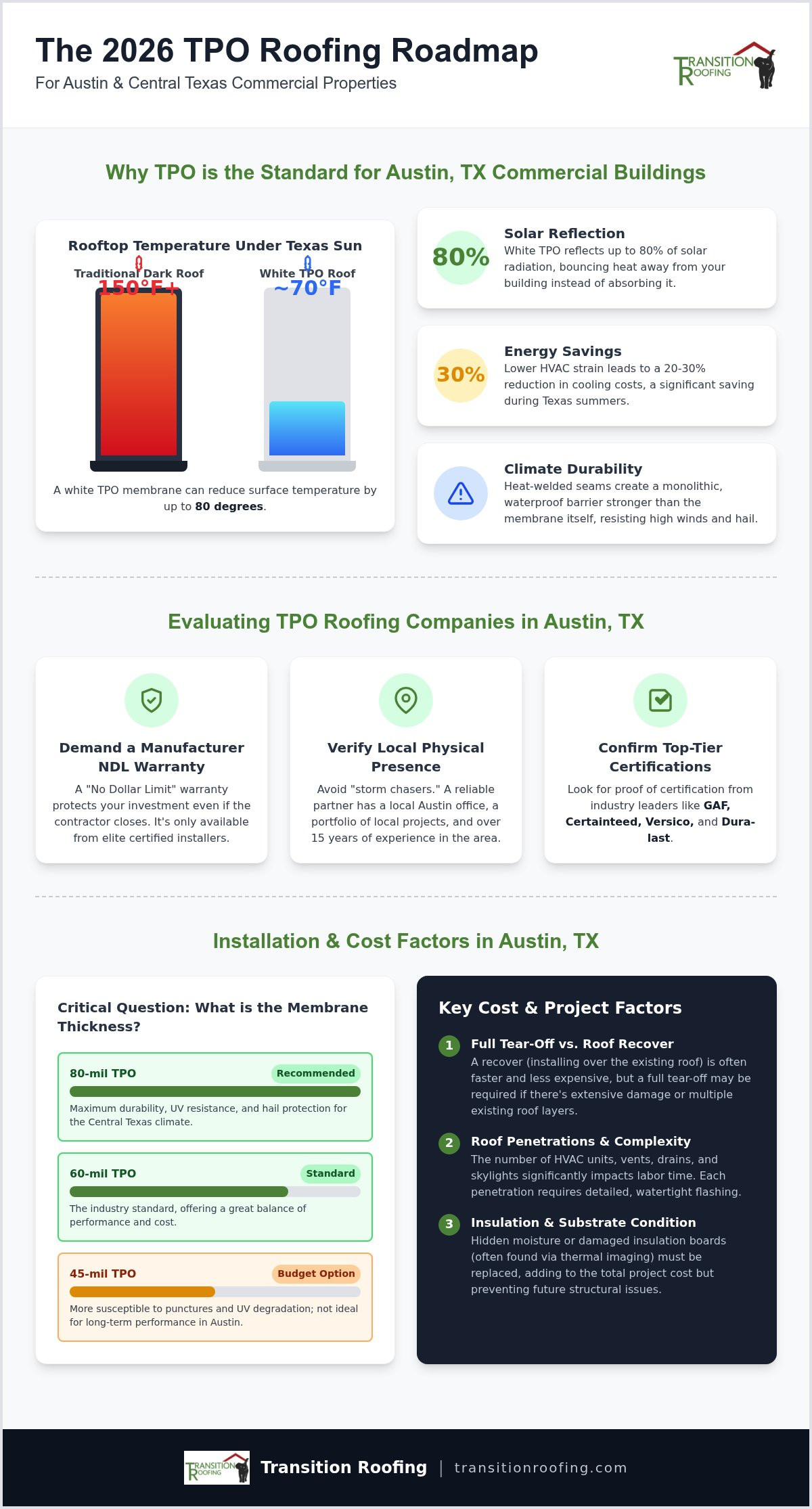
Commercial property owners in Central Texas face a unique challenge: the sun. Traditional asphalt-based flat roofs act like giant heat sponges. They soak up UV rays until the surface temperature hits 150 degrees or higher. This is why many TPO roofing companies in Austin TX have transitioned almost exclusively to Thermoplastic Polyolefin (TPO) roofing. TPO is a single-ply, white membrane designed to bounce heat away from your building rather than absorbing it.
In our climate, a high-quality white TPO system reflects 70% to 80% of solar radiation. This reflection can lower your roof’s surface temperature by 50 to 80 degrees compared to dark-colored materials. By keeping the roof cool, you significantly reduce the strain on your HVAC units during the brutal July and August heatwaves. It’s a proactive thermal management strategy that protects your equipment and your bottom line.
TPO Performance in the Central Texas Climate
Austin weather is notorious for rapid temperature swings. These shifts cause materials to expand and contract constantly. TPO is engineered to handle this thermal movement without cracking or becoming brittle. Unlike older systems that rely on adhesives, TPO uses heat-welded seams. These welds create a monolithic bond that’s actually stronger than the membrane itself. This provides superior protection during high-wind events and the heavy downpours common in Central Texas.
Energy Efficiency and Long-Term Savings
Installing a TPO system often leads to a 20% to 30% reduction in cooling costs for large commercial warehouses and retail spaces. It’s a key strategy for meeting the Austin Energy Conservation Audit and Disclosure (ECAD) ordinance. While the city’s adoption of the 2024 energy codes is currently under legal review at the state level, TPO remains the most reliable way to ensure your building stays efficient. It turns your roof into a protective shield that pays for itself over a typical 20 to 30 year lifespan.
Evaluating TPO Roofing Companies in Austin TX: Beyond the Quote
Vetting a contractor for a multi-thousand dollar commercial asset shouldn’t be a guessing game. While the bottom line on a quote is important, the validity of your future warranty matters more. Many TPO roofing companies in Austin TX offer a basic workmanship warranty, but this only covers the labor. If that company closes its doors, your protection vanishes. To truly secure your investment, you need a manufacturer NDL (No Dollar Limit) warranty. These are only available through contractors who hold elite certifications from industry leaders like GAF, Versico, or Dura-last.
Always verify a contractor’s local physical presence before signing a contract. “Storm chasers” frequently flood Central Texas after a major hail event, offering low-ball prices because they don’t have the overhead of a local office. They often disappear long before a leak develops. A reliable partner will gladly provide a portfolio of flat roofing company Austin projects that you can verify yourself. Seeing their work on similar commercial buildings in the area provides peace of mind that they understand the specific stressors of our local environment.
The Role of Certifications and Insurance Expertise
Navigating the Austin commercial insurance process is complex. A company with over 15 years of local experience understands the documentation and technical evidence needed to move a claim forward. Certifications from GAF and Certainteed aren’t just badges; they’re proof that the crew follows strict installation protocols. This expertise ensures your roof moves from a state of vulnerability to one of total security, backed by a manufacturer that trusts the contractor’s craftsmanship.
Questions Every Property Manager Should Ask
Ask specifically about the membrane’s mil thickness. In the Central Texas climate, 60-mil or 80-mil TPO is the standard for durability. A 45-mil budget option is more susceptible to UV degradation and hail punctures. You should also inquire about safety protocols for occupied buildings. Professional crews use specific staging and debris management to protect your tenants and customers during the installation process. If you’re reviewing a bid and the technical specs seem vague, we can help you evaluate the details to ensure you’re getting the protection your building requires.
TPO Installation and Cost Factors in Austin TX
The total investment for a new TPO system depends heavily on whether your building requires a full tear-off or a roof recover. A recover involves installing the new membrane over the existing roof. This approach reduces labor costs and keeps old materials out of landfills. However, if the underlying insulation is saturated with moisture, a full tear-off is the only way to protect the structural integrity of your building. Most experienced TPO roofing companies in Austin TX will use thermal imaging to check for hidden water before making a recommendation.
Labor costs are also driven by the complexity of your roof’s surface. Every penetration, such as HVAC curbs, vents, and pipes, requires custom flashing and meticulous hand-welding. A wide-open warehouse roof is straightforward. A retail center with dozens of units requires significantly more man-hours. We also prioritize the thickness of the Polyisocyanurate (ISO) insulation board. Proper ISO thickness ensures your building meets modern R-value ratings, which is vital for keeping cooling costs down in the Central Texas climate. While TPO has a higher upfront cost than shingles, the 20 to 25 year lifespan and energy savings provide a much higher return on investment.
Determining if You Need a Repair or Replacement
We use “contractor logic” to help property managers decide when to stop patching. If leaks or moisture damage exceed 25% of the total roof surface, a full replacement is usually the most financially sound move. Continual repairs on a failing system often cost more over three years than a new installation. Look for membrane shrinkage or “tenting” at the seams. These are early warning signs that the system is reaching the end of its functional life.
The Impact of Local Code Requirements
Austin building codes have strict requirements for drainage on flat surfaces. To prevent ponding water, which adds thousands of pounds of stress to a structure, we often install tapered insulation to direct water toward drains. Additionally, commercial roofing in Austin must meet specific wind uplift ratings. This ensures the membrane stays securely attached during the intense wind gusts common in our region. If you are dealing with persistent ponding or recurring leaks, we can inspect your roof and provide a clear plan to bring it up to code.
Transition Roofing: Your Partner for TPO Systems in Austin TX
Transition Roofing has spent over 15 years building a reputation for integrity in Central Texas. Unlike many TPO roofing companies in Austin TX that appear after a storm and vanish by the next season, we’re a permanent part of the local community. We’ve seen how the 100-degree days and sudden hail events can degrade a poorly installed system. Our mission is to move your property from a state of vulnerability to one of total security through expert craftsmanship.
Our process is built on transparency and technical precision. We start every assessment with high-resolution thermal imaging to find hidden moisture traps that a visual inspection might miss. This data-driven approach ensures you aren’t paying for a full replacement if a more cost-effective recover is possible. Once the project is complete, we deliver a manufacturer-backed NDL warranty that provides the long-term protection your asset deserves. We also offer preventative maintenance programs designed to catch minor seam issues or debris build-up before they turn into expensive interior damage.
A Local Expert for Local Climate Challenges
Our “neighborly expert” approach means we understand the specific environmental stressors of our region. We’ve completed commercial roof installation projects across the city that have survived the worst weather Austin has to offer. Whether it’s managing the thermal expansion of a large warehouse or ensuring proper drainage on a retail strip, our crews apply high-level technical proficiency to every weld. We’re here to be your long-term partner, ensuring your roof lasts well beyond the standard term.
Schedule Your Roof Inspection in Austin Today
If you’re noticing ponding water, rising cooling costs, or visible cracks in your current membrane, it’s time for a professional assessment. We serve property managers across the entire metro area, including Round Rock, Cedar Park, and Pflugerville. We’ll provide a clear plan that addresses your building’s specific needs without high-pressure sales tactics. If you’re dealing with a failing roof system, we can take a look and give you a clear plan. Schedule a roof inspection in Austin today to protect your asset for the next 20 years.
Securing Your Building’s Future Performance
A high-quality TPO system is more than just a roof; it’s a long-term thermal management strategy for your building. By reflecting up to 80% of solar radiation, you protect your HVAC systems and significantly reduce operational costs during the Central Texas summer. As you evaluate various TPO roofing companies in Austin TX, remember that the lowest bid rarely accounts for the long-term value of a manufacturer-backed NDL warranty or the durability of an 80-mil membrane.
Transition Roofing brings over 15 years of local experience to every project. As a GAF and Versico certified contractor, we specialize in delivering high-performance systems that meet strict industry standards and local building codes. We’re committed to moving your property from a state of vulnerability to one of total security. Whether you’re managing a single warehouse or a large retail portfolio, we have the technical proficiency to ensure your investment stays leak-free for decades. If you’re seeing signs of wear or simply want to verify the health of your system, we’re here to help. Schedule a professional TPO roof inspection in Austin today and get a clear, honest plan for your property’s future.
Frequently Asked Questions
How long does a TPO roof last in the Austin TX climate?
A professionally installed TPO system typically lasts between 20 and 30 years in the Central Texas climate. This lifespan depends on the quality of the initial installation and the thickness of the membrane you choose. While the intense UV exposure in Austin can degrade lower quality materials, high performance TPO is specifically engineered to resist this heat. Regular maintenance and keeping the drainage systems clear are essential for reaching the 30 year mark.
What is the cost difference between 60 mil and 80 mil TPO membranes?
Choosing an 80-mil membrane usually increases the material investment by about 15% to 25% compared to the standard 60-mil option. While the upfront cost is higher, the thicker membrane provides significantly better resistance to punctures and UV degradation over time. Most TPO roofing companies in Austin TX consider 60-mil the baseline recommendation, but we often suggest 80-mil for buildings with heavy foot traffic or frequent HVAC maintenance needs.
Can you install TPO roofing over an existing flat roof in Austin?
Yes, it’s possible to install a new TPO membrane over an existing flat roof through a process called a recover. We typically install a separator sheet or cover board over the old surface to prevent chemical reactions between materials and create a smooth base. This saves on labor and disposal fees while providing a fresh, UV-reflective surface. We only recommend this if a moisture probe or thermal scan confirms the underlying insulation is completely dry.
How does TPO roofing compare to PVC for Austin commercial buildings?
TPO and PVC are both single-ply membranes, but TPO is generally more cost-effective and offers better heat-aging performance in our region. While PVC has a higher resistance to chemicals and grease, TPO provides superior UV reflection, which is the primary concern for most Austin properties. Many TPO roofing companies in Austin TX prefer it for retail and warehouse spaces because it delivers excellent energy savings at a lower total project cost than PVC.
What are the signs that my commercial TPO roof needs repair after an Austin hailstorm?
Check for localized “star” fractures or indentations in the membrane surface after a major storm. Hail often targets the weakest points, such as aged seams or the detailed flashing around vents and AC curbs. If you notice new leaks or see that the white surface has been punctured, you likely need a professional repair. Prompt action prevents water from saturating the insulation board and causing expensive structural decay to your building’s deck.