

Roofing costs in the Austin metro area are consistently 8% to 12% higher than the Texas state average. You already know that maintaining a commercial property in Central Texas is getting more expensive and complex every year. Between the intense summer heat and the regular threat of hail, knowing how to budget for a commercial roof replacement is the only way to avoid the sticker shock that comes with unpredictable material prices. It’s not just about getting a quote. It’s about protecting your investment against the specific environmental stressors of our local climate.
With over 15 years of local experience and certifications from GAF and Versico, we understand the pressure of managing a major capital expense. This guide will show you exactly how to calculate your costs, choose materials that handle the sun, and plan for hidden structural repairs. We’ll walk through the 2026 local building codes and the methodical steps needed to ensure your business operations stay smooth during construction. By the end, you’ll have a clear roadmap to a durable roof without any financial surprises.
Key Takeaways
- Learn why Austin’s local market and 2026 energy codes create a price premium that you must account for early in your planning.
- Discover how to budget for a commercial roof replacement by viewing it as a strategic financial hedge against energy loss and storm damage.
- Compare the lifecycle value of TPO and metal systems to see which material offers the best protection against the Central Texas sun.
- Identify common budget killers like hidden structural rot and labor shortages that often appear after the initial tear-off begins.
- Use a methodical checklist to finalize your fiscal plan and select a contractor based on verified GAF or Versico certifications.
Key Factors Driving Commercial Roof Replacement Costs in Austin, TX
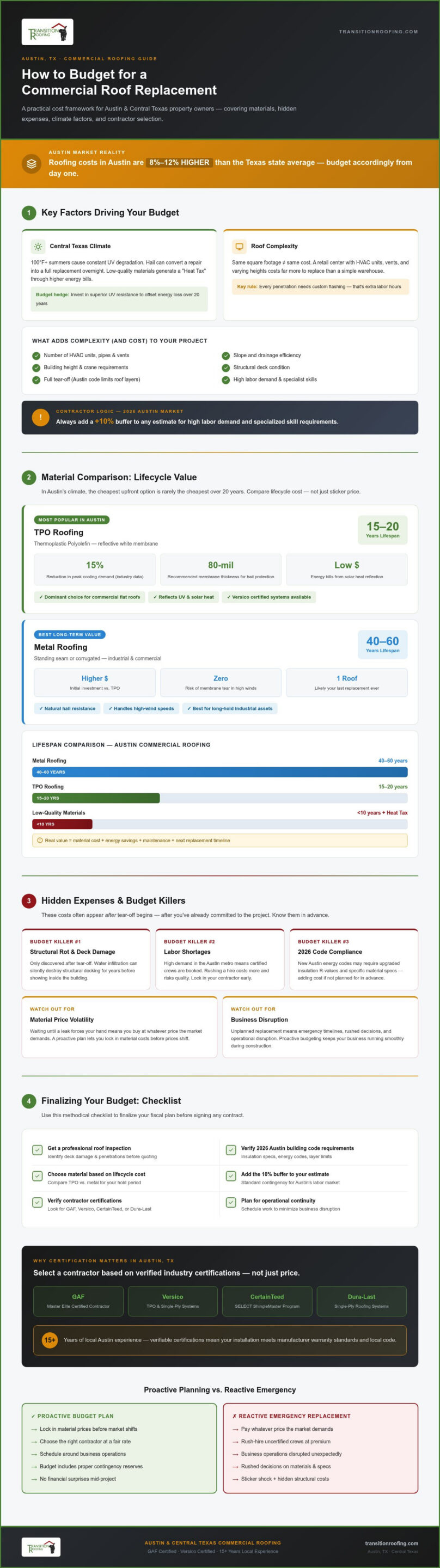
Understanding how to budget for a commercial roof replacement starts with shifting your mindset. A budget isn’t just a single number on a piece of paper; it’s a multi-year financial strategy that protects your physical assets and business continuity. In the 2026 Austin market, “Contractor Logic” dictates that you should add a 10% buffer to any estimate to account for high labor demand and specialized skill requirements. We see many property managers make the mistake of waiting until a leak happens, but a proactive plan allows you to lock in material choices before prices shift.
To better understand this concept, watch this helpful video:
The Impact of the Central Texas Climate on Budgeting
The Austin sun is relentless. It doesn’t just make your building hot; it physically breaks down Roofing materials and construction through constant UV exposure. If you choose low-quality materials to save money today, you’ll pay a “Heat Tax” through massive electricity bills and a shorter roof lifespan. Budgeting for superior UV resistance is a hedge against the Central Texas climate. We also have to account for our local hail patterns, which can turn a small repair into a full replacement need overnight.
Square Footage vs. Roof Complexity
Roof size is only the baseline for your estimate. A 10,000 square foot flat warehouse is a simple project. However, a 10,000 square foot retail center with dozens of HVAC units, vents, and varying heights is much more complex. Every penetration in the roof deck requires custom flashing and extra labor hours. Learning how to budget for a commercial roof replacement correctly ensures you don’t overlook these labor-heavy details. You must also factor in the cost of a full tear-off. Austin code generally limits the number of roof layers you can have, so removing old materials is often a legal necessity. If you’re only dealing with small leaks, you might start with an Austin roof repair plan, but a full replacement budget must include:
- Number of HVAC units, pipes, and vents
- The slope of the roof and drainage efficiency
- Building height and the need for specialized cranes
- The condition of the underlying structural deck
Choosing the Right Materials: TPO, Metal, and Flat Roof Systems in Austin, TX
Selecting the right material is the most significant variable when you are learning how to budget for a commercial roof replacement. In Central Texas, you aren’t just buying a cover for your building; you’re investing in a shield against 100-degree days and unpredictable spring hailstorms. While the initial sticker price is a factor, the real value lies in the lifecycle cost. This includes how much you will spend on maintenance, repairs, and electricity over the next 20 years. If you’re unsure which material fits your building, we can provide a detailed comparison to ensure your choice aligns with your long-term financial goals.
TPO Roofing: The Energy-Efficient Standard
TPO (Thermoplastic Polyolefin) is the dominant choice for Austin commercial properties for a reason. This white, reflective membrane physically bounces solar heat away from your deck. According to industry data, reflective “cool roofs” can reduce a building’s peak cooling demand by up to 15%. This directly lowers your monthly utility bills during our brutal summers. Most TPO systems provide 15 to 20 years of reliable service. When working with an experienced flat roofing company Austin businesses rely on, we often recommend 80-mil membranes for superior hail protection.
Metal Roofing: Long-Term Value and Hail Resistance
Metal roofing requires a higher initial investment, but the durability is unmatched in the Central Texas climate. For industrial facilities or property owners planning to hold an asset for decades, metal is often the best strategic move. It is naturally resistant to hail damage and handles high-wind speeds without the risk of membrane tearing. A properly installed metal system can last 40 to 60 years, effectively neutralizing the need for another replacement in your professional lifetime. We can help you weigh these commercial roofing Austin options against your current capital expenditure plan to find the right balance of protection and price.
Hidden Expenses and Labor Considerations in Austin, TX
Learning how to budget for a commercial roof replacement requires looking beneath the surface. The most significant financial surprises usually appear once the old membrane is stripped away. In the current 2026 Austin market, labor demand is high. Skilled crews are in short supply, which means labor can account for 40% to 60% of your total project cost. Don’t be tempted by the lowest bid. “Cheap” labor often leads to expensive redo costs because the installation doesn’t meet manufacturer standards for long-term protection.
Commercial sites also require specialized safety equipment and strict compliance with OSHA standards. This includes guardrails, fall protection systems, and sometimes specialized cranes for high-rise buildings. These safety measures protect your business from liability and ensure the project runs smoothly. Skipping these details to save money is a risk that can lead to massive fines or project shutdowns. A professional contractor will always include these costs in the initial estimate to ensure there are no surprises during construction.
Structural Repairs and Decking Costs
We recommend setting aside a 10% to 15% contingency fund for deck replacement. Until the tear-off is complete, it’s impossible to see the full condition of the underlying wood or metal deck. If you notice soft spots while walking the roof or see water stains on the interior ceiling, your structure is likely compromised. Our methodical inspection process helps identify these issues before they become emergencies. Replacing damaged decking ensures your new roof has a stable foundation to last for decades.
Local Permitting and Energy Code Compliance
Austin, TX enforces the 2021 International Energy Conservation Code (IECC). This code mandates specific insulation R-values that may require more material than your original roof had. You must also factor in permit fees and the cost of mandatory third-party inspections. These requirements are non-negotiable for commercial roofing Austin projects. If you want to avoid hidden costs, schedule a roof inspection in Austin today to get a clear plan for your property.
Securing Your Investment and Finalizing Your Budget in Austin, TX
Finalizing a fiscal plan requires more than just guessing. You need a detailed breakdown of every line item before you present it to your board or stakeholders. A professional inspection is the only way to get this data accurately. At Transition Roofing, we use our 15 years of local experience to provide transparent estimates that don’t hide the truth. When you are deciding how to budget for a commercial roof replacement, look for contractors with GAF, Certainteed, or Versico certifications. These credentials prove that the team follows strict standards. This protects your warranty and your building for the long term.
To finalize your budget for the upcoming year, follow these steps:
- Request a comprehensive moisture scan to identify hidden leaks.
- Review your current energy bills to see if an insulation upgrade is required by code.
- Compare the long-term ROI of different materials like TPO versus metal.
- Verify the contractor’s insurance and local Austin certifications.
Navigating Insurance Claims to Offset Costs
Storm damage in Central Texas is a frequent reality. If your roof has been hit by hail or high winds, you might not have to fund the entire replacement out of pocket. Many property managers don’t realize that insurance-funded replacements can significantly offset their capital expenditure. We specialize in insurance claim assistance for storm damage. We help you understand the difference between a retail bid and an insurance-assisted project. This ensures you get the full value of your policy while keeping your property protected.
Planning the Replacement Timeline
Timing is everything in the Austin construction market. Scheduling your project during off-peak months can sometimes help with labor availability and speed. We work with you to minimize business disruption during the installation phase. This includes planning for noise control and material staging that doesn’t block your customers or tenants. If you’re dealing with a failing system, we can take a look and give you a clear plan. Schedule a commercial roof inspection in Austin today to get a clear, professional plan for your property.
Protect Your Austin Asset with a Strategic Plan
A successful commercial roof replacement isn’t just about the installation. It’s about a methodical approach to planning that accounts for Austin’s unique climate and strict 2026 energy codes. By choosing high-performance materials like TPO and preparing a realistic contingency fund for structural deck repairs, you turn a major capital expense into a long-term investment. You don’t have to navigate these complexities alone. Understanding how to budget for a commercial roof replacement is much easier when you have an expert partner to help identify storm damage and manage the insurance claim process.
With over 15 years of local experience and top-tier certifications from GAF and Certainteed, Transition Roofing is committed to providing the clarity you need. We specialize in moving your property from a state of vulnerability to total security without financial surprises. Our team understands the specific environmental stressors of Central Texas and is ready to build a plan that fits your fiscal goals. Get a transparent commercial roof estimate in Austin today and take the first step toward a worry-free property. We’re here to ensure your business remains protected for decades to come.
Frequently Asked Questions
How much should I budget per square foot for commercial roof replacement in Austin?
Budgeting for an Austin commercial roof is based on material choice, roof complexity, and current labor demand. When you are learning how to budget for a commercial roof replacement, you must account for the local market premium where construction costs trend higher than the state average. Factors like building height and the number of HVAC units will influence the final project total.
Will my insurance pay for a commercial roof replacement after an Austin hail storm?
Insurance typically covers the cost of a replacement if the roof sustains functional damage from a covered peril like hail or wind. Because Austin is prone to severe storms, documenting the specific date of loss and extent of the damage is vital for a successful claim. This is a strategic way to fund a replacement while minimizing the impact on your primary capital budget.
What is the most cost-effective commercial roofing material for Central Texas heat?
TPO roofing is the most cost-effective option for the Central Texas climate due to its high solar reflectivity. These membranes help lower peak cooling demand, which can reduce summer utility costs by 20% to 30% for many Austin businesses. This makes TPO a smart choice for property owners who want to balance upfront costs with long-term energy savings.
How long can I delay a commercial roof replacement with maintenance?
You can often delay a full replacement for several years by implementing a professional preventative maintenance program. Regular cleanings, minor repairs, and drain clearings prevent the moisture intrusion that leads to structural failure. This proactive approach allows you to plan your capital expenditures on your own timeline rather than reacting to an emergency leak.
Are there tax incentives for installing an energy-efficient commercial roof in 2026?
Federal and local incentives for energy-efficient roofing often provide significant financial relief for businesses that upgrade their systems. Meeting the current IECC standards for insulation and reflectivity may qualify your building for tax deductions or rebates. This is a critical factor in how to budget for a commercial roof replacement while maximizing your long-term return on investment.