
Did you know that over 80% of commercial roofs are replaced prematurely because they didn’t receive the right maintenance at the right time? In our intense Central Texas climate, the sun’s UV rays and extreme heat put immense pressure on your building’s exterior. When you notice water dripping near your inventory or equipment, it’s easy to feel overwhelmed by the potential costs. You need a reliable TPO seam repair Round Rock solution that stops the damage without forcing you into a premature and expensive roof replacement.
It’s common to feel confused about whether you should use simple repair tape or a professional heat weld to fix a failing seam. We understand that your priority is long-term protection and peace of mind. In this article, we’ll show you how to identify early signs of failure and the exact steps needed to extend your roof’s life by 5 to 10 years. You will learn how professional repairs can secure your assets and why choosing a local expert who understands Round Rock building codes and the broader Austin TX market is the smartest move for your bottom line.
Key Takeaways
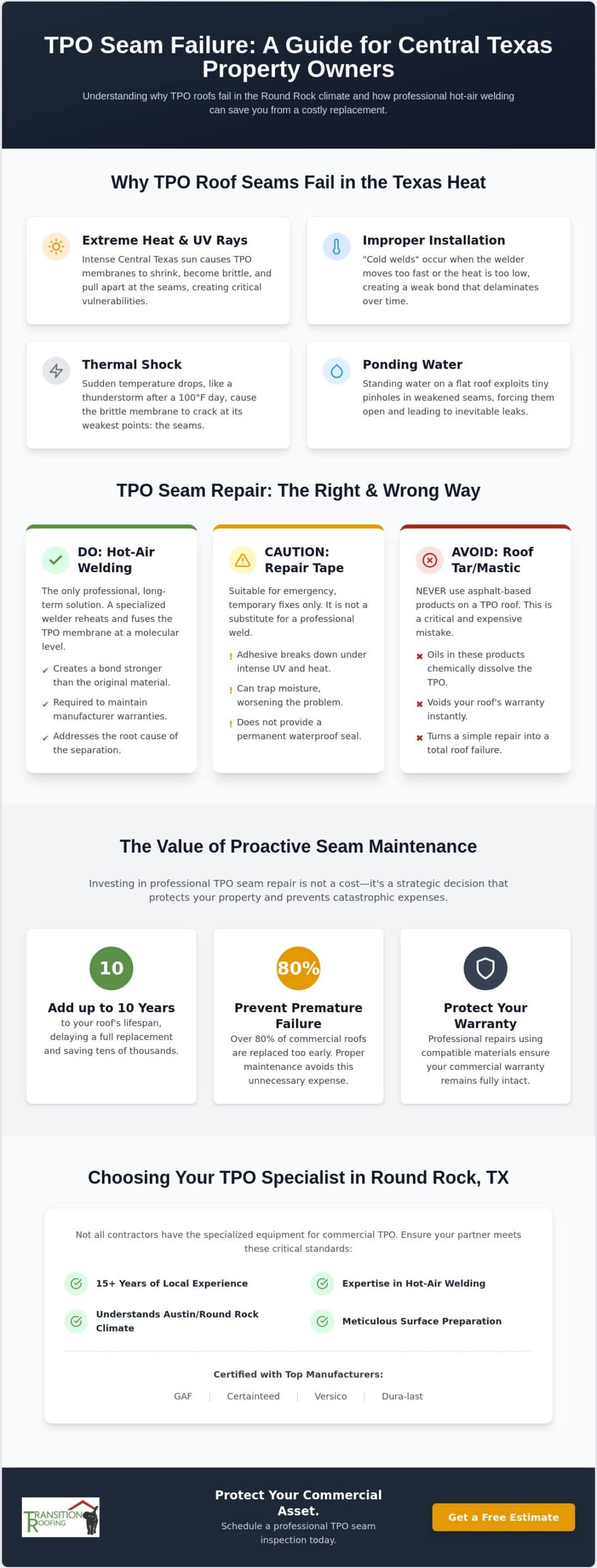
- Extreme Round Rock heat causes TPO membranes to shrink and pull apart, creating critical vulnerabilities at the seams.
- Effective TPO seam repair Round Rock uses thermal hot-air welding to recreate a permanent molecular bond between membrane sheets.
- Proactive seam maintenance can add up to 10 years to your roof’s lifespan, saving you from the high cost of a total replacement.
- Professional surface preparation and specialized primers are non-negotiable steps for ensuring new welds adhere to an aged roof.
- Hiring a contractor with over 15 years of experience and top-tier certifications ensures your commercial warranty remains fully intact.
Why TPO Seams Fail in the Round Rock, TX Climate
TPO seam failure is essentially the breakdown of the molecular bond that fuses two membrane sheets together. When this bond fails, your Thermoplastic Polyolefin (TPO) roofing is no longer a single, waterproof unit. In many cases, property managers need a professional TPO seam repair Round Rock service because the original heat weld has delaminated. This often happens because of “cold welds” during the initial installation. A cold weld occurs if the technician moves the robotic welder too quickly or if the temperature isn’t high enough to fuse the materials properly.
To better understand the mechanics of these failures and how they are addressed, watch this helpful video:
Our 100-degree Round Rock summers create a unique stress test for flat roofs. TPO membranes naturally expand and contract as temperatures fluctuate. Over time, the material can shrink, pulling at the seams with significant force. This creates a condition called “bridging,” where the membrane pulls tight over an angle and eventually pops the seam open. On a flat roof, this opening is a magnet for ponding water. Standing water is a primary catalyst for delamination, as it exploits tiny pinholes and forces the layers apart until a leak begins.
The Impact of Central Texas Heat on TPO
Extreme UV exposure in Austin, TX does more than just heat the surface; it breaks down the fire-retardant chemicals in the top layer of the membrane. As these chemicals degrade, the TPO becomes brittle and less flexible. During rapid temperature shifts, like a sudden thunderstorm after a hot afternoon, the membrane experiences thermal shock. Since the seams are the most vulnerable points, they are often the first to crack or split under this pressure. Choosing a contractor with over 15 years of experience in commercial roofing in Austin, TX ensures these climate-specific stressors are accounted for during the repair process.
Professional TPO Seam Repair Methods in Austin, TX
Fixing a commercial leak requires more than a quick patch. For a lasting TPO seam repair Round Rock, we rely on hot-air welding. This process uses specialized robotic or hand-held welders to fuse the membrane sheets back together at a molecular level. Unlike simple glues or caulking, this creates a monolithic barrier that is often stronger than the membrane itself.
Surface preparation is non-negotiable before any welding begins. Aged TPO accumulates dirt, dust, and oxidation that prevent a proper bond. We use specialized cleaners and primers to strip away this weathered layer. If you are seeing water intrusion near your equipment, scheduling a professional assessment is the first step to identifying if your seams can still be salvaged or if the damage is more extensive.
In cases where the original seam is too compromised to re-weld, we apply TPO cover strips. These are additional layers of unreinforced membrane welded over the existing joint to provide a secondary seal. We also check for mechanical fastening issues. If the underlying insulation has shifted, it can put physical tension on the membrane. This often leads to tears that no weld can fix without first stabilizing the roof substrate.
When Hot-Air Welding is Required
To repair an older roof, we use a technique called “scrubbing.” This involves deep cleaning the aged material to reach the original, weldable bottom layer of the TPO. We prioritize materials from trusted manufacturers like Versico or Dura-last for these repairs. This ensures the repair material is chemically compatible with your existing system, which is vital for maintaining your warranty protection in the Austin, TX area.
The Limitations of TPO Repair Tape
TPO repair tape has its place, but it’s usually for emergency leaks or temporary fixes. It relies on adhesives that eventually fail under the intense Central Texas sun. We strictly warn property owners against using asphalt-based “roof tar” or “mastic” on TPO. These products contain oils that chemically dissolve the membrane, turning a simple repair into a total roof failure that requires expensive material replacement.
Evaluating Costs and Commercial Longevity in Austin, TX
Commercial roofing contractors typically use “cost per linear foot” logic when estimating a TPO seam repair Round Rock project. This pricing model reflects the technical nature of the work. It accounts for the time spent deep-cleaning aged membranes and the precision required for hand-welding around penetrations. Unlike residential repairs that might use simple sealants, commercial TPO restoration requires specialized heat-welding equipment and a high level of expertise.
Proactive seam maintenance is always more affordable than an emergency response. When a seam fails during a sudden Central Texas thunderstorm, the costs quickly escalate to include damaged inventory, ruined equipment, and potential mold remediation. A high-quality repair performed by an expert can add 5 to 10 years of life to your existing TPO system. This extension allows property managers to better plan for future capital expenditures rather than facing a surprise six-figure replacement bill.
There is a “point of no return” for every commercial roof. If seam failures have been ignored for too long, water can saturate the underlying insulation board. Once the insulation is soaked, it loses its R-value and begins to rot the roof deck. At this stage, welding the seams is a waste of money because the moisture is already trapped. If you suspect your roof is reaching this stage, you should schedule a professional commercial roof inspection to determine the true condition of your substrate.
Repair vs. Replacement Decision Matrix
We generally follow a 25% rule for commercial properties in Austin, TX. If more than 25% of the total seam footage is failing or showing signs of “bridging,” a full replacement is often the more cost-effective choice. To make this decision with total clarity, we use infrared moisture surveys. These tools detect trapped moisture under the membrane that isn’t visible to the naked eye. If the survey shows dry insulation, a targeted repair is a sound investment. If the insulation is saturated, the system has reached the end of its functional life.
Choosing a TPO Specialist for Your Round Rock, TX Property
Finding the right contractor for TPO seam repair Round Rock is about more than just finding a low bid. Commercial roofing systems require specialized knowledge and thermal welding equipment that standard residential roofers often lack. You should prioritize contractors who hold certifications from major manufacturers like GAF, Certainteed, Versico, or Dura-last. These certifications are proof that the team follows strict industry standards. Hiring an uncertified roofer for a seam repair can often void your existing manufacturer warranty.
Experience in the specific Central Texas climate is another critical factor. A contractor with over 15 years of local experience understands how our 100-degree summers and sudden hailstorms impact membrane elasticity. They know that a seam in Round Rock needs more attention than one in a cooler climate. When evaluating a professional, look for these key indicators of reliability:
- Specific TPO Training: Mastery of robotic and hand-held hot-air welders.
- Local Track Record: A history of successful commercial projects in the Austin TX area.
- Comprehensive Insurance: Proper coverage specifically for commercial roofing operations.
- Maintenance Focus: A willingness to offer long-term protection rather than just quick patches.
If you are seeing water spots on your ceiling or noticing dampness near your roof drains, your TPO seams may already be open. Waiting for a major storm to address these signs usually leads to much higher repair costs and potential interior damage. A reliable partner will help you identify these vulnerabilities before they become emergencies.
Transition Roofing’s Approach to TPO Maintenance
We focus on moving your building from a state of vulnerability to one of total security. Our team uses high-quality materials and provides transparent, detailed estimates so you know exactly what the project entails. We believe in honest, grounded realism and won’t recommend a full replacement if a targeted repair can safely extend your roof’s life. If you’re dealing with active leaks or just want to verify the health of your seams, we can take a look and give you a clear plan. Schedule a professional TPO inspection in Round Rock today.
Secure Your Commercial Investment with Expert Maintenance
Your commercial roof is a critical asset that requires specialized care to withstand the Central Texas climate. We’ve seen how extreme heat and thermal shock can compromise even the best systems, making professional TPO seam repair Round Rock a necessity for long-term protection. By choosing a permanent hot-air weld over temporary tape, you can effectively stop leaks and add years of functional life to your building. Proactive care is the most reliable way to avoid the massive expense of a premature total replacement.
With over 15 years of local experience and certifications from industry leaders like GAF, Certainteed, and Versico, we understand the specific challenges property managers face in the Austin TX area. We focus on providing honest, transparent solutions that prioritize the structural integrity of your property. If you’re dealing with active leaks or are concerned about the state of your seams, Get a Clear Plan for Your TPO Roof Repair today. Our team is ready to help you move from a state of vulnerability to total security. You don’t have to manage these maintenance stresses alone; we are here to ensure your roof remains a steady, reliable shield for your business.
Frequently Asked Questions About TPO Seam Repair
How long does a TPO seam repair typically last in Texas?
A professional heat-welded TPO seam repair Round Rock typically lasts between 5 and 10 years. The exact lifespan depends on the condition of the surrounding membrane and how much UV damage the roof has already sustained. Because a proper weld creates a permanent molecular bond, the repaired section often becomes the strongest part of an aging roof system. This targeted approach is a great way to bridge the gap until a full replacement is necessary.
Can I use silicone caulk to fix a TPO roof leak myself?
You shouldn’t use silicone caulk or standard hardware store sealants to fix a TPO leak. These materials don’t bond to the membrane at a molecular level and will quickly peel away under the Central Texas sun. Using the wrong products can also contaminate the area. This makes it much more difficult for a professional to perform a proper heat-welded repair later on because we have to strip the residue away entirely.
Does commercial property insurance cover TPO seam failure after a hail storm?
Insurance coverage depends on whether the failure was caused by a sudden storm or general neglect. If a hail storm in Austin, TX creates physical punctures or forces a seam open, the repair is usually covered under your policy. However, if the seams are failing due to age or lack of maintenance, adjusters will likely deny the claim as a wear-and-tear issue. We always recommend documenting storm damage immediately to help with your claim.
What is the best temperature for hot-air welding TPO seams?
The ideal welding temperature usually falls between 800 and 1,100 degrees Fahrenheit. This range isn’t fixed because it depends on the thickness of your membrane and the current outdoor temperature. A skilled technician adjusts the heat and the speed of the welder throughout the day to ensure a perfect fusion without scorching the material. Getting this balance right is what separates a long-lasting repair from a temporary patch that will fail.
How often should I have the seams on my Round Rock commercial roof inspected?
We recommend a professional inspection twice a year, ideally in the spring and fall. These bi-annual checks are vital in the Austin, TX area because of our extreme temperature swings. Catching small issues like “bridging” or minor delamination early prevents them from turning into expensive emergency leaks. Regular maintenance is the most effective way to protect your building’s interior and inventory from unexpected water damage.