
Is your commercial roof working for your bottom line or against it? In Austin, TX, a roof is more than just a lid on a building. It’s your first line of defense against triple-digit heat and sudden spring hailstorms. You likely already feel the strain of sky-high HVAC costs during a Central Texas summer. It’s a common frustration for property owners, but it shouldn’t be the status quo. By investing in energy efficient commercial roofing Texas systems, you can transform a vulnerable asset into a high-performing shield that actively lowers your overhead.
We understand that navigating technical jargon and new 2026 state licensing requirements can feel overwhelming. This guide simplifies the process. You’ll learn how to slash cooling costs and protect your investment using the latest energy-efficient standards tailored for our local climate. We’ll preview the 2024 IECC code updates, explain how to claim Austin Energy rebates like the $0.25 per square foot coating incentive, and compare the most durable materials for our region. From TPO to standing seam metal, we’ll help you make an informed decision based on long-term protection and genuine craftsmanship.
Key Takeaways
- Understand how reflective “Cool Roofing” helps Austin businesses combat the urban heat island effect and reduce daily HVAC strain.
- Compare top-performing TPO and PVC membranes to select the right energy efficient commercial roofing Texas system for your specific property.
- See how most reflective systems pay for themselves within 5 to 7 years by lowering energy bills and extending your HVAC unit’s lifespan.
- Learn why manufacturer certifications from GAF, Versico, or Certainteed are necessary to secure valid energy-efficiency warranties in Central Texas.
Why Energy Efficient Commercial Roofing in Austin TX is a Must in 2026
Austin isn’t getting any cooler. As we move through 2026, the city’s rapid growth has intensified the “urban heat island” effect. This happens when concrete, asphalt, and dark rooftops absorb solar heat, making our local environment significantly hotter than surrounding rural areas. For a business owner, this means your building is constantly fighting a losing battle against the sun. Choosing a Cool Roof technology is the most effective way to break this cycle. These systems are designed to reflect UV rays rather than soaking them up.
To better understand how these systems protect local businesses, watch this project spotlight:
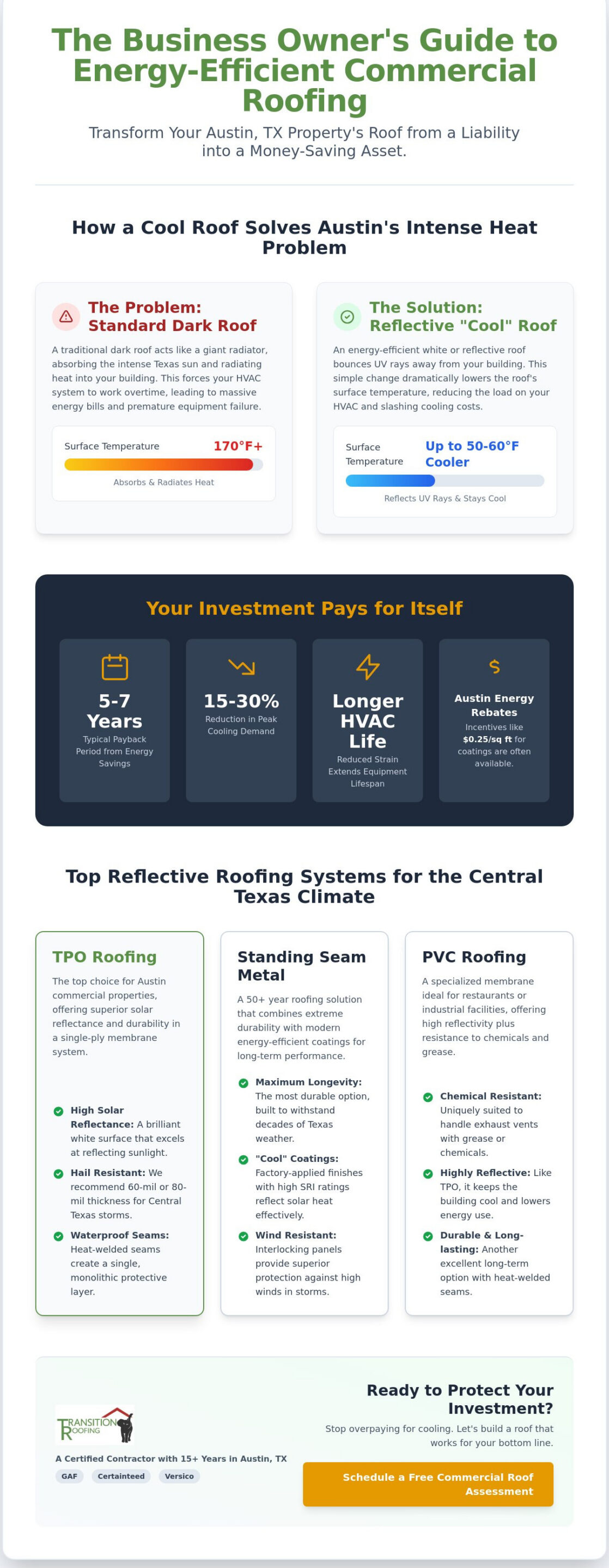
A high-performance energy efficient commercial roofing Texas system can stay up to 50°F cooler than a traditional dark roof during a peak July afternoon. This temperature difference is massive. It changes your roof from a heat-absorbing radiator into a protective shield. With Central Texas weather patterns becoming more unpredictable, including more intense heat waves and severe storms, using resilient and reflective materials is no longer just an upgrade. It’s a requirement for long-term property protection.
The Impact of Central Texas Heat on Commercial Cooling Costs
A standard dark roof acts like a giant radiator sitting on top of your business. It absorbs thermal energy all day and bleeds it into your building long after the sun goes down. This forces your HVAC units to work overtime, often running at maximum capacity for 12 to 14 hours a day. Over time, this constant cycling leads to premature equipment failure and massive electric bills. High-quality insulation combined with a reflective membrane keeps interior temperatures stable for warehouses and offices alike. Working with an expert roofing contractor in Austin, TX ensures your system is designed specifically for our local stressors like hail and extreme UV exposure.
Top Reflective Roofing Systems for Austin TX Commercial Properties
Choosing the right material is the foundation of a high-performance building. In Austin, we focus on the Solar Reflectance Index (SRI). This number tells you how well a roof rejects solar heat. We always look for the Cool Roof Rating Council (CRRC) label on any material we install. It’s the only way to verify that a product meets real standards for solar reflectance and thermal emittance. The Department of Energy on Cool Roofs notes that these systems improve indoor comfort while significantly lowering energy bills.
TPO (Thermoplastic Polyolefin) is currently the top choice for energy efficient commercial roofing Texas installations. It’s a single-ply white membrane that bounces sunlight off your building instead of letting it soak into the structure. This keeps your attic and ductwork much cooler during our 100-degree days.
TPO Roofing: The Standard for Solar Reflectance in Central Texas
In Austin, we recommend using 60-mil or 80-mil TPO. Thicker material handles our local hail much better than thin, entry-level alternatives. We use heat-welded seams to join the sheets together. This process uses hot air to fuse the material, creating a single, waterproof layer. It’s far more reliable than glue or tape for TPO Roofing Systems. PVC roofing is a similar white membrane that is excellent for restaurants. It resists chemicals and grease that can break down other materials over time.
Commercial Metal Roofing: Durability Meets Efficiency
Metal is a 50-year solution for the harsh Texas sun. Standing seam Metal Roofing Systems are excellent because they shed heat quickly once the sun sets. We use special “cool” coatings with high SRI ratings to keep the metal surface temperature low during the day. Metal also stands up to the high winds we see during Central Texas storm seasons. It provides a level of structural security that is hard to beat. If you’re seeing high energy bills or frequent leaks, this is usually when we recommend a professional assessment to see if a reflective upgrade is right for you.
Calculating the ROI of Energy Efficient Roofing in Austin TX
Investing in energy efficient commercial roofing Texas systems follows what we call “contractor logic.” While a reflective roof or high-R-value insulation requires a higher upfront investment, it typically pays for itself through energy savings within 5 to 7 years. In Austin, this ROI is accelerated by local incentives. As of February 2026, Austin Energy offers rebates of $0.25 per square foot for reflective roof coatings and $1.00 per square foot for roof insulation. Eligible small businesses and non-profits may qualify for an additional 30% bonus on these amounts. Keep in mind that federal tax credits for these upgrades under Section 25C and 25D expired at the end of 2025, making local utility programs your primary financial tool.
Beyond direct utility savings, a cooler roof protects your most expensive building equipment. When your roof surface temperature drops by up to 50 degrees, your HVAC units don’t have to cycle as frequently. This reduces mechanical wear and tear, adding years to the lifespan of your cooling towers and rooftop units. Adopting these systems helps Reduce Urban Heat Islands, which benefits the entire Austin community while keeping your specific operating costs manageable.
Maintenance and Longevity Factors for Texas Businesses
A “set it and forget it” mentality will shorten the life of even the best reflective membrane. We recommend twice-yearly inspections to catch minor heat-related expansions before they turn into leaks. This is especially critical during Austin’s hail season. Large hailstones can bruise or crack energy-efficient coatings, compromising their reflective properties and water-tight integrity. Our Preventative Maintenance Programs are designed to push the lifespan of your roof to 20 years or more by addressing these issues early. For property managers with assets in multiple cities, you can see how these needs compare in our guide to Commercial Roofing San Antonio.
If you want to see exactly how much you could save with a reflective upgrade, schedule a commercial roof inspection in Austin today.
Selecting a Certified Commercial Roofing Contractor in Austin TX
A high-performance reflective roof is only as good as the crew that installs it. In Austin, TX, the selection of a contractor is just as critical as the choice of material. To secure a valid warranty on energy efficient commercial roofing Texas systems, you must work with a factory-certified installer. Manufacturers like GAF, Certainteed, Versico, and Dura-last only provide full system warranties when their products are applied by trained professionals. Without these certifications, you might be left unprotected if the material fails prematurely due to improper installation.
When you review estimates, look for transparency. A professional bid should clearly list material specifications, Solar Reflectance Index (SRI) ratings, and labor warranties. If your current roof is over 15 years old, it’s likely costing you more in monthly energy bills than the cost of a modern replacement. Older systems simply don’t have the reflective technology required to handle the 2026 Central Texas climate stressors. This is usually when we recommend a thorough evaluation to compare your current energy loss against the savings of a new system.
Why Certifications and Local Experience Matter
Choosing a local expert ensures your project complies with the latest Austin building codes, including the 2024 IECC standards. Certified installers can also offer NDL (No Dollar Limit) warranties. An NDL warranty is a high-level guarantee where the manufacturer covers the full cost of repairs, including both labor and materials, for the duration of the term. This moves your structure from a state of vulnerability to one of total security.
At Transition Roofing, we bring over 15 years of experience to every project in the Central Texas market. We understand how our local heat and hail impact different membranes over time. We focus on long-term protection and community trust rather than a one-time transaction. If you’re dealing with recurring leaks or rising cooling costs, we can take a look and give you a clear plan. Schedule a comprehensive commercial roof inspection in Austin today.
Secure Your Austin Property’s Future
Protecting your commercial asset in Austin requires more than a standard roof. It demands a system built for the unique stressors of the Central Texas climate. By choosing high-SRI materials like TPO or standing seam metal, you actively reduce your monthly overhead while extending the life of your HVAC equipment. These upgrades are high-yield financial strategies that move your building from a state of vulnerability to one of total security. Investing in energy efficient commercial roofing Texas is a commitment to long-term property health and predictable maintenance costs.
Transition Roofing brings over 15 years of regional experience to every project. We specialize in TPO and high-SRI metal systems; we’re proud to be certified by industry leaders like GAF, Certainteed, Versico, and Dura-last. This expertise ensures your installation meets strict manufacturer standards and qualifies for the best available warranties. If you’re ready to stop overpaying for cooling and start protecting your investment, we’re here to help. Get a transparent estimate on your energy-efficient commercial roof in Austin. Your roof is your first line of defense. Let’s make sure it’s working as hard as you do to protect your bottom line.
Frequently Asked Questions
How much can a cool roof actually save on energy bills in Austin TX?
A cool roof can reduce your annual cooling costs by 10% to 30% depending on your building’s current insulation levels. In the Central Texas climate, these systems prevent the roof from absorbing thermal energy and radiating it into your workspace. This reduction in heat transfer allows your HVAC units to run more efficiently and lowers your monthly utility expenses.
What is the best energy-efficient material for a flat commercial roof?
TPO (Thermoplastic Polyolefin) is the leading material for energy efficient commercial roofing Texas flat roof applications. It combines a highly reflective white membrane with heat-welded seams for superior leak protection. PVC is another strong alternative; it provides excellent solar reflectance and is specifically designed to resist grease and chemicals found on restaurant rooftops.
Does the color of a commercial roof really matter for energy efficiency?
Roof color is a primary factor in determining how much heat your building absorbs from the sun. Dark roofs act as heat sinks; they often reach temperatures 50 degrees hotter than the surrounding air. White or light-colored roofs have a high Solar Reflectance Index (SRI), which means they bounce UV rays away. This keeps the building’s core cooler and reduces the load on your air conditioning system.
Are there tax credits for installing energy-efficient commercial roofing in 2026?
No federal tax credits are available for energy-efficient commercial roofing in 2026 because the Section 25C and 25D credits expired at the end of 2025. You should focus on local incentives instead. Austin Energy currently offers rebates of $0.25 per square foot for reflective coatings and $1.00 per square foot for new roof insulation to help offset your project costs.
How long does a TPO energy-efficient roof last in the Texas climate?
A high-quality TPO roof usually lasts between 20 and 25 years when maintained correctly in the Texas climate. The lifespan depends on the thickness of the membrane and the frequency of professional inspections. We recommend 60-mil or 80-mil membranes to handle the intense UV radiation and frequent hail events common in the Austin area.