You arrive at your restaurant for the morning shift only to find a steady leak dripping directly onto the food prep line. In the intense Austin heat, a failing roof is more than just a maintenance headache; it’s a risk to your health code standing and your daily revenue. When you need restaurant roofing repair Austin experts understand that a kitchen cannot simply stop operating because of a leak. Whether it’s grease trap exhaust degrading your membrane or the 115 mph wind speeds common in Central Texas, your building requires a specialized level of protection that generic commercial roofers often overlook.
We know that managing a commercial property in 2026 comes with enough stress, from rising food costs to strict local building codes. You deserve a roof that works as hard as your staff does. This guide will show you how to identify restaurant-specific failures, choose the right repair strategies, and minimize operational downtime. We will walk through the latest TPO standards and preventative maintenance tips to keep your energy bills low and your kitchen dry. From navigating City of Austin permits to understanding membrane durability, you’ll gain the clarity needed to protect your investment for the long term.
Key Takeaways
- Understand how kitchen grease and HVAC foot traffic chemically and physically degrade your roof membrane over time.
- Identify the critical leak points at kitchen exhaust curbs and drainage areas before they cause health code violations.
- Learn how professional restaurant roofing repair Austin experts use thermal imaging to find hidden leaks without interrupting your service.
- Discover why GAF and Versico certifications are essential for ensuring your repairs comply with the latest 2026 Austin building codes.
- See how regular preventative maintenance can protect your dining area from structural damage and reduce high energy costs.
Common Causes for Restaurant Roofing Repair in Austin, TX
Restaurant roofs face a unique set of challenges that standard office buildings never encounter. In the intense Central Texas climate, these structures are commonly found on commercial buildings and must withstand both environmental and operational stress. When you need restaurant roofing repair Austin experts, it’s usually because grease, heat, or foot traffic has finally compromised the system. Identifying these issues early is the only way to avoid a full-scale kitchen shutdown.
To better understand how we approach these issues, watch this helpful video:
The Silent Killer: Grease and Chemical Exposure
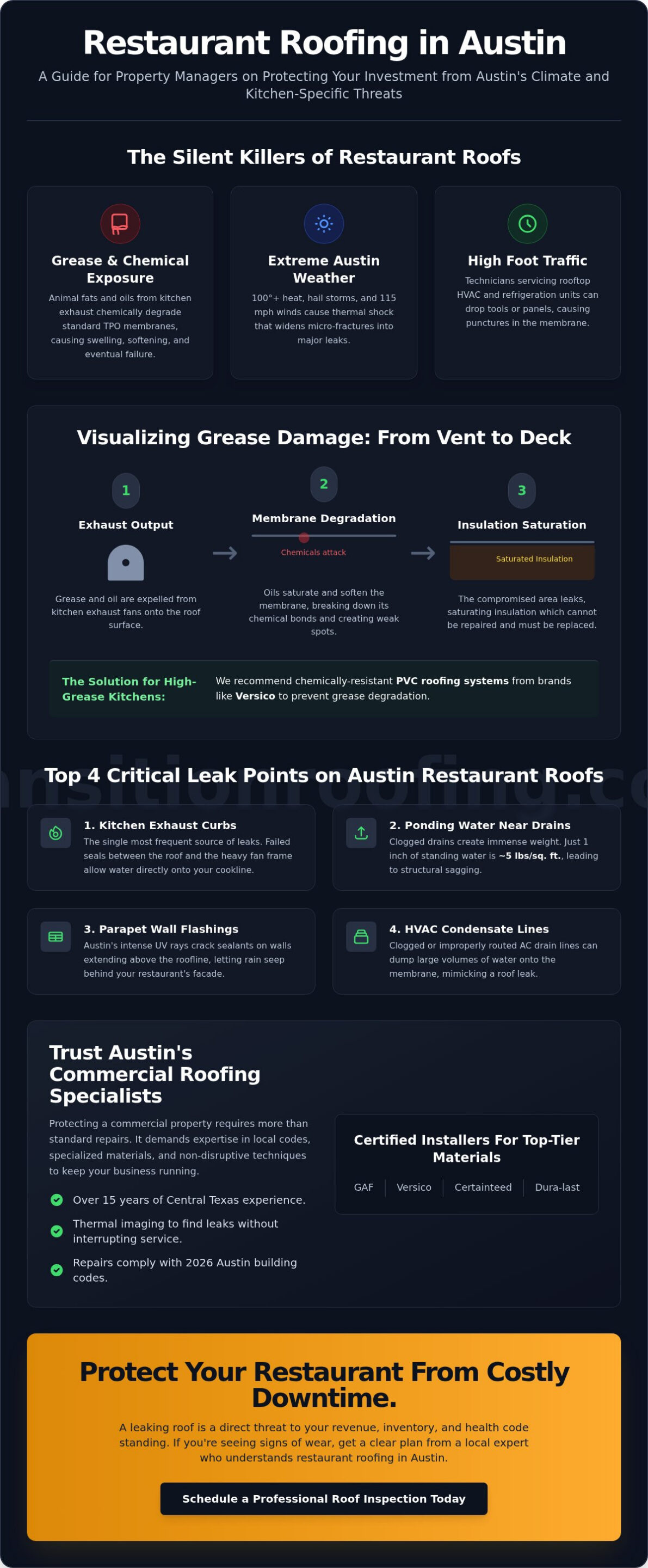
Kitchen exhaust fans often spray animal fats and oils onto the roof membrane. While standard TPO is durable, it isn’t always designed to handle constant chemical exposure. These oils cause the membrane to swell, soften, and eventually dissolve. If your grease trap fails, the resulting standing oil can eat through the roof and saturate the insulation underneath. Unlike standard wear, grease-saturated insulation cannot be restored; it must be replaced to prevent structural rot. For high-grease environments, we often recommend specialized commercial roofing in Austin using PVC systems from brands like Versico because they offer superior chemical resistance.
Austin Storm Damage and Hail Impact
Austin weather is notoriously tough on flat roofs. Recent hail storms in Central Texas can create micro-fractures in older membranes that aren’t visible to the naked eye. Over time, 100-degree Austin days cause the roof to expand and contract. This thermal shock widens those small fractures into major leaks. High winds, which often reach the 115 mph design speed for our area, can also loosen the flashings around kitchen exhaust fans. This creates a direct path for water to enter your food prep area. Other common causes include:
- High-Traffic HVAC Maintenance: Technicians servicing refrigeration units can drop heavy panels or tools, causing punctures in the membrane.
- UV Stress: The relentless Austin sun breaks down the reflective coatings on older roofs, leading to higher energy bills.
- Improperly Installed Vents: Heavy kitchen equipment requires specialized curbs; if these aren’t sealed with GAF or Versico materials, they will leak.
If you’re noticing bubbles in your roof membrane or oil stains near your vents, it’s time to act. This is usually when we recommend a professional moisture map to see if the damage has reached your decking.
Identifying Critical Leak Points in Austin, TX Restaurant Roofs
Finding a leak on a commercial flat roof can be difficult because water rarely enters directly above where it drips. In the Central Texas climate, high temperatures and sudden downpours expose specific weaknesses in restaurant structures. When performing restaurant roofing repair Austin contractors often find that the most common leak points are related to kitchen equipment rather than the roof membrane itself. Identifying these areas early can prevent costly structural damage and keep your kitchen running without interruption.
- Kitchen Exhaust Curbs: This is the most frequent source of leaks. The curb is the raised metal frame that supports your heavy exhaust fan. If the seal between this frame and the roof membrane fails, water flows directly into your ventilation system and onto your cookline.
- Ponding Water Near Drains: Clogged drains lead to standing water. This creates immense weight pressure over your dining area. One inch of standing water weighs roughly five pounds per square foot, which can lead to structural sagging over time.
- Parapet Wall Flashings: These are the walls that extend above the roof line. Austin’s intense UV rays cause the sealant on these walls to crack, allowing rain to seep behind your restaurant facade.
- HVAC Condensate Lines: Sometimes what looks like a roof leak is actually a clogged AC drain line. If these lines aren’t routed correctly, they dump water directly onto the membrane, which can cause premature wear.
The Anatomy of a Restaurant Roof Leak
To understand a leak, you must understand curb flashing. This is the specialized material used to seal the base of any equipment that “penetrates” or pokes through the roof. When this seal is tight, your building is secure. Grease-trap overflow is a primary cause of membrane swelling that eventually destroys these seals. If you’re noticing a soft or “spongy” feel around your vents, this is usually when we recommend a professional inspection to check for hidden moisture.
Signs You Need Immediate Repair
You don’t always need to climb onto the roof to know there’s a problem. Visual cues inside your building are often the first warning signs. Look for bubbling membranes on the roof surface, discolored ceiling tiles in the dining room, or persistent musty odors in the kitchen. Ignoring these signs can lead to serious health code violations if water makes contact with food preparation zones. If you see these red flags, learn more about our commercial roofing services to see how we can secure your facility.
The Process and Cost of Restaurant Roofing Repair in Austin, TX
Repairing a restaurant roof requires a methodical approach that respects your business hours. When we handle restaurant roofing repair Austin projects, we start with a high-tech diagnostic phase. Using thermal imaging and moisture mapping, we find water trapped under the membrane that isn’t visible to the eye. This prevents us from simply “patching” a problem while leaving rot underneath. Our team then matches the existing material using high-quality systems from GAF or Versico to ensure the new seal is permanent.
- Moisture Mapping: We use infrared technology to pinpoint exactly where insulation is wet.
- Material Compatibility: We select membranes like TPO or PVC that chemically bond with your current system.
- Off-Peak Scheduling: Most work happens during your closed hours or slow periods to keep your kitchen running.
- Final Certification: Every repair is checked against manufacturer warranty standards for long-term security.
Factors Influencing Repair Costs
The cost of a repair depends on several technical variables. The height of your building and the ease of access for our crews play a major role in labor time. Material type is also a factor; for example, grease-resistant PVC often costs more than standard TPO but offers better protection for kitchens. The biggest cost driver is usually the extent of wet insulation. If a leak was ignored, we must remove and replace saturated materials to prevent structural damage. Investing in flat roofing solutions that include regular maintenance is always more cost-effective than emergency repairs.
Minimizing Business Interruption
We understand that a roofing crew in the parking lot can scare away customers. To prevent this, we stage our equipment in discreet areas and use low-noise, no-odor materials. This allows your diners to enjoy their meals without smelling chemical fumes or hearing heavy machinery. Our goal is to move your structure from a state of vulnerability to one of total security without impacting your daily revenue. If you are dealing with a recurring leak, schedule a professional roof inspection in Austin today so we can provide a clear plan for your facility.
Choosing the Best Expert for Restaurant Roofing Repair in Austin, TX
Selecting the right partner for restaurant roofing repair Austin isn’t just about finding the lowest bid. It’s about finding a team that understands how a kitchen operates under pressure. Unlike residential work, commercial restaurant roofing requires specialized knowledge of grease-resistant materials and heavy-duty exhaust systems. With over 15 years of experience in Central Texas, we’ve seen how the local climate can turn a small leak into a major structural failure if handled by an inexperienced crew.
- Certifications Matter: We maintain credentials from GAF, Certainteed, and Versico. These aren’t just badges; they ensure your repair meets strict manufacturer standards for long-term warranties.
- Code Compliance: We navigate the specific building codes in Austin, TX, ensuring every repair or replacement meets the 115 mph wind speed design requirements.
- Insurance Support: If your roof was damaged by a recent Central Texas hail storm, we assist with insurance claim navigation to help you get the coverage you deserve.
- Transparency: Our estimates are direct and declarative. We lead with the solution so you can make an informed decision for your business.
Why Transition Roofing Stands Out
Our team understands the unique stressors of the Austin landscape. From extreme 100-degree heat that causes thermal shock to sudden flash floods, we install systems designed to last. We specialize in high-performance materials like TPO, PVC, and metal roofing systems. These materials provide the durability a busy restaurant needs while helping to lower energy costs. We focus on moving your building from a state of vulnerability to one of total security.
Schedule Your Austin Roof Inspection Today
Don’t wait for a health code violation or a kitchen shutdown to address your roof. If you’re seeing water spots or smelling grease-related decay, we can take a look and give you a clear plan. This is usually when we recommend a thorough assessment to prevent minor issues from becoming major capital expenses. Contact Transition Roofing for a professional estimate and secure your business for the future.
Secure Your Restaurant’s Future with Specialized Care
Your roof is the first line of defense for your kitchen and your customers. We have discussed how grease, HVAC traffic, and the Central Texas climate create unique challenges for your facility. Managing these risks requires more than a simple patch; it demands a partner who understands the high stakes of health codes and operational uptime. When you prioritize professional restaurant roofing repair Austin, you are investing in the long-term stability of your commercial asset.
With over 15 years of Central Texas experience, our team specializes in downtime-free commercial repairs that keep your doors open. We are GAF and Versico Certified, ensuring that every project meets the highest industry standards for durability and craftsmanship. We take pride in moving your building from a state of vulnerability to one of total security. If you are ready to address recurring leaks or want to prevent future damage, Schedule a professional restaurant roof inspection in Austin today. We are here to help you maintain a safe, dry, and successful dining environment for years to come.
Frequently Asked Questions
How long does a typical restaurant roofing repair take in Austin?
Most minor repairs are completed within 1 to 2 days; however, projects involving extensive insulation replacement can take up to a week. The timeline depends on the severity of the leak and current weather conditions. In Austin, TX, we monitor the forecast closely to ensure your kitchen is never exposed to a sudden Central Texas downpour during the process.
Can I stay open during the roof repair process?
Yes, you can typically remain fully operational while we perform repairs. We coordinate our work around your busiest hours to minimize any impact on your guests. Our crews use low-odor materials and quiet application methods so your diners can enjoy their meals without disruption from chemical fumes or loud machinery.
Will my insurance cover roof repairs caused by kitchen grease?
Standard insurance policies usually do not cover damage caused by kitchen grease because it is classified as a maintenance issue. Insurance is designed to cover sudden and accidental events like hail or wind damage. Because grease degradation happens over time, it is vital to use preventative maintenance to catch these issues before they lead to a costly out-of-pocket expense.
What is the best roofing material for an Austin restaurant?
PVC is the superior choice for restaurants because it is specifically engineered to resist animal fats and kitchen oils. While TPO is an excellent general-purpose material, it can soften when exposed to constant grease. For high-quality restaurant roofing repair Austin experts often recommend PVC membranes from Versico to provide the best long-term protection against chemical breakdown near exhaust fans.
How often should I have my restaurant roof inspected in Central Texas?
You should schedule a professional inspection at least twice a year to account for the extreme Central Texas climate. The combination of 100-degree summer days and volatile spring storm seasons puts immense stress on flat roof systems. Regular inspections allow you to identify micro-fractures from hail or UV damage before they turn into expensive leaks over your food prep areas.