A single afternoon hailstorm in Travis County can cause hundreds of millions in damages, but the real cost often comes from the damage you can’t see until it’s too late. You likely already feel the stress of checking your ceilings for spots after every Central Texas storm. It’s frustrating to deal with the high cost of a full roof replacement, especially when manufacturer warranty requirements feel like a confusing maze. You deserve to know that your largest asset is protected by more than just luck.
By sticking to a professional preventative roof maintenance plan Austin homeowners can often add a decade to their roof’s lifespan and avoid the chaos of emergency repairs. With over 15 years of local experience and master certifications from GAF and Certainteed, we’ve seen how a methodical approach turns a vulnerable structure into a secure one. This guide will walk you through how documented maintenance simplifies insurance claims and keeps your home dry during the unpredictable 2026 weather season. We’ll cover everything from thermal expansion to the specific ways we stop leaks before they start.
Key Takeaways
- Understand how the Central Texas heat and sudden storms cause rapid material expansion, making regular checks a necessity for long-term protection.
- A professional preventative roof maintenance plan Austin property owners use can extend a roof’s life by up to a decade while ensuring warranty compliance.
- Learn the specific 2026 checklist items, such as fastener inspections and debris removal, that prevent common issues like ponding water and leaks.
- Discover how documented maintenance provides the proof needed for insurance claims and helps you avoid the high costs of emergency repairs.
- Identify the critical certifications and experience levels to look for when choosing a local partner to manage your roof’s health and security.
Why Your Property Needs a Preventative Roof Maintenance Plan in Austin
A preventative roof maintenance plan Austin property owners rely on is a scheduled program of professional inspections, cleaning, and minor repairs. It serves as a proactive shield against the relentless UV degradation found in the Central Texas climate. Think of it as a health checkup for your building. By catching small vulnerabilities before they turn into major structural issues, you ensure the total integrity of your investment.
Contractor logic is simple: if you wait until you see a brown spot on your ceiling, you’ve already lost the battle. By that point, water has likely soaked through the insulation and begun rotting the wooden decking. This delay costs thousands in structural damage that could have been easily avoided. Staying ahead of the weather is the only way to protect your bottom line in 2026.
Thermal Shock and Austin TX Weather Stressors
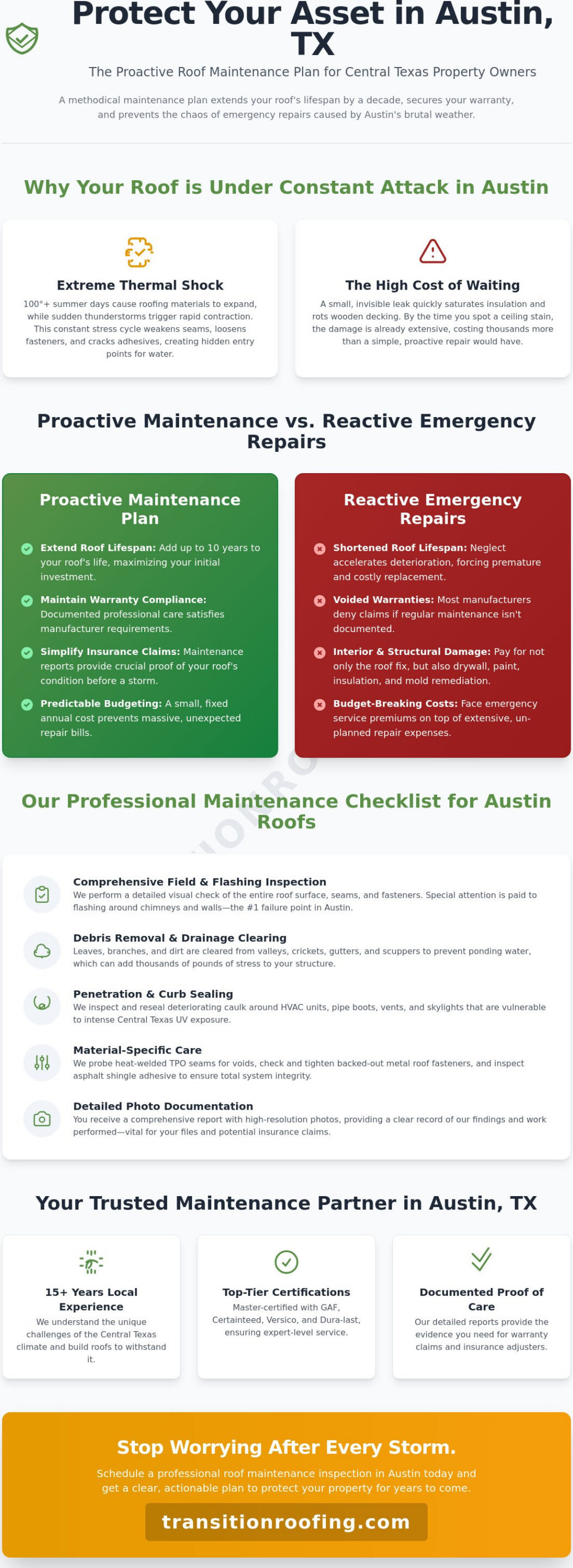
Austin’s weather is brutal on the various elements of a roof. In 2026, we’re seeing more 100-degree days than ever, which causes materials like TPO and asphalt shingles to expand rapidly. When a sudden afternoon thunderstorm hits, the temperature can drop 20 degrees in minutes. This thermal shock creates massive stress on TPO seams and shingle adhesives. Over time, these cycles weaken the bond, leading to cracks and delamination that high-velocity winds and hail quickly exploit.
The True Cost of Reactive vs. Proactive Care in Austin TX
Many property managers view maintenance as an extra line item, but it’s actually a high-yield investment. An annual plan is a fraction of the cost of an emergency leak repair in Austin, TX. Beyond the immediate price, a preventative roof maintenance plan Austin experts provide identifies “silent killers” before they cause a catastrophe. We often find clogged scuppers or backed-up gutters holding thousands of pounds of ponding water. If left alone, this weight can lead to structural failure or a full commercial roof collapse. Staying ahead of these issues keeps your asset secure and your budget predictable.
The 2026 Checklist: What a Professional Austin TX Roof Plan Includes
A professional preventative roof maintenance plan Austin contractors provide goes far beyond a quick glance from the ground. We perform a comprehensive visual inspection of the entire field, paying close attention to seams and fasteners that often loosen during high-wind events. Debris removal is another critical step. We clear out valleys, crickets, and drainage points to prevent ponding water, which can weigh down a structure and lead to catastrophic leaks.
Our team also focuses on sealing all penetrations. We check HVAC curbs, pipe boots, and skylight perimeters where the seal often fails due to intense UV exposure. To give you total peace of mind, we provide detailed photo documentation. This record is essential for your long-term files and serves as vital proof if you ever need to file an insurance claim after a major storm.
Critical Points: Flashing and Drainage in Central Texas
Flashing is the number one failure point for both residential and commercial roofing in Austin. These thin metal strips redirect water away from corners and chimneys, but they often pull away during extreme heat cycles. If you’re noticing water stains near walls, this is usually when we recommend a professional resealing. We also ensure gutters and downspouts are completely clear to handle the massive volumes of water that Austin’s flash floods produce.
Material-Specific Care: TPO, Metal, and Shingles
Each material requires a specialized approach. For TPO systems, we use specialized probes to check heat-welded seams for tiny cracks or voids. On metal roofs, we inspect fasteners for “backing out.” This happens when the metal expands and contracts during 100-degree days, slowly pushing the screws out and creating entry points for rain. If you haven’t had your fasteners checked in the last year, you can schedule a professional review to ensure everything is tight and secure.
Maximizing ROI and Warranty Compliance in Austin TX
Investing in a preventative roof maintenance plan Austin property managers trust is one of the most effective ways to protect your capital. When you have documented proof of care, you can often add 5 to 10 years to a commercial roof’s total lifespan. This isn’t just contractor talk; it’s about preventing the cumulative damage that leads to premature failure. If you’re dealing with the intense Central Texas sun, every extra year of service translates to thousands of dollars saved in deferred replacement costs.
A maintenance log is the best defense against a denied insurance claim. After a major hailstorm, insurance adjusters look for reasons to reduce payouts. If they see evidence of neglect, they may claim the damage was pre-existing rather than storm-related. However, a consistent history of professional inspections proves the roof was in good condition before the event. This transparency makes the claims process smoother and much more predictable for the owner.
Protecting Your Manufacturer Warranty
Most owners don’t realize that the “fine print” in manufacturer warranties often requires annual professional inspections to remain valid. Top brands like GAF, Certainteed, and Versico mandate regular upkeep to cover material defects. If you can’t provide records of this care, your warranty might be void when you need it most. Transition Roofing specializes in maintaining this compliance through expert documentation that meets every manufacturer standard.
Improving Energy Efficiency Through Maintenance
Keeping a “cool roof” clean isn’t just about aesthetics. In Austin, TX, a dirty TPO or metal roof absorbs significantly more heat, which spikes your AC bills. Regular cleaning ensures the surface reflects maximum UV rays as designed. We also use maintenance visits to identify wet insulation early. Wet insulation loses its R-value, leading to massive thermal loss and forcing your HVAC system to work overtime. To keep your building efficient and your warranty secure, you can start a professional maintenance program today.
Choosing the Best Maintenance Partner in Austin, TX
Selecting the right team for your preventative roof maintenance plan Austin is a decision that impacts your property for years. You should prioritize contractors with at least 15 years of local experience. Companies with deep roots in Central Texas understand how our specific environment affects materials over time. If you’re managing a business, see our guide on commercial roofing in San Antonio for additional regional insights.
Verify industry certifications like GAF Master Elite or Certainteed Select ShingleMaster. These aren’t just marketing badges. They represent a commitment to high standards and ongoing training that generic contractors simply don’t have. At Transition Roofing, we take a transparent, no-fluff approach. We focus on total protection rather than high-pressure sales. Our goal is to ensure your asset remains secure throughout the 2026 storm season and beyond.
What to Ask Before Signing a Maintenance Contract
Not all plans are created equal. You need to know exactly what you’re paying for before you commit. Ask these specific questions to ensure you’re getting a professional service:
- Does the plan include minor repairs like resealing pipe boots, or is it just a visual inspection report?
- How quickly can the team respond after a major Austin hail storm?
- Will I receive a documented photo report for my insurance and warranty records?
Secure Your Property with Transition Roofing
We’re committed to integrity and quality craftsmanship in every Austin TX neighborhood. Whether you’re in West Lake Hills or Round Rock, we treat your roof as if it were our own. Our process is methodical and transparent, moving your property from a state of vulnerability to one of total security. If you’re dealing with uncertainty about your roof’s condition, we can take a look and give you a clear plan. Get a clear maintenance plan for your roof today and schedule a roof inspection in Austin to protect your investment.
Secure Your Investment for the Seasons Ahead
Austin’s climate doesn’t take days off; your roof shouldn’t either. You now understand how thermal shock and rapid expansion can compromise even the strongest systems. By prioritizing a preventative roof maintenance plan Austin residents trust, you’re choosing long-term stability over the stress of emergency repairs. You’re also ensuring that your manufacturer warranty remains a valid safety net rather than a piece of voided paper. This proactive approach is the most reliable way to protect your bottom line in 2026.
Our team brings over 15 years of Central Texas experience and elite certifications from GAF and Certainteed to every project. We don’t just look for problems. We provide comprehensive, photo-documented reports that give you the evidence needed for insurance adjusters and warranty compliance. This methodical process turns a major structural concern into a well-managed asset. If you’re ready to stop worrying about the next hail season, we can help you build a clear, honest strategy for your building. Schedule your professional roof inspection in Austin today and let us handle the technical details while you enjoy total peace of mind.
Frequently Asked Questions
How much does a preventative roof maintenance plan cost in Austin?
The total cost of a maintenance program depends on the size of your property and the complexity of the roofing system. Commercial TPO or metal systems generally require more detailed inspections than residential asphalt shingles. While the price varies based on these factors, the investment is always a small fraction of the thousands you would spend on an emergency leak repair or a premature full replacement. Most property managers find that the extended lifespan of the roof more than pays for the program.
How often should I have my roof inspected in Central Texas?
We recommend a professional inspection at least twice a year to account for the extreme Central Texas climate. The best schedule is a visit in the spring to prepare for hail season and another in the fall to check for damage caused by summer heat cycles. This frequency allows us to catch issues like thermal expansion cracks or clogged drainage points before they lead to structural failure. Regular checks are the best way to ensure your building stays dry throughout the year.
Will a maintenance plan cover repairs after a major hail storm?
A maintenance plan is not an insurance policy, but it is your best tool for a successful claim. The plan covers routine upkeep like clearing debris and sealing small penetrations. If a major storm causes significant damage, your preventative roof maintenance plan Austin documentation serves as proof of the roof’s prior condition. This clear history makes it much harder for insurance adjusters to deny your claim based on “prior neglect” or “wear and tear.”
Does my roof warranty require a professional maintenance plan?
Yes, most manufacturer warranties from major brands like GAF and Certainteed require regular professional upkeep to remain valid. If you can’t provide documented proof of inspections and minor repairs, the manufacturer might deny coverage for material defects. Professional plans ensure you meet all the “fine print” requirements so your warranty stays fully intact. It’s a simple way to protect the long-term security of your investment without the guesswork.
Can I perform my own roof maintenance to save money?
DIY maintenance is risky because walking on certain materials can cause more damage than it fixes. You might accidentally break shingle seals or miss technical failure points like backing fasteners on a metal roof. More importantly, self-performed work doesn’t provide the certified documentation that insurance companies and manufacturers demand. Hiring a professional with over 15 years of experience ensures the job is done safely and provides the legal paper trail you need to protect your asset.