Could your retail building’s roof be the silent drain on your 2026 operating budget? Managing a commercial property in the Central Texas climate means constant battles with triple-digit heat and unpredictable hailstorms. When you invest in retail building roofing Lakeway, you aren’t just buying materials; you’re securing your tenants’ safety and your building’s energy efficiency. We know that a leaking roof does more than damage inventory; it disrupts operations and creates unnecessary stress for property managers in the Austin, TX area.
This guide shows you how to choose, maintain, and protect your investment while navigating the latest 2021 IECC energy codes. You’ll learn how to lower utility bills using “cool roof” technology and identify the most durable materials for our specific environment. We also explain how to handle complex insurance claims after a storm to ensure your property is restored with integrity and long-term protection in mind.
We’re going to break down the benefits of advanced 80-mil TPO membranes and metal systems that stand up to local weather. You’ll also find a clear path for preventative maintenance that moves your structure from a state of vulnerability to one of total security.
Key Takeaways
- Learn how to choose the most durable materials for retail building roofing Lakeway based on your specific commercial structure and traffic needs.
- Discover how white TPO membranes function as a “cool roof” to reflect intense Central Texas UV rays and lower your building’s energy costs.
- Identify the “silent” signs of hail damage, such as micro-fractures in TPO, that lead to leaks if not addressed quickly through professional repair.
- Understand the importance of GAF and Versico certifications in securing long-term warranty protection and maintaining a safe environment for your customers.
Choosing the Best Retail Building Roofing in Lakeway and Austin TX
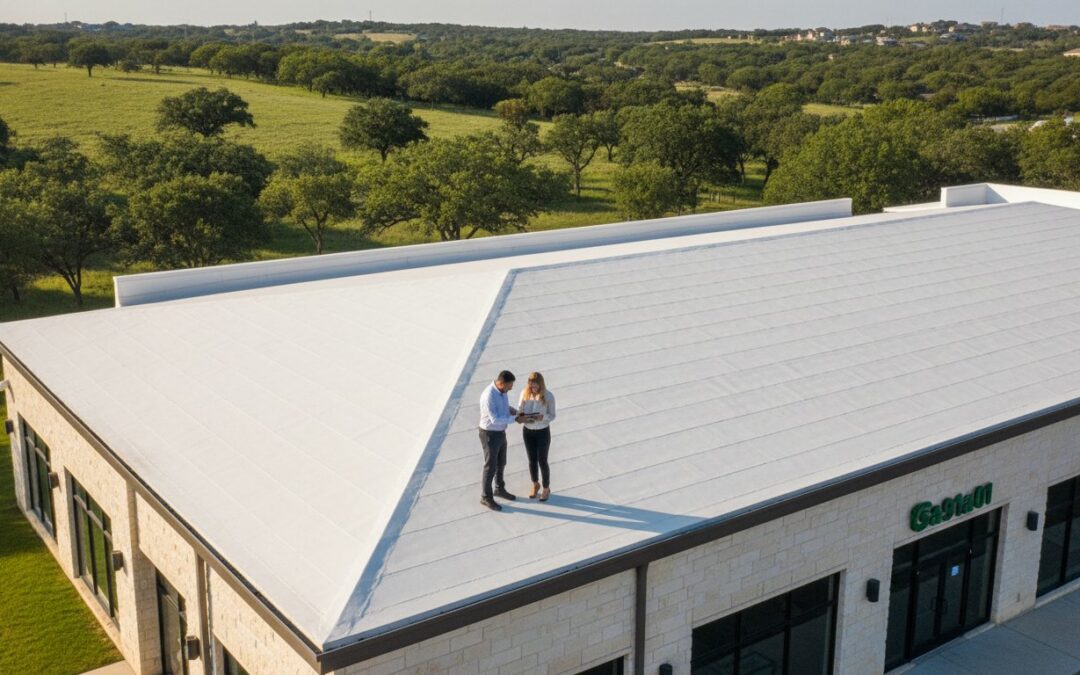
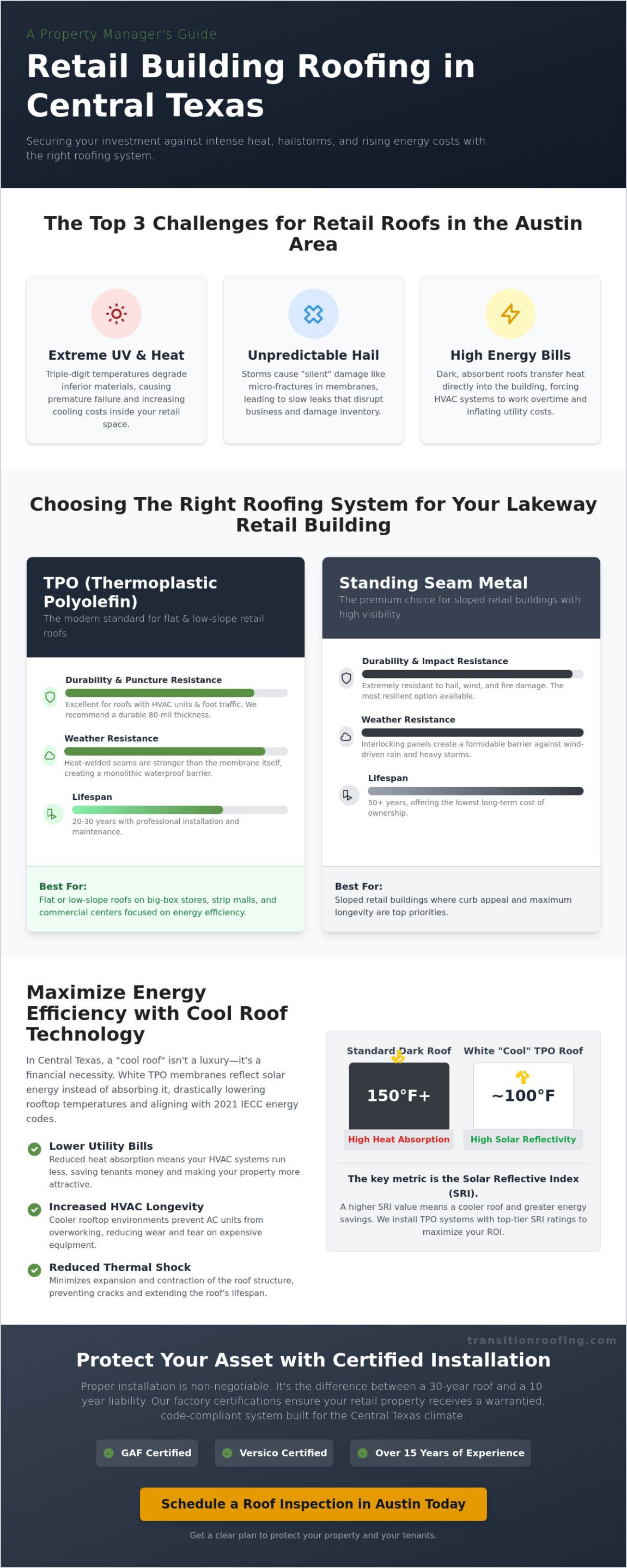
Retail building roofing Lakeway focuses on specialized low-slope or flat systems. These roofs are designed for high-traffic commercial zones where durability is the main priority. Unlike residential structures, retail spaces often have massive footprints that require specific engineering to manage water runoff and structural weight. Choosing the right material depends on your specific building type. A standalone big-box store has different structural needs than a multi-tenant strip mall with shared walls.
One critical factor many managers overlook is the weight of rooftop equipment. Retail buildings usually house heavy HVAC units to keep customers comfortable. Your roof must support this weight and the frequent foot traffic from maintenance crews. We prioritize high-performance commercial roofing in Austin because it offers the puncture resistance needed for these active environments. Most modern projects utilize Membrane roofing systems to provide a watertight seal over these large, flat areas.
TPO vs. Metal: Which Fits Your Retail Space?
TPO (Thermoplastic Polyolefin) is the top choice for flat retail roofs. It uses heat-welded seams that are stronger than the material itself. This prevents the common leaks found in older, glued systems. TPO is also highly reflective, which helps manage the intense Central Texas heat. If you’re managing a high-slope retail building where aesthetics matter, metal roofing is a superior alternative. Metal provides incredible curb appeal and can last over 50 years with minimal maintenance. For a deeper look at how these systems perform across different Texas markets, you can review our Commercial Roofing San Antonio guide. Your choice should balance your immediate budget with the long-term protection of your tenants’ assets.
Maximizing Energy Efficiency for Lakeway Retail Roofs in Austin TX
Central Texas summers are a stress test for any commercial structure. When temperatures hit 100 degrees, the heat island effect in the Austin and Lakeway corridor can make rooftop temperatures soar even higher. Inferior materials degrade rapidly under this constant UV bombardment, leading to premature failure. Switching to white TPO membranes is one of the most effective ways to combat this. These systems reflect solar energy back into the atmosphere rather than absorbing it into your building. This technology aligns with the latest energy-efficient cool roof guidance provided by the Department of Energy.
A high-performance retail building roofing Lakeway system does more than just stop leaks. It acts as a thermal barrier. During a full replacement, we often recommend upgrading to Polyiso board insulation. This material provides superior thermal resistance, which keeps your conditioned air inside where it belongs. The return on investment for these upgrades is clear. You’ll see lower monthly utility bills and reduced wear on your mechanical systems. If you’re curious about specific reflectivity ratings, our flat roofing company in Austin page details how different membranes perform in our climate.
Cool Roof Technology and Retail ROI
Investing in cool roof technology provides immediate benefits for property managers and tenants alike. These systems improve the shopping experience by stabilizing indoor temperatures during peak heat. Key advantages include:
- Reduced Thermal Shock: Reflective surfaces limit the expansion and contraction of the building structure, extending the roof’s lifespan.
- Lower Internal Temperatures: Tenants spend less on cooling, making your property more attractive for long-term leases.
- HVAC Longevity: Reflective membranes prevent rooftop AC units from “baking” in reflected heat, which helps them run more efficiently.
The Solar Reflective Index, or SRI, is a value that measures a roof’s ability to reject solar heat and release any heat it does absorb. High SRI ratings mean your roof stays cooler, which directly translates to lower overhead. If your current energy costs are climbing, scheduling an efficiency audit can help identify where your building is losing money.
Addressing Hail Damage and Retail Roof Repair in Austin TX
Large-diameter hail is the primary threat to retail building roofing Lakeway. High-wind events in Central Texas often accompany these storms, creating a double threat for commercial property managers. While metal roofs show obvious dents, TPO membranes often hide “silent” damage. Hail impacts create micro-fractures in the membrane’s reinforcement layer that aren’t visible from the ground. These fractures eventually lead to leaks that can disrupt retail operations and damage tenant inventory.
Transition Roofing provides documented damage reports specifically for property managers. This documentation is essential for commercial insurance claims. We focus on providing clear evidence of storm-related failure so you have the proof your carrier requires. Preventative maintenance is the best way to avoid emergency leaks that force retail closures. Identifying weak points early moves your property from a state of vulnerability to one of total security.
Signs Your Retail Roof Has Storm Damage
You don’t always need to climb onto the roof to know there’s a problem. Keep an eye out for these common indicators of storm-related failure:
- Ponding Water: This suggests that hail or wind has shifted the drainage slope or blocked scuppers.
- Dented Metal Flashing: If the metal trim around the edges is dented, the membrane has likely taken a hit as well.
- Loose Seams: High winds can peel back membrane edges, leaving the substrate exposed to rain.
- Internal Ceiling Stains: Any discoloration on the ceiling inside your retail space is a sign that the roof’s integrity is compromised.
Contractor logic suggests acting within the standard 12 to 24 month insurance window after a storm. Proving that damage was caused by a specific event becomes much harder as time passes. If you suspect hail damage after the last Lakeway storm, we can provide a documented assessment to protect your asset. If you’re seeing these signs, contact us for a professional roof inspection in Austin to secure your building’s future.
Professional Installation Standards for Lakeway Commercial Buildings in Austin TX
High-quality retail building roofing Lakeway requires more than just a crew and some materials. It demands a standard of precision that protects your long-term investment. We maintain certifications from top manufacturers like GAF and Versico. These aren’t just badges; they are your guarantee of professional warranty protection. If a contractor lacks these certifications, even a minor installation error could void your coverage, leaving you responsible for the full cost of future repairs.
With over 15 years of experience in the Central Texas market, we’ve established ourselves as a reliable roofing contractor in Austin. We utilize premium materials like Dura-last and Certainteed to ensure your retail space withstands the local climate. Our “safety first” protocol is a core part of every project. We manage debris, secure entryways, and control noise to protect your customers and employees while work is underway. This methodical approach ensures your business stays operational and safe.
The Transition Roofing Process for Retailers
Our team follows a transparent project timeline to move your structure from vulnerability to total security:
- Step 1: We perform a comprehensive site audit and core sampling. This identifies hidden moisture in the substrate to ensure the new system has a solid foundation.
- Step 2: We use strategic scheduling to minimize disruption. Our crews work around your store hours and parking needs to maintain tenant access.
- Step 3: We execute precision installation following manufacturer-spec wind uplift requirements. This keeps your roof secure during the high-wind events common in Lakeway.
If you’re dealing with a failing commercial roof or need a clear plan for your next project, we can take a look and give you a professional assessment. Schedule a roof inspection in Austin today to secure your retail asset for the long term.
Securing Your Retail Investment for the Long Term
Managing a commercial property in Central Texas requires a proactive approach to structural protection. By choosing high-reflectivity TPO membranes and adhering to strict installation standards, you safeguard your building’s integrity and your bottom line. We’ve seen how “silent” hail damage can compromise a property’s value if it isn’t documented and addressed within the insurance window. A strategic maintenance plan ensures that your roof remains an asset rather than a liability.
Navigating the complexities of retail building roofing Lakeway is easier with a partner who understands the local landscape. With over 15 years of experience and certifications from GAF and Versico, we provide the steady expertise needed to move your property from vulnerability to total security. We specialize in expert insurance claim assistance to ensure your assets are protected without unnecessary stress or operational downtime.
If you’re concerned about your roof’s current condition or want to optimize your building’s energy efficiency for the coming year, we can provide a clear, documented plan. Schedule a professional retail roof inspection in Lakeway today to ensure your property remains a durable, efficient space for your tenants. Your building is in safe, capable hands.
Frequently Asked Questions for Retail Roofing in Austin TX
How long does a retail building roof typically last in Lakeway?
A retail roof in Lakeway typically lasts between 20 and 30 years, depending on the specific material and maintenance history. High-quality TPO systems often reach the 20-year mark, while standing seam metal systems can exceed 50 years. The intense Central Texas sun and frequent hailstorms are the primary factors that shorten this lifespan. Consistent preventative maintenance helps you reach the upper end of these ranges by catching small issues before they become structural failures.
What is the best roofing material for a flat retail building in Central Texas?
White TPO (Thermoplastic Polyolefin) is widely considered the best choice for a flat retail building roofing Lakeway project. It offers high solar reflectivity, which is essential for managing the 100-degree days we experience in the Austin area. The heat-welded seams provide a watertight seal that is stronger than the membrane itself. This makes it ideal for large retail footprints that house expensive inventory and heavy rooftop HVAC equipment.
Can you repair a retail roof without disrupting store operations?
Yes, we can perform most retail roof repairs without disrupting your store operations or tenant business hours. We use strategic scheduling to perform the loudest tasks during off-peak times and manage materials to keep parking lots clear for customers. Our safety protocols include securing entryways and using specialized debris management systems. This ensures your customers and employees remain safe and undisturbed while we move your structure from a state of vulnerability to total security.
Does commercial insurance cover hail damage for retail buildings in Austin?
Commercial insurance policies generally cover hail damage for retail buildings in Austin, provided you can document the specific storm event. Most policies have a 12 to 24 month window for filing a claim after a storm occurs. We provide detailed damage reports that include core samples and photos to help property managers navigate the insurance process. It’s vital to act quickly after a storm to prove the specific cause of the damage and secure your claim.
How often should a retail property manager schedule a roof inspection?
We recommend that retail property managers schedule a professional roof inspection at least twice a year. Assessments in the spring and fall help you prepare for and recover from the extreme Texas seasons. You should also request an inspection immediately after any major hailstorm or high-wind event. Catching micro-fractures in the membrane early prevents the silent leaks that eventually lead to costly interior damage, mold issues, and tenant complaints.