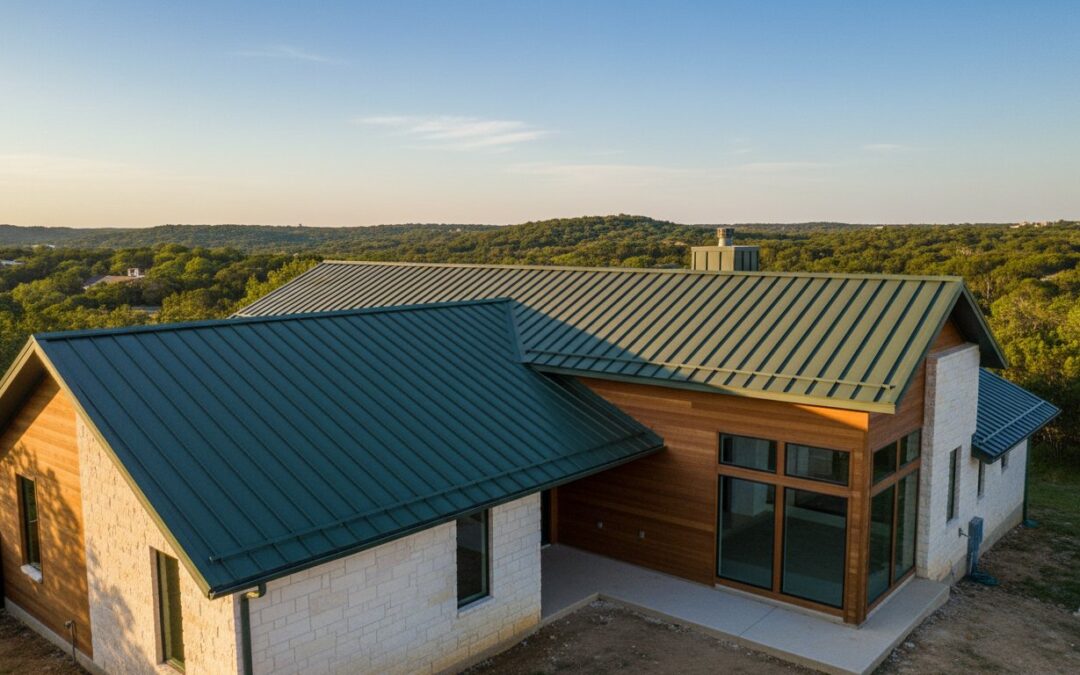
The cheapest roof you can buy today is often the most expensive one you’ll ever own when you account for 105 degree Austin summers and the golf ball sized hail we witnessed in April 2024. Most Central Texas homeowners are tired of the 10 year replacement cycle that comes with traditional shingles. You’re likely asking how much does a metal roof cost because you want a permanent shield for your property rather than a temporary fix. It’s a significant decision, but choosing the right material can end the stress of storm season once and for all.
At Transition Roofing, we believe in providing the steady, professional guidance you need to make an informed choice for your home’s integrity. This 2026 price guide offers a transparent look at current local labor rates and material costs for everything from R-panel to premium standing seam systems. We’ll show you how this investment can lower your annual cooling costs by 25% and potentially reduce your insurance premiums by up to 35%. You’ll get a clear roadmap for the transition from asphalt to metal, ensuring your home stays secure for the next 50 years.
Key Takeaways
- Gain clarity on how much does a metal roof cost in 2026 with an updated breakdown of Austin’s current price ranges per square foot.
- Identify the specific variables-from roof pitch to local freight charges-that determine the final price of a high-quality installation in Central Texas.
- Calculate the long-term value of your investment by understanding how metal roofing acts as a “cool roof” to defend your home against extreme UV rays.
- Follow a transparent roadmap for transitioning your property from aged shingles to a secure, durable metal system with a trusted local contractor.
The Reality of Metal Roofing Costs in Austin (2026 Update)
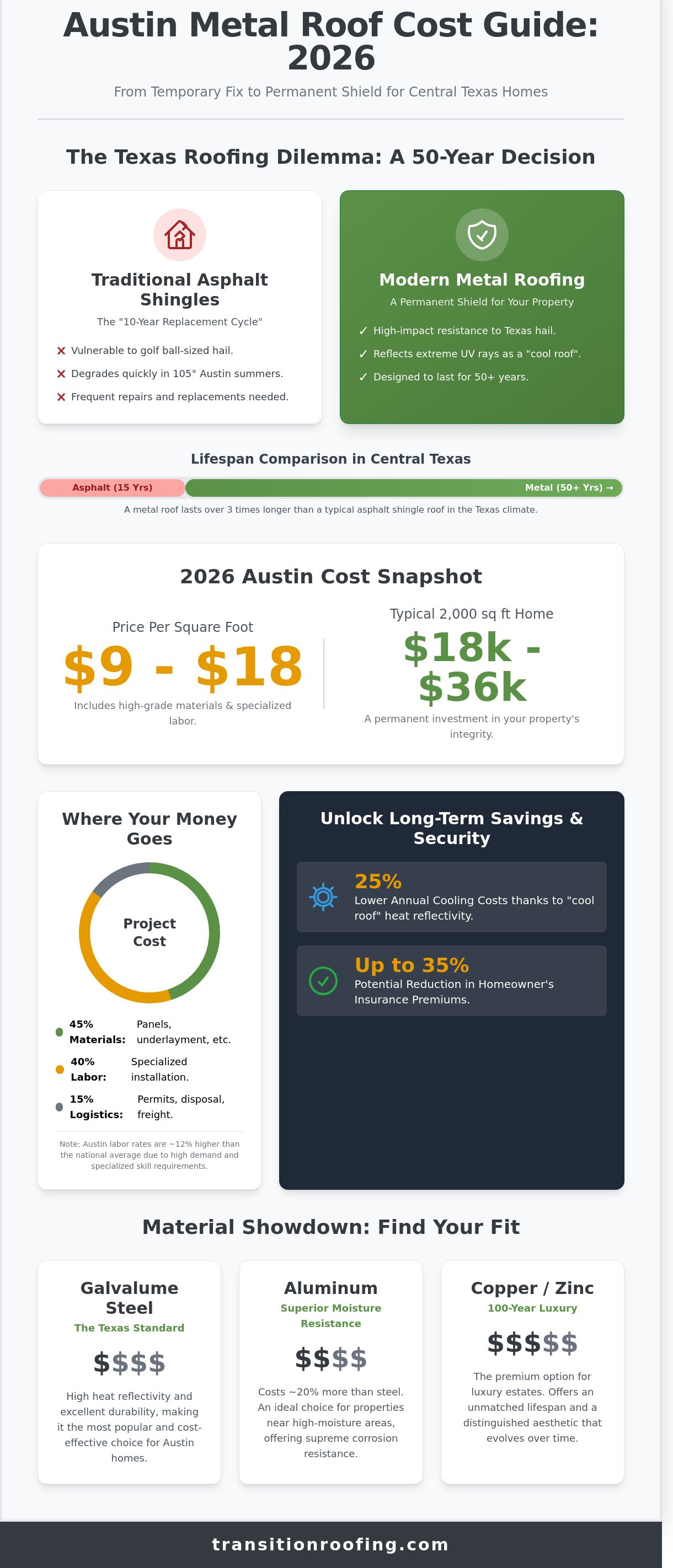
Austin’s skyline and residential neighborhoods are changing rapidly. As we move through 2026, homeowners in fast-growing areas like Round Rock and Pflugerville are prioritizing long-term protection over temporary fixes. If you are asking how much does a metal roof cost in today’s Central Texas market, the answer depends on your specific goals for durability and aesthetics. On average, residential metal roofing installations in the Austin metro area currently range from $9 to $18 per square foot. This price includes both high-grade materials and the specialized labor required for a secure, weather-tight fit.
The 2026 market reflects a steady increase in demand. Local material costs have stabilized after the fluctuations of previous years, but Austin’s construction boom continues to impact pricing. A standard 2,000 square foot home in Travis County typically requires an investment between $18,000 and $36,000. While this initial figure is higher than traditional materials, a Metal roof provides a level of structural integrity that asphalt simply cannot match. We see more neighbors choosing this path because they want a permanent solution that stands up to the Texas sun and seasonal storms.
Current Market Rates in Central Texas
Labor rates in Austin currently sit about 12% higher than the national average. This is due to the high level of expertise needed to handle the complex flashing and thermal expansion requirements unique to our climate. For a typical 2,000 square foot project, you should expect a timeline of 4 to 6 weeks for contractor availability. Most reputable local crews are booked well in advance because of the ongoing expansion in the northern suburbs. Choosing a local specialist ensures your project adheres to specific municipal codes that generic installers might overlook.
Why Austin Homeowners are Switching from Shingles
The transition from asphalt shingles to metal is rarely just about style; it is about security. In 2025 alone, Central Texas experienced three major hail events that compromised thousands of traditional roofs. Homeowners are realizing that knowing how much does a metal roof cost is only half the story. You must also consider the lifetime value. A metal system lasts 50 years or more, whereas a shingle roof often requires replacement or heavy repair every 15 years in the Texas heat. When you calculate the cost of two or three shingle replacements plus rising insurance premiums, the metal option becomes the more fiscally responsible choice for protecting your property. For homeowners dealing with recurring storm damage, exploring expert metal roof replacement in Austin can provide the permanent solution needed to end the cycle of costly repairs.
- Material Range: $9 to $18 per square foot for most residential profiles.
- Typical Project Total: $18,000 to $36,000 for a 2,000 sq. ft. Austin home.
- Labor Factor: 12% higher than national averages due to local demand and specialized skill.
- Durability: 50+ year lifespan compared to 15-20 years for asphalt.
Breaking Down the Bill: Materials, Labor, and Austin Logistics
Understanding how much does a metal roof cost requires looking past the final number on a quote. Most professional estimates are divided into three primary categories: materials (45%), labor (40%), and logistics such as disposal and permitting (15%). Austin’s specific geography plays a significant role in these figures. Because Central Texas sits between major supply hubs in San Antonio and North Austin, freight charges are often lower here than in rural parts of the state. However, the heavy traffic congestion on I-35 can still impact delivery schedules and labor transport costs, which contractors must factor into the final bid.
Local regulations also influence your total investment. In Bee Cave, permit fees for a standard residential reroof often start around $150. Cedar Park usually calculates fees based on the total valuation of the project. These small details ensure your home remains compliant with local building codes and maintains its structural integrity. When homeowners ask how much does a metal roof cost, they must account for these municipal variables that vary from one neighborhood to the next.
Steel, Aluminum, and Premium Metals
Galvalume and galvanized steel serve as the Texas standard for durability. These materials offer high heat reflectivity. This is vital when Austin temperatures exceed 100 degrees for 40 or more days per year. Aluminum costs roughly 20% more than steel but represents a superior choice for homes near high-moisture areas. For luxury estates in Lakeway, premium metals like copper or zinc provide a 100-year lifespan. While the initial price is higher, many homeowners find these systems Worth the Investment because they eliminate the need for a replacement every 15 to 20 years.
The Cost of Specialized Labor
Installing a metal roof isn’t as simple as nailing down shingles. It requires precision cutting, specialized flashing, and a deep understanding of thermal expansion. A single mistake in a valley or around a chimney can lead to leaks that compromise the entire structure. This is why labor for metal systems often costs 2 to 3 times more than standard asphalt shingle installation.
We take a Trusted Protector approach to every job. This means ensuring every crew member is specifically trained in metal fabrication and safety protocols. We maintain $2 million in general liability insurance to keep your property safe during the transition. This level of craftsmanship ensures your home is secure against the 2-inch hail common in Central Texas. If you’re ready to see how these factors apply to your specific property, you can request a detailed estimate from our local team.
Is a Metal Roof Worth the Investment? The Texas ROI Equation
Determining how much does a metal roof cost requires a shift from short-term budgeting to long-term financial planning. In the Central Texas climate, asphalt shingles typically face a 15-year replacement cycle because the intense UV radiation breaks down petroleum-based adhesives. Metal roofing breaks this cycle. These systems provide a 50-year service life, effectively outlasting three standard shingle roofs. For residents in competitive markets like Rollingwood, this durability is a powerful selling point. A metal roof signals to buyers that the home is protected by high-quality craftsmanship and requires minimal maintenance. Data from NerdWallet’s 2026 metal roof cost analysis indicates that while the initial price point is higher, the total cost of ownership over several decades is significantly lower than traditional materials.
Energy Savings in the Scorching Texas Summer
Austin homeowners deal with triple-digit temperatures for months at a time. Metal roofs function as a cool roof by mastering two physical properties: solar reflectance and thermal emissivity. Reflectance is the ability to bounce sunlight back into the atmosphere before it enters your home. Emissivity is the roof’s capacity to release any heat it does absorb. By keeping the attic space cooler, metal roofs can reduce your A/C cooling costs by up to 25% during peak July and August months. You can also take advantage of Austin Energy rebates or federal tax credits under the Inflation Reduction Act, which offers incentives for energy-efficient building envelopes. When evaluating how much does a metal roof cost for an Austin property, remember that these monthly utility savings act as a recurring dividend on your investment.
Insurance Discounts and Hail Resistance
Hail is a fact of life in Central Texas, but it doesn’t have to mean a total loss for your property. Most metal systems we install carry a Class 4 Impact Resistance rating. This is the industry’s highest benchmark for durability. Because these roofs are so difficult to damage, many Texas insurance providers offer premium discounts ranging from 15% to 30%. When a storm passes through, metal prevents the granular loss and substrate exposure that force shingle homeowners into immediate, stressful repairs.
Working with insurance adjusters becomes a more straightforward process when your roof remains structurally sound after a storm. You avoid the cycle of filing claims every few years, which protects your insurability and provides true peace of mind. We focus on these protective benefits to ensure your investment pays for itself over time. Transitioning to metal isn’t just an upgrade; it’s a way to secure your home against the unpredictable Texas elements for the next half-century.
Variables That Impact Your Austin Metal Roofing Quote
Calculating how much does a metal roof cost involves looking beyond the surface area of your home. At Transition Roofing, we see every Central Texas property as a unique structure with specific engineering needs. A simple ranch style home in Round Rock presents different challenges than a multi-story Victorian in the Austin historic districts. The final quote reflects the specific labor hours and safety measures required to secure your home properly for the long term.
Complexity drives labor costs. A roof with multiple valleys, hips, and dormers requires precise metal cutting and custom-fit flashing. These intersections are where leaks typically start if they aren’t handled with expert craftsmanship. Accessibility also plays a role in your final price. If your home sits on a narrow street in Clarksville or has limited driveway space for material staging, logistics costs can increase by 8% to 12% to account for specialized delivery equipment and additional manual labor required to move materials to the site.
Roof Pitch and Architectural Complexity
Pitch refers to the steepness of your roof. For slopes exceeding a 6:12 ratio, installers must use specialized safety harnesses and staging equipment. This steep slope factor can increase labor rates by 15% to 25% compared to a low-slope commercial roof. We also account for every penetration, such as chimneys and skylights. Each one requires custom-fabricated flashing to ensure a watertight seal against the 35 inches of average annual rainfall Austin receives. Multi-story homes often require 40-foot lifts or cranes to move heavy metal panels safely to the roof peak, adding to the equipment fees.
Exposed vs. Hidden Fastener Systems
The choice between corrugated metal and standing seam panels is the biggest financial variable for most residents. Homeowners often ask how much does a metal roof cost when they see the price gap between these two systems. Corrugated systems use exposed fasteners with rubber washers. These are budget-friendly but require maintenance every 10 to 15 years to replace weathered screws. Standing seam systems use hidden fasteners and represent the gold standard for durability.
While the cost delta for standing seam is often 45% to 60% higher than exposed systems, it offers superior protection against the 100-mph wind gusts common during Texas spring storms. For homeowners in growing areas like Kyle or Buda, standing seam provides the long-term value and curb appeal that maximizes resale potential. Homeowners who want that same durability with a more traditional appearance should also explore metal shingles in Austin, which mimic the look of slate or wood shakes while delivering comparable storm protection. We also prioritize high-performance synthetic underlayments. We don’t use standard felt paper because it can’t withstand the 105-degree Austin summer heat without degrading. This hidden layer acts as your second line of defense, ensuring the integrity of your home for decades.
Navigating Your Transition to a Metal Roof in Austin
Deciding to upgrade your home is a major step toward long-term security. While the initial price tag often leads homeowners to ask how much does a metal roof cost compared to traditional shingles, the true value lies in the 50-year lifespan and the peace of mind it provides during Central Texas storm seasons. At Transition Roofing, we focus on moving your property from a state of vulnerability to one of total protection. This process is methodical, transparent, and designed to minimize the typical stress of construction.
Preparing Your Home for Installation
The transition begins with a complete tear-off of your existing materials. We don’t install metal over old shingles because it hides potential rot and prevents a proper seal. Once the old roof is removed, our team performs a rigorous decking inspection. We look for warped plywood or water damage caused by Austin’s intense humidity and flash flooding. We replace any compromised wood to ensure your new 24-gauge steel panels have a rock-solid foundation. Construction is inherently loud, but we manage this by starting promptly at 7:00 AM and maintaining a tidy job site. We use magnetic sweeps daily to collect stray nails, keeping your driveway and lawn safe for your family and pets.
Once the project is complete, many homeowners also schedule a professional cleaning to wash away any remaining construction dust from their siding and walkways. A dedicated service like Poseidon Power Washing LLC can provide that final touch, making the entire property shine.
Choosing a Local Contractor You Can Trust
Austin’s weather is unique. A contractor from out of state won’t understand how our 100-degree summers and sudden hail storms impact metal expansion and contraction. When vetting a professional, ask about their experience with standing seam systems versus exposed fastener panels. You should also demand clarity on warranties. A quality installation should include a lifetime workmanship warranty alongside the manufacturer’s 40-year paint finish guarantee. When you analyze how much does a metal roof cost, remember that a cheap installation often leads to expensive leaks within the first five years. For comprehensive guidance on selecting the right contractor and understanding the complete installation process, our detailed guide on metal roof installation Austin provides the essential information property owners need to make informed decisions.
Our commitment to the Austin community is built on integrity and proven results. We treat every home as if it were our own, ensuring the final walkthrough meets our high standards for craftsmanship and durability. If you’re ready to secure your home against the elements, it’s time to speak with a specialist who understands the local landscape.
- Step 1: Detailed site assessment and measurement.
- Step 2: Material selection tailored to your home’s architecture.
- Step 3: Professional installation typically completed in 3 to 5 days.
- Step 4: Final inspection and warranty activation.
Schedule your free Austin metal roof estimate with Transition Roofing to get a clear, honest breakdown of your project requirements.
Protect Your Investment With a Texas-Proven Metal Roof
Choosing a metal roofing system is a strategic move for any property owner in Central Texas. While the initial investment is higher than traditional shingles, the durability of Class 4 impact resistant materials provides essential defense against the severe hail storms that hit Austin annually. You’ll likely see these benefits reflected in lower insurance premiums and a roof lifespan that often exceeds 50 years. Understanding how much does a metal roof cost requires looking past the 2026 sticker price and considering the long-term ROI of energy efficiency and reduced maintenance.
Transition Roofing has been a trusted local specialist since 2015; we bring deep expertise to every residential and commercial project we touch. We focus on moving your property from a state of vulnerability to total security with methodical craftsmanship. Our team understands the specific thermal demands of the Texas climate and ensures every installation meets our high standards for integrity. For comprehensive guidance on selecting the right system for your home’s specific needs, explore our detailed metal roofing Austin guide for Central Texas protection. Ready to make the switch? Secure your home with an expert metal roof installation in Austin today. We’re here to help you build a legacy of protection for your property.
Frequently Asked Questions
How much more does a metal roof cost than shingles in Austin?
A metal roof typically costs 2 to 3 times more than a standard asphalt shingle installation in Central Texas. While a quality shingle roof in Austin averages $4.50 to $6.00 per square foot, a professional metal installation ranges from $10.00 to $18.00 per square foot. When homeowners ask how much does a metal roof cost, it’s important to consider that this investment lasts 50 years, which is triple the lifespan of shingles.
Will a metal roof interfere with my cell phone reception in Central Texas?
Your cell phone reception won’t change after a metal roof installation because signals primarily enter through your windows and doors. We’ve installed hundreds of systems in Austin neighborhoods like West Lake Hills without a single reported signal loss. Most modern homes already contain metal components like radiant barriers and ductwork that haven’t impacted your 5G connectivity or call quality.
Are metal roofs noisier than shingles during a Texas rainstorm?
Metal roofs aren’t noisier than shingles when they’re installed with solid wood decking and high-quality underlayment. The thick layers of insulation and 5/8-inch plywood decking on most Austin homes act as a natural sound barrier. In fact, acoustic testing shows that a properly installed metal system only registers 52 decibels during heavy rain, which is actually quieter than a normal conversation.
Can I get a discount on my Texas homeowners insurance with a metal roof?
Texas homeowners often receive a premium discount of 20% to 35% when they switch to a metal roof with a Class 4 impact rating. Most major insurers in the Austin area, such as State Farm and Allstate, offer these credits because metal resists 2-inch hail stones. You’ll need to provide your agent with a UL 2218 certification form to secure these annual savings on your policy.
How long does it take to install a metal roof on an average Austin home?
It takes 3 to 5 business days to complete a metal roof installation on a standard 2,500 square foot home in the Austin area. Larger or more complex projects with steep pitches can take up to 8 days to ensure every detail is perfect. Our crews work efficiently to ensure your home stays dry and secure throughout the entire transition process from your old roof to the new one.
What happens if my metal roof gets dented by hail?
Cosmetic denting from hail usually doesn’t compromise the structural integrity or the 50-year lifespan of your roof. Most 24-gauge standing seam panels are rated to withstand 90 mph wind-blown debris without leaking or cracking. If a storm produces hail larger than 2 inches, we’ll perform a 21-point inspection to ensure the protective coatings and fasteners remain fully intact and secure.
Is it possible to install a metal roof over my existing shingles?
You can install metal over a single layer of shingles in Austin, provided the local building code and your roof deck allow it. However, we recommend a full tear-off 95% of the time to inspect the wood decking for hidden rot or soft spots. Removing the old layers ensures your new system is fastened directly to a stable surface, which is vital for calculating how much does a metal roof cost for long-term protection.
What is the best type of metal for the Austin heat?
Standing seam Galvalume with a Kynar 500 resin coating is the most effective choice for the extreme Austin heat. These “Cool Roof” systems reflect up to 85% of solar radiation, which can lower your summer cooling costs by 25% compared to dark asphalt shingles. This combination of aluminum and zinc provides the best thermal protection for homes facing 100-degree Texas summers while preventing long-term corrosion. Homeowners who prefer a more traditional aesthetic without sacrificing performance may also want to consider metal shingles designed for Austin’s climate, which offer comparable cool roof benefits in a classic profile.