
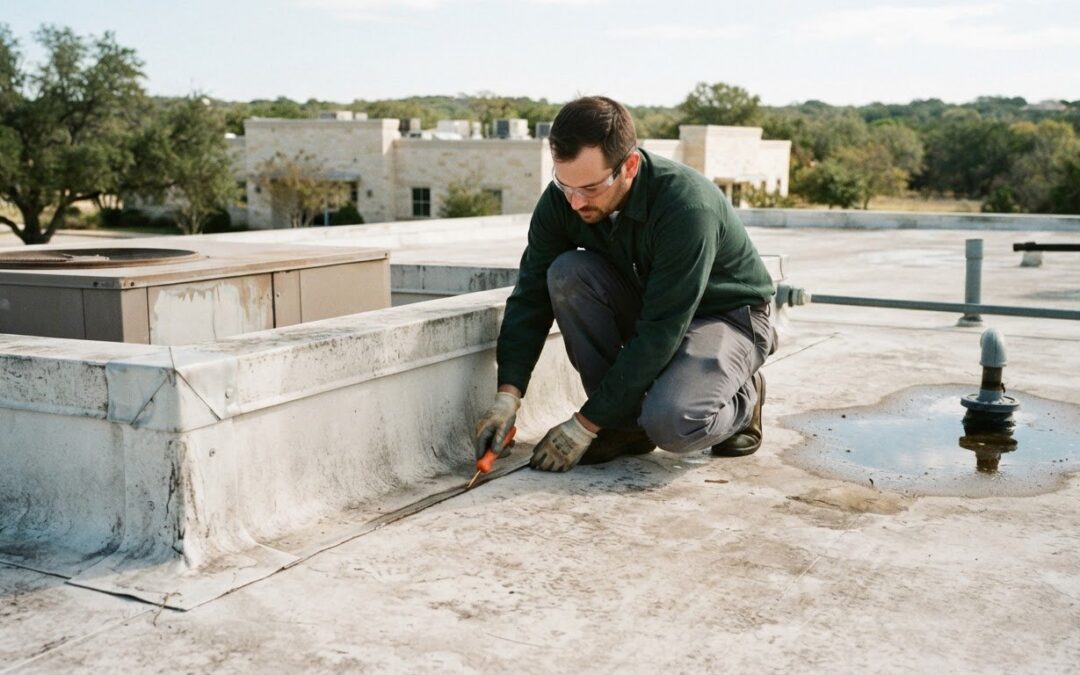
The cost of medical clinic flat roof maintenance in Cedar Park depends on the roof’s condition and the work needed, from routine upkeep and localized repairs to restoration or replacement. Inspection findings, drainage, membrane wear, roof access, and energy performance all shape the scope. A patch may not resolve a recurring leak if water is collecting elsewhere.
For a clinic, roof problems can affect more than the building itself. Leaks near HVAC equipment or other critical systems may disrupt operations, so understanding the roof’s condition helps define the work needed. A clear explanation of the scope is more useful than a one-size-fits-all estimate.
This guide explains what a flat-roof inspection should cover, how Central Texas heat and storms can affect a roof, and which findings may call for repair, restoration, or replacement. It also covers energy efficiency and the details that help build a practical maintenance plan for a Cedar Park clinic.
Key Takeaways
- Central Texas summers can exceed 100°F, according to the National Weather Service, so roof condition and energy efficiency deserve attention when planning long-term upkeep.
- A thorough inspection looks beyond visible leaks to flashings, seams, ballast, and signs of UV aging.
- The extent and location of damage help show whether a targeted repair, restoration, or replacement is the practical next step.
- Regular maintenance can help catch membrane problems around the equipment and systems healthcare buildings rely on.
Energy efficiency and long-term roofing costs
Flat roof maintenance costs for commercial buildings in Cedar Park, TX, reflect roof area, access, drainage, membrane condition, and the work required. A focused repair costs less in scope than restoring broad areas or replacing a system, so inspection findings guide a useful plan. The U.S. Census Bureau estimated Cedar Park’s population at 79,032 residents on July 1, 2025 (V2025), underscoring the local need for dependable commercial facilities.
Energy use is another part of long-term roofing decisions. Central Texas summers can reach temperatures above 100°F, according to the National Weather Service. Heat and sun expose flat roofs to ongoing stress, while a reflective roof surface can help limit heat absorption. The actual benefit depends on the existing roof, insulation, building use, and the condition of the roofing system.
Flat and low-slope commercial roofs often use membranes, including single-ply systems such as TPO. Seams, penetrations, and drainage points need sound detailing to protect the roof. A roofing contractor can assess these areas and explain whether maintenance, repair, or a larger project best addresses the condition. The scope should also account for rooftop equipment and safe access.
- Review the membrane and insulation condition before weighing energy improvements.
- Keep drains and drainage paths clear so water can leave the roof.
- Plan roofing work around clinic access, patient privacy, and facility operations.
- Set clear work zones and debris controls to protect staff, patients, and visitors.
For healthcare facilities, limiting disruption is part of project planning. Roofing work should account for access routes, noisy tasks, material staging, and cleanup around clinic operations. For instance, work near an entrance may require a separate route for patients and deliveries. Clear scheduling and daily site controls support safety and hygiene while crews complete the work.
Inspection of flashings, seams, ballast, and UV aging
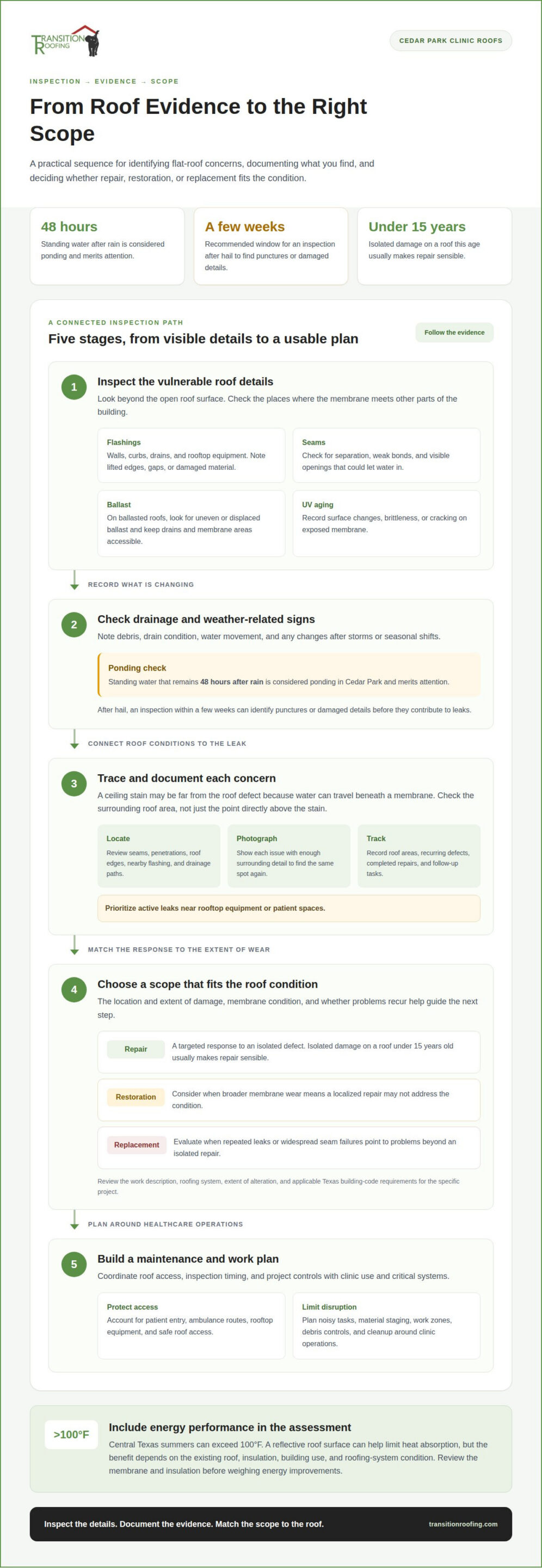
A commercial roof inspection checks vulnerable membrane details, not just the open roof surface. For a Cedar Park clinic, the findings help locate possible water entry and set maintenance priorities.
Flashing and Seam Inspections
An inspection covers flashing where the roof meets walls, curbs, drains, and rooftop equipment. These transitions protect openings in the membrane, so lifted edges, gaps, or damaged material need attention. At seams, the inspector looks for separation, weak bonds, and visible openings. Photos can record each concern’s location and condition, helping relate an interior leak to a specific roof detail.
Ballast and UV Aging Checks
On a ballasted roof, the inspection checks whether ballast is evenly distributed and whether drains and membrane areas remain accessible. Displaced ballast can expose sections that need closer review. The inspector also looks for signs of UV aging on exposed membrane, such as surface changes, brittleness, or cracking. Recording these conditions helps distinguish a localized repair from broader roof wear.
Seasonal maintenance gives facilities a chance to document changes after weather shifts or storms. After hail, a roof inspection within a few weeks can identify punctures or damaged details before they contribute to leaks. Inspectors also note debris, drain condition, and water movement. Standing water that remains 48 hours after rain is considered ponding in Cedar Park and merits attention.
For urgent care centers, coordinate roof access and inspection timing around patient entry, ambulance routes, and rooftop equipment. Photo documentation should identify each issue by roof area and show enough surrounding detail to locate it again. Clear images help facilities track whether a seam, flashing, or aged membrane changes between visits. If an inspection points to a flat-roof concern, flat roofing guidance can help frame the next step.
Repair, restoration, or replacement decisions
For Cedar Park clinics, the right response depends on where the damage is, the membrane’s condition, and whether problems recur. A repair addresses a specific defect, while widespread wear may call for restoration or replacement.
For Cedar Park projects, review repair and replacement scopes against the Texas building-code requirements that apply to the specific work. The work description, roofing system, and extent of alteration are practical starting points for that review.
Hail, heat, wind, and heavy rain can all stress a flat roof in Central Texas. After severe weather, temporary repairs can help limit further damage while permanent work is planned. A clinic maintenance plan should record roof areas, recurring defects, completed repairs, and follow-up tasks.
Membrane Seam Repairs
Commercial roof repairs at membrane seams start by locating separation, weak bonds, or openings where water could enter. The scope should identify and address the affected seam rather than just cover nearby symptoms. A leak near a seam, for example, may also warrant checking adjacent flashing and drainage paths. Clear records help facility teams track whether the same area needs attention again.
Leak Detection and Repair
Flat-roof leak detection traces water stains toward possible entry points, including seams, penetrations, and roof edges. Water can travel beneath a membrane, so a ceiling stain may be far from the roof defect. The inspection should cover the surrounding roof area, document likely sources, and connect each repair to a visible condition. This helps clinics prioritize active leaks near equipment or patient spaces.
Restoration or Replacement Decisions
Isolated damage on a roof under 15 years old usually makes repair sensible. Broader membrane wear, repeated leaks, or widespread seam failures can shift the decision toward restoration or roof replacement. The assessment should consider the roof’s age, repair history, drainage, and the condition beneath the membrane. Shingles are not a substitute for a flat-roof membrane system; material choice must match the roof design and slope.
A Cedar Park roofing contractor can build a maintenance plan around inspection findings, repair records, and clinic operations. This gives facility teams a clear basis for scheduling work and distinguishing urgent leak repairs from planned restoration or replacement.
Healthcare facility roof maintenance
Clinic roofs often support HVAC equipment, electrical systems, backup generators, and other critical services. A maintenance plan should map these assets alongside drains, access routes, and roof sections. That record helps teams prioritize a leak near equipment differently from a minor defect in an unused area. A clear medical clinic flat roof maintenance plan in Cedar Park also helps staff coordinate roof work with daily operations.
Standing water that remains 48 hours after rain is considered ponding in Cedar Park. Persistent ponding can point to drainage problems that need attention before they affect nearby seams or penetrations. A maintenance visit should document water locations, clear debris from drainage paths, and record any change since the previous inspection. Effective medical clinic flat roof maintenance in Cedar Park gives facility teams a consistent way to track these conditions.
Central Texas storm damage can affect more than the membrane surface. Hail may puncture or bruise roofing materials, while wind can stress roof edges and flashing. After a hail event, arrange a roof inspection within a few weeks. Photos and marked roof locations help facility teams document damage and guide repair decisions.
Roofing work at an active clinic also needs careful planning to limit disruption. Before work begins, facility staff can identify patient entrances, delivery routes, sensitive areas, and equipment that needs uninterrupted access. The work plan should cover material staging, debris removal, and daily cleanup. Keeping a route clear to an urgent-care entrance, for example, helps maintain patient access during scheduled work.
- Keep a roof plan showing drains, equipment, and recurring leak locations.
- Record inspection findings and completed repairs by roof section.
- Set access and cleanup procedures before maintenance or repair begins.
- Review the plan after storm damage, hail damage, or equipment changes.
These steps help facilities identify developing problems and organize work around clinical operations. If a leak or storm-related issue needs professional attention, arrange a commercial roof assessment to establish a clear next step.
Transition Roofing: Commercial Roof Installation
Transition Roofing helps Cedar Park clinics address commercial roof needs through repair or installation when inspection findings point beyond routine upkeep. For a localized leak or damaged membrane, commercial roof repair can target the affected area. If wear is widespread, a new commercial roof installation may provide a more complete solution.
System selection should suit the building’s roof design and operating needs. Transition Roofing installs TPO roofing systems and metal roofing systems for commercial buildings. A clear project scope can explain the observed condition, recommended work, and how crews will coordinate with clinic access and daily operations.
If your clinic needs roof repairs or you’re considering a replacement, contact Transition Roofing to discuss the next step.
Build a Clear Plan for Your Clinic’s Roof
Turn roof observations into a practical maintenance plan by keeping inspection notes, repair records, and facility changes together. When equipment moves or new penetrations are added, update the roof record so future work starts with accurate details. This makes recurring concerns easier to track and helps teams plan around clinic operations.
For medical clinic flat roof maintenance in Cedar Park, clear information matters as much as timing. Discussing current concerns can help identify the right next step, whether that means addressing a repair or planning future roofing work. Note what your facility has observed and which areas need attention to keep the assessment focused on your building.
Contact Transition Roofing to discuss your clinic’s roof maintenance needs. A thoughtful plan can help your team move forward with confidence and keep attention on patient care.
Frequently Asked Questions
Which flat roof types are commonly used on medical clinics in Cedar Park, Texas?
Common commercial flat-roof systems include single-ply membranes such as TPO, PVC, and EPDM. Each uses a membrane across a low-slope roof, with seams and rooftop penetrations requiring proper detailing. The right fit depends on the existing roof assembly, drainage, equipment layout, and planned work. An assessment can identify the current system and its condition before maintenance or replacement is considered.
How often should commercial clinics schedule roof inspections and maintenance?
Clinics should plan regular inspections and maintenance, adjusting the schedule to roof condition, building use, and recent events. Arrange an inspection within a few weeks after hail, and schedule one when roof work or equipment changes could affect the membrane. Keep findings with maintenance records to help facility teams spot new concerns and plan follow-up without relying on memory or scattered repair notes.
How can a medical clinic roof be checked for leaks, ponding water, and membrane damage?
Start with interior signs, such as new ceiling stains, damp areas, or water near equipment, and record their locations. A trained inspector can then assess the corresponding roof areas, drainage paths, membrane, and penetrations. Standing water still present 48 hours after rain is ponding. Avoid walking on the roof without appropriate training, since foot traffic can damage membranes or create safety risks.
How can roof leaks and maintenance work affect patient safety and clinic operations?
A leak near electrical equipment, HVAC units, or patient-care areas may need prompt attention and coordination with facility staff. Mark affected interior areas and protect access routes while the source is assessed. For planned maintenance, coordinate crew access, material staging, noise, and cleanup with clinic operations. Clearly marked work zones help keep patients and staff away from active work while maintaining usable entrances.
What signs suggest a Cedar Park clinic roof needs repair instead of full replacement?
A single, identifiable defect surrounded by sound membrane may be suitable for a targeted repair. Widespread deterioration, repeated leaks in separate areas, or multiple failing seams may point toward restoration or replacement. The decision also depends on the roof’s repair history and the condition of the underlying assembly. A documented inspection helps distinguish an isolated failure from broader system wear.
If your Cedar Park clinic needs roof maintenance or repair, contact Transition Roofing to discuss the next step.