
The right roof decision is not always a full replacement. For commercial roof replacement for Austin manufacturing facilities, the system should fit the existing roof assembly, drainage, insulation, building use, and roof condition. In Austin, heat, hail, and storms make those factors especially important.
A leak or recurring repair can disrupt production and put equipment, materials, and schedules at risk. Weigh the cost of continued repairs against the protection a new roof can provide, but don’t assume every aging roof needs to be removed.
This guide explains which low-slope systems may suit manufacturing buildings, how to decide between repair and replacement, and how maintenance can help catch problems early. It also outlines what an assessment should cover, including moisture, insulation, drainage, and your facility’s operating needs, so you can make a practical plan.
Key Takeaways
- Match a low-slope roofing system to your facility’s roof assembly, drainage, insulation, and operating needs.
- Weigh roof condition, recurring repairs, moisture, and drainage issues before deciding whether to repair or replace.
- Use regular maintenance to spot developing problems before they disrupt building operations.
- Understand why an on-roof assessment and roof core help shape a replacement scope and cost.
Commercial roofing systems for low-slope and flat roofs: commercial roof replacement for Austin manufacturing facilities
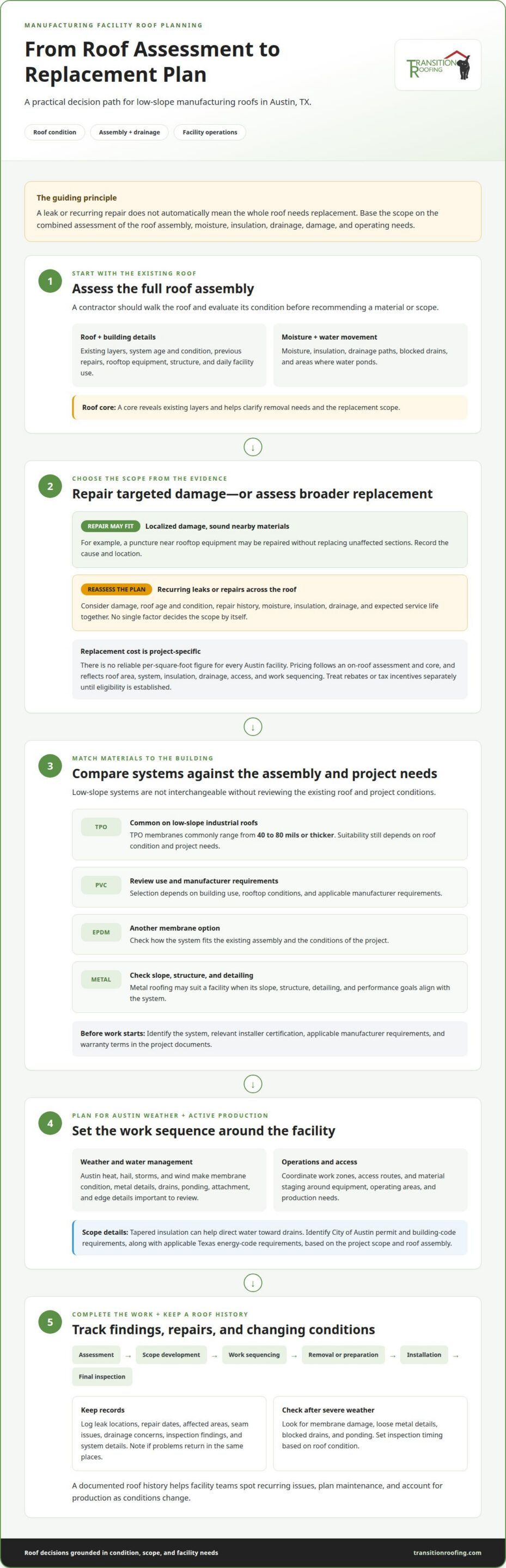
A manufacturing roof system should suit the building’s assembly, insulation, drainage, and daily use. TPO is a common option for low-slope industrial roofs, but the right fit depends on the roof’s condition and project needs. Before choosing materials, assess existing layers, rooftop equipment, and drainage paths.
TPO, PVC, and EPDM are membrane systems; metal roofing can suit facilities when slope, structure, detailing, and performance goals align. TPO membranes for Austin commercial roofs commonly range from 40 to 80 mils or thicker. PVC selection also depends on building use, rooftop conditions, and manufacturer requirements, so these systems aren’t interchangeable without reviewing the assembly.
Austin manufacturing facilities can consider TPO, metal roofing, and flat-roof systems through commercial roofing contractors that handle installation and repair. A contractor’s proposal should identify the system and the installer certification relevant to its manufacturer requirements. Local commercial roofing services can address installation and repair needs.
Warranty terms vary by roofing system and installer certification. Have the project documents identify applicable manufacturer requirements and warranty terms before work starts. Set inspections based on roof condition, and keep maintenance and repair records to track recurring leaks, seam issues, and drainage concerns over time.
Austin roofs face heat, hail, storms, and wind. After severe weather, look for membrane damage, loose metal details, blocked drains, and ponding. Tapered insulation can help direct water toward drains. Secure attachment and sound edge details are also important when planning for wind exposure and reliable drainage.
Active production shapes the installation sequence. Plan work zones, access routes, and material staging around equipment and operating areas. Keep a long-term roof plan that records inspection findings, repairs, drainage concerns, and system details. This history helps facility teams schedule maintenance and address developing issues while keeping operations in view.
TPO is commonly used on low-slope industrial roofs. PVC and EPDM are other membrane options, and their suitability depends on the roof assembly and project conditions. Metal roofing may work when the facility’s slope, structure, detailing, and performance goals suit the system.
Who is the best commercial roof replacement company in Austin TX?
For manufacturing properties, the right contractor evaluates roof condition, replacement scope, and the effect of work on operations. A sound decision starts with a roof assessment, not a material choice alone.
Repair-Versus-Replacement Evaluation
Review damage, roof-system age and condition, previous repairs, moisture, insulation, drainage, and expected service life. Together, these factors show whether targeted repairs can address the problem or broader replacement is the practical option. If the existing assembly includes modified bitumen, assess its condition and compatibility with the planned work.
City of Austin permit and building-code requirements depend on the project scope and roof assembly. Identify the requirements that apply to the property before work begins.
Texas energy-code requirements can affect the replacement scope and selected assembly. Account for applicable energy requirements when planning insulation and roofing system details.
For an active manufacturing site, replacement typically moves through assessment, scope development, work sequencing, removal or preparation, installation, and final inspection. Plan for access, staging, production areas, and measures that help the facility operate safely throughout the work.
Replacement Cost Considerations
There is no reliable per-square-foot figure for every Austin facility. A commercial replacement should be priced after the contractor walks the roof and cuts a core. The core reveals existing layers and helps clarify removal needs. The estimate also reflects roof area, system choice, insulation, drainage, access, and project sequencing.
Rebates or tax incentives depend on the program, building, and proposed work. Treat potential incentives separately from the roof estimate, and include them in planning only after eligibility is established.
For a project assessment or repair plan, explore commercial roofing options in Austin.
A decision should weigh the listed conditions together rather than treating any one item as decisive. Damage and moisture or insulation concerns describe current problems, while roof-system age and condition, previous repairs, drainage, and expected service life help frame the wider state of the roof. Comparing those considerations supports a scope suited to the roof’s overall condition: addressing limited issues where appropriate, or planning replacement when the combined assessment points to a broader need. This keeps the choice grounded in the assessment rather than a single factor.
Industrial roof repair, replacement, and maintenance
For commercial roof replacement for Austin manufacturing facilities, a documented roof history helps connect past repairs to current conditions. Record leak locations, repair dates, and affected areas, then note whether problems return in the same places. This gives facility managers a clearer view of recurring failures than a list of work orders alone.
Localized damage may call for repair when nearby materials remain sound. For example, a puncture near rooftop equipment may be repaired without replacing unaffected sections. Record the cause and location after the work. If leaks recur in separate areas or repairs spread across the roof, reassess the overall plan.
Replacement planning should account for the facility’s structure, roof condition, and operating demands. An East Austin warehouse with a deteriorated built-up roof was replaced with a standing-seam system. The example shows how the existing roof and building design can shape the project scope, rather than relying on a one-size-fits-all specification.
Build maintenance records that support the next inspection. Keep photographs, repair notes, and roof-access details together. If the facility has several roof sections, label each area on a plan. This makes it easier to find repeat issues, brief maintenance staff, and track whether a prior repair addressed the cause.
Restoration may be an option when the existing roof remains structurally sound. Coatings cover the roof surface, while a layover can add a new system over the existing membrane when roof composition or code rules prevent coating. The right approach depends on the existing assembly’s condition and the project scope.
Coordinate roofing work with facility operations before it begins. Identify sensitive equipment, access routes, and areas that need protection. A clear sequence helps the roofing team stage materials and communicate work zones. Keep inspection and repair records with facility maintenance files to support future planning.
Prism Roof Group says Austin-area commercial roofs face intense UV exposure, heat, and a spring hail season. Restoration could prevent 85% of commercial roof replacements and often costs 50-75% less than tear-off and replacement.
Commercial Roof Replacement Cost per Sq Ft in Austin, TX
A reliable commercial roof estimate for an Austin facility starts with an on-roof assessment. Transition Roofing provides free, no-obligation estimates and transparent pricing with no hidden fees. Reviewing the roof’s existing layers and condition helps define the project scope before pricing; a figure based only on roof area can miss work that the roof needs.
For a manufacturing facility, the estimate should account for the selected system, insulation, drainage, and existing roof assembly. It should also explain whether the project includes removing old materials or preparing the existing surface. Access around rooftop equipment and active production areas can affect staging and sequencing, so include those details in the scope.
Ask for a written breakdown that connects each work item to a roof condition or project requirement. If the assessment identifies wet insulation, for example, the proposal should explain how that affects the repair or replacement plan. If drains or roof edges need attention, list those tasks clearly rather than burying them in a general allowance.
Compare proposals by scope, not just by a per-square-foot figure. Confirm that each describes the same roof area, material system, insulation work, drainage details, and removal plan. Different assumptions can make totals look comparable when they cover different work. For an Austin facility, address production access and roof staging before comparing schedules.
Prepare for the assessment by sharing roof plans, known leak locations, and records of previous repairs. The contractor’s roof walk and core sample can then connect those records to current conditions. This gives facility managers a clearer basis for planning capital work and comparing repair with full replacement.
If you’re planning a commercial roof assessment in Austin, request help with your roofing project.
Transition Roofing: Commercial Roof Installation
Transition Roofing brings over 15 years of local experience to commercial roofing projects in Austin and Central Texas. Its installers are insured and manufacturer-certified, supporting commercial roof installation, TPO roofing systems, and commercial roof repair.
Turn to Transition Roofing when leaks keep returning, storm damage needs attention, or an aging roof calls for a replacement plan. The team provides commercial roof installation, repair, and maintenance to help assess your facility’s needs and identify a practical next step.
Contact Transition Roofing to discuss your manufacturing facility’s roof.
Set a Clear Plan for Your Facility’s Roof
Make the next roof decision with your facility’s operating needs in view. A clear plan can help schedule work, protect production areas, and address roof concerns before they become larger disruptions. For commercial roof replacement for Austin manufacturing facilities, start by assessing the roof’s condition and the building’s needs, then set a practical path forward with Transition Roofing.
Transition Roofing offers commercial roof installation, TPO roofing systems, and commercial roof repair for facilities facing replacement or active roof problems. Whether you’re planning a larger project or need to address a specific issue, a conversation can help define the next step without pressure.
Contact Transition Roofing today to discuss your facility’s roofing needs. A sound plan starts with a clear view of the roof and the demands on your building.
Frequently Asked Questions
Need Help With an Industrial Roof in Austin?
Yes. Transition Roofing handles commercial roof installation and repair for industrial buildings in Austin and nearby communities, including Round Rock, Pflugerville, Cedar Park, Lakeway, Buda, Kyle, Bee Cave, and West Lake Hills. If a leak threatens stored materials or production equipment, note where it appears and whether storm damage preceded it. Those details help frame a useful next step for your facility.
Which commercial roofing systems are best for Austin manufacturing buildings?
TPO or metal roofing can suit Austin manufacturing buildings, but neither is the automatic choice for every roof. TPO is available for low-slope commercial projects; metal can fit when the building’s slope and structure suit the system. Consider how roof access, equipment placement, and future service work affect the facility. A system that fits those needs can make ongoing roof care more practical.
How long does an industrial roof replacement take, and how can production disruption be minimized?
A commercial roofing project can take a couple of days to multiple months, depending on its complexity. To limit production disruption, coordinate the work sequence with facility leads, set clear access routes, and plan material deliveries around busy areas. Phased work can help keep active spaces separate from roofing operations. Confirm the planned sequence and communication process before installation begins.