
A contractor’s workmanship warranty typically lasts 10-25 years and covers problems caused by how the roof was installed. A peace of mind roofing warranty for homeowners in Buda depends on more than the term: material coverage, exclusions, and workmanship protection all matter.
The longest warranty isn’t automatically the best fit. It’s reasonable to want clear protection after investing in a roof, but a warranty’s value depends on what it covers and how its terms match your roofing material and budget.
This guide explains the difference between manufacturer and workmanship warranties, what each may exclude, and how contractor coverage can vary. You’ll also learn what to consider when choosing protection for a Buda home exposed to Central Texas heat, hail, and storms.
Key Takeaways
- Separate material coverage from workmanship coverage: one addresses eligible product defects, while the other covers problems caused by installation.
- Read exclusions closely. Weather damage, maintenance issues, and later roof changes may affect whether a claim is covered.
- Contractor workmanship coverage can vary in length. Compare the term with what installation problems it covers and how claims are handled.
- Choose coverage that fits your roof material, budget, and installer’s qualifications; the longest term alone doesn’t tell the whole story.
What is the difference between a manufacturer warranty and a workmanship warranty in Austin, TX?
A manufacturer warranty covers eligible defects in roofing materials; a workmanship warranty covers installation errors. Because these protections come from different parties, a material claim and a leak claim may follow different processes.
I can’t verify whether Peace of Mind Roofing is licensed, insured, or serves homeowners in Buda from the information available here.
Manufacturer Material Warranties
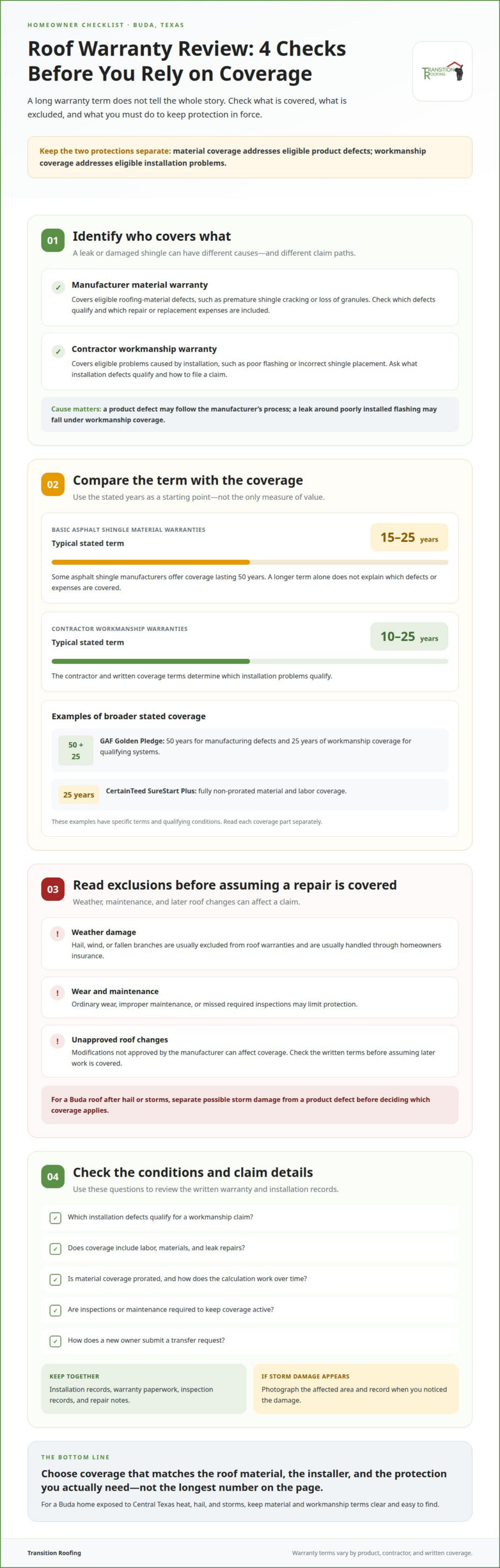
A manufacturer warranty covers eligible roofing material defects, such as premature shingle cracking or loss of granules. It matters because a product can fail even when installation was done correctly. Standard warranties for basic asphalt shingles typically run 15-25 years, but terms differ by manufacturer and product. Some asphalt shingle manufacturers offer coverage lasting 50 years. A longer term alone doesn’t explain which defects qualify or which expenses are covered, so the written warranty’s limits matter.
Contractor Workmanship Warranties
A contractor workmanship warranty covers eligible problems caused by how the roof was installed. It matters when a leak traces to poor flashing, incorrect shingle placement, or another installation error rather than a defective product. Workmanship warranties typically last 10-25 years, depending on the contractor and coverage terms. For example, a shingle defect may belong under the manufacturer’s warranty, while a leak around poorly installed flashing may fall under workmanship coverage. The cause helps identify which warranty applies.
Roofing Materials and Warranty Coverage
Roofing materials determine which manufacturer’s warranty applies and what product defects it addresses. This matters because asphalt shingles, metal panels, and TPO systems have different product terms. For asphalt shingles, compare the stated warranty period with covered defects and any limits on repair or replacement expenses. Some full-system warranties address both materials and workmanship when qualifying systems are installed by certified contractors. GAF Golden Pledge, for example, provides 50 years of coverage for manufacturing defects and 25 years of workmanship coverage for qualifying systems. Read both coverage parts separately.
For a Buda roof, keep the material warranty and workmanship terms with the installation records. If a problem appears, identify whether it concerns a product defect or installation, then follow the matching warranty process. This distinction can guide the next step without assuming every leak or damaged shingle has the same cause.
What does the roofing material warranty cover?
A material warranty may cover eligible product defects, while labor and leak repairs depend on its terms. Hail or wind damage is generally excluded from roof warranties and is usually handled through homeowners insurance.
Common Warranty Exclusions
Warranty exclusions can vary, but they may limit coverage for damage caused by weather, wear, maintenance issues, or unapproved modifications. Severe weather, ordinary wear and tear, improper maintenance, and unapproved roof changes can affect a claim. In Buda, hail damage may fall outside a material warranty, even when shingles are damaged. Check whether the policy distinguishes product defects from weather damage or later work.
Labor, Materials, Leaks, and Storm Damage
A material warranty focuses on roofing products, but some plans also cover labor or repair expenses. For example, CertainTeed SureStart Plus provides 25 years of fully non-prorated material and labor coverage. A leak isn’t automatically covered: its cause and the warranty terms matter. Storm damage from hail, wind, or fallen branches is usually excluded from roof warranties; homeowners insurance usually covers this damage.
Warranty Conditions
Warranty conditions explain what you need to do to keep coverage in force and submit a valid claim. Improper maintenance or modifications not approved by the manufacturer may affect protection. Some warranties also require regular inspections or maintenance. Keep installation records, warranty paperwork, and repair notes together. If a storm damages shingles, photograph the affected area and record when you noticed the damage before arranging repairs.
For a Buda roof with hail damage, separate storm-related damage from a possible product defect before pursuing coverage. An inspection can help identify the cause and clarify the next step. Explore residential roofing services if your roof needs attention after a storm.
How long does a roofing contractor’s workmanship warranty last?
A workmanship warranty typically lasts 10-25 years, but the written terms define what repairs qualify. For a Buda homeowner, the coverage details matter as much as the stated term.
Compare the Term With the Coverage
Ask what installation problems the workmanship warranty covers, who pays for labor, and how to start a claim. A leak after a storm, for example, may need an inspection to determine whether installation or weather caused it. Also review whether coverage includes removing and replacing affected shingles, flashing, or other roof components.
Check whether material coverage is prorated. Prorated coverage can decrease over time, changing how much the manufacturer contributes toward replacement materials. Review how the calculation works and whether labor is included. These details clarify potential costs if a covered defect appears as the roof ages.
- Which installation defects qualify for a workmanship claim?
- Does coverage include labor, materials, and leak repairs?
- Are inspections or maintenance required to keep coverage active?
- How should a new owner submit a transfer request?
Maintenance, HVAC, and New Construction
Some warranties require regular inspections or maintenance. Keep inspection records and receipts, and follow the stated care requirements. Air-conditioning parts and labor generally fall under separate HVAC coverage, not a roofing workmanship warranty. If a leak appears near an AC curb or roof opening, its cause helps determine whether roof installation coverage applies.
For new construction, identify whether roof coverage comes from the builder, roofing contractor, or material manufacturer. Each warranty may cover different work. Don’t assume a general home warranty automatically extends roof coverage; read the roof documents for repair responsibilities, exclusions, and claim steps.
Transfers and Contractor Changes
A Transition Roofing warranty transfers according to its written terms. Many systems include a transferable lifetime warranty, but the applicable conditions depend on the coverage. A contractor’s closure or ownership change can complicate a workmanship claim. Keep the signed warranty and installation records, and review how the document explains claims after a business change. Manufacturer-backed material coverage is separate and follows its own terms.
Choosing a warranty based on budget, materials, and contractor expertise
Choose roof warranties by matching coverage to your roof, budget, and installer’s qualifications. A long term alone doesn’t show whether exclusions, repair rules, or material protection suit your home. For a peace of mind roofing warranty for homeowners in Buda, compare the actual protections, not just the headline duration.
Start with the roofing material. Asphalt shingles, metal, and TPO systems have different manufacturer terms, so compare coverage for the product being installed. For shingles, review what a stated 25-year term covers, including defect limits and whether benefits change as the roof ages. Transferability can also matter if you sell; the warranty documents set the conditions.
Then weigh the contractor’s installation expertise. Extended warranties often require installation by certified roofing companies that meet training standards. GAF Master Elite certification is held by 2% of roofing contractors nationwide. That figure doesn’t decide which warranty is right, but it shows why certification requirements can affect access to some extended plans.
- Compare material coverage with workmanship coverage.
- Read exclusions for maintenance, weather, and later roof changes.
- Check whether coverage is prorated and how replacement is handled.
- Review any manufacturer certification requirements for installation.
If you’re working with a tighter budget, prioritize protection for risks relevant to your roof rather than choosing the longest advertised term. Central Texas heat, hail, and storms can cause damage excluded from material warranties. Choosing a peace of mind roofing warranty for homeowners in Buda means distinguishing product-defect coverage from storm protection before comparing plans.
There isn’t one fixed cost for a warranty or roof installation in Buda. The total reflects roof size, material, roof details, existing conditions, and the scope of installation and coverage. Comparing proposals against those factors makes the differences easier to understand. Homeowners considering replacement can review residential roofing options as they weigh system choices alongside warranty terms.
Transition Roofing: Commercial Roof Installation
Transition Roofing provides Commercial Roof Installation for property owners planning a new commercial roof or replacing a system that no longer fits the building. For low-slope roofs, TPO Roofing Systems and other Flat Roof Systems can be considered based on the building and project needs. Metal Roofing Systems offer another option, while commercial roof repair can address damage before a full replacement is needed.
For commercial property managers, warranty terms should match the roofing system and the work being done. Keep the written coverage details with project records so you can refer to them if a repair issue arises. If you’re planning a commercial roofing project or dealing with roof damage, contact Transition Roofing to discuss the next step.
Make Your Roof Records Work for You
A warranty is easier to use when roof details are organized before a problem appears. Create one home record with the signed warranty, installation paperwork, product details, inspection notes, and photos of any damage. Add repair documents as work is completed. This gives you a clear timeline when reviewing a concern or preparing for a future home sale.
For a peace of mind roofing warranty for homeowners in Buda, connect the written coverage to the roof’s actual condition. If you also manage a commercial property, keep its roofing documents separate so the system and coverage are easy to identify. Clear records help ground decisions in the roof’s condition, not guesswork.
Transition Roofing can discuss commercial roofing needs and the next step for your property. Contact Transition Roofing to start a conversation and move forward with a clearer plan.
Frequently Asked Questions
How long does the Peace of Mind Roofing warranty last?
Transition Roofing offers manufacturer-backed material warranties and workmanship warranties, and many systems include a transferable lifetime warranty. No single term applies to every roof. Material and workmanship coverage may have different durations and conditions. Keep both documents with your installation records so you can identify which terms apply if you sell your home or need repair work.
What exclusions or conditions apply to the roofing warranty?
Coverage can depend on the cause of damage and later work on the roof. A product defect, for example, differs from damage caused by a storm, neglected maintenance, or an unapproved modification. Repairs by another crew may also affect parts of a warranty. Keep records of roof changes and repairs, and compare them with your warranty conditions before filing a claim.
Does the warranty require annual maintenance or inspections?
Some roof warranties require regular inspections or maintenance, but an annual schedule does not apply to every warranty. Follow the frequency and care requirements in your documents. Keep a simple record of each inspection, including the date, visible concerns, and work completed. If a Buda roof has loose shingles or debris after a storm, documenting its condition can help show how it was maintained.
How do homeowners file a warranty claim and what is the response time?
Start by documenting the issue with photos, dates, and relevant paperwork, then contact the roofing contractor and review the warranty terms. Submit the claim promptly; delays of more than 30 days often result in denial. There is no single response time for every claim. Review time depends on the records provided and whether the roof needs an inspection to identify the problem’s cause.
Are roofing warranty terms affected by hail, wind, or other weather in Buda and Central Texas?
Yes, weather can affect whether a repair falls under a roof warranty. Hail, wind, and fallen branches usually cause storm damage, which most roof warranties exclude; homeowners insurance usually covers this damage. A manufacturer warranty may still apply to a separate product defect. In Buda, Austin, or Round Rock, identifying whether damage came from weather or a material defect helps determine which coverage to pursue.