
A clear plan for how to keep employees safe during roof replacement in Round Rock starts with coordinating the worksite before crews arrive. For property managers in Austin and Central Texas, that means planning how employees will move through the building while roofing work is underway.
It’s reasonable to want the project to proceed without exposing staff or visitors to avoidable hazards. Fall protection, controlled work areas, contractor planning, and roof anchors all support a safer replacement. Account for changing site conditions and organize the work around your building’s daily needs.
Key Takeaways
- Keep employees and visitors out of active roofing zones with clear barriers, signs, and a planned route around the work area.
- Look for a contractor who trains workers, checks safety equipment, and identifies roof hazards before work begins.
- Fall-arrest anchors need proper strength and installation; OSHA requires a 5,000-pound anchor or a safety factor of at least two under a qualified person’s supervision.
- Plan roof replacement around weather, material handling, and building access to reduce hazards and disruption.
1. OSHA fall-protection requirements in Austin TX
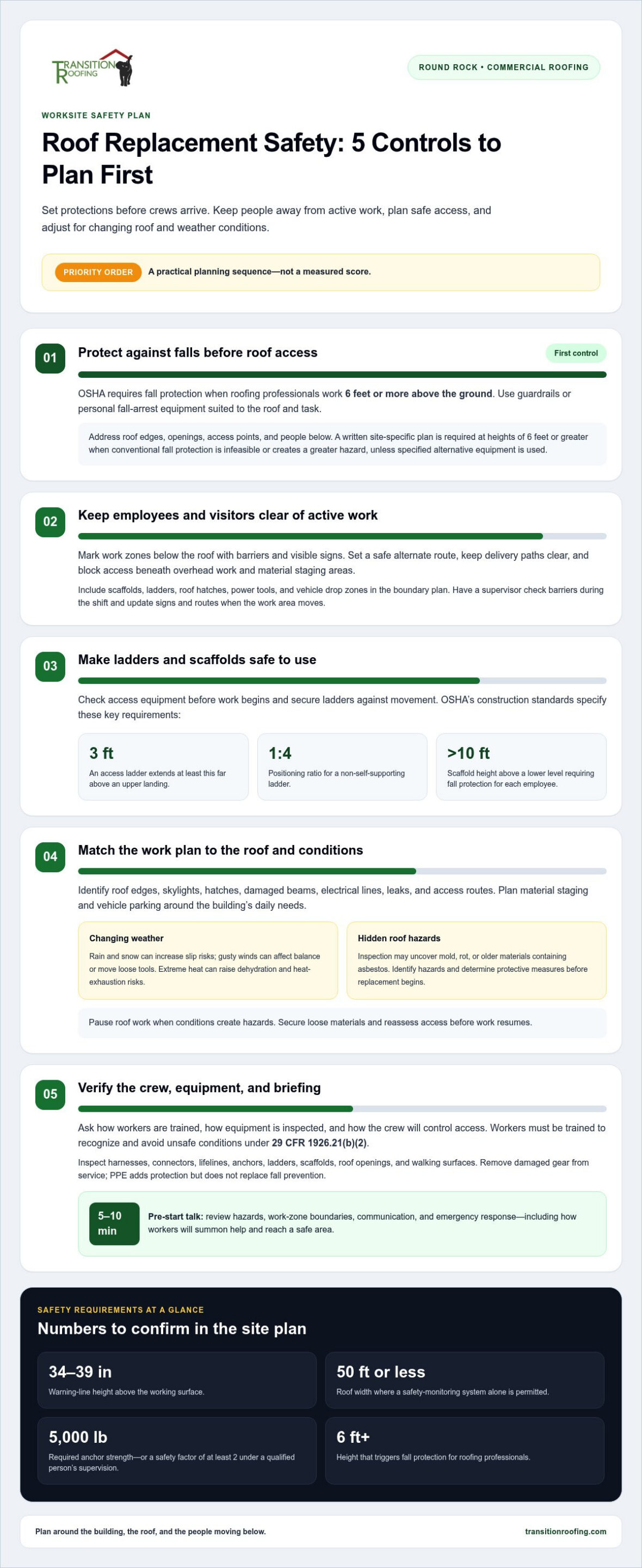
For roof replacement in Round Rock, set fall protection before workers step onto the roof. The Occupational Safety and Health Administration (OSHA) states that roofing professionals must use a fall-protection system when working at least 6 feet above the ground. The system may include guardrails or personal fall-arrest equipment suited to the roof and task. A safe setup also accounts for roof edges, openings, access points, and the people working below.
Scaffolds and ladders need their own protections. According to the Occupational Safety and Health Administration (OSHA), under construction standard 1926.451(g)(1), each employee on a scaffold more than 10 feet above a lower level must be protected from falling to that level. The Occupational Safety and Health Administration (OSHA) also requires an extension ladder used to access an upper landing to extend at least 3 feet above that landing. Position non-self-supporting ladders at a 1:4 ratio, and secure them against movement before use.
Personal protective equipment adds another layer of protection, but it does not replace fall prevention. Workers should wear properly fitted helmets to guard against falling debris and impacts. When using a harness, connect it to a secure anchor and inspect the harness, connectors, and lifeline before use. Remove damaged gear from service. Choose equipment suited to the roof’s layout so workers can move without creating new trip hazards.
A written, site-specific fall-protection plan is required when work is at heights of 6 feet or greater and conventional fall protection is infeasible or creates a greater hazard, unless specified alternative equipment is used. The plan should identify roof edges, skylights, hatches, access routes, and the protective measures for each hazard. Review it with workers before work begins, then update it when site conditions change.
To protect workers from falling debris, cordon off areas below active roof work and post visible warning signs. Require helmets, keep tools organized, and regularly move tear-off waste into designated containers.
Before replacement starts, inspect ladders, scaffolds, harnesses, anchors, roof openings, and walking surfaces. Hold a 5-10 minute pre-start talk to review hazards, work-zone boundaries, communication, and emergency response steps, including how workers will summon help and reach a safe area.
2. What Are the Benefits of Enhanced Roofing Safety in Austin TX?
Restricting access keeps employees, visitors, and roofing workers away from active hazards. Before tear-off begins, mark the work zone below the roof and block access with barriers. Post visible signs at entrances and along nearby routes. Direct staff to a safe alternate entrance, and keep delivery paths clear of falling debris. These measures help prevent people from walking beneath workers or into material staging areas.
Set boundaries around scaffolding, ladders, roof hatches, and power tools. Keep the area beneath overhead work off-limits, and move parked vehicles away from drop zones. Have a supervisor check barriers during the shift, especially when crews move to another roof section. If the work area changes, update signs and routes before work resumes. Clear boundaries protect people who may not know which parts of the site are hazardous.
Weather can change roof conditions and make footing less reliable. Rain and snow increase slip risks, while gusty winds can affect balance or move loose tools. Extreme heat can raise the risk of dehydration and heat exhaustion. Pause roof work when conditions create hazards, secure loose materials, and reassess access before restarting. In Round Rock, include heat, storms, and sudden wind shifts in daily planning.
Power tools and electrical equipment require controlled work zones, organized cords, and careful handling. Keep cords out of walkways and away from wet surfaces. Place tools where they cannot slide toward roof edges. Inspect equipment before use and keep employees clear of active cutting or fastening work.
Older roofing can hide hazards that change the protective measures crews need. A roof inspection may reveal mold or rot that calls for respiratory protection. Older materials may contain asbestos, which must be identified and handled safely before replacement begins. Keep removed materials in designated containers, not scattered across the roof or ground. For help planning a commercial roof project, explore commercial roofing options.
3. Selecting a safety-conscious roofing contractor
Choose roofers who explain their safety process before work starts, not after hazards appear. Ask how the crew inspects equipment, trains workers, and controls access around the building. Workers must be trained to recognize and avoid unsafe conditions under 29 CFR 1926.21(b)(2). A clear answer should connect that training to actual tasks, such as carrying tear-off debris or working beside a roof hatch.
Warning-line systems and safety monitors must suit the roof and work method. Warning-line placement should suit the roof and work method, with protection maintained for workers near the edge. Its line height must be between 34 and 39 inches above the working surface. A safety-monitoring system alone is permitted on roofs 50 feet or less in width. Ask how workers will remain protected beyond the warning line and when the crew will stop work.
Site planning should address hazards specific to the building. Identify leaks, skylights, hatches, damaged beams, electrical lines, and ground-level routes. Coordinate material staging and work-vehicle parking. Slate and tile surfaces need particular attention because they can pose slip risks. The work plan should reflect the roof’s condition, access points, and work sequence rather than rely on a generic checklist.
For Texas workers’ compensation and workplace safety, treat insurance coverage and job-site protections as separate issues. Clarify the employer’s coverage arrangement and responsibility for the crew, and confirm that the work plan addresses training, fall protection, and hazards. OSHA safety practices remain central to preventing accidents, regardless of how coverage is arranged.
Before work begins, walk the site with the crew lead. Confirm that equipment is inspected, warning lines are in place, and workers understand restricted areas. Agree on how to respond if the weather shifts or roof repairs expose hidden damage. These checks can identify dangerous conditions before they put employees or roofers at risk.
4. Fall-arrest anchor selection and installation
A fall-arrest system works only when its anchor connects securely to the building structure. According to the Occupational Safety and Health Administration (OSHA), an anchor must meet a 5,000-pound strength requirement or maintain a safety factor of at least two under a qualified person’s supervision. For a new roof anchor, attach it to a truss or rafter, not roof sheathing alone. Sheathing by itself does not provide enough support.
Match anchor locations to the crew’s work area. Workers should be able to connect before approaching an exposed edge, skylight, or roof opening. Keep lifelines clear of sharp edges, loose materials, and debris that could damage them. Where the roof layout allows, guardrails can provide a physical barrier. A fall-arrest system does not replace an orderly walking surface.
Inspect every component before work begins and before each use. Under OSHA construction standard 1926.502(d)(21), personal fall-arrest systems must be inspected before each use for wear, damage, and other deterioration, and defective components must be removed from service. Check harness webbing, connectors, lifelines, and anchor points. Workers should also confirm the system limits free fall to no more than 6 feet and prevents contact with a lower level.
Weather changes can increase fall risks even when anchors are installed correctly. Rain and snow make roof surfaces slippery, while gusty winds can affect balance and move tools. Stop work when conditions compromise safe footing, then reassess the roof before crews return. After storms, clear loose debris and check anchor points and access routes for damage.
For a commercial roof project, connect roof planning with a safe work sequence. Plan a commercial roof project with the roof layout, worker access, and fall protection in mind to help prevent injury.
Transition Roofing: Commercial Roof Installation
Transition Roofing installs commercial roofs for businesses planning a replacement or addressing a roof that no longer suits the building. For a commercial project, discuss the roof layout, work areas, and system needs during planning. Options include TPO and metal roofing systems selected to fit the building’s requirements.
Clear project planning helps property managers coordinate roofing work with employee access and day-to-day operations. Transition Roofing can help you move from considering a replacement to planning the roofing work. To discuss a commercial roof installation, visit Transition Roofing’s commercial roofing page.
Put a Safer Roof Plan Into Action
A plan for how to keep employees safe during roof replacement in Round Rock should start before work is scheduled. Bring your building manager and roofing team together to map employee access, material staging, and areas that must stay open. Early coordination turns safety decisions into clear site procedures and gives employees time to prepare for temporary changes.
Transition Roofing provides commercial roof installation, TPO roofing systems, and commercial roof repair. If you’re planning a replacement or addressing a roof problem, discuss the building’s needs and how work can fit its operations. Start with a free, no-obligation estimate and a conversation about organizing the project safely.
Contact Transition Roofing to discuss your commercial roofing needs. With a thoughtful plan in place, you can move forward with greater confidence and keep your workplace ready for the work ahead.
Frequently Asked Questions
What Are the Benefits of Enhanced Roofing Safety?
Good roofing safety practices help protect employees, visitors, and crews while keeping building operations organized. A practical plan for how to keep employees safe during roof replacement in Round Rock might direct staff to a safe entrance while roofers use a separate route for materials. Planning these movements ahead of time reduces exposure to active work areas and helps supervisors respond when site conditions change.
What is Roof Safety?
Roof safety means using work practices and equipment to reduce hazards during roofing tasks. It includes safe access, fall prevention, protective gear, and control of work areas. For example, crews can map a clear path from the ladder to the work zone, keep tools away from skylights, and adjust tasks when rain makes roof surfaces slippery.
What OSHA fall protection requirements apply to commercial roof replacement?
The Occupational Safety and Health Administration (OSHA) states that roofing professionals must use a fall-protection system when working at least 6 feet above the ground. Under OSHA construction standard 1926.451(g)(1), each employee on a scaffold more than 10 feet above a lower level must be protected from falling. For project planning, identify roof edges, openings, scaffold access, and changes in the work area.
What are OSHA requirements for roof anchors, guardrails, safety nets, and warning lines?
According to the Occupational Safety and Health Administration (OSHA), a fall-arrest anchor must meet a 5,000-pound strength requirement or maintain a safety factor of at least two under a qualified person’s supervision. Guardrail top edges must be 39 to 45 inches above the work surface. Warning lines must be at least 6 feet from the edge, or 10 feet when mechanical equipment is used, and 34 to 39 inches high. Select measures to fit the roof layout.
What precautions prevent heat illness for roofing crews in Round Rock, Texas?
In Round Rock’s heat, plan for drinking water and shaded recovery areas for crews. Supervisors should watch for signs of heat illness, encourage workers to report symptoms promptly, and pause tasks if conditions become unsafe. Reduce extra exertion by staging materials near the work area and keeping access routes clear. Review the weather before work begins and adjust the plan as conditions shift.
What are safe procedures for working near electrical lines and rooftop equipment?
A key part of how to keep employees safe during roof replacement in Round Rock is planning access around electrical hazards. Keep ladders at least 10 feet from electrical power lines, and choose routes that avoid passing beneath them. Before work starts, identify rooftop equipment and mark clear paths around it. Keep tools and materials clear of equipment, and revise the work method before approaching an electrical hazard.